
Written by Michael Hayes
Quick Answer: Massage oil may temporarily make dimpled skin look smoother by moisturizing the surface and supporting a massage routine. It does not appear to permanently remove cellulite. Ingredients such as caffeine or retinol have some evidence for modest cosmetic improvement, but results vary and require consistent use.
What This Guide Covers
If you are wondering whether massage oil can change the appearance of cellulite, the most useful answer is a realistic one. Massage oils can make skin feel softer and may temporarily improve its appearance, but rubbing oil onto the skin is not the same as changing the structures beneath it.
The goal here is not to promise a perfect-looking body. Cellulite is a common skin appearance, and having it is not a sign that something is wrong. This guide focuses on what topical products can reasonably do, how to choose them, and when skin irritation or another concern deserves professional advice.
Trust & Safety: This article is for general educational information only. It does not diagnose, treat, cure, or prevent any condition. It does not replace advice from a licensed healthcare professional. Readers should seek professional help for severe, worsening, unusual, or persistent symptoms.
Does Anti-Cellulite Massage Oil Actually Work?
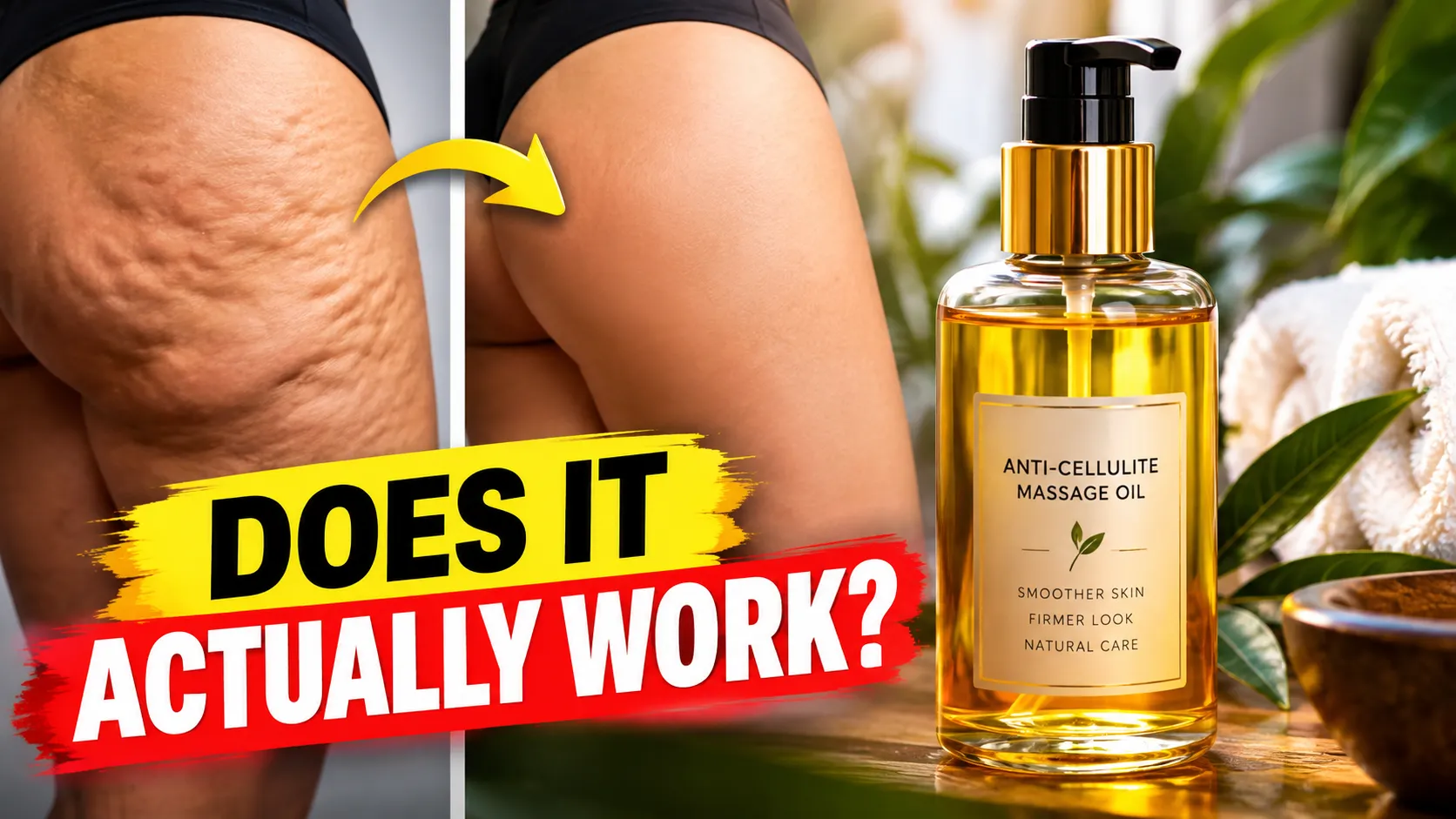
Whether a massage oil “works” depends on what result you expect. If the goal is softer, more moisturized skin or a temporarily smoother appearance, an oil can be useful. If the goal is permanently removing cellulite, the evidence does not support that expectation.
Cellulite involves the way fat, connective tissue, and skin are arranged beneath the surface. A topical oil sits mainly on the skin. Massage can change how the skin looks or feels for a short period, but that does not mean the underlying structure has been permanently changed.
The American Academy of Dermatology notes that some creams and lotions may make cellulite less noticeable. It specifically discusses caffeine-containing products and products containing 0.3% retinol, while also emphasizing that results require continued use and can vary. This is different from saying that every massage oil works. :contentReference[oaicite:0]{index=0}
Note: Cellulite is a common cosmetic skin feature. A product does not need to “fix” cellulite to be useful; softer skin, easier massage, and a pleasant routine can be reasonable goals on their own.
What the evidence suggests
Research on topical cellulite products is limited and often involves specific formulas rather than ordinary massage oils. Small studies have examined caffeine, retinol, and combinations of ingredients. Some have reported improvements in the visual appearance of cellulite, but the studies are not strong enough to make a broad promise for all oils or creams.
A randomized study of topical retinol found changes in skin mechanical properties after six months, while another study examined a product containing retinol, caffeine, and ruscogenine. These findings suggest that formulation matters more than the simple presence of “massage oil” on a label. :contentReference[oaicite:1]{index=1}
What matters most when choosing a product
Look beyond phrases such as “fat burning,” “detox,” or “melting cellulite.” Check the ingredient list, directions, fragrance level, and whether the manufacturer clearly identifies active ingredients and concentrations. A simple oil may be suitable for massage, while a targeted cosmetic formula may have a different purpose.
Choose a product that fits your skin and your routine. Avoid assuming that a stronger warming or tingling sensation means better results. Sensation is not a reliable measure of cellulite improvement.
Comparison: oil, cream, and targeted formula
Swipe left/right to see the full table →
| Option | Main role | Best fit |
|---|---|---|
| Plain body oil | Slip and moisture | Massage routine |
| Moisturizing cream | Surface hydration | Dry skin |
| Caffeine formula | Cosmetic smoothing | Targeted routine |
| Retinol formula | Skin texture | Long-term cosmetic use |
Routine flow: A simple application sequence is easier to maintain than an aggressive one.
Clean, intact skin is the starting point.
Use enough for comfortable glide.
Avoid painful pressure or aggressive rubbing.
Burning, swelling, or a rash is a reason to stop.
A practical takeaway is simple: choose consistency and comfort over intensity. A routine that leaves the skin calm is more sensible than one that creates redness just to produce a strong sensation.
How Massage May Change the Appearance
Massage can temporarily alter the way the skin looks and feels. The mechanical action moves the skin and surrounding soft tissue, while the oil reduces friction. Moisturized skin can also reflect light differently, making uneven texture appear less noticeable.
That temporary cosmetic effect should not be confused with permanent structural change. If the appearance improves after massage and later returns, that does not necessarily mean the product failed; temporary effects are different from long-term changes.
Safety decision path: Use the product only when the skin response remains comfortable.
Continue gently.
Stop and reassess.
Seek professional advice.
Possible reasons for different skin responses
Fragrance, essential oils, warming ingredients, preservatives, and active cosmetic ingredients can all affect how a formula feels. More ingredients do not automatically make a product more effective.
People with sensitive skin should be especially cautious with strongly fragranced or warming products. A product that feels pleasant to one person can cause irritation in another.
Swipe left/right to see the full table →
| Problem | Possible reason | Safer response |
|---|---|---|
| Stinging | Irritating ingredient | Stop use |
| Redness | Friction or sensitivity | Use less pressure |
| Dryness | Formula mismatch | Choose gentler care |
| No visible change | Limited cosmetic effect | Adjust expectations |
Tip: Test a new cosmetic product on a small area first and follow its label directions. This is especially useful when a formula contains several active or fragranced ingredients.
Which Ingredients Deserve Attention?
Ingredient lists are more useful than marketing phrases. Caffeine and retinol are among the topical ingredients that have been studied for cellulite appearance, although evidence remains limited and does not mean every formula will produce the same result. :contentReference[oaicite:2]{index=2}
Caffeine-containing formulas may produce a temporary cosmetic effect. Retinol has a different rationale because it can influence skin structure over time. These are not interchangeable, and neither should be treated as a guaranteed solution.
Be cautious with products that use dramatic claims such as “melts fat,” “destroys cellulite,” or “permanently removes dimples.” The FDA has also warned about certain cellulite and thigh products containing aminophylline, including the potential for allergic reactions and other problems. :contentReference[oaicite:3]{index=3}
Swipe left/right to see the full table →
| Ingredient type | What to expect | Beginner check |
|---|---|---|
| Caffeine | Possible temporary effect | Check full label |
| Retinol | Gradual skin changes | Expect slow results |
| Fragrance | Sensory benefit | Watch for irritation |
| Warming agents | Strong sensation | Do not equate heat with efficacy |
Product-fit dashboard: Think about the job you want the product to perform.
Choose a comfortable body oil.
Choose a simple moisturizing formula.
Review active ingredients carefully.
Favor simpler, gentler formulas.
The practical choice is to match the product to your actual goal. If massage and moisturization are the goal, a basic oil may be enough. If you are considering a product with an active ingredient, read the label carefully and consider professional advice when appropriate.
A Simple, Skin-Friendly Massage Routine
If you decide to use a body oil, keep the routine gentle. There is no need to press hard, repeatedly rub one area, or create visible irritation. The purpose is comfortable application rather than forcing a physical change.
1
Read the label. Check ingredients, warnings, and directions before applying.
2
Patch-test when appropriate. A small-area test can help identify sensitivity before broader use.
3
Apply enough for glide. Avoid excessive product or aggressive rubbing.
4
Massage gently. Use comfortable movements and stop if the skin becomes painful or irritated.
5
Observe your skin. If irritation develops, stop the product rather than increasing the amount.
For active products, follow the manufacturer’s directions instead of creating a stronger routine yourself. More frequent application or harder massage is not automatically better.
Warning: Avoid products that promise to dissolve fat or permanently erase cellulite. Strong burning, excessive redness, swelling, or pain is not a useful measure of effectiveness.
Safe routine versus risky routine
Swipe left/right to see the full table →
| Safer routine | Riskier routine |
|---|---|
| Gentle pressure | Painful pressure |
| Label directions | Extra applications |
| Intact skin | Broken or irritated skin |
| Stop with irritation | Pushing through symptoms |
Red-flag checklist: These signs are reasons to stop self-care and seek appropriate professional guidance.
Do not keep massaging through it.
Get the symptom assessed.
Stop the product and seek advice.
Ask a qualified professional.
Common Mistakes to Avoid
One common mistake is expecting an oil to perform the same job as a professional cellulite procedure. Topical products work at the skin-care level and should be judged by realistic cosmetic goals.
Another mistake is choosing the strongest-feeling formula. Heat, tingling, or redness may simply indicate that the skin is reacting to an ingredient. They do not prove that cellulite is being changed.
A third mistake is switching products constantly. If you change several products at once, it becomes difficult to know which ingredient helped or caused irritation. A simple routine makes your skin response easier to understand.
Mistake versus better choice
Swipe left/right to see the full table →
| Mistake | Better choice |
|---|---|
| Expecting permanence | Expect modest effects |
| Using more product | Follow directions |
| Chasing strong heat | Choose comfort |
| Ignoring irritation | Stop and reassess |
What Experienced Skin-Care Users Notice

People with more experience using body-care products often pay attention to formulation, concentration, application frequency, and skin tolerance rather than the front-label promise. They also distinguish a temporary appearance change from a lasting result.
Another useful habit is keeping expectations specific. “My skin feels smoother after moisturizing” is a reasonable observation. “This oil removed the cellulite” is a much stronger claim that requires stronger evidence.
Safety Note: Do not use a cosmetic product on damaged or irritated skin unless a qualified professional tells you it is appropriate. Stop using a product if it causes a significant or persistent reaction.
Relative priority meter: This is a practical guide, not scientific research data.
Skin tolerance
Realistic expectations
Consistent routine
Strong sensation
The key message is that comfort, ingredient awareness, and realistic expectations matter more than intensity. A product that feels dramatic is not automatically the better product.
When to Contact a Professional
Cosmetic cellulite is generally a personal appearance concern, but a new or unusual skin change should not automatically be assumed to be cellulite. Seek professional advice when an area becomes severely painful, rapidly swollen, unusually warm, persistently inflamed, develops a spreading rash, or otherwise changes in a way that concerns you.
If a cosmetic product causes a significant reaction that does not settle after stopping it, a qualified healthcare professional can help determine what to do next. A dermatologist can also discuss evidence-based options if you want to explore cosmetic treatment beyond topical products.
Self-care or professional advice?
Swipe left/right to see the full table →
| Situation | Reasonable next step |
|---|---|
| Normal cosmetic concern | Optional gentle routine |
| Mild temporary irritation | Stop product |
| Persistent reaction | Professional advice |
| Severe or unusual symptoms | Prompt medical evaluation |
When to contact a professional: Seek qualified healthcare advice for severe, worsening, unusual, spreading, or persistent symptoms, especially when the skin change does not behave like your usual cosmetic concern.
Frequently Asked Questions
Does anti-cellulite massage oil work permanently?
No. Massage oil may temporarily improve softness or the appearance of skin, but there is not good evidence that ordinary massage oil permanently removes cellulite.
Can massage itself make cellulite less noticeable?
Massage may create a temporary cosmetic change in how the skin looks or feels. That effect should not be confused with permanent structural change.
Does caffeine in body care help cellulite?
Some studies suggest caffeine-containing topical products may modestly improve the appearance of cellulite. Results vary, and evidence does not support treating caffeine as a permanent solution.
Is retinol different from ordinary massage oil?
Yes. Retinol is an active cosmetic ingredient with a different purpose from a simple carrier oil, and research suggests any cellulite-related effect develops gradually rather than immediately.
Should massage oil burn or sting to be effective?
No. A strong burning or stinging sensation is not proof that a product is working. Stop using a product if it causes significant or persistent irritation.
How should I test a new cellulite massage product?
Follow the label directions and consider testing a small area first. Stop if you develop significant redness, swelling, burning, or another concerning reaction.
When should I ask a healthcare professional about a skin change?
Seek professional advice for severe, worsening, unusual, spreading, or persistent symptoms, particularly when the change is painful or does not behave like your usual cosmetic concern.
Bottom-line visual: Think of the evidence as a spectrum rather than an all-or-nothing claim.
Moisturization
Temporary appearance change
Modest ingredient-specific evidence
Permanent cellulite removal from ordinary oil
The visual is a practical guide, not a scientific score. The strongest reason to use an oil is usually comfort, moisturization, and a manageable self-care routine rather than a promise of permanent cellulite removal.
Final Thoughts
Massage oil can be a reasonable part of a comfortable body-care routine, but it is best viewed as a cosmetic product rather than a permanent cellulite solution. Choose formulas based on ingredients, skin tolerance, and realistic expectations, and stop using any product that causes a concerning reaction.
If a skin change is severe, worsening, unusual, persistent, or not improving, seek advice from a qualified healthcare professional.
Author
-

I’m Alex Turner, a massage product reviewer and wellness writer at RemedyTip. I specialize in researching, evaluating, and comparing massage and recovery products to help readers make informed purchasing decisions. My focus is on practical, evidence-informed product guidance covering muscle recovery, relaxation, everyday comfort, and wellness.
I take a research-driven approach to every product I review. I examine product specifications, features, materials, performance claims, user feedback, durability, comfort, ease of use, and overall value. When appropriate, I also consult trusted industry and health-related sources to verify important information and provide readers with a more complete and balanced view.
I cover a wide range of products, including massage guns, handheld massagers, neck and shoulder massagers, foot massagers, massage chairs, foam rollers, and other recovery tools. Rather than focusing only on marketing claims, I look at how products compare in real-world use and who they are actually suitable for. I also consider different budgets, use cases, and user needs when making recommendations.
At RemedyTip, I’m committed to accuracy, transparency, and unbiased product information. I clearly distinguish between manufacturer claims, available evidence, and my own product analysis so readers can understand the basis of each recommendation. I continuously research new products, technologies, and developments in the massage and recovery space to keep my content current and useful.
My goal is simple: to provide trustworthy, easy-to-understand information that helps readers choose massage and recovery products with greater confidence.

