A massage gun can ease tight muscles and improve movement, but its rapid pulses do not physically dissolve scar tissue or break apart fascia. A massage gun may temporarily reduce muscle tension and the feeling of knots, but it cannot remove scar tissue or permanently release adhesions.
Gentle use may help healthy tissue around a fully healed scar move more comfortably. However, sensitive scars, recent injuries, and painful areas need extra care. Michael Hayes of RemedyTip.com emphasizes that proper timing, light pressure, and medical guidance matter more than force.
Key Takeaways
- Massage guns can temporarily reduce muscle tightness.
- They cannot dissolve scar tissue or permanently break fascia.
- Safe use depends on healing time, pressure, and location.
What Percussive Therapy Does to Soft Tissue
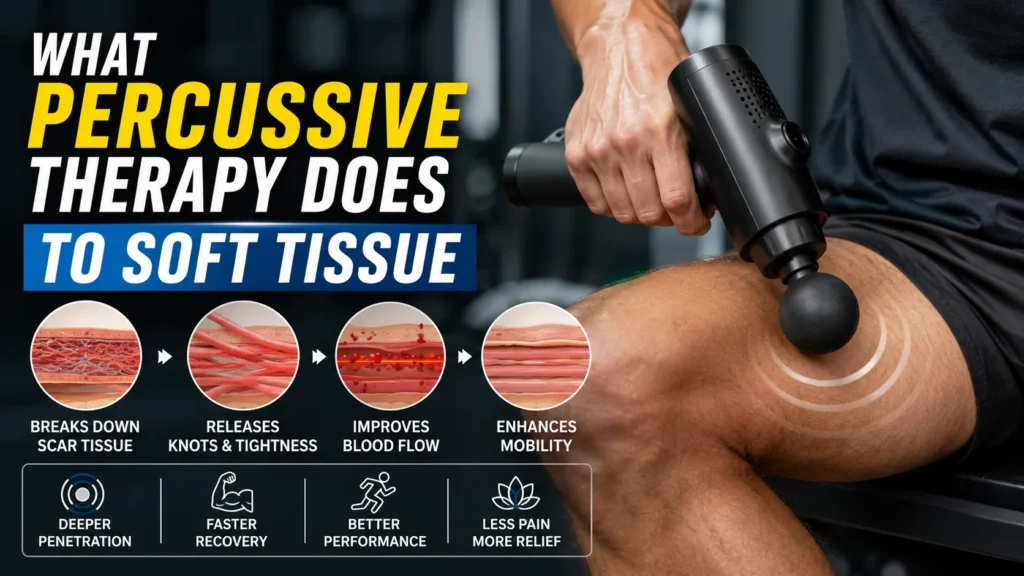
A massage gun applies repeated mechanical pulses to muscles and other soft tissues. These pulses may briefly change muscle tone, blood flow, and pain sensitivity, but they do not physically break apart scar tissue, fascia, or muscle knots.
How Amplitude, Frequency, and Pressure Work
Amplitude describes how far the massage gun head moves into the tissue. A higher amplitude reaches deeper, but it also increases discomfort and the chance of bruising. Frequency describes how quickly the device delivers its pulses. Faster settings may feel stimulating, while slower settings can feel more manageable on sensitive areas.
Pressure also changes the treatment. Light pressure allows the device to move across relaxed muscle. Firm pressure increases the force on the tissue but does not guarantee better results. The user should let the massage gun do the work rather than press hard.
Percussion may temporarily reduce muscle tightness by changing the nervous system’s response to stretch and pressure. It does not realign or dissolve collagen fibers in a mature scar. A scar that limits movement may need assessment and treatment from a physical therapist.
Short-Term Effects on Circulation and Sensation
Percussive therapy can increase local blood flow for a short time, especially when used on large muscle groups. This effect may create warmth and help the tissue feel less stiff before activity. It does not prove that the device speeds scar healing or removes adhesions.
The pulses also stimulate nerves in the skin and muscle. This stimulation may temporarily reduce the feeling of soreness or tightness, which can make movement feel easier. The effect usually fades after the treatment ends.
A massage gun should stay on healthy muscle and move continuously. It should not be used directly over an open wound, a fresh surgical scar, swollen tissue, reduced-sensation areas, bones, or visible blood vessels. Pain, numbness, skin color changes, or increased swelling signals that the user should stop.
Scar Tissue: What Can and Cannot Change
A massage gun cannot dissolve or mechanically break scar tissue. Gentle treatment may improve comfort and movement around a fully healed scar, but healing time and medical guidance determine when and how it should be used.
Mature Scars Versus Healing Incisions
A healing incision needs protection, not percussion. A massage gun should not touch an open wound, scab, drainage, fresh stitches, or skin that remains red, hot, swollen, or unusually painful. The device may irritate the wound, reopen fragile tissue, or increase bleeding and swelling.
A scar usually becomes more stable after the incision closes completely, often after several weeks, but healing rates differ. A surgeon or other qualified clinician should approve treatment after surgery, especially when implants, infection risks, or complications exist.
A mature scar contains remodeled collagen. Percussion cannot remove or shatter this collagen. It may temporarily increase blood flow and reduce nearby muscle tightness, but it will not reliably flatten, erase, or permanently soften the scar.
Mobility Improvements Without Tissue Breakdown
Scar-related stiffness can result from reduced skin movement, tight muscles, swelling, or sensitivity around the area. A massage gun may help the surrounding muscles relax, which can make movement feel easier without changing the scar itself.
The user should keep the device on nearby muscle rather than directly over the scar. The lowest speed and a soft attachment provide a safer starting point. Short sessions with light pressure are preferable to pressing hard or repeatedly targeting one spot.
Treatment should stop if it causes sharp pain, increased swelling, bruising, numbness, warmth, or skin changes. A clinician or physical therapist can use scar massage, stretching, manual therapy, or other methods when the scar restricts movement. Persistent pain or a raised, expanding scar needs medical assessment.
Fascia and Muscle Knots Explained
Fascia surrounds muscles, nerves, and other tissues. When muscles stay tense or become irritated, they may feel tight, tender, or lumpy. Massage guns can reduce discomfort for some people, but they do not reliably break apart fascia, scar tissue, or muscle tissue.
Myofascial Tightness and Trigger Points
Fascia is a thin layer of connective tissue that supports and separates muscles. It can become less mobile after injury, repeated strain, surgery, or long periods in one position. This may create a pulling or stiff sensation, but it does not mean the fascia has formed a solid knot that a device can break apart.
A muscle knot often refers to a trigger point. This is a sensitive area within a tense muscle that may hurt when pressed or may send pain to another area. Trigger points can develop from overuse, poor movement patterns, stress, or holding one posture for too long.
A massage gun may temporarily change how the nervous system senses pressure and pain. It may also increase local blood flow and help a tight muscle relax. These effects can make movement easier without physically removing a knot or cutting through fascia.
Why Muscles May Feel Less Stiff After Use
A massage gun applies repeated pressure to the muscle. This stimulation may reduce the muscle’s protective tension and change pain signals sent to the brain. The result can feel like improved flexibility or less stiffness, especially when the tightness comes from fatigue or mild overuse.
The effect usually does not mean the device has permanently changed the fascia or removed a trigger point. Benefits may last minutes or hours and often work best when combined with gentle movement, stretching, strength training, and rest.
They should use a low setting and a soft attachment on the surrounding muscle. They should avoid bones, joints, the front of the neck, open wounds, bruises, and areas with reduced sensation. Pain, numbness, swelling, or worsening symptoms signals a need to stop and seek advice from a qualified health professional.
Evidence for Massage Gun Benefits
Research supports short-term effects on muscle flexibility, perceived soreness, and pain tolerance. It does not show that percussion physically breaks apart mature scar tissue, fascia, or muscle knots.
Range of Motion and Warm-Up Effects
Small studies suggest that brief massage-gun use can increase short-term range of motion without reducing muscle strength as much as prolonged static stretching sometimes can. Applying the device to nearby muscle tissue may reduce stiffness and help a person move more freely before exercise.
The effect likely comes from changes in muscle tone, blood flow, and pain sensitivity rather than from breaking adhesions. It usually lasts for minutes to a few hours, so it should not be treated as permanent tissue remodeling.
| Possible effect | What the evidence supports |
|---|---|
| Short-term flexibility | A modest increase in joint movement |
| Warm-up | Reduced feeling of stiffness |
| Scar tissue removal | No strong evidence |
| Fascia or knot breakdown | No proof of physical “breakup” |
A low setting and light pressure reduce the chance of bruising or irritation. The device should not press directly on a fresh incision, raised scar, swollen area, or painful joint.
Pain Relief and Recovery Findings
Massage-gun studies report short-term reductions in muscle soreness and changes in how people perceive pain after exercise. Some findings also show improved recovery of movement when the device treats surrounding muscle rather than the painful spot itself.
These benefits do not prove that a massage gun repairs damaged tissue. Percussion may temporarily relax tight muscles and make movement more comfortable, but it cannot reliably remove a scar adhesion or dissolve a deep muscle knot.
People with surgical scars should wait until the wound has fully closed and medical staff have cleared the area. They should avoid percussion over keloids, numb skin, infection, unexplained swelling, or active inflammation. Persistent pain, restricted movement, or a scar that pulls during motion requires assessment by a clinician or physical therapist.
Safe Use Around Sensitive Areas
A massage gun should target healthy muscle near a scar, not the scar itself, open skin, or areas with little soft tissue. Low speed, light pressure, and short sessions reduce the risk of bruising, nerve irritation, and added pain.
Appropriate Body Regions and Technique
A person can usually use a massage gun on large, fleshy muscles such as the thighs, glutes, calves, and upper back. They should keep the device away from the spine, joints, bones, the front and sides of the neck, and the abdomen unless a health professional gives specific guidance.
For a scar, the wound should be fully closed, dry, and free of scabs, drainage, redness, or unusual tenderness. A mature scar may tolerate gentle hand massage, but a massage gun should not press directly on it without approval from the surgeon or physical therapist. Instead, the user can work lightly on nearby muscle to reduce tension and support comfortable movement.
They should avoid areas with numbness because reduced sensation can hide injury. They should also avoid varicose veins, swollen tissue, recent injuries, and any area that bruises easily.
Settings, Duration, and Pressure Guidelines
The user should begin with the lowest speed and a soft attachment, keeping the device moving rather than holding it in one place. Light contact should feel comfortable; it should not cause sharp pain, tingling, numbness, increased swelling, or skin discoloration.
A short session of about 30 seconds to 2 minutes per muscle group is a cautious starting point. The user should stop if symptoms worsen during use or remain worse afterward. More force or longer sessions do not break down scar tissue and may irritate healing tissue.
The device should never be used on an open or recently closed wound. People taking blood thinners or managing poor circulation, nerve problems, diabetes, or a clotting condition should seek medical advice before using one.
When to Avoid Percussive Massage
Percussive massage can worsen bleeding, inflammation, nerve irritation, or wound damage in some situations. People should avoid direct treatment over vulnerable tissue and seek medical guidance when pain, swelling, skin changes, or poor healing suggest a deeper problem.
Medical Conditions and Injury Warning Signs
A massage gun should not be used over an open wound, infection, unexplained lump, active rash, or area with reduced sensation. It can also increase bruising or bleeding, so people with bleeding disorders or those taking blood thinners should ask a clinician before using one.
They should avoid percussive massage over a recent strain, sprain, fracture, or severe muscle injury, especially during the first days when swelling and pain are increasing. A massage gun may irritate damaged tissue and hide symptoms that need assessment.
People should stop immediately if treatment causes sharp pain, numbness, tingling, weakness, dizziness, increased swelling, or skin discoloration. Anyone with a known keloid tendency should avoid percussion directly on the scar unless a qualified clinician approves it. Gentle scar care may require a different approach, such as guidance from a dermatologist or physical therapist.
Post-Surgery and Acute Inflammation Considerations
A massage gun should not touch a surgical incision until the wound has fully closed and the surgeon has cleared the area. The device can stress healing tissue, disturb scabs, increase soreness, or affect nearby swelling. Timing depends on the procedure, incision location, and healing progress, so a fixed waiting period does not apply to everyone.
It should also be avoided over fresh bruising, redness, warmth, marked swelling, or drainage. These signs may indicate inflammation, infection, or another complication that needs medical review rather than mechanical pressure.
After clearance, treatment should begin around—not directly on—the scar with the lowest setting and a soft attachment. The user should keep the device moving, apply little pressure, and stop if symptoms worsen. A clinician can advise when direct scar work is appropriate and whether manual massage or another treatment fits the surgery.
Alternatives and Professional Care
Hands-on treatment and carefully chosen exercises can improve movement around tight scars, fascia, and muscles without trying to force tissue apart. A physical therapist can also identify whether pain comes from a scar, joint restriction, nerve sensitivity, or muscle weakness.
Manual Therapy and Targeted Exercise
A trained clinician may use scar massage, soft-tissue work, joint mobilization, or myofascial techniques to improve comfort and movement. These methods do not physically erase scar tissue. They may help the skin and nearby tissue layers move more freely, especially after a wound has fully closed.
Targeted exercise often provides longer-lasting benefits. A therapist may prescribe gentle stretching, range-of-motion drills, strengthening, or nerve-gliding exercises based on the affected area. For example, someone with a surgical scar near the knee may need knee bends, quadriceps strengthening, and gradual loading.
The area should not become sharply painful, swollen, hot, or increasingly red after treatment. Open wounds, fresh incisions, infection, and painful swelling require medical advice before massage or exercise.
When to Consult a Physical Therapist
A physical therapist can assess scars that limit movement, cause pulling, or remain painful after healing. Professional care may help when symptoms continue despite gentle home exercise, interfere with walking or daily tasks, or return whenever the person increases activity.
The therapist can examine strength, joint motion, skin mobility, nerve symptoms, and movement patterns. They can then create a safe plan and adjust pressure, exercise intensity, and progression. This guidance matters after surgery, burns, major injuries, or radiation treatment, when tissues may need special care.
A person should seek medical evaluation for increasing redness, warmth, drainage, fever, severe pain, numbness, or a new lump near the scar. These signs may indicate infection, nerve involvement, or another problem that a massage gun cannot treat.
FAQs
Can a massage gun break up scar tissue?
No. A massage gun cannot dissolve, shatter, or mechanically break scar tissue. Gentle massage may help mature scar tissue and nearby layers move more freely, but research on massage guns for scar treatment remains limited.
Can it improve a scar’s appearance?
It may reduce tightness and improve movement around a fully healed scar. It should not be expected to remove the scar or change its appearance significantly.
Can it release fascia?
A massage gun may temporarily reduce the feeling of tightness in muscles and surrounding soft tissue. It does not permanently separate or “release” fascia.
Can it break up muscle knots?
It cannot physically break a knot apart. Percussion may relax nearby muscles, increase comfort, and improve short-term movement.
When can someone use one after surgery or injury?
The wound must be fully closed, dry, and healed before use. A doctor or physical therapist should confirm that percussion is safe, especially after surgery.
How should it be used?
- Choose the lowest speed.
- Use light pressure around, not directly over, a new scar.
- Limit each area to a short session.
- Stop if pain, swelling, redness, numbness, or bleeding occurs.
Massage guns should not be used on open wounds, infected skin, fresh incisions, bruises, or areas with reduced sensation. Professional guidance is important when a scar remains painful, raised, swollen, or limits movement.
Conclusion
A massage gun cannot physically break up scar tissue or cut through fascia. It may help reduce muscle tightness, improve short-term blood flow, and make some knots feel less tender by relaxing nearby muscle fibers.
Scar tissue may become more flexible with time, guided movement, hands-on therapy, and proper rehabilitation. A massage gun might support movement around a fully healed, mature scar, but it does not remove or dissolve the scar itself.
Safe use depends on the area and stage of healing:
- Use low speed and light pressure.
- Avoid open wounds, fresh incisions, bruises, numb areas, and inflamed skin.
- Do not apply it directly over bones, joints, or sensitive scar tissue.
- Stop if it causes sharp pain, swelling, bleeding, or increased soreness.
People recovering from surgery or a major injury should ask a health professional before using one. A physical therapist can select safer techniques and combine them with stretching, strengthening, and scar-mobility work.