
By Alex Turner
Quick Answer: Can I use massage cream daily? Often, a simple moisturizing massage cream can fit into a daily routine if your skin tolerates it and the label allows regular use. Products containing active pain-relief ingredients, strong fragrances, or irritating ingredients need more caution. Stop if your skin reacts.
Daily massage cream use is mainly a skin-and-label question. The answer depends on what the cream contains, where you apply it, how much you use, and whether your skin stays comfortable.
Safety & Trust: This article is for general educational information only. It does not diagnose, treat, cure, or prevent any condition. It does not replace advice from a licensed healthcare professional. Readers should seek professional help for severe, worsening, unusual, or persistent symptoms.
When Daily Massage Cream Use May Make Sense
Massage cream is not one single type of product. Some formulas are mainly designed to reduce friction and leave skin feeling soft. Others contain ingredients intended to create warming, cooling, soothing, or pain-relief sensations. That difference matters when deciding whether everyday application fits your routine.
A basic cream used for lubrication may be easier to use regularly when the label supports frequent application and your skin remains comfortable. Cleveland Clinic notes that simple emollient products can generally be used as needed, although products with active ingredients require closer attention to their directions. Cleveland Clinic guidance on emollients.
By contrast, a massage cream containing a medication or other active ingredient should not automatically be treated like an ordinary moisturizer. The product label may specify how often it can be applied, how much to use, and which areas to avoid.
Four questions to ask before using it every day
Note: “Massage cream” describes how a product is used, not necessarily what it contains. Check the ingredient list and directions rather than assuming every massage cream has the same safety profile.
First, is it a simple cosmetic cream or does it contain an active ingredient? Second, does the label permit the frequency you have in mind? Third, are you applying it to healthy, intact skin? Finally, does your skin remain calm after repeated use?
Daily-use caution table
Swipe left/right to see the full table →
| Product type | Daily use question | What to check |
|---|---|---|
| Simple moisturizer | Often reasonable | Skin tolerance and label |
| Cooling or warming formula | Use more cautiously | Ingredients and directions |
| Topical analgesic | Follow label exactly | Active ingredient and limits |
| Strongly fragranced formula | Depends on skin | Irritation or allergy signs |
This table is a practical screening tool, not a substitute for the product’s directions. If a label gives a stricter limit, follow the label.
There is also a skin-health issue to consider. Personal-care products can cause irritation or allergic contact dermatitis in some people. The American Academy of Dermatology recommends testing new skin-care products before regular use, especially when irritation is a concern. AAD product-testing guidance.
How to Judge Your Skin’s Response
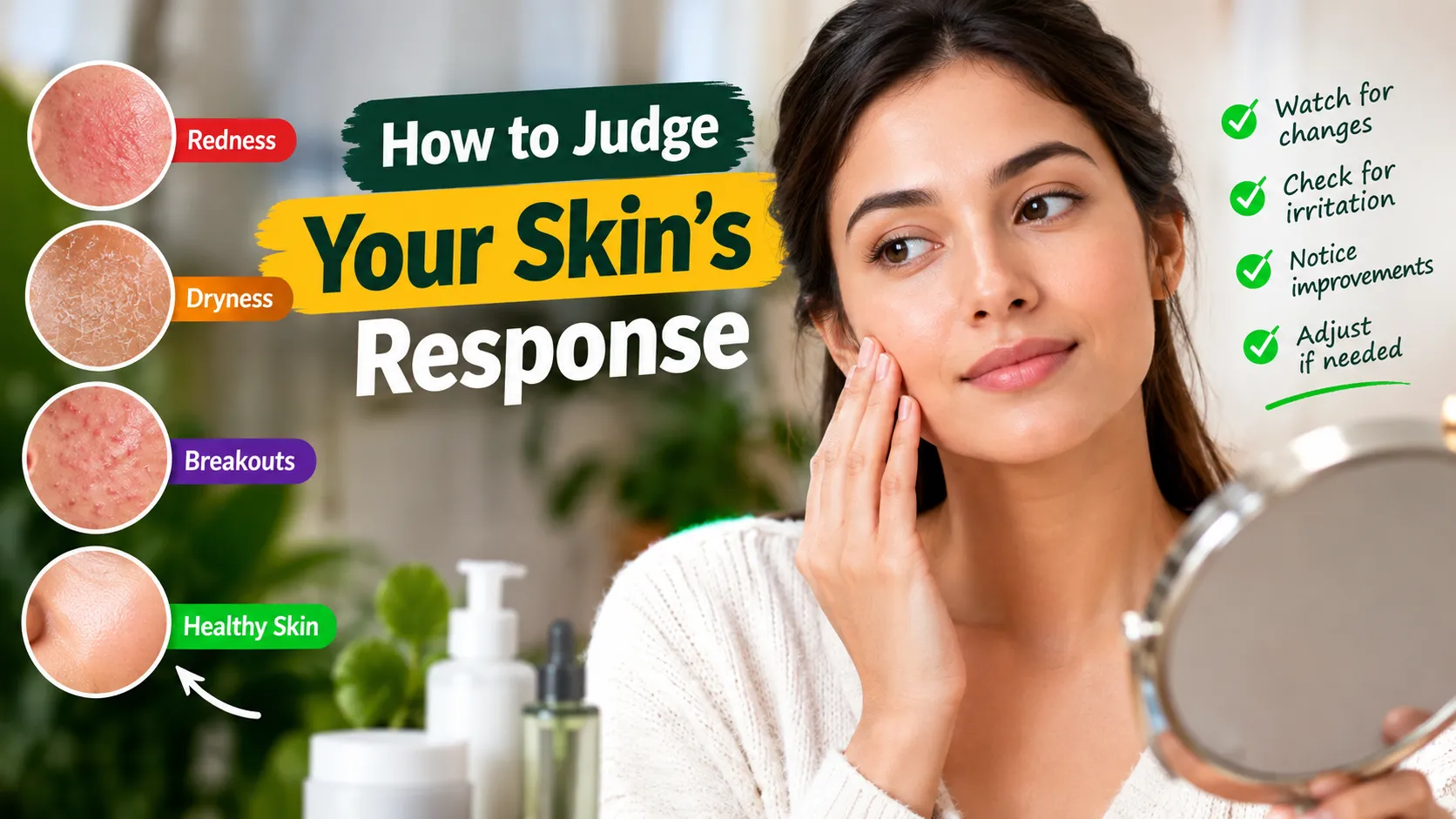
The easiest way to decide whether everyday massage cream use fits you is to watch the skin rather than chasing a fixed number of applications. Comfortable skin with no persistent redness, itching, burning, swelling, or rash is a different situation from skin that becomes increasingly irritated.
Do not assume that a reaction must happen immediately. Some contact reactions can develop hours or even days after exposure. If a product repeatedly produces itching, redness, scaling, swelling, or discomfort, continuing to apply it every day can make it harder to identify the trigger. AAD information on contact dermatitis.
Practical risk guide
Practical guide only; these levels are not medical risk scores.
The visual guide shows why the same routine may be reasonable for one person and unsuitable for another. Ingredient strength, skin condition, and reaction history all matter.
Ingredients worth checking
Look at the label before turning a massage product into an everyday habit. A plain moisturizing formula is different from one containing strong cooling agents, warming agents, fragrances, essential oils, or topical analgesic ingredients.
Ingredient checklist
Swipe left/right to see the full table →
| Label feature | Why notice it | Daily-use approach |
|---|---|---|
| Fragrance | Can irritate some skin | Consider fragrance-free if sensitive |
| Essential oils | May irritate or trigger allergy | Use caution with reactive skin |
| Active analgesic | Changes the safety profile | Follow label limits |
| Simple emollients | Primarily support moisturization | Often easier for regular routines |
The American Academy of Dermatology advises people with sensitive skin to consider fragrance-free products, while Cleveland Clinic notes that fragrance, dyes, alcohol, essential oils, and some preservatives can irritate certain people. AAD sensitive-skin guidance.
Ingredient decision dashboard
Usually the simplest category for regular skin care.
Pay closer attention if your skin is easily irritated.
Read frequency, amount, and application warnings carefully.
Do not assume daily use is appropriate when directions are unclear.
Think of the label as the first decision point. If the product is marketed for therapeutic effects or contains an active drug ingredient, its directions matter more than a general rule about massage creams.
A Safer Daily Routine
If the product appears suitable for regular use, keep the routine simple. Use the amount directed on the label, apply it only where the product is intended to be used, and avoid broken or irritated skin unless a qualified professional specifically tells you otherwise.
Daily-routine flow
Read label
Check skin
Apply as directed
Monitor response
This approach keeps frequency from becoming the only concern. A product used once a day can still be unsuitable if it causes repeated irritation, while a simple moisturizer may be used more often when appropriate for the person’s skin.
Safer routine vs risky routine
Swipe left/right to see the full table →
| Safer choice | Riskier habit | Why it matters |
|---|---|---|
| Follow label frequency | Apply whenever desired | Active products have specific limits |
| Use on intact skin | Use over damaged skin | Absorption and irritation may differ |
| Stop after a reaction | Push through burning or rash | May worsen irritation |
| Introduce one new product | Change several products together | Makes triggers harder to identify |
Tip: If you are trying a new massage cream, introducing only one new skin product at a time can make it easier to notice whether your skin reacts. AAD recommends testing new skin-care products before broader use.
Common mistakes to avoid
Do’s and don’ts
Another common mistake is assuming that “natural” means irritation-free. Botanical ingredients and essential oils can still cause irritation or allergic reactions. The AAD specifically notes that fragrance and some plant-based ingredients can be problematic for sensitive skin. AAD contact-dermatitis guidance.
When Daily Use Is Not a Good Idea
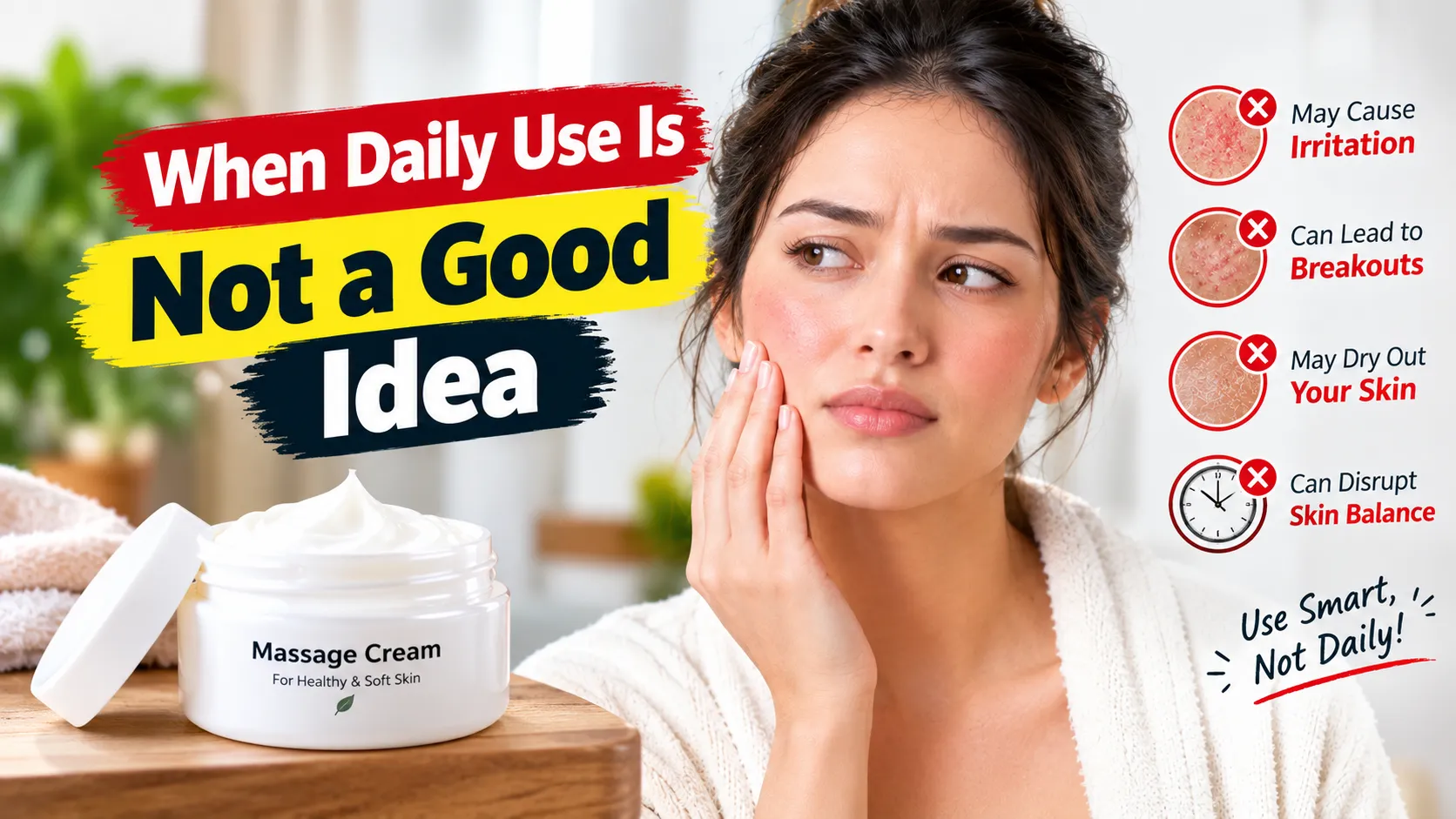
Daily application deserves more caution when the product causes repeated irritation, when you are applying it to damaged skin, or when the formula contains an active ingredient with specific usage restrictions. Do not increase the amount or frequency simply because a normal application does not feel strong enough.
FDA warnings about certain topical analgesic products show why active ingredients deserve particular attention. Large amounts applied over large areas, especially on irritated or broken skin or under covering, can increase absorption and create safety concerns. FDA topical analgesic safety information.
Self-care or professional advice?
Swipe left/right to see the full table →
| Situation | Reasonable next step |
|---|---|
| No irritation and label allows routine use | Continue as directed |
| Mild new irritation | Stop the new product and reassess |
| Persistent or worsening rash | Ask a healthcare professional |
| Severe or unusual reaction | Seek prompt medical help |
Warning: Do not use a massage cream simply to push through unexplained or worsening pain. A cream can change how the skin feels without explaining why symptoms are occurring.
Safety decision path
If frequency and application area are clear, follow them.
If the skin is irritated, broken, or reacting, pause rather than adding more product.
If symptoms persist or worsen, ask a healthcare professional.
Active or strongly irritating ingredients call for extra caution.
The goal is not to find a universal daily-use number. It is to match the product’s instructions with your skin’s response and the reason you are using it.
When to Contact a Professional
A new rash that keeps returning, significant swelling, severe burning, blistering, or symptoms that continue after stopping a product deserve professional attention. The AAD notes that persistent or difficult-to-identify contact reactions may require evaluation and, in some cases, formal patch testing.
When to contact a professional: Seek professional help for severe, worsening, unusual, or persistent skin symptoms; significant swelling; blistering; or a reaction that does not settle after stopping the suspected product. Seek urgent medical help for a severe allergic reaction or other emergency symptoms.
If you have a known skin condition, recurring reactions, or uncertainty about an active topical product, a pharmacist, dermatologist, or other qualified healthcare professional can help you interpret the label and decide whether the product fits your routine.
FAQ
Can I use massage cream daily?
A simple moisturizing massage cream may fit a daily routine when the label allows it and your skin remains comfortable. Active formulas require closer attention to their directions.
Can daily massage cream use irritate skin?
Yes. Fragrance, essential oils, preservatives, and other ingredients can irritate or trigger allergic reactions in some people.
Should I patch test massage cream?
Testing a new skin-care product on a small area before broader use can help identify a reaction before it affects a larger area.
Is fragrance-free massage cream better for sensitive skin?
Fragrance-free products may be a simpler choice for people whose skin reacts to fragrance. “Unscented” does not always mean fragrance-free.
Can I use massage cream on irritated skin?
It is better not to assume a massage cream is appropriate for irritated or broken skin. Check the label and ask a healthcare professional when the skin problem is significant or persistent.
What if massage cream starts burning or itching?
Stop using the product and reassess the reaction rather than continuing daily applications. Persistent, severe, or worsening symptoms should be evaluated by a healthcare professional.
Does a massage cream with an active ingredient have different rules?
Yes. Active topical products can have specific limits for amount, frequency, body area, and duration, so follow the product label rather than treating them like ordinary moisturizer.
Final Thoughts
Can I use massage cream daily? The answer depends less on the word “massage” and more on the formula, directions, application area, and how your skin responds. A simple cream may be suitable for regular use when the label permits it, while active or irritating formulas deserve more caution.
If daily use leads to persistent, unusual, severe, or worsening symptoms, stop and seek professional advice rather than continuing the routine.
Author
-

I’m Alex Turner, a massage product reviewer and wellness writer at RemedyTip. I specialize in researching, evaluating, and comparing massage and recovery products to help readers make informed purchasing decisions. My focus is on practical, evidence-informed product guidance covering muscle recovery, relaxation, everyday comfort, and wellness.
I take a research-driven approach to every product I review. I examine product specifications, features, materials, performance claims, user feedback, durability, comfort, ease of use, and overall value. When appropriate, I also consult trusted industry and health-related sources to verify important information and provide readers with a more complete and balanced view.
I cover a wide range of products, including massage guns, handheld massagers, neck and shoulder massagers, foot massagers, massage chairs, foam rollers, and other recovery tools. Rather than focusing only on marketing claims, I look at how products compare in real-world use and who they are actually suitable for. I also consider different budgets, use cases, and user needs when making recommendations.
At RemedyTip, I’m committed to accuracy, transparency, and unbiased product information. I clearly distinguish between manufacturer claims, available evidence, and my own product analysis so readers can understand the basis of each recommendation. I continuously research new products, technologies, and developments in the massage and recovery space to keep my content current and useful.
My goal is simple: to provide trustworthy, easy-to-understand information that helps readers choose massage and recovery products with greater confidence.

