
By Alex Turner
Quick Answer: Can children use a foot massager? In most cases, yes — healthy children over about 6 can use a gentle, manual foot massager for short sessions with adult supervision. Skip motorized or heated models for younger kids, and check with a pediatrician first if your child has a foot injury, circulation problem, or skin condition.
Tired, achy feet after a long day of running around aren’t just an adult problem — kids get them too, especially after sports practice, dance class, or a full day at the playground. It’s natural to wonder can children use a foot massager the same way adults do, or whether their smaller, still-developing feet need a different approach. This guide covers safe age ranges, what settings to avoid, and how to tell when a foot massager is a good fit for your family.
This article is for general educational information only. It does not diagnose, treat, cure, or prevent any condition. It does not replace advice from a licensed healthcare professional. Readers should seek professional help for severe, worsening, unusual, or persistent symptoms.
What a Foot Massager Actually Does for Kids
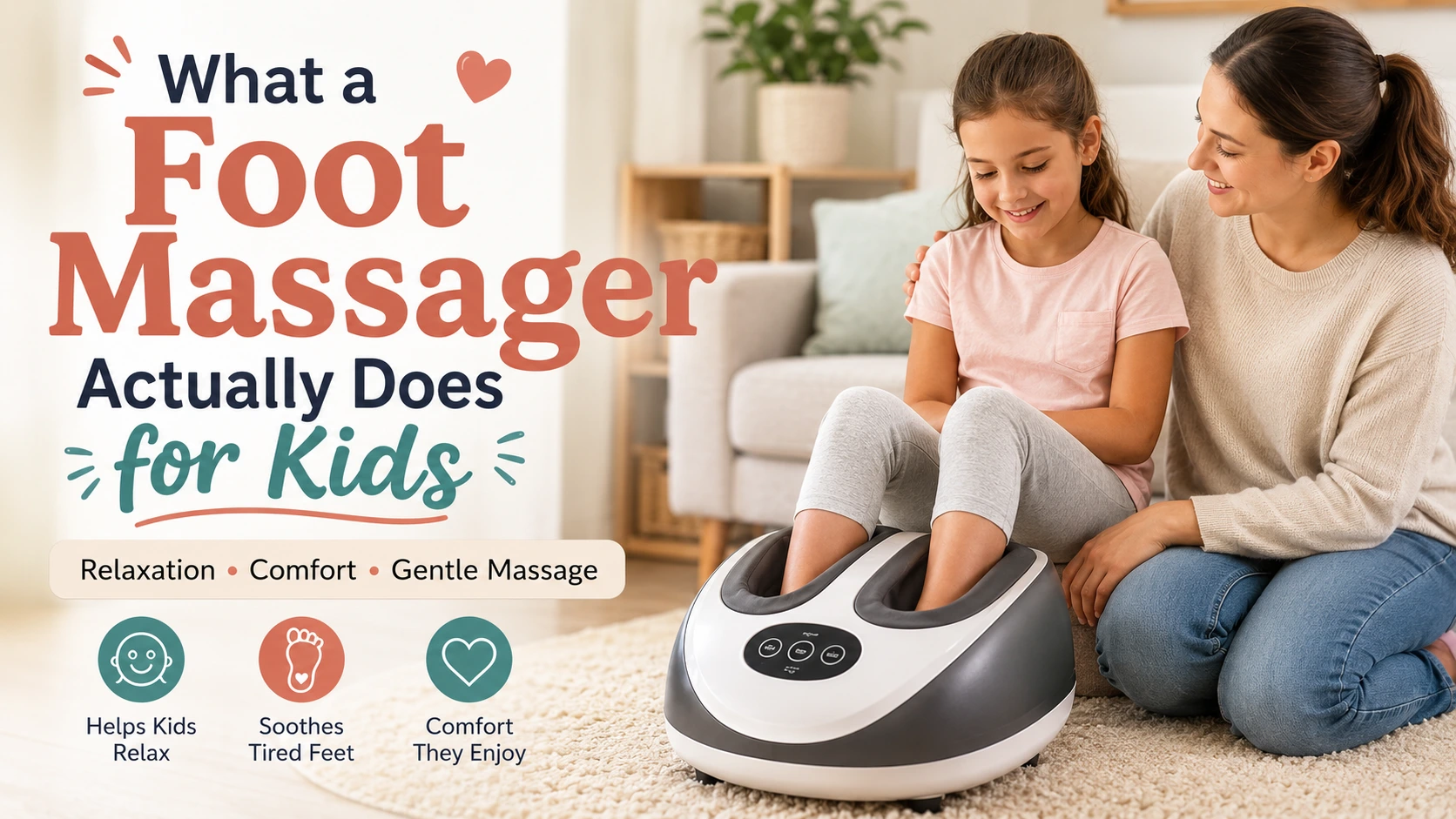
Foot massagers range from simple wooden or textured rollers to handheld vibrating devices and electric foot spas with heat and water jets. Most children encounter one of two ways: trying a parent’s device out of curiosity, or receiving a kid-sized version as a gift after a season of sports. Understanding these types matters when deciding can children use a foot massager built for adults, or whether a gentler, kid-specific approach is safer. Simple rollers apply light, adjustable pressure and are generally the easiest to control. Electric and vibrating models add intensity, heat, or motion that a child’s smaller foot may not need or tolerate well.
For most kids, the appeal is the same as it is for adults — sore feet after activity feel better with light pressure and warmth. The difference is that children’s bones, joints, and circulation are still developing, so settings and session length matter more than they do for a grown adult.
So, Can Children Use a Foot Massager Safely?
Age is the biggest factor in whether a foot massager is a good idea. Younger children have thinner skin and less ability to communicate discomfort clearly, while older kids and teens can usually handle the same gentle settings an adult would use.
Age-Based Guidance
Swipe left/right to see the full table →
| Age Group | General Guidance | What to Avoid |
|---|---|---|
| Under 3 | Not recommended; hand massage only | Any motorized or heated device |
| 3–5 years | Only soft manual rollers, brief sessions, full supervision | Vibration, heat, unsupervised use |
| 6–12 years | Manual rollers or low-intensity handheld devices, supervised | High-intensity or adult-strength settings |
| 13+ (teens) | Most standard devices on low-medium settings, brief check-ins | Prolonged high heat or max intensity |
Who Should Be Extra Cautious
Even in an age range where a foot massager is generally fine, certain situations call for extra caution or a quick chat with a pediatrician first.
Swipe left/right to see the full table →
| Situation | Why It Matters | What to Do Instead |
|---|---|---|
| Diabetes or circulation issue | Reduced sensation can hide injury or overheating | Ask a pediatrician before any device use |
| Recent foot injury or surgery | Pressure can worsen healing tissue | Wait for clearance from their doctor |
| Skin condition or open wound | Friction and heat may irritate skin | Skip the device until skin heals |
| Sensory sensitivities | Vibration or texture may feel overwhelming | Try a short test first, stop if distressed |
Use this general decision path before letting a child try a foot massager:
This is a general practical guide, not a medical protocol — when in doubt, ask a professional.
Choosing a Kid-Safe Foot Massager
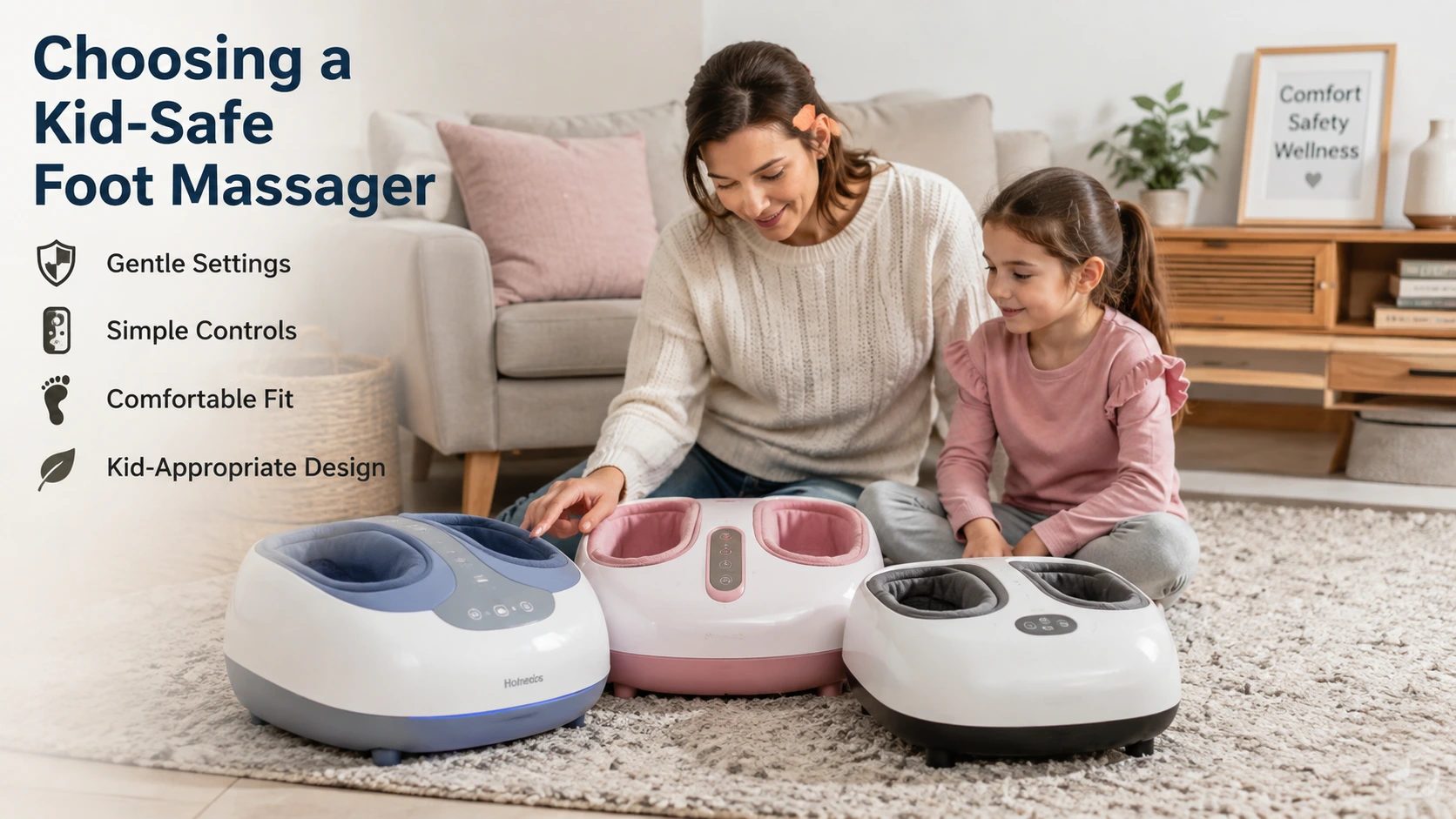
Not every foot massager on the market is built with a child’s foot in mind. A few features make the biggest difference in whether a device is appropriate for a younger user.
Swipe left/right to see the full table →
| Feature | Kid-Friendly Choice | Skip This |
|---|---|---|
| Power type | Manual roller or roll-on massager | High-power electric shiatsu units |
| Heat setting | No heat, or very low with a fixed cap | Adjustable high heat |
| Intensity control | Wide low range, easy to adjust | Single fixed high-intensity mode |
| Size and fit | Compact, easy for small hands or feet | Bulky adult-sized foot spas |
Note: A simple wooden or textured roller is usually the easiest starting point — it has no cord, no heat, and the child controls the pressure by how hard they press.
Common Mistakes Parents Make
Swipe left/right to see the full table →
| Common Mistake | Better Choice |
|---|---|
| Using adult intensity settings on a child | Start on the lowest setting and check comfort |
| Leaving a young child unsupervised with the device | Stay present for the whole session |
| Continuing despite a pain complaint | Stop immediately and check the foot |
| Using it on a visibly swollen or injured foot | Wait until a doctor clears the injury |
How Often and How Long
Swipe left/right to see the full table →
| Situation | Suggested Session Length |
|---|---|
| Occasional tired feet | 5–10 minutes, as needed |
| After sports or dance practice | 5–10 minutes, once per day max |
| Bedtime wind-down routine | 5 minutes, low pressure only |
| Daily habit | Fine occasionally; avoid making it a rigid daily rule |
Tip: Keep the first few sessions short and let your child tell you when it feels like enough — this builds trust and helps you learn their comfort level quickly.
Red-flag checklist — stop use and check in with a pediatrician if you notice:
Do
Supervise every session
Start with low pressure
Ask how it feels along the way
Don’t
Leave a young child alone with it
Use on a visibly injured foot
Ignore complaints of pain
Warning: Never use a heated or high-intensity foot massager on a child under sensory or communication challenges without first testing tolerance briefly, and never leave any electric device plugged in unattended near a child.
General risk level by scenario (practical guide, not a medical score):
Healthy child, age 6+, manual roller
Low
Healthy child, electric device, low setting
Medium
Child with a health condition, heated/high-intensity device
High
When to Contact a Professional
Check with a pediatrician before using any foot massager if your child has diabetes, a circulation condition, a nerve disorder, or a recent foot injury. Stop use and seek medical advice if you notice numbness, persistent pain, swelling, skin discoloration, or a wound that isn’t healing. For more general reading on children’s foot and body care, resources like HealthyChildren.org from the American Academy of Pediatrics and KidsHealth.org from Nemours are useful starting points, alongside MedlinePlus for general child health topics.
This article may contain affiliate links. If you buy through these links, we may earn a small commission at no extra cost to you. We only mention products that fit the topic and do not replace professional medical advice.
Simple Manual Foot Roller
A cordless, non-electric roller that lets a child control pressure by hand, with no heat or high-intensity settings to worry about — a low-risk way to start.
Frequently Asked Questions
At what age can children use a foot massager?
Most healthy children can start around age 6 with a gentle manual roller under supervision. Younger children generally aren’t a good fit for any type of foot massager.
Can children use a foot massager every day?
Occasional use is fine, but there’s no need for a rigid daily routine. Short, supervised sessions after activity or before bed are usually enough.
Are electric foot massagers safe for kids?
They can be for older, healthy children on the lowest setting with supervision, but manual rollers are generally the safer starting point for younger kids.
Can a foot massager help with growing pains?
Some families find gentle pressure comforting for tired legs and feet, but a foot massager doesn’t treat growing pains. Persistent or worsening leg pain should be checked by a pediatrician.
What foot massager settings are safest for children?
Low pressure, no or minimal heat, and short sessions of 5–10 minutes are the safest starting point for any child new to a foot massager.
Should I supervise my child while they use a foot massager?
Yes, adult supervision is recommended for every session, especially with electric or heated devices, so settings and reactions can be checked in real time.
When should I avoid using a foot massager on my child?
Avoid it if your child has a recent foot injury, a skin condition, diabetes, a circulation issue, or is showing pain, numbness, or swelling.
So, can children use a foot massager? For most healthy families, yes — with the right age, a gentle manual device, short sessions, and full supervision, a foot massager can be a comforting part of a wind-down routine. Watch for red flags like pain, numbness, or swelling, and pause use if anything seems off. When in doubt, especially with a known health condition, a quick check with your pediatrician is always the safest next step.
Author
-

I’m Alex Turner, a massage product reviewer and wellness writer at RemedyTip. I specialize in researching, evaluating, and comparing massage and recovery products to help readers make informed purchasing decisions. My focus is on practical, evidence-informed product guidance covering muscle recovery, relaxation, everyday comfort, and wellness.
I take a research-driven approach to every product I review. I examine product specifications, features, materials, performance claims, user feedback, durability, comfort, ease of use, and overall value. When appropriate, I also consult trusted industry and health-related sources to verify important information and provide readers with a more complete and balanced view.
I cover a wide range of products, including massage guns, handheld massagers, neck and shoulder massagers, foot massagers, massage chairs, foam rollers, and other recovery tools. Rather than focusing only on marketing claims, I look at how products compare in real-world use and who they are actually suitable for. I also consider different budgets, use cases, and user needs when making recommendations.
At RemedyTip, I’m committed to accuracy, transparency, and unbiased product information. I clearly distinguish between manufacturer claims, available evidence, and my own product analysis so readers can understand the basis of each recommendation. I continuously research new products, technologies, and developments in the massage and recovery space to keep my content current and useful.
My goal is simple: to provide trustworthy, easy-to-understand information that helps readers choose massage and recovery products with greater confidence.

