A neck massager may ease tinnitus for some people when tight neck, shoulder, or jaw muscles affect their symptoms. A neck massager cannot cure tinnitus, and research does not show that it works for everyone. Its main benefit may come from reducing muscle tension and stress.
The cause of tinnitus matters. This article explains when gentle massage might help, how to use a device safely, who should avoid it, and which proven treatment options can provide better support.
Key Takeaways
- Neck massage may reduce tension linked to some tinnitus symptoms.
- A neck massager cannot treat every cause of tinnitus.
- Safe use and medical guidance matter when symptoms persist.
Tinnitus Basics And Common Causes
Tinnitus describes sound that a person hears without an outside source. Its pattern, timing, and related symptoms can help show whether muscle tension may play a role or whether a medical evaluation is needed.
Types Of Tinnitus
Subjective tinnitus is the most common type. Only the affected person hears the ringing, buzzing, hissing, or clicking. Hearing loss, loud-noise exposure, earwax blockage, some medicines, infections, and age-related changes can cause it. Stress and poor sleep may make the sound more noticeable.
Objective tinnitus is rare. A clinician may also hear the sound, which can result from muscle movement or blood-flow changes near the ear.
Tinnitus can also be classified by its sound and timing:
- Pulsatile tinnitus: It follows the heartbeat and may relate to blood-flow problems.
- Nonpulsatile tinnitus: It sounds steady or irregular and often relates to hearing or nerve changes.
- Temporary tinnitus: It may occur after loud noise and then fade.
- Persistent tinnitus: It continues for weeks or longer and deserves medical assessment.
Neck or jaw tension can change tinnitus in some people, especially when movement or pressure changes the sound. A neck massager may ease muscle tightness, but it cannot treat hearing loss or other underlying causes.
When Tinnitus Needs Medical Evaluation
A healthcare professional should assess tinnitus that lasts more than a few days, affects sleep or concentration, or occurs with hearing loss. An ear, nose, and throat specialist or audiologist can check the ear canal, hearing, jaw, and related nerves.
Prompt medical care is important when tinnitus:
- Starts suddenly with hearing loss
- Affects only one ear persistently
- Pulses with the heartbeat
- Begins after a head or neck injury
- Occurs with severe dizziness, weakness, facial drooping, or trouble speaking
- Comes with ear pain, drainage, or signs of infection
A clinician should identify earwax, medication effects, infection, noise injury, and blood-flow concerns before someone uses strong pressure on the neck. A neck massager should not replace an evaluation, particularly when the sound is new, one-sided, or pulsatile.
How Neck Tension May Influence Ear Symptoms
Neck tension may change how some people perceive tinnitus, especially when symptoms vary with posture, movement, or muscle pressure. Jaw problems, reduced neck movement, and tight shoulder muscles can affect nearby nerves and the brain’s processing of sound.
Somatosensory Tinnitus
Somatosensory tinnitus occurs when signals from the neck, jaw, or upper spine influence the brain’s sound pathways. The noise may change when a person turns the head, moves the jaw, clenches the teeth, or presses on tense muscles. Some people also have neck pain, headaches, or limited movement.
This pattern does not prove that neck tension caused the tinnitus. It suggests that body signals may affect how the brain processes existing ear noise. A neck massager might reduce muscle tightness for a short time, but evidence does not show that it treats tinnitus itself.
The person should stop using the massager if it increases ringing, dizziness, pain, numbness, or headache. Gentle pressure is safer than deep pressure, especially around the front and sides of the neck.
Muscle And Joint Connections
Tight muscles in the upper back, shoulders, and neck can strain nearby joints and tissues. The upper neck shares nerve connections with parts of the head and face, while the jaw joint sits close to the ear. Teeth grinding, poor posture, or prolonged screen use may increase this strain.
A person may notice louder tinnitus after holding the head forward or tightening the jaw. Gentle massage, heat, posture changes, and controlled neck movement may ease related discomfort. A massager should not press directly over the spine or carotid arteries.
Persistent or one-sided tinnitus needs medical assessment, particularly when it follows sudden hearing loss, severe dizziness, weakness, or a pulsing sound that matches the heartbeat.
What Neck Massage Devices Can And Cannot Do
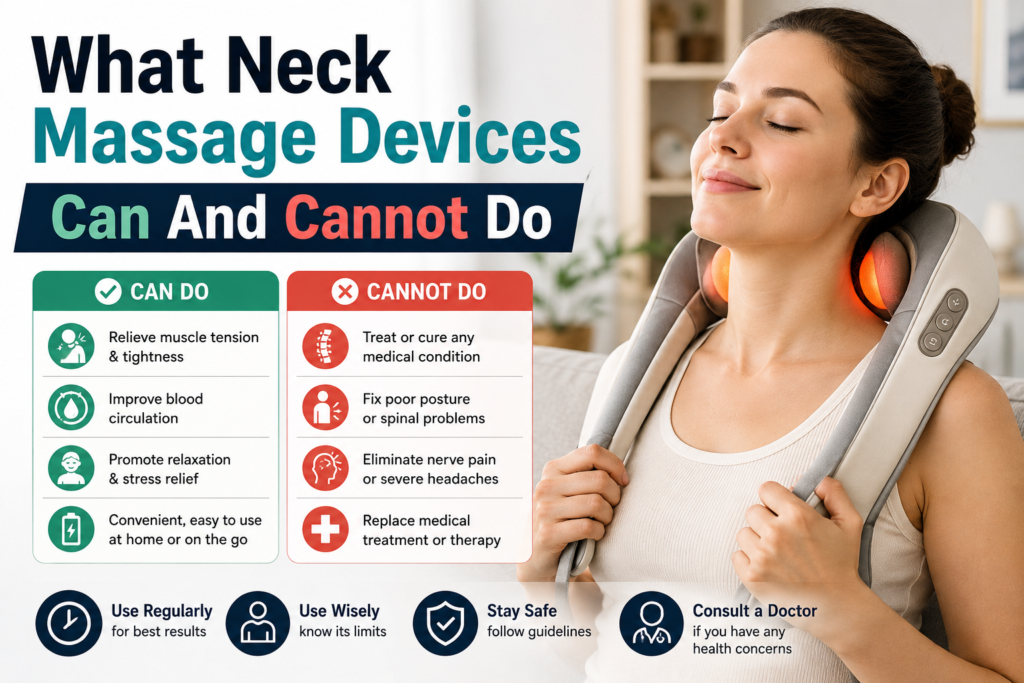
Neck massagers may ease muscle tension and stress, which can make tinnitus feel less intrusive for some people. They do not remove the underlying causes of tinnitus or provide a reliable cure.
Potential Relaxation Benefits
A neck massager may relax tight muscles in the neck, shoulders, and upper back. Reduced tension can help people who notice louder tinnitus during stress, poor posture, or long periods at a desk. Gentle massage may also support relaxation and make it easier to sleep, even if the ringing remains.
Some people have tinnitus linked to jaw clenching or muscle tension around the head and neck. In these cases, massage from a trained professional may help more than a device because the therapist can target specific muscles and adjust pressure.
A person should use a device on low intensity and avoid pressing the front or sides of the neck. Heat may feel soothing, but it should remain warm rather than hot.
Limits Of Symptom Relief
Massage does not treat hearing loss, inner-ear damage, medication effects, circulation disorders, or other medical causes of tinnitus. Evidence for neck massage remains limited, and any improvement often affects comfort rather than the source of the sound.
A device may also worsen symptoms if it causes pain, muscle irritation, dizziness, or increased ringing. It should not be used over the throat, directly on the spine, or near swollen or injured areas.
| Situation | Safer approach |
|---|---|
| Mild muscle tension | Use gentle pressure for a short period |
| New or worsening tinnitus | Arrange a medical hearing evaluation |
| Pulsing tinnitus | Seek prompt medical advice |
| Tinnitus with sudden hearing loss, weakness, or severe dizziness | Seek urgent medical care |
People with neck problems, blood vessel disorders, nerve conditions, or recent surgery should ask a clinician before using an electric massager.
Evidence For Massage And Tinnitus Management
Research suggests that neck massage may help some people, especially when tinnitus relates to neck tension, jaw problems, or stress. It does not treat every cause of tinnitus, and evidence for using a neck massager alone remains limited.
Current Research Findings
A controlled study of 118 adults with chronic subjective tinnitus examined a 2-week program with 10 sessions. The treatment combined neck exercises, massage of the muscles between the neck vertebrae, and muscle-relaxation exercises. The study reported better tinnitus outcomes in the treatment group than in a waiting-list control group. However, it was not a randomized trial, so other factors may have affected the results.
Massage may also reduce muscle tightness, stress, and jaw tension. These factors can increase how noticeable tinnitus feels, even when they do not cause it. A neck massager may provide temporary comfort, but research has not shown that it reliably removes tinnitus.
| Use | What the evidence suggests |
|---|---|
| Neck massage | May help when muscle tension affects symptoms |
| Neck massager alone | Limited direct research |
| Massage as a cure | Not supported by current evidence |
Why Individual Responses Differ
Tinnitus has many possible causes, including hearing loss, ear conditions, medication effects, jaw disorders, and neck problems. Massage is more likely to help when the sound changes as a person turns the head, moves the neck, or clenches the jaw. This pattern may suggest a musculoskeletal influence.
Stress and poor sleep can also make tinnitus seem louder. Massage may ease these factors without changing the underlying ear or nerve condition. Some people notice short-term relief, while others notice no change or increased discomfort.
A person should use gentle pressure and stop if the massager causes pain, dizziness, numbness, headache, or worsening tinnitus. New, sudden, one-sided, or pulsating tinnitus requires medical assessment rather than self-treatment.
Safe Use Of A Neck Massager
A neck massager may ease muscle tension or stress-related discomfort, but it has not been proven to treat tinnitus itself. Safe use depends on low pressure, short sessions, and avoiding sensitive areas and medical warning signs.
Recommended Settings And Duration
The user should start with the lowest speed and pressure. A gentle vibration or light massage setting is safer than deep kneading, heat, or strong electrical stimulation. The device should feel comfortable and should never cause pain, dizziness, nausea, headache, numbness, or worsening ringing.
A first session should last 5–10 minutes. If no symptoms develop, the user may gradually increase sessions to about 15 minutes, following the device instructions. The user should stop if tinnitus becomes louder and should not use the device repeatedly to chase short-term relief.
The user should keep the massager moving instead of holding it on one spot. A licensed massage therapist or health professional can help identify whether neck or jaw tension affects the person’s tinnitus. Persistent or bothersome tinnitus still requires an evaluation by a hearing or medical professional.
Areas To Avoid
The user should avoid the front and sides of the neck, especially over the throat, windpipe, and large blood vessels. The device should not press directly on the spine, the bony parts of the neck, or the area just below the skull. Strong pressure near the head may trigger pain, dizziness, or other symptoms.
The user should avoid using a neck massager over swollen, bruised, infected, or injured skin. They should not use it after a recent neck injury or surgery unless a clinician approves it. People with neck instability, severe arthritis, nerve symptoms, or blood-vessel disease should seek medical advice first.
A person should stop immediately and seek prompt care for sudden hearing loss, severe dizziness, facial weakness, new numbness, trouble speaking, or a sudden severe headache.
Who Should Avoid Neck Massage Devices
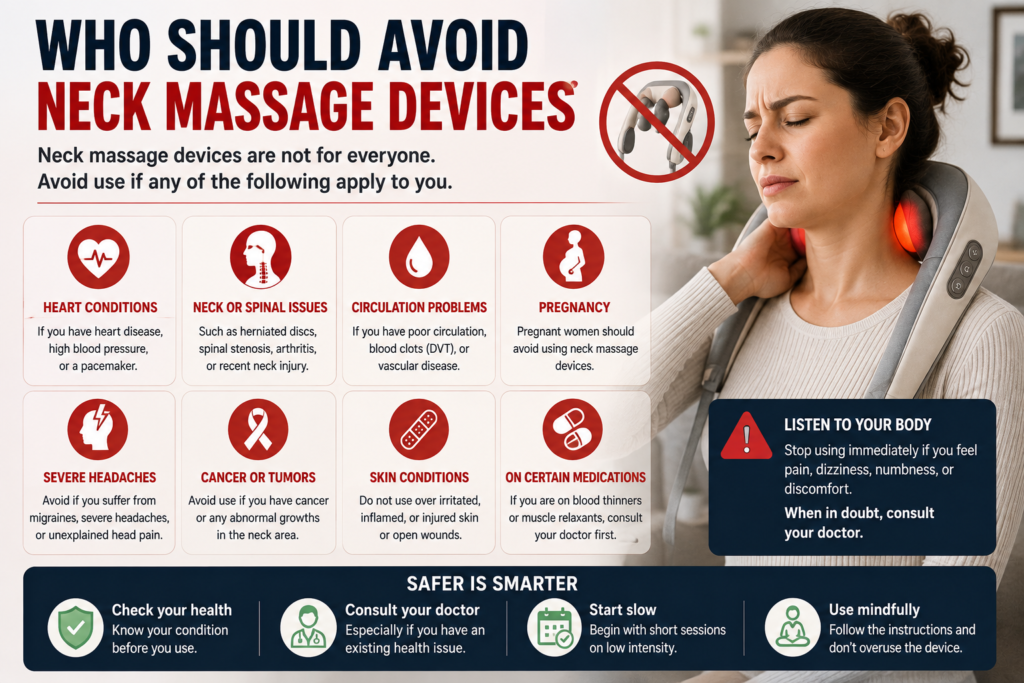
People with certain health conditions should avoid neck massage devices unless a qualified clinician approves their use. Even healthy users should stop if the device causes new pain, dizziness, numbness, or other unusual symptoms.
Medical Conditions Requiring Caution
People with a recent neck injury, fracture, severe arthritis, spinal instability, or suspected nerve compression should not use a neck massager without medical advice. Pressure or vibration may worsen inflammation or nerve symptoms. The same caution applies to people recovering from neck surgery or living with chronic neck pain that has no clear cause.
Anyone with a blood-clotting disorder, who takes blood thinners, or who has an implanted medical device should ask a healthcare professional before use. People with osteoporosis, cancer affecting the bones, or an active infection should also avoid neck massage unless cleared by a clinician.
A device should never press on the front of the neck or throat. People with unexplained tinnitus, hearing loss, severe headaches, or balance problems should seek medical evaluation rather than use massage as treatment. Massage may ease muscle tension or jaw tightness, but it does not treat tinnitus itself. More information about tinnitus is available from the National Institute on Deafness and Other Communication Disorders.
Signs To Stop Immediately
The user should turn off the device at once if it causes sharp or worsening pain, a new headache, dizziness, faintness, nausea, or trouble with balance. New numbness, tingling, weakness, or pain spreading into an arm also requires prompt medical attention.
The user should stop if tinnitus becomes suddenly louder, changes sharply, or occurs with sudden hearing loss, ear pressure, or severe vertigo. Sudden hearing loss requires urgent assessment, so massage should not delay medical care.
Mild soreness can occur after pressure on tight muscles, but severe pain or symptoms that continue after stopping are not normal. The user should avoid restarting the device until a healthcare professional identifies the cause.
Proven Options For Managing Tinnitus
Tinnitus care often focuses on hearing support, sound therapy, stress control, and better sleep. The right option depends on its cause, severity, hearing status, and whether jaw or neck movement changes the sound.
Hearing And Sound-Based Approaches
A hearing test can identify hearing loss, earwax buildup, or other conditions that may contribute to tinnitus. Hearing aids may reduce the contrast between tinnitus and quiet surroundings when hearing loss exists. An audiologist can also adjust settings and discuss tinnitus programs built into some devices.
Sound therapy may make tinnitus less noticeable. People can try soft background sounds, such as a fan, rain audio, gentle music, or a sound generator. The volume should stay comfortable and should not completely block outside sounds. The National Institute on Deafness and Other Communication Disorders provides information about evaluation and treatment options.
Cognitive behavioral therapy (CBT) can help reduce the distress and sleep problems linked to tinnitus. It does not remove the sound, but it can change how the brain responds to it. A neck massager may help if muscle tension worsens symptoms, but it does not treat inner-ear damage or cure tinnitus.
Stress And Sleep Support
Stress can make tinnitus feel louder or harder to ignore. Regular sleep, physical activity, and relaxation methods may reduce this effect. A person can use slow breathing, progressive muscle relaxation, or guided mindfulness for several minutes each day.
Sleep support should focus on consistent habits. Going to bed and waking at the same time, limiting late caffeine, and keeping the bedroom dark and quiet can help. Low-level background sound may prevent complete silence from drawing attention to tinnitus.
A clinician should review ongoing anxiety, depression, or severe insomnia. CBT for insomnia or tinnitus-related distress may provide more reliable help than unproven supplements. Sudden hearing loss, one-sided tinnitus, pulsating sounds, dizziness, or new weakness requires prompt medical assessment.
FAQs
Can a neck massager cure tinnitus?
No. A neck massager cannot cure tinnitus or repair problems in the ear. It may reduce symptoms when neck, jaw, or shoulder tension makes the ringing more noticeable.
Who might benefit from it?
People with somatic tinnitus may notice changes in the sound when they move their neck or jaw. Gentle massage may ease muscle tightness and lower stress, which can make tinnitus feel less intrusive.
How should it be used safely?
The device should stay on a low setting and target the muscles beside the neck, not the throat or the front of the neck. Short sessions are safer than strong or prolonged pressure. The user should stop if the massager causes pain, dizziness, numbness, headache, or worsening tinnitus.
Can it make tinnitus worse?
Yes. Strong vibration or pressure may increase discomfort in some people. A neck massager may also be unsafe for people with certain neck problems, recent injuries, blood-clotting conditions, or implanted medical devices unless a clinician approves its use.
When should someone seek medical care?
A clinician should assess tinnitus that starts suddenly, affects one ear, follows a head injury, or occurs with hearing loss, severe dizziness, weakness, or a pulsing sound. Persistent tinnitus also warrants a hearing evaluation, especially if self-care does not help.
Conclusion
A neck massager may ease tinnitus symptoms when muscle tension, stress, or jaw and neck problems contribute to the ringing. It does not treat the underlying cause of tinnitus, and results vary between individuals.
People should use the device gently on the neck and shoulders. They should stop if it causes pain, dizziness, increased ringing, numbness, or other new symptoms. A neck massager should not press on the front or sides of the neck.
A hearing evaluation can help identify hearing loss, ear conditions, or other causes. Medical advice is especially important when tinnitus begins suddenly, affects one ear, follows a head injury, or occurs with hearing loss, severe dizziness, or weakness.