
Carpal tunnel syndrome develops when pressure affects the median nerve in the wrist, causing numbness, tingling, pain, or weakness in the hand. A massage gun may seem like an easy way to ease these symptoms, but its benefits have limits.
A massage gun may briefly relax tight forearm muscles, but it cannot remove pressure from a compressed median nerve. Safe use means applying light pressure to nearby muscles—not the wrist, palm, or areas with numbness. Severe, lasting, or worsening symptoms need medical evaluation.
Key Takeaways
- Massage guns may offer short-term relief from muscle tightness.
- Direct pressure on the wrist or affected nerve can cause harm.
- Persistent weakness, numbness, or pain requires professional care.
Carpal Tunnel Syndrome Basics
Carpal tunnel syndrome develops when pressure builds around the median nerve as it passes through a narrow space in the wrist. Symptoms often begin gradually, and activities that repeatedly bend the wrist or grip objects can make them worse.
Common Symptoms And Causes
The median nerve supplies feeling to the thumb, index finger, middle finger, and part of the ring finger. Carpal tunnel syndrome may cause:
- Numbness or tingling in those fingers
- Burning, aching, or electric-like pain
- Symptoms that worsen at night
- Weak grip or trouble holding small objects
- Dropping items because of reduced hand control
Some people feel discomfort in the wrist or palm that travels into the forearm. The little finger usually remains unaffected because a different nerve supplies it.
| Common contributors | How they may increase risk |
|---|---|
| Repeated wrist bending or gripping | Increases irritation and pressure in the tunnel |
| Wrist injury or swelling | Reduces available space around the nerve |
| Health conditions such as diabetes or thyroid disease | May make nerves more vulnerable to compression |
Why Nerve Compression Matters
The carpal tunnel contains the median nerve and several finger-flexor tendons. Because the tunnel has limited room, swelling around the tendons can press against the nerve. Continued pressure can interfere with nerve signals, causing tingling, reduced sensation, pain, and weakness.
Early symptoms may come and go, but persistent compression can affect hand strength and coordination. In more advanced cases, the muscles at the base of the thumb may shrink. A clinician can assess symptoms and may use nerve tests or imaging when the diagnosis remains uncertain.
A massage gun should not be placed directly over the wrist crease, palm-side carpal tunnel, or any area with numbness or sharp nerve pain. Vibration cannot remove the underlying compression, and excessive pressure may worsen irritation. Any treatment should avoid increasing symptoms, especially weakness, numbness, or tingling.
What Percussive Therapy Can And Cannot Do
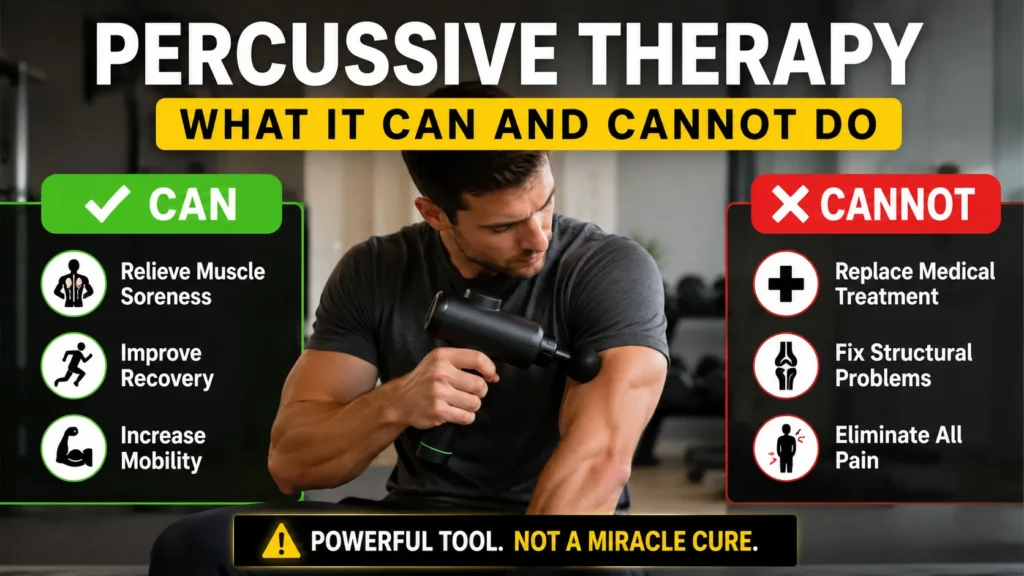
A massage gun may reduce tightness in the forearm muscles that support the wrist and fingers. It cannot remove pressure from the median nerve or repair nerve damage inside the carpal tunnel.
Potential Benefits For Surrounding Muscles
Percussive therapy may relax tight forearm muscles, especially the muscles on the palm side of the forearm. These muscles connect to tendons that pass through the carpal tunnel. Reducing muscle tension may ease pulling around the wrist and improve comfort during movement.
A massage gun may also provide short-term relief from muscle soreness or stiffness. People should use the lowest comfortable setting and a soft attachment on the fleshy parts of the forearm, not on the wrist itself.
| Possible effect | What it may help |
|---|---|
| Muscle relaxation | Tight forearm muscles |
| Temporary pain relief | Muscle-related soreness |
| Easier movement | Stiffness in the wrist or forearm |
These effects do not prove that the median nerve has more space. A massage gun works on soft tissue and cannot diagnose the cause of hand pain, numbness, or weakness.
Limits Of Massage Guns For Nerve Compression
Carpal tunnel syndrome occurs when pressure affects the median nerve at the wrist. A massage gun cannot directly release that pressure, widen the carpal tunnel, or heal an injured nerve.
Direct use over the palm side of the wrist may increase pain or irritation. It can also worsen symptoms when the area has numbness or reduced sensation because the person may not notice excessive force. The device should not be used over the carpal tunnel, the inner wrist, swollen tissue, open skin, or areas with altered feeling.
Persistent numbness, tingling, weakness, dropping objects, or symptoms that disturb sleep require medical assessment. A clinician can check for carpal tunnel syndrome and suggest options such as activity changes, a wrist splint, exercises, injections, or surgery when needed.
Safe Use Around the Wrist And Forearm
A massage gun may loosen tight forearm muscles, but it cannot remove pressure from the median nerve. Safe use means avoiding sensitive structures, choosing low force, and stopping when symptoms worsen.
Areas To Avoid
A user should never apply the massage gun directly over the carpal tunnel, the palm-side wrist crease, or the base of the palm. These areas contain the median nerve and other sensitive tissues. Direct percussion may increase tingling, numbness, pain, or irritation.
The device should also stay away from:
- The inner wrist and any spot that causes an electric or burning feeling
- Areas with reduced sensation
- Open wounds, bruises, swelling, or recent injuries
- Bony areas, joints, and the front of the elbow
- A visibly inflamed or painful tendon
The user can work around the muscle belly of the forearm, especially several inches below the elbow. The massage gun should not travel over the wrist or hand. A licensed clinician can identify safe areas when symptoms include constant numbness, weakness, or muscle wasting.
Gentle Technique And Duration
The user should select the lowest speed and the softest attachment. The device should move slowly over the fleshy parts of the forearm without pressing down. It should remain in motion rather than staying on one tender point.
A short session of 30 to 60 seconds per muscle area is usually enough for an initial trial. The user should limit treatment to a few minutes total and assess symptoms during and after use. Massage should stop immediately if it causes sharper pain, increased tingling, numbness, weakness, or symptoms that last after the session.
| Use | Safer approach |
|---|---|
| Pressure | Light; the device should not forcefully compress the tissue |
| Location | Forearm muscles, away from the wrist and elbow |
| Speed | Lowest comfortable setting |
| Frequency | Stop if symptoms worsen; seek clinical advice for persistent symptoms |
When To Choose Other Treatments
A massage gun may offer short-term relief from forearm muscle tightness, but it cannot remove pressure from the median nerve. Wrist support, activity changes, and medical care often provide safer and more effective options.
Wrist Splints And Activity Changes
A neutral-position wrist splint can limit bending during sleep, when symptoms often worsen. It should feel supportive, not tight. A clinician or pharmacist can help select the correct size and fit.
People should also reduce activities that repeatedly bend the wrist or require strong gripping. Helpful changes include:
- Keeping the wrist straight while typing or using a mouse
- Taking short breaks during repetitive tasks
- Using lighter grip pressure
- Adjusting tools so the wrist stays neutral
- Avoiding prolonged pressure on the palm
A massage gun should not replace these steps. It should not be used directly over the wrist crease, palm, or areas with numbness, tingling, swelling, or reduced feeling. Gentle massage of nearby forearm muscles may feel comfortable, but increased pain or tingling means the person should stop.
Medical Evaluation And Evidence-Based Care
A medical evaluation becomes important when numbness persists, symptoms interfere with sleep or work, or hand weakness develops. A clinician can check for carpal tunnel syndrome and other causes, such as a pinched nerve in the neck, tendon problems, or diabetes-related nerve damage.
Treatment may include a properly fitted splint, hand therapy, nerve-gliding exercises, or medication when appropriate. A clinician may recommend a corticosteroid injection for temporary relief or surgery when nerve compression is severe or does not improve with other care.
Prompt evaluation is needed for worsening weakness, frequent dropping of objects, lasting loss of sensation, or visible muscle shrinking at the base of the thumb. These signs may indicate significant nerve damage, which a massage gun cannot treat.
Warning Signs That Need Prompt Care
Carpal tunnel symptoms can signal increasing pressure on the median nerve. Persistent numbness, weakness, or symptoms that interfere with sleep and work require medical assessment rather than stronger massage.
Persistent Numbness Or Weakness
Numbness that remains after changing position or stopping an activity may indicate ongoing nerve compression. Symptoms often affect the thumb, index finger, middle finger, and part of the ring finger. The little finger usually remains unaffected.
Weakness deserves prompt attention, especially when someone drops objects, struggles to button clothing, or cannot grip normally. Muscle loss near the base of the thumb can develop when compression continues. A clinician can assess nerve function and check for other causes, such as a neck problem, pinched nerve, or diabetes-related neuropathy.
A massage gun should not be used over a numb area or directly on the wrist. Reduced sensation can make it harder to notice excessive pressure, pain, or skin injury. Medical sources such as the carpal tunnel syndrome overview describe common symptoms and related nerve effects.
Symptoms That Worsen At Night Or With Work
Nighttime tingling or pain that repeatedly wakes someone can suggest significant nerve irritation. Symptoms that worsen during typing, tool use, driving, or other tasks may also show that wrist position and repeated pressure are aggravating the condition.
A person should arrange an evaluation when symptoms continue for several days, return often, or limit normal activities. Prompt care becomes more important if rest, wrist positioning, or a neutral night splint does not help.
Massage may briefly ease forearm tension, but it does not remove pressure inside the carpal tunnel. A massage gun should never replace medical care when symptoms progress, spread, or include weakness.
FAQS
Can a massage gun treat carpal tunnel syndrome?
No. A massage gun cannot remove pressure from the median nerve or repair nerve damage. It may ease nearby muscle tightness and provide short-term symptom relief for some people.
Where can it be used safely?
It may be used gently on the forearm muscles, away from the wrist and palm. The user should start with the lowest setting and brief sessions.
Where should it not be used?
The device should not be applied directly to the carpal tunnel, wrist, palm, or any area with numbness or reduced feeling. Direct pressure may worsen irritation or hide signs of injury.
Can it worsen symptoms?
Yes. Pain, tingling, numbness, weakness, or increased sensitivity after use means the person should stop. They should not continue using it to push through symptoms.
When should someone see a health professional?
Persistent or worsening symptoms, weak grip, frequent nighttime numbness, or dropping objects require medical assessment. A clinician can check for carpal tunnel syndrome and other causes, such as a nerve problem in the neck or elbow.
Are other treatments available?
A wrist splint worn at night, activity changes, hand exercises, and professional treatment may help. The right option depends on symptom severity and the cause.
Conclusion
A massage gun may ease tight forearm muscles linked to carpal tunnel symptoms. It cannot remove pressure from the median nerve or repair nerve damage, so any relief may be temporary.
People should use the device only on the forearm muscles, with low pressure and a gentle setting. They should avoid the wrist crease, palm, carpal tunnel, bones, and areas with numbness or reduced feeling. Direct use over the nerve may worsen symptoms or cause injury.
A massage gun should support—not replace—medical care. Persistent numbness, hand weakness, worsening pain, or frequent symptoms require an evaluation by a qualified health professional. A clinician can recommend safer treatments, such as activity changes, wrist splinting, exercises, or other care.

