
A pinched nerve or herniated disc can cause sharp pain, tingling, numbness, or weakness. A massage gun may relax tight muscles around the problem area, but it cannot remove pressure from a nerve or repair a damaged disc.
A massage gun may offer short-term muscle relief, but it should not touch the spine or painful nerve area and cannot treat the underlying condition. Michael Hayes of RemedyTip.com emphasizes that careful use matters, since strong vibration can worsen pain or irritate sensitive tissue. The full guide explains safer techniques, situations to avoid, and signs that require medical care.
Key Takeaways
- Massage guns may ease nearby muscle tightness.
- Avoid the spine, nerves, bones, and inflamed areas.
- Seek medical care for weakness, numbness, or worsening pain.
Understanding Nerve Compression And Disc Problems
Nerve compression can come from tight muscles, swollen tissues, bone changes, or a damaged spinal disc. The cause affects the symptoms, treatment, and safety of using a massage gun.
Common Causes And Symptoms
A pinched nerve develops when nearby tissue presses on or irritates a nerve. Common causes include muscle tightness, arthritis, bone spurs, spinal narrowing, and a herniated disc. A herniated disc occurs when the soft inner material pushes through a tear in the disc’s outer layer. This can press on a nerve root near the spine.
Symptoms depend on the affected nerve. They may include sharp or burning pain, tingling, numbness, or weakness. Pain can travel from the neck into the arm or from the lower back into the buttock and leg. Symptoms may worsen with movement, coughing, or sneezing.
| Possible source | Common symptoms |
|---|---|
| Muscle-related pressure | Local tightness, aching, or pain with movement |
| Herniated disc | Radiating pain, tingling, numbness, or weakness |
| Spinal narrowing | Leg pain, numbness, or weakness during standing or walking |
Why Accurate Diagnosis Matters
A massage gun may loosen a tight muscle near a compressed nerve, but it does not remove pressure from a disc, bone, or narrowed spinal canal. Direct treatment over the spine, neck, or painful nerve may increase irritation, especially when a herniated disc or spinal stenosis causes the symptoms.
A healthcare professional can identify the likely source through a physical exam and, when needed, imaging or other tests. This evaluation helps determine whether gentle muscle work is reasonable or whether rest, physical therapy, medicine, or another treatment fits better.
Severe or worsening weakness, loss of bladder or bowel control, numbness around the groin, or difficulty walking requires prompt medical care. These signs may indicate serious nerve compression.
How Percussive Therapy Affects Pain And Muscles
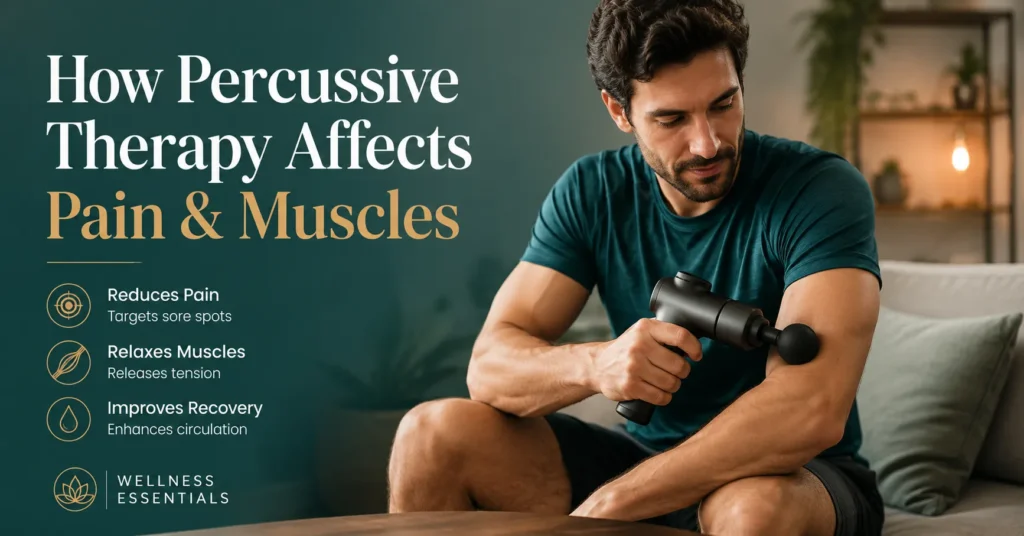
Percussive therapy mainly affects muscles and nearby soft tissue, not the trapped nerve or damaged disc itself. It may reduce muscle tightness for a short time, but it cannot remove pressure caused by a herniated disc or correct nerve damage.
Potential Benefits For Surrounding Muscle Tension
A massage gun delivers rapid, shallow taps that can temporarily change how tight muscles feel. When muscles around the neck, back, or hip tighten to protect a painful area, gentle treatment may reduce muscle guarding and make movement easier.
The device may also increase local blood flow and provide short-term pain relief through sensory stimulation. These effects can help with muscle soreness or stiffness near the affected area, but they do not treat the source of nerve compression.
| Possible effect | What it may help |
|---|---|
| Reduced muscle tension | Tight muscles near the painful area |
| Temporary pain relief | Muscle-related discomfort |
| Improved movement | Stiffness caused by muscle guarding |
Treatment should use the lowest comfortable setting and target muscles beside the spine, such as the gluteal muscles or upper back. A person should stop if the device causes sharp pain, tingling, numbness, weakness, or pain that travels farther down an arm or leg.
Limits Of Deep-Tissue Vibration
A massage gun cannot push a herniated disc back into place or widen a narrowed space around a nerve. It also cannot repair a torn disc, reverse nerve injury, or treat serious causes of sciatica, neck pain, or back pain.
Direct pressure over the spine, neck, or painful nerve can worsen symptoms. Strong vibration may irritate sensitive tissue and make numbness, tingling, or radiating pain more noticeable. It should not be used over areas with reduced sensation because the person may not feel tissue damage.
People with new or worsening weakness, loss of bladder or bowel control, or numbness around the groin need urgent medical care. A clinician should assess persistent nerve symptoms before someone uses percussive therapy.
When Use May Be Appropriate
A massage gun may help when muscle tightness develops around a painful nerve or disc problem. It should support comfort and movement, not treat the compressed nerve or repair a herniated disc.
Muscle Guarding And Stiffness
Pain can cause nearby muscles to tighten and limit movement. A massage gun may briefly reduce this muscle guarding, especially in large muscle groups such as the buttocks, hips, thighs, or upper back.
It should be used on soft muscle tissue only, with the lowest speed and light pressure. The person should keep the device away from the spine, neck, joints, bones, and the exact area where pain, tingling, or numbness begins.
| Use may be reasonable | Avoid use |
|---|---|
| Tight buttock or hip muscles | Directly over the spine |
| Mild muscle stiffness | On numb or weak areas |
| Short sessions at low speed | Over a suspected disc injury |
| Comfort after gentle movement | When symptoms worsen |
The person should stop if the device increases shooting pain, tingling, numbness, weakness, or pain that travels farther down an arm or leg. Any short-term relief should not replace medical evaluation when symptoms persist.
Recovery After Professional Guidance
A clinician or physical therapist may approve limited use after identifying the cause of the symptoms. They can show which muscles are safe to target and explain how massage fits with exercises, posture changes, or other treatment.
The person should follow the recommended location, speed, pressure, and session length. A brief trial, such as 30 to 60 seconds on one muscle, can help reveal whether the device improves movement without increasing symptoms later.
Massage gun use may be inappropriate with significant weakness, loss of feeling, recent injury, infection, blood-clot risk, or severe pain. New bowel or bladder problems, numbness around the groin, or rapidly worsening leg weakness require urgent medical care rather than self-treatment.
When To Avoid A Massage Gun
A massage gun can increase pain when nerve tissue is irritated or when force reaches the spine. People with new neurological changes, severe pain, or suspected disc injury should seek medical advice before using one.
Acute Neurological Symptoms
A person should avoid a massage gun and seek prompt medical care if a pinched nerve causes new or worsening weakness, loss of coordination, or trouble walking. Numbness that spreads quickly, severe shooting pain, or loss of feeling in the arm or leg also needs medical assessment.
Emergency care is needed for numbness around the groin or inner thighs, loss of bladder or bowel control, or sudden weakness in both legs. These signs can point to serious nerve compression and should not be treated with massage.
A person should also stop using the device if symptoms become sharper, spread farther down a limb, or continue after treatment. A massage gun may relax nearby muscles, but it cannot relieve pressure from a herniated disc or repair damaged nerve tissue.
Direct Use Over The Spine Or Painful Areas
A massage gun should never be used directly over the spine, neck bones, or a suspected herniated disc. It should also stay away from the front and sides of the neck, where important blood vessels and nerves are located.
Direct treatment over a painful area can increase irritation, especially when the pain feels electric, burning, or travels into an arm or leg. The device should not be used over areas with swelling, bruising, open wounds, infection, or reduced sensation.
If a clinician approves limited use, the person should apply the lowest setting to nearby muscles, not the painful nerve path. The device should keep moving, use light pressure, and stop immediately if pain, tingling, numbness, or weakness increases.
Safe Use Guidelines
A massage gun may relax tight muscles near a painful nerve or disc, but it cannot remove nerve pressure or repair disc damage. Safe use means choosing gentle settings, avoiding sensitive structures, and stopping when symptoms worsen.
Choosing Settings And Attachments
The user should start with the lowest speed and lightest pressure. A soft, rounded attachment usually works best for large muscles, such as the glutes, thighs, and upper back. A flat head may suit broad muscle areas, but it should not press directly over the spine.
The massage gun should stay on the muscles beside the painful area, not on the spine, neck, joints, bones, or the exact spot where pain, tingling, or numbness occurs. Users should avoid heated, swollen, bruised, infected, or recently injured tissue. They should also avoid using a pointed attachment near the spine or any area with reduced sensation.
A massage gun should never replace medical care for a suspected herniated disc or pinched nerve. A clinician can assess the cause and recommend treatment. The user should stop immediately if the device causes sharp pain, increased numbness, weakness, burning, or pain that travels farther down an arm or leg.
Duration, Frequency, And Body Positioning
Each session should begin with 30 to 60 seconds per muscle group, using slow movements rather than holding the device in one place. If symptoms do not increase, the user may extend treatment to about two minutes per muscle group. Daily use may be reasonable for mild muscle tightness, but persistent nerve symptoms require medical advice instead of repeated self-treatment.
The user should keep the body relaxed and supported. Sitting with the back supported or lying on the side can reduce strain while treating nearby muscles. The device should remain lightly in contact with the muscle and should not force the body into a stretch or painful position.
Massage should stop if symptoms spread, become stronger, or last after the session. New muscle weakness, loss of bladder or bowel control, numbness around the groin, or severe pain requires urgent medical assessment.
Alternative Treatments And Self-Care
Gentle movement, guided exercise, and careful symptom control may reduce pressure around an irritated nerve. Medication and heat or cold therapy can ease pain, but they do not repair a herniated disc or correct severe nerve compression.
Physical Therapy And Targeted Exercise
A physical therapist can identify movements that reduce symptoms and strengthen the muscles supporting the spine. Treatment may include posture training, nerve-gliding exercises, core work, and gentle stretches for the hips, back, neck, or shoulders. The right exercises depend on the affected nerve and the cause of compression.
He or she should stop any exercise that increases numbness, tingling, weakness, or pain that travels farther down an arm or leg. A therapist may also teach safe lifting, sitting, and sleeping positions. These changes can reduce repeated strain while the area heals.
Light activity usually works better than prolonged bed rest. Short walks and frequent position changes may prevent stiffness. A massage gun should not replace physical therapy, and it should not be used directly over the spine, a painful disc area, or a region with reduced sensation.
Medication And Heat Or Cold Therapy
Over-the-counter medicines may provide short-term relief. Ibuprofen or naproxen can reduce inflammation, while acetaminophen may help with pain but does not reduce inflammation. These medicines can cause harm in people with kidney disease, stomach ulcers, blood-thinning treatment, liver disease, or certain heart conditions. A pharmacist or clinician can help determine which option is safe.
Cold packs may help during the first day or two after a flare, especially when pain feels sharp or the area feels swollen. A wrapped pack should stay on for about 15–20 minutes. Heat may help later when muscle tightness is the main problem; a warm pack should not be hot enough to burn the skin.
Neither treatment removes pressure from a herniated disc. Medical care is needed urgently for new bladder or bowel problems, numbness around the groin, or worsening leg or arm weakness.
Warning Signs That Need Medical Care
A massage gun cannot treat nerve compression from a herniated disc, spinal narrowing, or another structural problem. New or worsening nerve symptoms require medical assessment, especially when weakness, numbness, or changes in bowel or bladder control appear.
Progressive Weakness Or Numbness
Increasing weakness may show that nerve compression is worsening. Warning signs include a foot that drags, trouble lifting the front of the foot, repeated tripping, weaker grip, or difficulty standing, walking, climbing stairs, or holding objects.
Numbness that spreads or becomes constant also needs prompt evaluation. If symptoms affect both arms or legs, develop quickly, or follow a neck or back injury, the person should stop using the massage gun and contact a medical professional.
A massage gun should never be used directly over the spine, neck, painful nerve pathway, or numb skin. Reduced sensation can prevent a person from noticing excessive pressure, bruising, or tissue injury. Sudden weakness, severe pain, or rapidly spreading numbness requires urgent care.
Bowel, Bladder, Or Saddle Sensory Changes
New difficulty starting urination, loss of bladder control, loss of bowel control, or an inability to sense when the bladder or bowel is full requires emergency medical care. These symptoms can signal serious compression of nerves in the lower spine.
Numbness in the saddle area—the inner thighs, buttocks, genitals, or area that touches a bicycle seat—is another emergency warning sign. It may occur with severe low-back pain, leg weakness, or pain in both legs, but it can also develop without severe pain.
The person should not try to treat these symptoms with massage, stretching, or a massage gun. They should seek emergency evaluation immediately, particularly if the changes began suddenly or are getting worse.
FAQS
Can a massage gun fix a pinched nerve?
No. A massage gun may loosen nearby tight muscles and provide short-term comfort, but it cannot repair or remove pressure from a compressed or irritated nerve.
Can it help with a herniated disc?
It may reduce muscle tightness around the painful area. However, it does not treat the herniated disc and should not be used on the spine, neck, or directly over the painful area.
Where can it be used safely?
If a health professional approves its use, the device should stay on nearby muscle tissue. It should use the lowest comfortable setting and light pressure. It should never be applied to a numb area, the spine, joints, or the path of an irritated nerve.
When should someone avoid a massage gun?
They should avoid it if they have worsening numbness, weakness, severe pain, a recent injury, reduced sensation, or a diagnosed disc problem without medical guidance. They should also avoid using it over areas with swelling, infection, or poor circulation.
When should medical care be sought?
A person should seek prompt medical care for new or worsening weakness, loss of bladder or bowel control, numbness around the groin, or severe pain after an injury. A clinician can identify the cause and recommend safer treatment.
Conclusion
A massage gun may provide short-term relief when tight muscles add to discomfort around a pinched nerve or herniated disc. It does not repair a damaged disc or remove pressure from a compressed nerve.
Anyone who uses one should apply light pressure to nearby muscles only. The device should never touch the spine, the injured area, joints, the front or side of the neck, or places with numbness or reduced feeling. Lower speed and shorter sessions reduce the risk of irritation.
People with a herniated disc, ongoing nerve symptoms, or an unknown cause of pain should speak with a health professional before using a massage gun. A clinician can identify the source of the symptoms and recommend safer treatments.
They should stop immediately if the massage gun causes sharper pain, increased tingling, numbness, weakness, or pain that spreads. New weakness, loss of bladder or bowel control, or numbness around the groin requires urgent medical care.

