
A massage gun may seem like a quick way to reduce puffiness, but lymphatic drainage requires a gentle touch. Percussion devices use repeated pressure, which differs from the light, targeted movements used in clinical lymphatic massage.
A massage gun should not replace professional lymphatic drainage, and people with swelling or medical conditions should ask a clinician before using one. This article explains what percussion therapy can and cannot do, when it may pose risks, and which safer habits can support normal fluid movement.
Key Takeaways
- Lymphatic drainage uses gentle pressure and specific movement patterns.
- Massage guns may bruise tissue or worsen swelling when misused.
- Medical advice matters when swelling has an unknown cause.
How Lymphatic Drainage Works
The lymphatic system collects extra fluid, proteins, and waste from body tissues and returns them to the bloodstream. Gentle muscle movement, breathing, and light pressure help move lymph through this network because it has no central pump like the heart.
The Role Of Lymph Nodes And Vessels
Lymph vessels form a network throughout the body. They collect excess fluid from tissues and carry it toward larger lymph vessels. One-way valves help keep lymph moving in the correct direction.
Lymph nodes sit along these vessels, including in the neck, armpits, chest, abdomen, and groin. They filter lymph and support immune activity by trapping particles and helping immune cells respond to possible threats.
Body movement and muscle contractions help push lymph forward. Deep or forceful pressure does not automatically improve this process. A massage gun acts mainly on muscles and soft tissue, so it does not replace the normal function of lymph vessels or lymph nodes.
What Manual Lymphatic Drainage Is Designed To Do
Manual lymphatic drainage uses slow, light, and controlled strokes. A trained therapist works with the skin and tissues near healthy lymph pathways, often clearing areas closer to the trunk before directing fluid from a swollen area.
The technique aims to encourage surface-level lymph flow and reduce fluid buildup. It differs from deep-tissue massage, which uses firmer pressure to affect muscles. A massage gun uses rapid percussion and may place too much pressure on delicate or swollen tissue.
People with unexplained swelling, diagnosed lymphedema, infection, heart problems, blood clots, or recent surgery should seek medical advice before using any massage device. A qualified clinician can determine whether manual drainage or another treatment is appropriate.
What Percussion Therapy Can And Cannot Do
A massage gun may affect muscles and nearby soft tissue, but it does not replace clinical lymphatic drainage. Its rapid pressure can support short-term muscle relaxation and local blood flow, while gentle, directed techniques better match how lymph fluid moves.
Effects On Muscles And Circulation
A massage gun delivers rapid tapping or vibration to muscle tissue. This action may temporarily reduce muscle tightness, improve comfort, and increase local blood flow. It can also help a person feel less stiff after exercise.
These effects do not prove that the device clears lymph fluid or treats lymphedema. Lymph flow depends on gentle pressure, body movement, breathing, and functioning lymph vessels. A massage gun may irritate tissue or worsen swelling when used with excessive force, over an area of inflammation, or on fragile skin.
| May help with | Cannot reliably do |
|---|---|
| Temporary muscle relaxation | Treat lymphedema |
| Short-term comfort | Remove a blood clot |
| Local circulation | Replace prescribed drainage therapy |
| Reduced feeling of stiffness | Repair blocked or damaged lymph vessels |
Why Percussion Differs From Gentle Lymphatic Techniques
Manual lymphatic drainage uses slow, light strokes that guide fluid toward working lymph nodes and vessels. A trained therapist follows specific pathways and adjusts pressure for the person’s condition. The technique does not use the deep, rapid force produced by most massage guns.
Percussion mainly targets muscles and surrounding soft tissue. It may compress small vessels without directing fluid along a safe drainage route. People with swelling after surgery, lymph node removal, infection, cancer, a blood clot, or known lymphedema should seek medical advice before using one.
A massage gun should not touch the neck, groin, armpits, swollen areas, open wounds, bruises, or painful tissue unless a qualified clinician gives specific instructions. For unexplained or sudden swelling, medical evaluation should come before any massage device.
When a Massage Gun May Be Appropriate
A massage gun may help with muscle tightness or short-term swelling after exercise, but it does not perform true lymphatic drainage. Safe use depends on light pressure, low speed, and avoiding areas with lymph nodes, blood vessels, or known medical problems.
Muscle Recovery And Temporary Swelling
A massage gun may suit healthy adults who have tight muscles or mild, temporary swelling after exercise. It can relax muscle tissue and may support normal blood flow around the treated area. It should not be used to force fluid through the lymphatic system or to treat lymphedema.
The user should choose the lowest speed and a soft ball or flat attachment. The device should keep moving over large muscle groups, such as the thighs or calves, for a short period. It should never cause sharp pain, numbness, bruising, or increased swelling.
| Use case | Safer approach |
|---|---|
| Tight muscles after exercise | Use low speed and light pressure |
| Mild, temporary muscle soreness | Treat the surrounding muscle briefly |
| Ongoing or one-sided swelling | Stop and seek medical advice |
A trained clinician should assess swelling that lasts, worsens, affects one limb, or follows surgery or an injury.
Using It Near, Not Over, Lymphatic Areas
A massage gun should not press directly over lymph nodes, the front or sides of the neck, the armpits, the groin, or the abdomen. These areas contain sensitive structures and do not need deep percussion. The user should also avoid bones, joints, the spine, open wounds, varicose veins, and areas with reduced sensation.
If a health professional approves its use, the device may be applied lightly to nearby muscle tissue instead of the lymphatic area itself. For example, a person might treat the calf muscle while avoiding the knee and groin. The strokes should remain brief and comfortable, with no attempt to push fluid toward a node.
People with lymphedema, blood-clot risk, heart or kidney disease, infection, or recent surgery should ask a qualified clinician before using a massage gun. Manual lymphatic drainage from a trained therapist remains the established option for lymph-related swelling.
Situations Where It Should Be Avoided
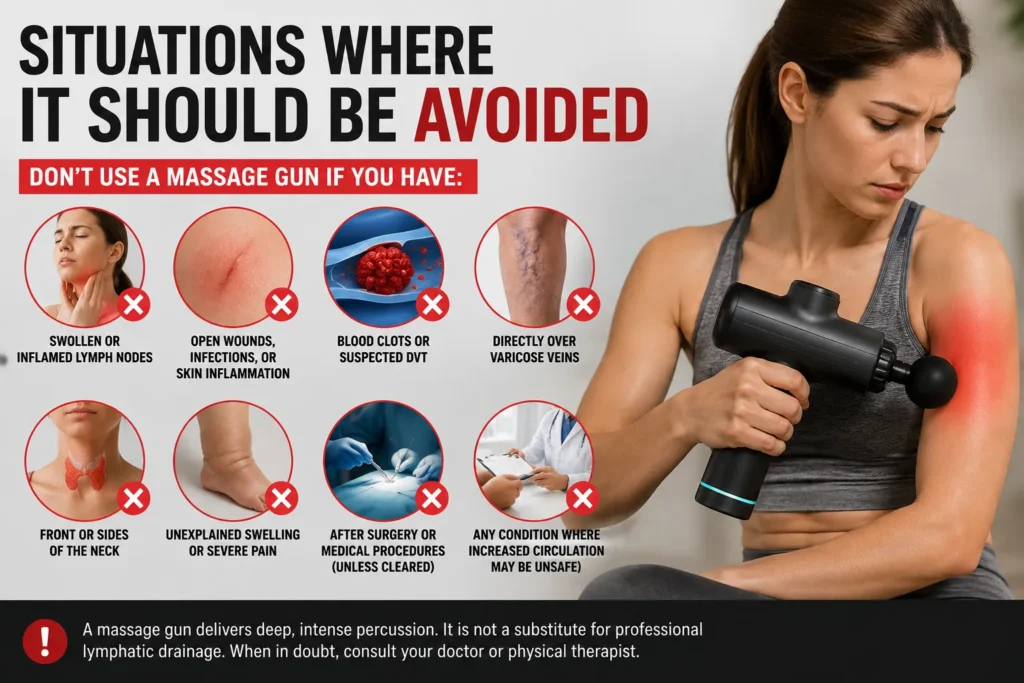
A massage gun uses strong, rapid pressure that can injure tissue or move fluid in unsafe ways. People with swelling linked to cancer, clots, infection, or heart and kidney disease should avoid using one unless a qualified clinician approves it.
Lymphedema And Cancer-Related Swelling
People with diagnosed lymphedema should not use a massage gun on swollen areas without guidance from a lymphedema therapist. Lymphedema treatment uses slow, light movements and may include compression, exercise, and skin care. Percussion can irritate fragile tissue, worsen inflammation, or cause bruising.
Cancer-related swelling also requires medical advice before any massage device is used. Swelling may result from surgery, radiation, blocked lymph vessels, or a tumor. A massage gun should not be used over a tumor, recent surgical site, radiation-damaged skin, open wounds, or areas with reduced sensation.
A clinician should assess new, sudden, painful, or one-sided swelling. The massage gun should remain unused until the cause is clear and a trained professional provides specific instructions.
Blood Clots, Infection, And Heart Or Kidney Conditions
A massage gun should never be used over a suspected or confirmed blood clot. Warning signs include sudden swelling in one limb, warmth, redness, tenderness, or unexplained pain. A clot can travel to the lungs and become life-threatening, so medical assessment is needed instead of massage.
It should also be avoided over cellulitis or another active infection. Fever, spreading redness, warmth, pus, or worsening pain requires prompt medical care. Massage may irritate infected tissue and delay treatment.
People with uncontrolled heart failure or significant kidney disease should seek medical advice before using a massage gun for swelling. These conditions can impair fluid removal, and forceful treatment may worsen symptoms. A clinician should also review use when swelling comes with shortness of breath, chest pain, rapid weight gain, or reduced urination.
Safer Alternatives for Supporting Fluid Movement
Gentle, controlled methods support normal fluid movement with less risk than forceful percussion. Professional care, light activity, compression, and elevation may help, depending on the cause of swelling and the person’s health.
Professional Manual Lymphatic Drainage
A trained therapist can perform manual lymphatic drainage (MLD) using slow, light strokes on the skin. The technique follows known lymph pathways and directs fluid toward working drainage areas. It should not feel painful, bruising, or deeply pressurized.
A therapist should first check for possible causes of swelling, such as surgery, infection, heart problems, blood clots, or lymphedema. Medical approval matters when swelling appears suddenly, affects one limb, causes pain or warmth, or occurs with shortness of breath.
Self-massage may be suitable after a therapist teaches the correct pattern. A person should avoid pressing directly on swollen, painful, infected, or recently injured tissue. A massage gun does not provide the same control or gentle directional pressure as MLD.
Gentle Movement, Compression, And Elevation
Light movement helps the muscles encourage fluid flow. Walking, ankle pumps, gentle stretching, and slow range-of-motion exercises can support circulation without applying strong pressure. The person should stop if movement increases pain, redness, warmth, or swelling.
Compression garments may reduce fluid buildup by applying measured pressure. They should fit correctly and match medical advice, especially when a person has poor arterial circulation, diabetes, numbness, or a diagnosed vascular condition.
Raising an affected arm or leg above heart level may also help reduce mild swelling. The limb should rest on pillows without pressure behind the knee or elbow. These methods support comfort but do not replace evaluation when swelling has no clear cause.
| Method | Safer use |
|---|---|
| Walking or ankle pumps | Gentle, pain-free movement |
| Compression garment | Proper fit and medical guidance |
| Elevation | Raise the limb above heart level |
| MLD | Use a trained therapist or taught technique |
Guidance From a Qualified Clinician
A clinician should assess unexplained swelling before anyone uses a massage gun. Proper evaluation can identify lymphedema, infection, a blood clot, or another condition that needs specific treatment.
When To Seek Medical Evaluation
A person should seek medical care for new, one-sided, sudden, painful, or rapidly increasing swelling. Red, hot skin, fever, drainage, severe tenderness, chest pain, or shortness of breath requires prompt attention. These signs may indicate infection or a blood clot, and a massage gun could worsen pain or delay treatment.
Anyone with known or suspected lymphedema should ask a clinician before using percussion therapy. A trained professional can check the skin, tissue firmness, limb size, circulation, and possible causes of swelling. They may recommend compression, exercise, skin care, or manual lymphatic drainage instead.
A massage gun should not be used over open wounds, irritated skin, recent surgical sites, areas with reduced sensation, or suspected clots. It should also be avoided unless a clinician approves it for people with active infection, bleeding problems, or complex medical conditions.
Choosing a Lymphedema Therapist
A qualified lymphedema therapist usually has training in complete decongestive therapy, which may include manual lymphatic drainage, compression, exercise, and skin care. The therapist should assess the affected area and explain whether any device has a safe role.
Patients can ask about the therapist’s certification, clinical experience, and training in post-surgical or cancer-related swelling. In the United States, recognized training may come through programs linked to the Lymphology Association of North America, although certification standards vary by location.
The therapist should give clear instructions about pressure, speed, treatment areas, and warning signs. They should never promise to remove “toxins” or cure lymphedema. If a massage gun receives approval, the therapist should set strict limits and stop its use if it causes pain, bruising, skin changes, or increased swelling.
Key Takeaways
- A massage gun does not replace manual lymphatic drainage. Lymphatic drainage uses slow, gentle movements, while massage guns deliver rapid percussive pressure to muscles and soft tissue.
- If a person uses one, they should choose the lowest speed, the gentlest attachment, and minimal pressure. They should move the device slowly over nearby soft tissue rather than pressing directly on lymph nodes, the front of the neck, or areas with swelling.
- A massage gun may help relax muscles or temporarily improve comfort, but strong evidence does not show that it improves lymph flow or removes “toxins.” It should not treat the cause of persistent swelling.
| Use caution | Avoid use and seek medical advice |
|---|---|
| Sensitive skin, easy bruising, or mild discomfort | Unexplained or sudden swelling |
| Recent injury or surgery | Suspected blood clot, infection, or fever |
| Use near the face, neck, groin, or armpits | Heart, kidney, or serious circulation problems |
A person with lymphedema, cancer treatment history, a blood-clot risk, or recent surgery should ask a health professional before using a massage gun. They should stop if they feel pain, numbness, dizziness, increased swelling, or skin changes.
FAQs
Can a massage gun improve lymphatic drainage?
A massage gun may increase blood flow and relax muscles, but it does not replace manual lymphatic drainage. This technique uses slow, light movements and should be performed by a trained professional when medical treatment is needed.
Can it reduce swelling?
It may provide temporary relief from mild muscle tightness or a feeling of puffiness. Evidence does not show that massage guns safely treat swelling caused by a medical condition.
How should someone use one?
They should use the lowest speed, the softest attachment, and light pressure on healthy muscle areas. They should avoid pressing directly on the neck, armpits, groin, bones, joints, or swollen and painful areas.
Who should avoid massage guns?
People with suspected or diagnosed blood clots, active infections, open wounds, unexplained swelling, or recent surgery should avoid them unless a clinician gives approval. People with bleeding disorders, cancer, or heart and circulation problems should also ask a health professional first.
When should medical care be sought?
Sudden swelling, one-sided leg pain, warmth, redness, shortness of breath, or chest pain requires prompt medical attention. A massage gun should never be used over a suspected blood clot.

