Massage guns use rapid pulses to apply pressure to sore muscles. Athletes and active people often use them before exercise to warm up or after workouts to ease muscle tightness. They can support recovery, but they do not replace rest, proper training, or medical care.
The best sports massage guns offer useful power, several speed settings, comfortable handling, and attachments that suit different muscle groups. I also pay close attention to the gun’s weight, battery life, noise level, stall force, and safety features. People should avoid using one over injuries, open wounds, bones, or areas with reduced feeling, and seek medical advice for ongoing or severe pain.
I tested and compared sports massage guns to find the models that make muscle care more comfortable, practical, and safe for active users.
Best Massage Guns for Sports
I reviewed massage guns designed to support muscle recovery after training, workouts, and competition. Below, I list my top picks based on power, comfort, speed settings, battery life, and ease of use.
Youdgee Deep Tissue Massage Gun
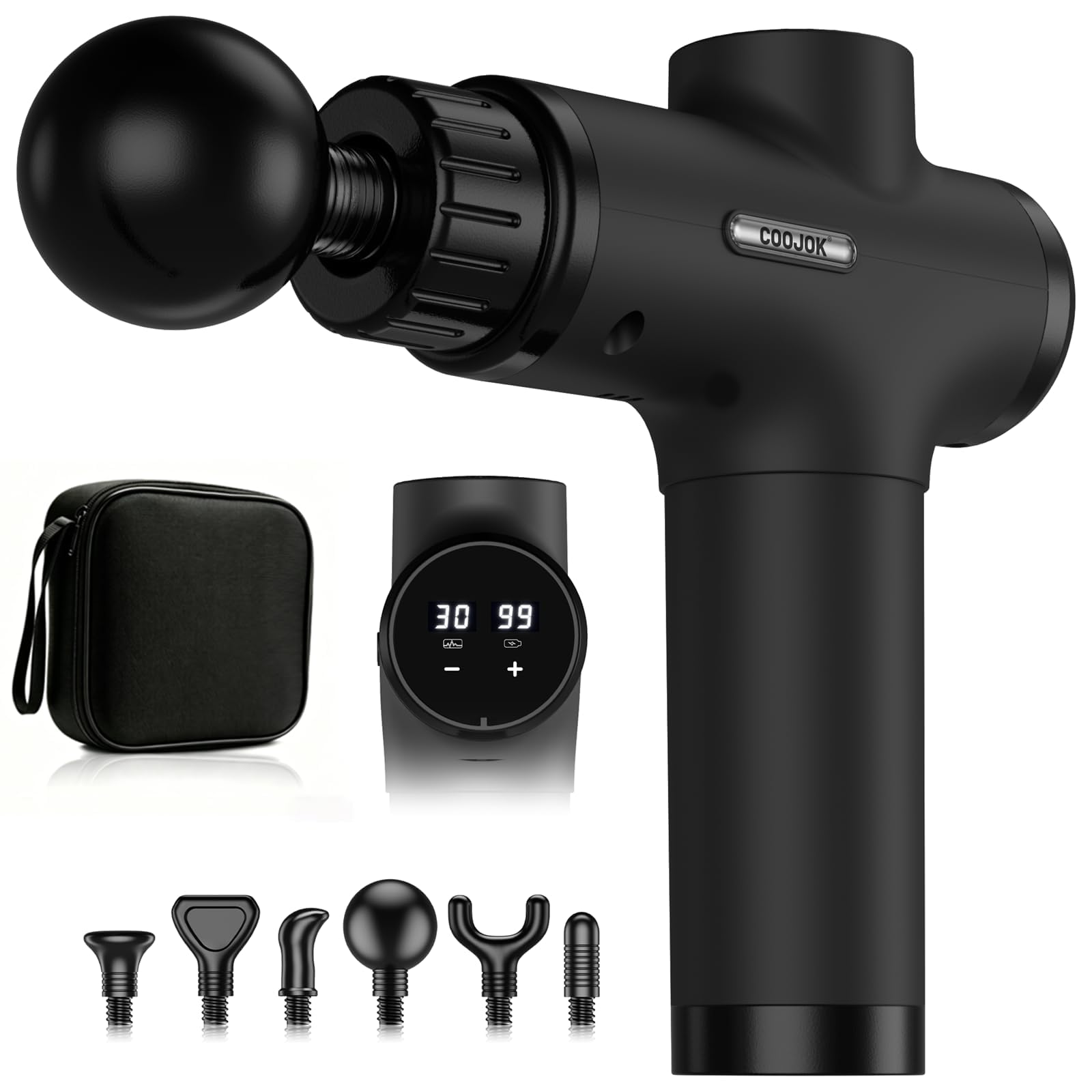
I recommend this compact massage gun for athletes who want strong pressure, many speed choices, and useful attachments at a reasonable price.
Pros
- Deep, firm pressure for larger muscle groups
- Six heads and 30 speed levels offer flexible use
- Portable design, carrying case, and USB-C charging
Cons
- The motor can feel less refined than premium models
- Some buyers reported missing or incorrect parts
- The small body may feel less comfortable during long sessions
I found the Youdgee easy to hold and simple to adjust. The touchscreen shows the battery level and speed clearly, while the 10-minute shutoff helps prevent overly long sessions.
The massage felt strongest on my thighs, calves, and shoulders. Lower speeds worked better for warming up, while higher settings provided firmer pressure after exercise. The six heads made it easy to switch between broad areas and smaller spots.
Its screw-lock system kept the attachments secure during use. The carrying case also made storage and travel convenient. Battery life seemed suitable for regular home sessions, though charging time may vary.
The compact size helps with portability, but it also gives the product a lighter feel than larger massage guns. Some customer reports mention missing parts or damaged units, so I would check the package soon after delivery and use Amazon’s return process if needed.
Mebak 3 Massage Gun
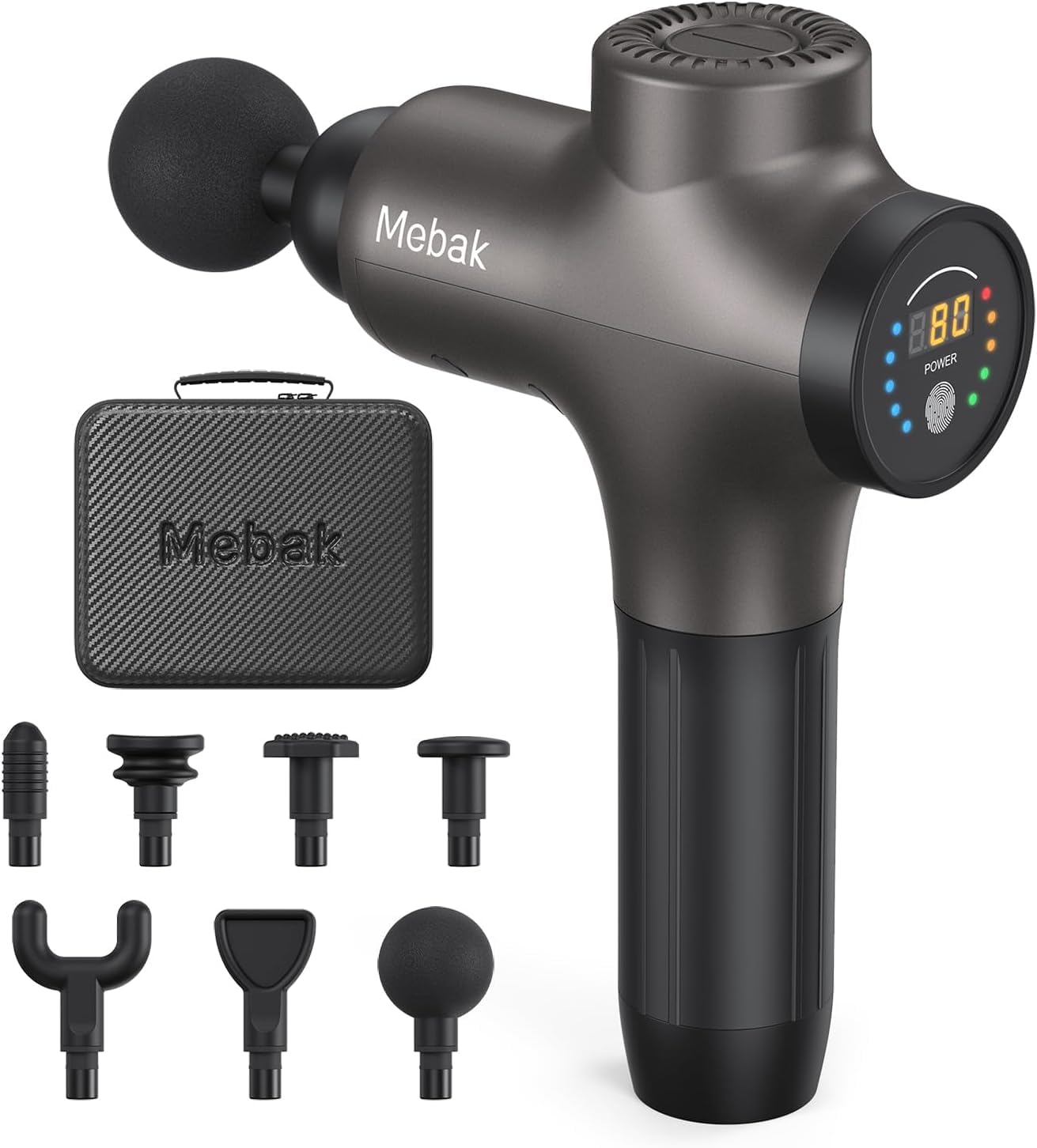
I recommend the Mebak 3 for athletes who want strong muscle relief, several attachment choices, and a quieter design at a reasonable price.
Pros
- Strong pressure for tight muscle groups
- Seven heads and five speed settings
- Quiet, portable, and easy to store
Cons
- Charging adapter is not included
- Plastic body may feel less premium
- Some users report battery problems over time
I found the Mebak 3 useful after workouts because it offers enough force for larger areas such as the thighs, glutes, and back. The 12 mm movement reaches deeper than a light vibrating massager, but I still used the lower settings around sensitive areas.
The seven heads made it easy to change the feel between muscle groups. I preferred the softer attachment for general recovery and the firmer options for focused work. The pressure indicator also helped me avoid pressing too hard.
Noise stayed fairly low during use, so I could use it at home without much disruption. Its weight felt manageable for short sessions, though my arm became tired when I held it against my back for several minutes.
The carrying case is useful for taking it to the gym or storing the attachments. I did need to provide my own suitable 5V/2A charging adapter, which adds a small inconvenience.
Overall, I would choose the Mebak 3 for sports recovery if I wanted strong performance without paying premium-brand prices. I would handle the plastic housing with care and check the battery warranty before buying.
Medcursor Massage Gun
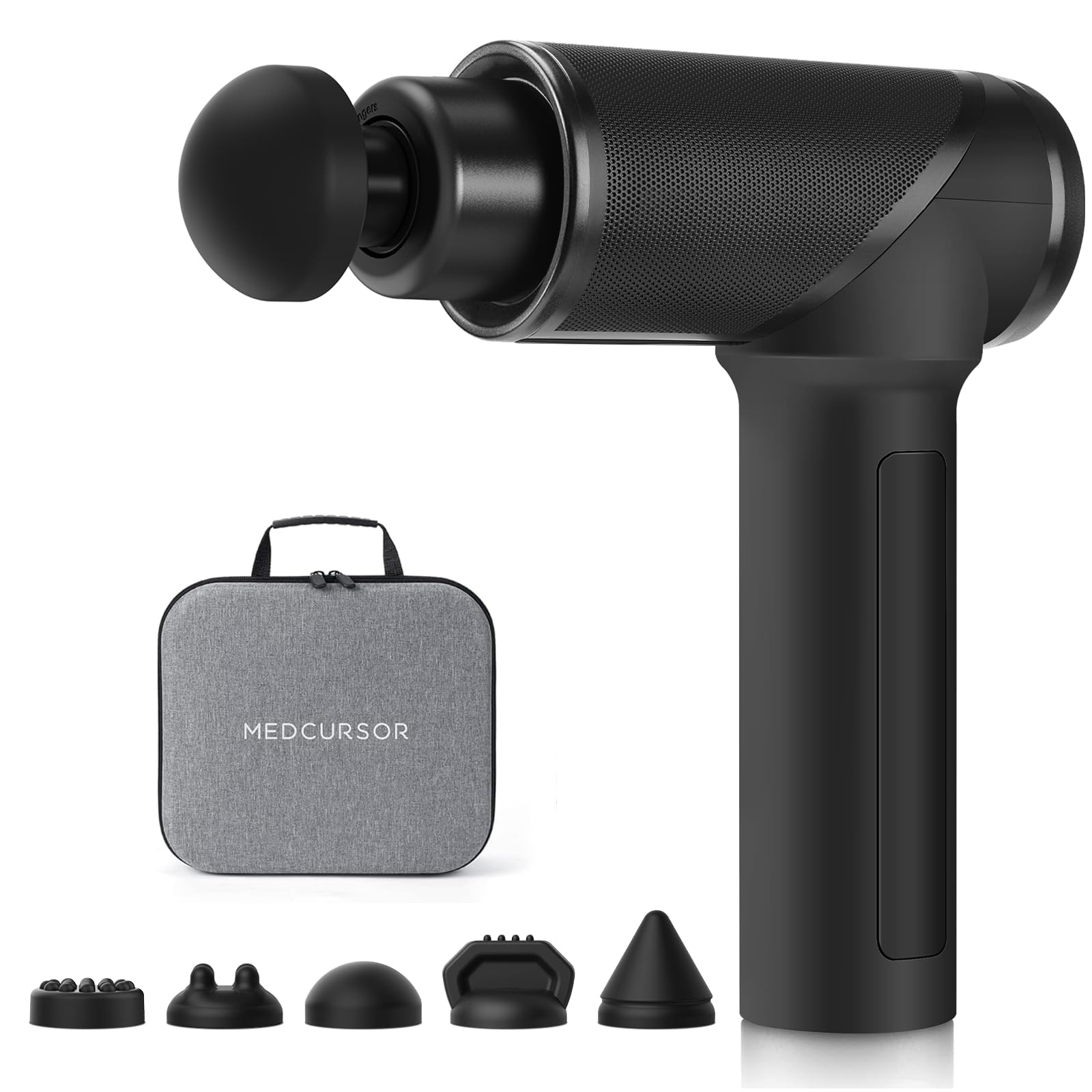
I recommend this massage gun for athletes who want strong, simple muscle relief in a portable design.
Pros
- Strong pressure with five speed levels
- Quiet motor and long battery life
- Five useful massage heads
Cons
- It needs a full charge before first use
- It is not water resistant
- The strongest setting may feel intense on tender areas
The Medcursor felt sturdy in my hand without becoming tiring during use. I liked the single-button control because I could change the speed quickly instead of sorting through many settings. The motor stayed fairly quiet, even when I increased the speed.
I used the round head on larger muscle groups and the bullet head on smaller areas. The higher settings gave me firm pressure after workouts, while the lower levels worked better during warm-ups or when my muscles felt sensitive.
The battery lasted through several sessions without needing a recharge. Its 10-minute timer also helped me avoid spending too long on one area. I would charge it fully before the first session because the package ships with a limited charge for safe transport.
At 1.5 pounds, the gun is easy to carry to the gym or keep in a travel bag. The included heads add useful variety, although I would keep the device away from water because it has no water resistance. Overall, it offers strong performance and simple controls for its price.
Opove M3 Pro 2 Massage Gun

I recommend this massage gun for athletes who want strong muscle relief, long battery life, and a sturdy carrying case without paying premium-brand prices.
Pros
- Deep 12 mm percussion reaches tight muscles well
- Quiet operation and a solid outer shell
- Long battery life for repeated workouts
Cons
- Heavy during longer sessions
- The strongest setting may feel too intense
- Not water resistant
After using the Opove M3 Pro 2 on my legs and shoulders, I found it effective for post-workout soreness and tight spots. Its firm pressure worked well on larger muscle groups, especially my thighs and glutes.
The motor stayed fairly quiet, so I could use it while watching television. The handle felt secure, but the 2.4-pound weight became noticeable when I worked on my arms or upper back.
I liked having five speed levels because I could start gently and increase the pressure as needed. The included case also made storage and travel easier.
The battery lasted through several sessions in my experience, though charging takes some time. I would avoid using it on bones, joints, or injured areas, and I would choose a lighter model if portability matters most.
AERLANG Heated Massage Gun

I recommend this massage gun for athletes who want strong percussion, several attachments, and optional heat in one portable device.
Pros
- Heated head offers three temperature levels
- Twenty speed settings provide fine control
- Carrying case and multiple heads support travel and varied muscle use
Cons
- Heavier and wider than some competing models
- May stop early during longer sessions
- Charging takes several hours
I found the heated head useful after workouts when my muscles felt tight. The warmth added comfort before increasing the massage intensity, though I used the heat setting carefully and kept it moving over the skin.
The LCD screen made it easy to see the selected speed and applied pressure. I liked starting slowly on sore areas, then raising the intensity for larger muscle groups such as the thighs and calves.
The motor delivered strong pressure without excessive noise. However, the wider handle became tiring during longer sessions, especially when I worked on my back or shoulders without changing grip.
The included heads covered common needs, from broad muscle areas to more focused spots. The carrying case also made storage simple. Some users report charging problems or early shutoffs, so I would keep the first few sessions moderate and test the unit soon after delivery.
Buying Guide
I look for a massage gun that matches my sport, recovery habits, and comfort needs. A model with several speed settings helps me use gentle pressure on sensitive areas and stronger pressure on larger muscles.
| Feature | What I look for |
|---|---|
| Speed settings | Several levels for warmups, recovery, and comfort |
| Amplitude | Moderate travel for general muscle work; deeper travel only if I know I need it |
| Stall force | Enough power to maintain speed without pressing hard |
| Attachments | Different shapes for large muscles, small areas, and softer tissue |
| Battery life | Enough capacity for several sessions between charges |
| Noise and weight | A quiet, balanced design that feels comfortable to hold |
| Controls | Simple buttons or a clear display that I can use easily |
I check the handle shape and total weight before buying. A lighter model may suit long sessions, while a heavier model may feel tiring or hard to control.
I also review the safety guidance and warranty. I avoid using a massage gun on bones, joints, the front of my neck, open wounds, or areas with reduced feeling. If I have an injury or medical condition, I ask a qualified health professional before use.
Price matters, but I compare features rather than choosing the cheapest option. I also check whether the package includes a charger, storage case, and the attachments I expect to use.
FAQS
How do I choose the best massage gun for sports?
I look for adjustable speed levels, useful attachment heads, and enough battery life for regular training. I also check the gun’s weight, noise level, and grip because I may use it before or after a long workout.
When should I use a massage gun?
I use it for a short session before exercise to help warm up a muscle. After training, I use it at a low or medium speed to help relax tight areas.
How long should I use it on one muscle?
I usually spend about 30 seconds to two minutes on each muscle group. I keep the gun moving and avoid pressing hard on one spot.
Can a massage gun replace stretching or recovery?
No. I treat it as one part of my routine, along with rest, fluids, light movement, and stretching. It does not replace medical care for an injury.
Where should I avoid using a massage gun?
I avoid bones, joints, the front of my neck, open wounds, bruises, and areas with swelling or numbness. I also avoid using one directly on a suspected injury.
Can I use one if I have a health condition?
I ask a health professional before use if I have a blood-clotting problem, nerve condition, recent surgery, or serious injury. I stop if I feel sharp pain, increased swelling, or unusual numbness.
Conclusion
I look for a massage gun that matches my sport, training load, and recovery needs. A lighter model works well for travel and quick sessions, while a stronger device may suit larger muscle groups after hard training.
I also check the weight, noise level, battery life, speed settings, and attachments before I buy. These details affect how easy the gun feels to use and whether I will keep it in my routine.
| My priority | Feature to consider |
|---|---|
| Portability | Light design and travel case |
| Quiet use | Low-noise motor |
| Deep muscle work | Higher stall force |
| Full-body use | Several useful attachments |
| Regular training | Long battery life |
I avoid using a massage gun on broken skin, bones, joints, or areas with severe pain. I start with low pressure and short sessions, then stop if the area feels worse. For an injury or ongoing pain, I speak with a qualified health professional before using one.