
Massage guns use rapid percussive movements to apply pressure to muscles and soft tissue. Many people use them before exercise, after training, or during recovery to reduce temporary muscle tightness and improve comfort. In clinical and professional settings, they can also support a therapist’s hands-on work when used with proper training.
For professional use, the best massage gun should offer dependable power, precise speed control, a quiet motor, durable construction, and a battery that lasts through repeated sessions. Weight, handle design, attachment options, and cleaning needs also matter when a device will be used often or shared between clients. People with injuries, nerve problems, blood-clot risks, or other health concerns should seek medical advice before using percussive therapy.
I evaluated the features that matter most in busy clinics and professional practices to identify the massage guns that provide useful control, comfort, and long-term value.
Best Massage Guns for Clinical and Professional Use
I reviewed massage guns for power, durability, control, and comfort during regular professional use. My list includes models that suit clinics, trainers, therapists, and other specialists.
Mebak 3 Massage Gun
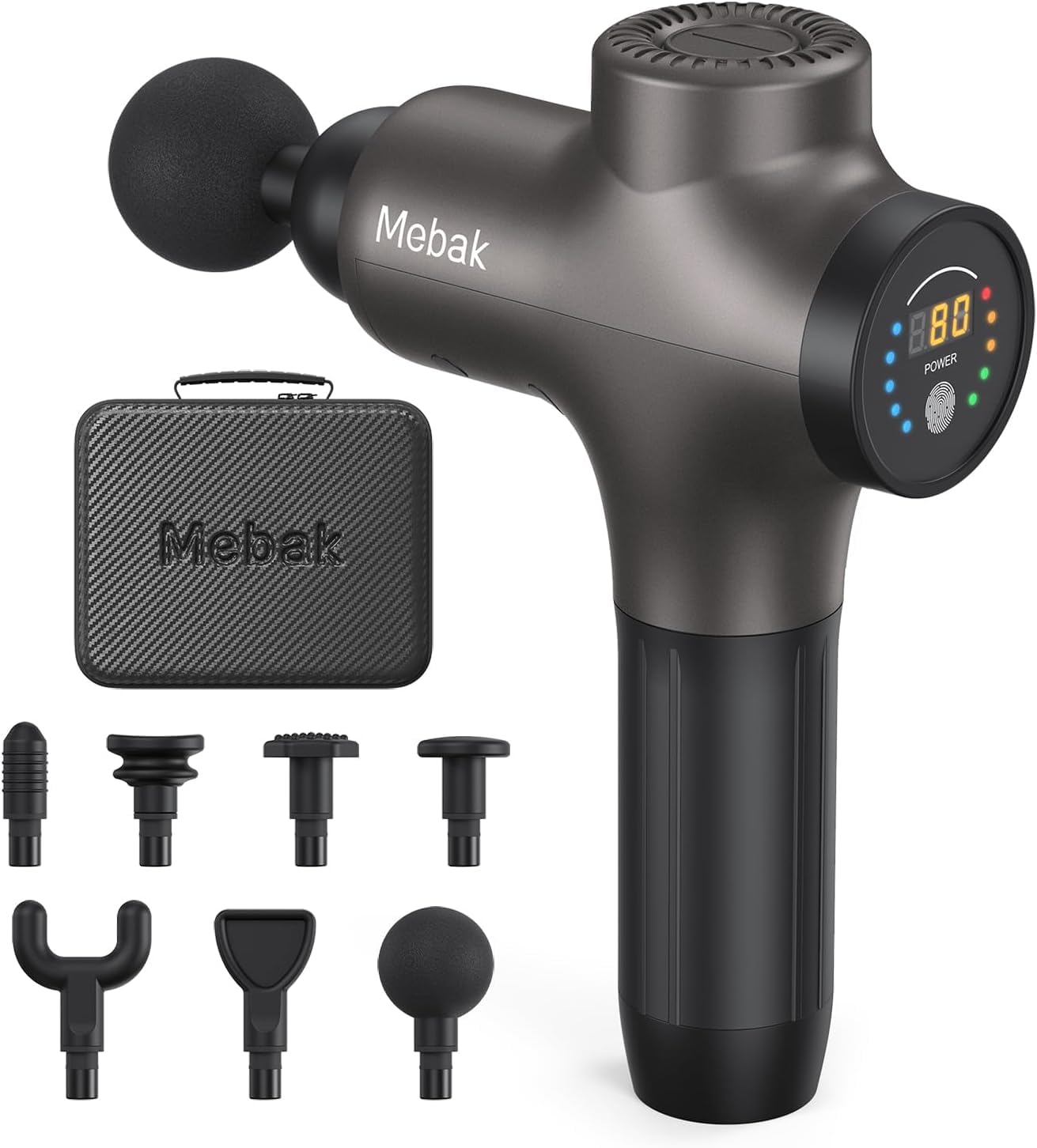
I recommend the Mebak 3 for professionals who want strong, quiet performance and several attachment options at a reasonable price.
Pros
- Strong pressure for deep muscle work
- Seven heads and five speed levels
- Quiet, portable design with a carrying case
Cons
- Charging adapter is not included
- Plastic body feels less premium
- Not water resistant
The Mebak 3 feels sturdy enough for regular use in a clinic, gym, or home setting. Its 12mm movement and firm pressure reached tight areas well when I used it on larger muscles such as the thighs, glutes, and back.
I liked the pressure indicator because it helped me avoid pressing too hard. The five speed settings also made it easier to switch from gentle warm-up work to more focused muscle treatment.
The seven heads cover common needs, including broad muscle work and smaller trigger points. Changing attachments was simple, and the carrying case kept everything organized between sessions.
Noise stayed manageable during use. I could run it near other people without creating much distraction, although the higher settings were more noticeable than the lower ones.
The main drawback is the basic plastic finish. It also needs a separate 5V/2A adapter, and the unit should stay away from water. For professional use, I would also follow proper treatment guidelines and avoid using it on injured areas without medical advice.
Opove M3 Pro 2 Massage Gun

I recommend the Opove M3 Pro 2 for professionals who want strong percussion, long battery life, and a sturdy build without paying top-tier prices.
Pros
- Strong pressure for deep muscle work
- Quiet enough for most treatment spaces
- Includes a useful carrying case
Cons
- Heavy during longer sessions
- Not water resistant
- Some users report early battery or unit failures
The M3 Pro 2 felt powerful when I used it on large muscle groups such as the thighs, glutes, and back. Its firm pressure helped loosen tight areas, while the speed controls made it easier to switch from a gentle warm-up to deeper work.
I also liked the reduced noise. It was not silent, but I could use it near other people without creating too much disruption. The outer shell felt solid, and the redesigned vents helped the unit stay comfortable during extended use.
At about 2.4 pounds, this massage gun can feel tiring in one hand. That weight may matter to massage therapists, trainers, or other professionals who use the tool repeatedly throughout the day.
The included case made storage and transport simple. Battery life should cover several sessions, though charging time and performance may vary with pressure and speed. A few customer reports mention units that stopped working early, so I would buy from a seller with a clear return policy.
Overall, I found the Opove M3 Pro 2 suitable for clinical and professional support work, especially when deep pressure matters more than a lightweight design.
Theragun Relief Massage Gun
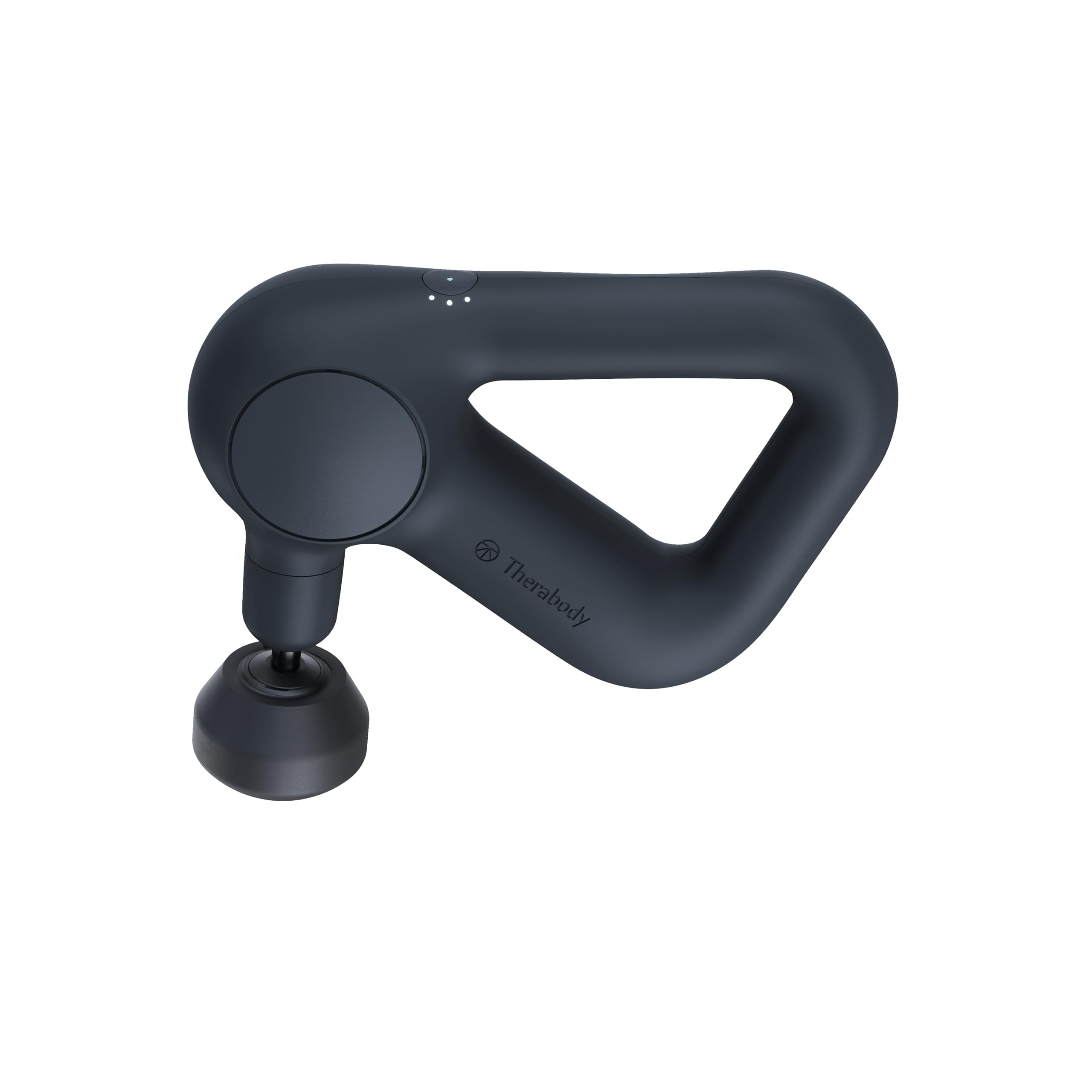
I recommend the Theragun Relief for professionals who want a quiet, lightweight massage gun with gentle settings and simple controls.
Pros
- Gentle massage for sensitive or tired muscles
- Easy-to-hold triangular grip
- Quiet motor and useful attachment choices
Cons
- Only three speed settings
- Not water resistant
- May feel too mild for users who want intense deep-tissue pressure
I found the Relief comfortable to use during longer sessions. Its triangular grip gave me several hand positions, which helped when I worked on shoulders, legs, and the lower back without putting much strain on my wrist.
The three attachments cover common clinical needs. I used the Dampener on tender areas, the Standard Ball for larger muscle groups, and the Thumb attachment for focused work around the lower back. The gentler action felt better suited to sensitive clients than more forceful massage guns.
The one-button control kept setup simple, and the quiet motor made it easier to talk during treatment. Its light weight also helped when moving between body areas or using it for repeated sessions.
I would not choose this model when strong pressure and many settings matter most. It also needs to stay away from water, so I would clean it carefully with a suitable cloth rather than use it near wet treatment areas.
| Feature | My assessment |
|---|---|
| Best use | Gentle daily relief and clinical support |
| Attachments | Dampener, Standard Ball, and Thumb |
| Speeds | Three |
| Grip | Ergonomic triangular handle |
| Battery | About 80 minutes of use |
| Weight | About 1.4 pounds |
BOB AND BRAD T2 Pro Massage Gun

I recommend the T2 Pro for professionals who want strong percussion, quiet operation, and built-in heat and cold therapy in one portable device.
Pros
- Powerful deep-tissue treatment with five speed levels
- Heat and cold attachments add treatment flexibility
- Comfortable grip and quiet operation
Cons
- Heavier than many compact massage guns
- Heat and cold features may not suit every treatment plan
- The strongest setting can feel intense on sensitive areas
When I used the T2 Pro, its 10mm amplitude and strong motor reached deep muscle groups without requiring much pressure. I found the lower speeds useful for warmups and sensitive areas, while the higher settings worked better on large muscles such as the thighs, glutes, and back.
The heat and cold functions make this model more useful in a clinical setting than a basic percussion gun. I liked using heat before muscle work and cold afterward, though each feature targets a specific need and may not replace separate clinical equipment.
Despite its power, the motor stayed quiet enough for a treatment room or office. The handle felt secure during longer sessions, but the gun’s weight became noticeable when I held it above shoulder height or treated another person for several minutes.
The five attachment heads cover common treatment needs, and USB-C charging makes the device convenient between appointments. I also value the included two-year warranty, especially for professional users who expect frequent use.
Overall, the BOB AND BRAD T2 Pro offers strong performance and useful therapy options, but professionals who prefer very light equipment may want a smaller model.
AERLANG Heated Massage Gun

I recommend this massage gun for professionals who want strong percussion, heat, and several attachment options at a modest price.
Pros
- Heated head with three temperature levels
- Twenty speed settings and a pressure display
- Includes multiple heads and a carrying case
Cons
- Heavy and somewhat wide in the hand
- May stop early during extended sessions
- Charging takes several hours
I found the heated head useful when working on tight muscles. The separate heat control made it easy to use percussion without warmth, or add heat for a gentler session. The attachments also helped me switch between larger muscle groups and more focused areas.
The motor delivered firm pressure across the speed range, while the LCD showed how much force I applied. It stayed reasonably quiet for use in a treatment room, though the wide handle became tiring during longer sessions.
The main drawback is its weight. Some users also report that the unit shuts off before the expected session ends, especially during heavy use. I would treat it as a capable entry-level professional tool rather than a replacement for a higher-end clinic device.
Buying Guide
I choose a professional massage gun by focusing on control, durability, and safe use. A strong motor matters, but smooth speed adjustment and steady performance matter more during repeated treatments.
| Feature | What I look for |
|---|---|
| Speed settings | Several levels for gentle and deeper massage |
| Force control | A clear way to adjust pressure without straining my hand |
| Battery life | Enough runtime for a full work session |
| Noise level | Quiet operation for clinics and shared spaces |
| Attachments | Different shapes for large muscles, small areas, and sensitive spots |
| Weight and grip | A balanced body that I can hold comfortably |
| Cleaning | Removable, easy-to-clean attachments and smooth surfaces |
| Warranty | Clear coverage and accessible customer support |
I check the device’s weight before buying. A heavy model may feel powerful, but it can cause hand and wrist fatigue during frequent use. A balanced grip and simple controls help me work with better precision.
I also review the charging system, storage case, and replacement-part options. For professional use, I prefer products with clear safety instructions, dependable construction, and a warranty that covers regular use.
I avoid choosing based only on the highest speed or stall force. I match the settings and attachments to the types of clients and treatments I handle, while avoiding use over bones, open wounds, or areas with known medical concerns.
FAQs
What massage gun do I recommend for clinical use?
I look for a durable model with adjustable speeds, several attachment heads, and a long battery life. A quiet motor also helps me use it during appointments without disrupting conversation.
How much stall force should a professional massage gun have?
I prefer a model with enough stall force for deep muscle work, but I use lower pressure near joints, bones, and sensitive areas. Higher force does not always provide better treatment.
Which attachments do I use most?
I use a round head for large muscle groups, a flat head for general work, and a soft head for tender areas. I choose attachments based on the client’s comfort and treatment needs.
How loud should a clinical massage gun be?
I choose a device that operates quietly, ideally at a low noise level. This makes it easier for me to communicate with clients and maintain a calm treatment room.
How long should a professional massage gun battery last?
I look for at least two to four hours of use per charge. A removable battery or fast charging can help me avoid interruptions during a busy workday.
Can I use a massage gun on every client?
No. I screen clients first and avoid using one over open wounds, recent injuries, areas with reduced sensation, or suspected blood clots. I refer clients to a medical professional when a health condition may affect safe use.
Conclusion
I choose a professional massage gun based on power, control, comfort, and long-term reliability. A model with adjustable speeds and several useful attachments gives me more flexibility when treating different muscles and client needs.
I also look for a quiet motor, strong battery life, and a design that feels comfortable during repeated use. These features help me work efficiently without adding noise, hand strain, or frequent charging.
My key priorities are:
- Adjustable speed and force
- Durable construction
- Low operating noise
- Long battery life
- Easy-to-clean surfaces
- Attachments for different treatment areas
A massage gun should support my hands-on work rather than replace proper assessment or technique. I use it as one tool within a broader treatment plan and follow safety guidance for each client.

