You want relief from heel pain and you want it now. Massage can ease plantar fasciitis by loosening tight tissue, lowering pain, and helping you move more comfortably, especially when you combine it with stretching, strength work, and better footwear. Massage often reduces symptoms and speeds comfort, but it works best as part of a bigger plan rather than as the only fix.
This guide shows safe self-massage moves, explains which professional techniques help most, and tells you when to avoid massage or see a clinician. You will learn simple steps to try at home and how to fit massage into a recovery plan that actually helps you get back to walking and standing with less pain.
Key Takeaways
- Massage can reduce plantar fascia tension and ease heel pain.
- Use massage with stretches, strengthening, and better shoes for best results.
- Stop if pain worsens and seek professional advice when needed.
Understanding Plantar Fasciitis
Plantar fasciitis is a focused problem at the bottom of the foot that affects walking, standing, and exercise. It often causes sharp heel pain on first steps and soreness after long periods of activity.
Common Symptoms
Pain usually appears at the inner heel or along the arch. It is often worst with the first steps in the morning or after sitting for a long time.
The pain can be sharp or aching and may ease with light movement but return after long standing or exercise. Tenderness is common when pressing the heel or along the plantar fascia.
Stiffness in the foot and reduced ankle dorsiflexion may occur. Some people notice swelling or a burning sensation, though visible swelling is rare. Symptoms typically develop gradually over weeks to months.
Primary Causes
Plantar fasciitis stems from repetitive strain of the plantar fascia, the thick band of tissue that runs from the heel bone to the toes. Tiny tears and inflammation form where the fascia attaches to the heel.
Overuse from high-impact activities—running, jumping, long standing—repeatedly stresses that attachment. Sudden increases in training volume or intensity often trigger symptoms.
Biomechanical issues play a role too. Limited calf flexibility, tight Achilles tendon, flat feet, or high arches change how load transfers through the foot and raise tension on the fascia.
Risk Factors
Age between 40 and 60 raises risk because tissue flexibility and repair capacity change. Men and women both get it, but activity type affects who develops symptoms.
Body weight matters: higher body mass increases load on the plantar fascia during walking and standing. Jobs that require long hours on hard surfaces, like retail or factory work, also increase risk.
Foot mechanics and footwear contribute as well. People with flat feet, high arches, tight calves, or poor shoe support face higher odds. Sudden increases in activity, improper training surfaces, and inadequate warm-up the same.
How Massage Therapy Helps Plantar Fasciitis
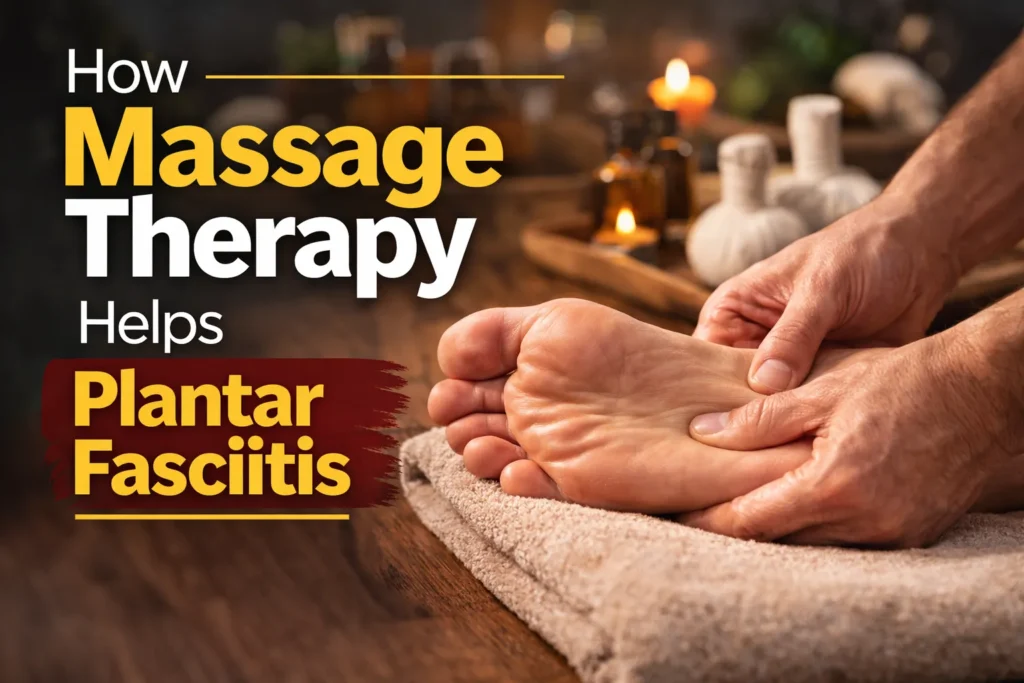
Massage targets tight tissue, improves blood flow, and eases pain so the foot can move more normally. It can break up tight spots in the plantar fascia and calf, reduce swelling, and help the person return to walking and exercise with less pain.
Mechanisms of Pain Relief
Massage reduces pain by working directly on trigger points and tight bands in the plantar fascia and surrounding muscles. Therapists use techniques like thumb pressure, cross-fiber friction, and deep stroking to release adhesions that irritate the heel. This can lower input from pain receptors and calm local muscle guarding.
A visible effect often follows a few minutes of targeted work: soreness eases and the person can dorsiflex the ankle more comfortably. For home care, rolling a ball or using a frozen bottle under the arch offers similar pressure-based relief. Table: Common techniques and their immediate effects
| Technique | What it targets | Typical short-term effect |
|---|---|---|
| Thumb/heel pressure | Trigger points in arch | Reduced sharp heel pain |
| Cross-fiber friction | Adhesions in fascia | Less stiffness on first steps |
| Ball rolling | Myofascial tightness | General pain reduction, easier walking |
Improving Foot Mobility
Restricted ankle and toe movement often keeps plantar fasciitis active. Massage addresses calf tightness, Achilles stiffness, and limits in the foot’s connective tissue. Releasing these areas lets the ankle bend more and the arch lengthen during walking.
Therapists combine soft-tissue release with joint mobilization and active movements to restore range of motion. Patients commonly notice easier upward ankle motion and less pulling under the heel after a few sessions. Regular self-massage plus calf stretches helps keep gains between visits and supports progressive loading for recovery.
Reducing Inflammation
Massage helps control local inflammation by boosting circulation and enhancing lymphatic drainage. Increased blood flow brings oxygen and nutrients to damaged tissue and helps remove metabolic waste that fuels pain. Gentle pumping strokes and light effleurage work best when the area is swollen or tender.
For acute flare-ups, therapists avoid aggressive deep work and instead focus on light techniques that move fluid away from the heel. The table below shows when to use each pressure level.
| Stage of symptoms | Recommended pressure | Goal |
|---|---|---|
| Acute, very tender | Light | Reduce swelling, move lymph |
| Subacute, moderate pain | Moderate | Increase blood flow, ease stiffness |
| Chronic, low-level pain | Deep as tolerated | Break adhesions, restore mobility |
Types of Massage Techniques for Plantar Fasciitis
These methods target the plantar fascia and nearby muscles to reduce tightness, ease pain, and improve foot mobility. Each technique uses different pressure and hand motions and may be done by a therapist or adapted for self-care.
Deep Tissue Massage
Deep tissue massage uses firm, slow strokes and focused pressure to reach the deeper layers of muscle and fascia under the sole. A therapist often works with thumbs, knuckles, or elbows along the arch and heel to break up adhesions and reduce chronic tightness.
Sessions focus on areas of greatest tension like the plantar fascia, calf muscles, and Achilles tendon. This can improve load distribution across the foot and reduce strain on the fascia. Therapists adjust pressure to pain tolerance; some discomfort can occur but should not cause sharp pain.
Patients may feel soreness for 24–48 hours after treatment. Combining deep tissue work with stretching and supportive shoes often gives better results than massage alone.
Trigger Point Therapy
Trigger point therapy targets small, tight knots in muscle that refer pain to the heel or arch. A therapist locates a trigger point—often in the calf, soleus, or intrinsic foot muscles—and applies steady pressure until the knot softens.
Clients often notice immediate local release and reduced referred pain after a point eases. Practitioners may pair pressure with gentle stretching to prevent the knot from returning.
People can perform basic trigger point work at home using a tennis ball or thumb, pressing into the spot for about 20–60 seconds. If pain radiates intensely or does not improve, a professional assessment is recommended.
Myofascial Release
Myofascial release focuses on loosening the connective tissue (fascia) that surrounds muscles, not just the muscles themselves. Therapists use long, gliding strokes or sustained pressure along the arch, heel, and lower leg to restore fascia mobility.
This technique reduces stiffness that limits ankle dorsiflexion and increases tension on the plantar fascia. Gentle sustained holds—sometimes combined with movement—help the fascia lengthen without sharp pain.
Patients often receive home instructions, such as foam rolling the calves or using a rubber ball under the arch. Regular, gentle sessions tend to be more effective than one-off intense treatments.
Step-By-Step Self-Massage Guide
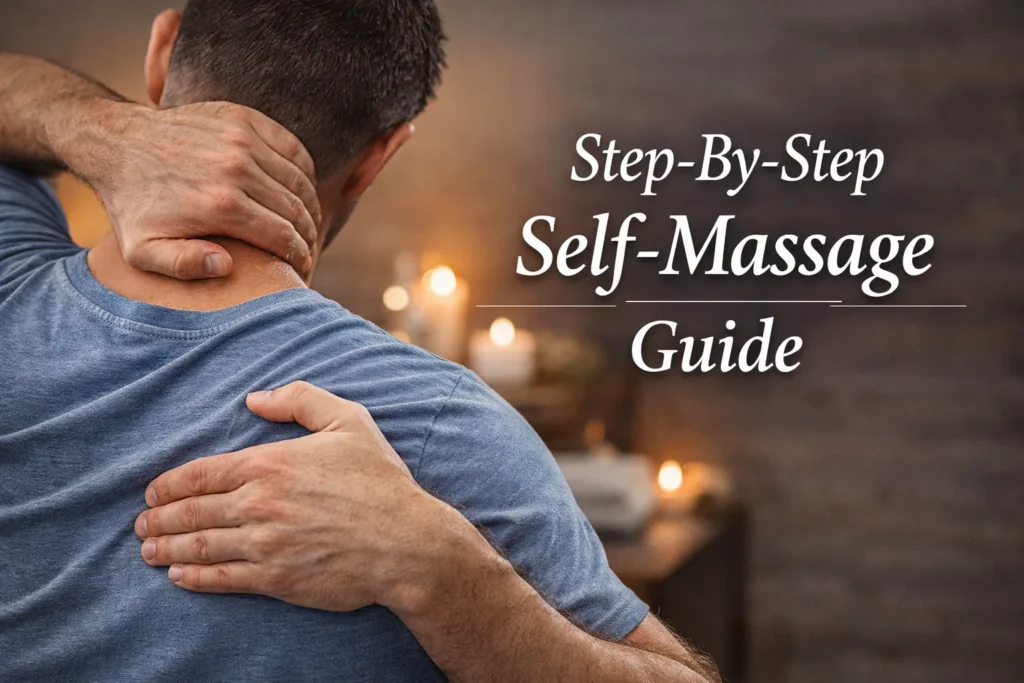
This guide gives clear steps to prepare, perform, and avoid common errors when massaging the plantar fascia. It lists tools, safe techniques, and warning signs to watch for.
Preparation and Tools Needed
They should wash their feet and sit in a comfortable chair with good back support. A rolled towel under the knee can slightly flex the foot and make the fascia easier to reach.
Useful tools include a firm massage ball (lacrosse or tennis), a frozen water bottle for rolling, and a thumb or knuckle for targeted pressure. Socks can be worn to reduce friction when using hands; bare skin helps with gloves or tools.
Have a chair, a towel, and water nearby. If pain is sharp or lasts more than a few minutes during testing, stop and consult a clinician before continuing.
Best Practices for Self-Massage
They should begin gently, using light strokes along the arch toward the heel for 1–2 minutes to warm tissue. Increase pressure gradually, using thumbs or a ball to apply steady, tolerable pressure for 30–60 seconds on tender spots.
Use these motions:
- Long glides from toes to heel to improve circulation.
- Circular thumb presses along the medial arch to release tight bands.
- Roll a frozen water bottle under the arch for 1–2 minutes to reduce inflammation.
Limit sessions to 5–10 minutes, 1–2 times daily. Combine massage with calf stretches and short walks to encourage healing. Pain should ease after treatment; sharp or worsening pain is a sign to stop.
Common Mistakes to Avoid
They must not press so hard that pain spikes or they limp afterward. Excessive force can irritate the fascia and delay recovery.
Avoid massage right after intense exercise when tissue is inflamed. Do not use massage as the only treatment—skip shoes with poor support, add calf strengthening, and follow load management.
Do not ignore numbness, burning, or persistent swelling. If symptoms worsen or do not improve after a few weeks, seek assessment from a physical therapist or podiatrist.
Professional Massage Therapy Options
Skilled therapists use targeted techniques, trigger point work, and soft-tissue tools to reduce heel pain and improve foot mobility. They also coordinate care with podiatrists or physical therapists and may suggest orthotics, stretching, or progressive loading plans.
Choosing a Qualified Therapist
Look for someone with credentials and experience treating plantar fasciitis. Good options include licensed massage therapists (LMTs), physical therapists (PTs) with manual therapy training, and sports therapists who list foot or heel pain on their profiles.
Ask about specific techniques they use: myofascial release, deep tissue work, trigger point therapy, instrument-assisted soft tissue mobilization (IASTM), or neuromuscular therapy. Request outcome examples or patient references for plantar fasciitis.
Confirm safety measures. They should screen for diabetes, peripheral neuropathy, blood clot risk, or recent steroid injections before treatment. Also check that they coordinate with your doctor if you have imaging or an ongoing medical plan.
Massage Session Expectations
Sessions generally last 30–60 minutes and focus on the calf, Achilles, plantar fascia, and surrounding muscles. The therapist may start with light effleurage, progress to targeted deep work, and finish with stretching and home-care instructions.
Treatment may include hands-on pressure, cross-fiber friction, trigger point release, and tools like cups or IASTM. Pain during treatment should be tolerable and brief; therapists should adjust pressure based on feedback.
Expect homework. Therapists often teach calf stretches, plantar fascia self-massage, toe towel scrunches, and footwear advice. They may recommend 4–8 sessions spaced weekly, then reassess progress with pain scores and function.
Combining Massage With Other Treatments
Massage works best when paired with targeted exercises and good shoe support. These steps reduce strain on the plantar fascia and help the tissue heal while massage eases pain and improves mobility.
Stretching and Strengthening Exercises
They should do calf stretches, plantar fascia stretches, and toe curls daily. Calf wall stretches (standing, knee straight) help loosen the Achilles tendon. Tight calves increase pull on the heel; easing that tension lowers stress on the plantar fascia.
Plantar fascia-specific stretches include pulling the toes toward the shin while seated or before getting out of bed. Hold 20–30 seconds and repeat 3 times per session. Strengthening involves short-foot exercises and towel scrunches to build arch support. Start with 10–15 reps, once or twice a day, and increase gradually.
Pair each exercise session with massage or rolling (tennis ball or frozen water bottle) for 1–3 minutes to combine mechanical release with tissue loading. Stop or scale back if pain worsens and consult a clinician.
Orthotics and Supportive Footwear
They should choose shoes with firm heel support, good arch contour, and a stable sole. Running shoes with a supportive midsole or motion-control features help reduce pronation that stresses the plantar fascia.
Custom orthotics or over-the-counter insoles with medial arch support can redistribute pressure across the foot. Use orthotics during daily activities and sports for several weeks to assess benefit. Night splints that hold the foot dorsiflexed can protect healing tissue overnight and reduce morning pain.
Combine footwear changes with massage sessions. Supportive shoes lower load while massage reduces tightness, making each treatment more effective. If pain persists despite these measures, seek evaluation for alternative treatments.
Precautions and When to Seek Medical Advice
Massage can ease pain and stiffness, but it must be done safely. Watch for signs that the foot needs medical care or that massage is causing harm.
Recognizing Worsening Symptoms
They should stop massage if pain turns sharp, increases during or after treatment, or spreads up the ankle or calf. New or worsening swelling, redness, warmth, throbbing pain, numbness, or tingling can mean infection, nerve irritation, or another problem that needs a doctor.
If pain does not improve after consistent home care for 2–4 weeks, or if symptoms return quickly after activity, seek a podiatrist or primary care evaluation. A clinician may order imaging, check for heel spur, stress fracture, nerve entrapment, or systemic causes, and recommend targeted treatments like physical therapy, orthotics, or corticosteroid injection. For urgent signs such as fever with a painful, red, swollen foot or sudden severe pain after trauma, go to the emergency department.
Contraindications for Massage
Avoid deep or aggressive massage when the foot is bruised, infected, or has open sores. People on blood thinners, with bleeding disorders, or with uncontrolled diabetes should consult their doctor before massage because of higher risk of bleeding, poor wound healing, or hidden infection.
Do not massage over recent fractures, surgical sites, or during active gout flare-ups. Pregnant individuals with preexisting conditions, or anyone with severe peripheral neuropathy, should get medical clearance. A qualified therapist can screen for these issues; if uncertainty remains, a referral to a podiatrist or physical therapist helps ensure safe care.
Relevant resources: American Academy of Orthopaedic Surgeons (orthoinfo.aaos.org) and the National Institute of Arthritis and Musculoskeletal and Skin Diseases (niams.nih.gov).
FAQS
Can massage cure plantar fasciitis?
Massage can reduce pain and improve blood flow, but it rarely cures the condition alone. It works best with stretching, calf strengthening, and proper shoes.
How often should someone massage their foot?
They can massage daily for 5–15 minutes, especially after activity or in the evening. Gentle work several times a day may help when pain is worse.
What techniques are safe to try at home?
They can use thumb pressure along the arch, rolling a tennis ball or frozen water bottle, and gentle calf massage. Avoid deep, painful pressure over the heel or bone.
When should massage be avoided?
Stop massage if pain sharply increases, numbness develops, or infection signs appear. They should avoid massage over open wounds or recent fractures.
Will a professional massage help more than self-massage?
A trained therapist can target tight muscles, use deeper techniques, and advise on foot mechanics. Self-massage remains useful, affordable, and convenient for daily care.
How long until someone sees improvement?
Some relief may appear in days, but meaningful change often takes weeks with consistent care. If symptoms persist beyond 6–8 weeks, they should seek a clinician for further evaluation.
Can massage prevent recurrence?
Regular calf and foot work, plus proper footwear and load management, lowers recurrence risk. Massage is one part of a broader prevention plan.
Conclusion
Massage can reduce pain and improve comfort for many people with plantar fasciitis. When done correctly, it eases tightness, boosts circulation, and helps break down adhesions in the fascia and surrounding muscles.
It works best as part of a broader plan. Pair massage with stretching, calf strengthening, supportive shoes, and load management for better results.
Use gentle techniques at first and avoid deep pressure during severe inflammation or acute injury. If pain increases or does not improve, seek evaluation from a healthcare professional.
Practical tips:
- Start with short sessions (5–10 minutes) and increase as tolerated.
- Combine self-massage with tools like a ball or frozen bottle for targeted relief.
- Track pain and function to judge whether massage is helping.
Massage is low-cost and accessible, but not a cure-all. It offers useful symptom relief and can speed recovery when combined with other treatments and professional advice.