You may feel sharp pain, numbness, or tingling from a pinched nerve, and massage can help ease those symptoms when done safely. Gentle, targeted massage often reduces muscle tension and improves blood flow, which can lower pain and speed recovery for many people.
This post shows clear, practical tips you can use at home or discuss with a therapist, including which techniques to try, how hard to press, and when to stop and seek medical care. Keep reading to learn simple self-massage moves, tools that help, and signs that mean you need professional treatment.
Key Takeaways
- Massage can ease pain and reduce muscle tightness linked to nerve compression.
- Use gentle, controlled techniques and proper tools to avoid making symptoms worse.
- Seek professional care if weakness, severe pain, or worsening numbness occurs.
Understanding Pinched Nerves
Pinched nerves happen when nearby tissues press on a nerve and change how it works. This can come from bones, disks, muscles, or tight tendons and causes pain, numbness, or weakness in specific body areas.
Common Causes of Pinched Nerves
- Herniated or bulging discs: When a spinal disc pushes against nerve roots, it commonly causes sciatica or neck pain.
- Bone spurs and arthritis: Extra bone growth from osteoarthritis narrows spaces where nerves travel, especially in the spine.
- Muscle tightness and spasms: Overused or injured muscles can compress nearby nerves, such as the thoracic outlet or carpal tunnel areas.
- Repetitive motions and posture: Repeated wrist or shoulder movements and prolonged poor posture increase pressure on peripheral nerves.
- Trauma and fractures: Direct blows, fractures, or swelling after injury can pinch a nerve near the injury site.
Each cause compresses the nerve differently, so the exact symptoms and where they appear depend on the nerve and location involved.
Symptoms Associated With Pinched Nerves
- Pain: Local sharp or burning pain at the compression site or radiating pain down an arm or leg.
- Numbness and tingling: “Pins and needles” often spread along the nerve’s path, such as down the forearm or into the foot.
- Weakness: Affected muscles may feel weak or give out, making gripping or walking difficult.
- Sensitivity changes: Decreased or increased sensitivity to touch, temperature, or vibration in the nerve’s area.
Symptoms often worsen with certain positions or movements and may improve with rest. Persistent symptoms, progressive weakness, or loss of bowel/bladder control require immediate medical evaluation.
Risk Factors and Prevention

- Age-related wear: People over 40 face higher risk from disc degeneration and arthritis.
- Job and hobbies: Repetitive tasks (typing, assembly work, heavy lifting) raise risk for carpal tunnel and other entrapments.
- Body mechanics and posture: Slouching, forward head posture, or improper lifting increases spinal nerve pressure.
- Obesity and inactivity: Extra weight and weak core muscles change spine load and muscle balance.
- Medical conditions: Diabetes, thyroid disease, and inflammatory conditions increase nerve vulnerability.
Prevention focuses on posture, ergonomic work setup, regular stretching, weight control, and strengthening key muscle groups to reduce the chance of nerve compression.
Benefits of Massage for Pinched Nerve Relief
Massage can reduce pain, relax tight muscles, and improve blood flow to the injured area. It can also help restore movement and lower stress that worsens nerve symptoms.
How Massage Alleviates Nerve Compression
Massage targets the muscles and connective tissue that press on the nerve. By loosening tight muscles and breaking up small knots (myofascial trigger points), it lowers direct pressure on the nerve root or peripheral nerve. Therapists use techniques like gentle mobilization, trigger-point release, and myofascial release to change tissue tension and improve nerve glide.
Improved circulation from massage brings oxygen and nutrients to the area. That helps reduce local inflammation and supports healing. For many patients, decreased muscle guarding leads to faster recovery of normal movement and less radiating pain.
Evidence-Based Outcomes
Clinical studies show massage often reduces pain intensity and improves function for people with radicular or peripheral nerve symptoms. Trials comparing massage to no treatment or to usual care report moderate short-term pain relief and better range of motion in many participants. Benefits are strongest when massage is part of a treatment plan that includes exercise and posture correction.
Common measured outcomes:
- Pain score reduction (short-term)
- Increased range of motion
- Improved sleep and reduced muscle tension
| Outcome | Typical Effect |
|---|---|
| Pain (short-term) | Moderate reduction |
| Function/motion | Small to moderate improvement |
| Long-term cure | Limited when used alone |
Comparing Massage to Other Therapies

Massage works differently than medications or injections. Drugs reduce pain or inflammation systemically, while injections target local inflammation quickly. Massage, however, addresses the mechanical contributors: tight muscles, scar tissue, and poor joint mechanics. It is lower risk than long-term opioid use and less invasive than injections or surgery.
When combined, therapies often produce better results. Example care plan:
- Massage to reduce muscle tension
- Stretching and strengthening exercises to stabilize
- Medication or injection for severe inflammation
Patients with worsening neurological signs (progressive weakness or loss of bowel/bladder control) should get medical evaluation before relying on massage.
Choosing the Right Massage Technique
Pick a method that targets the specific cause of nerve compression and matches the client’s pain level. Techniques differ by pressure, speed, and focus area; some aim to release tight knots, others loosen connective tissue or promote broad relaxation.
Trigger Point Massage
Trigger point massage focuses on small, tight knots in muscles that press on nearby nerves. The therapist locates taut bands and applies steady pressure for 20–90 seconds to reduce the knot’s referral pain. This method works well when a specific muscle spasm causes numbness or shooting pain.
Clients may feel brief discomfort during pressure. Therapists should use fingertip, thumb, or elbow pressure and follow with gentle stretching to prevent the knot from re-forming. Avoid aggressive work directly on inflamed or bruised tissue.
Use this when symptoms are localized and reproduce with palpation. Not ideal for diffuse nerve compression or when pain comes from structural spine issues.
Myofascial Release
Myofascial release targets the fascia, the connective tissue that can tighten and restrict nerves. The therapist uses slow, sustained stretches and broad hand contact to lengthen restricted tissue and improve glide around nerves.
This technique reduces restrictions over a wider area, so it suits cases where several muscles and fascial layers contribute to nerve pressure. Sessions are gentle and steady, which helps when the client has high sensitivity to sharp pressure.
Practitioners often combine this with guided movement to retrain tissue patterns. Myofascial release is safer than deep, forceful work for irritated nerves or recent injuries.
Swedish Massage Techniques
Swedish massage uses long, gliding strokes, kneading, and light tapping to increase circulation and relax muscles. It decreases overall muscle tone and swelling, which can indirectly reduce pressure on a compressed nerve.
Therapists employ effleurage to warm tissue, petrissage to release muscle bulk, and gentle percussion for stimulation. Pressure stays moderate; practitioners avoid deep friction directly over tender neural pathways.
Recommend Swedish techniques for general pain relief, neck or shoulder tension, and clients who need low-intensity care. Combine with targeted work (like trigger point or myofascial release) for best results when specific tight spots exist.
Step-by-Step Massage Tips for Pinched Nerves

Follow practical steps to prepare, choose target areas, and use the right pressure and movements. These actions help reduce muscle tightness around the nerve and lower pain without pushing into sharp nerve pain.
Preparing for a Massage Session
They should check medical red flags first: new severe weakness, loss of bowel or bladder control, or signs of infection need urgent care. If symptoms are stable, they can proceed with gentle self-massage or a licensed therapist.
Set up a comfortable space with a firm surface and pillows to support the neck, shoulders, or lower back. Use a small towel roll under the neck or knees to keep the spine aligned. Keep a bottle of massage oil or lotion nearby to reduce skin friction.
Apply heat for 10–15 minutes before massaging to loosen muscles, or ice for 10 minutes if the area is swollen. Start with short, 5–10 minute sessions and reassess. Stop if numbness, pins-and-needles, or sharp shooting pain increases.
Key Areas to Target
They should focus on muscles that press on nerves, not the nerve itself. For neck nerve irritation, target the upper trapezius, levator scapulae, and scalenes. For lower back or sciatica, work the glutes, piriformis, and lumbar paraspinals.
Use a systematic approach: warm the area with broad, gentle strokes, then move to deeper, localized work. Include the sides of the spine and base of the skull for neck issues. For sciatica, work from the buttock outward along the back of the thigh.
Include nerve-gliding movements after muscle work. Gentle range-of-motion exercises—like slow neck tilts or knee-to-chest movements—can help the nerve move freely. They should avoid pressing directly on bony spines or placing sustained pressure on areas that trigger electric shock pain.
Pressure and Movement Guidelines
Start with light pressure and test tolerance. They should use the pads of fingers, thumbs, or the heel of the hand for broad strokes. If muscle tissue softens and pain shifts from sharp to dull ache, they may increase pressure slightly.
Prefer slow, rhythmic strokes along muscle fibers rather than short, jab-like pokes. For trigger points, apply steady, moderate pressure for 20–30 seconds or until tension eases, then release slowly. Avoid deep pressure over areas that cause radiating numbness.
Use strokes that follow anatomy: upward for traps, downward for lumbar muscles, and circular motions on glutes. Reassess every few minutes and keep massage sessions under 20 minutes per area. If symptoms worsen, stop and seek professional evaluation.
Self-Massage Strategies and Tools
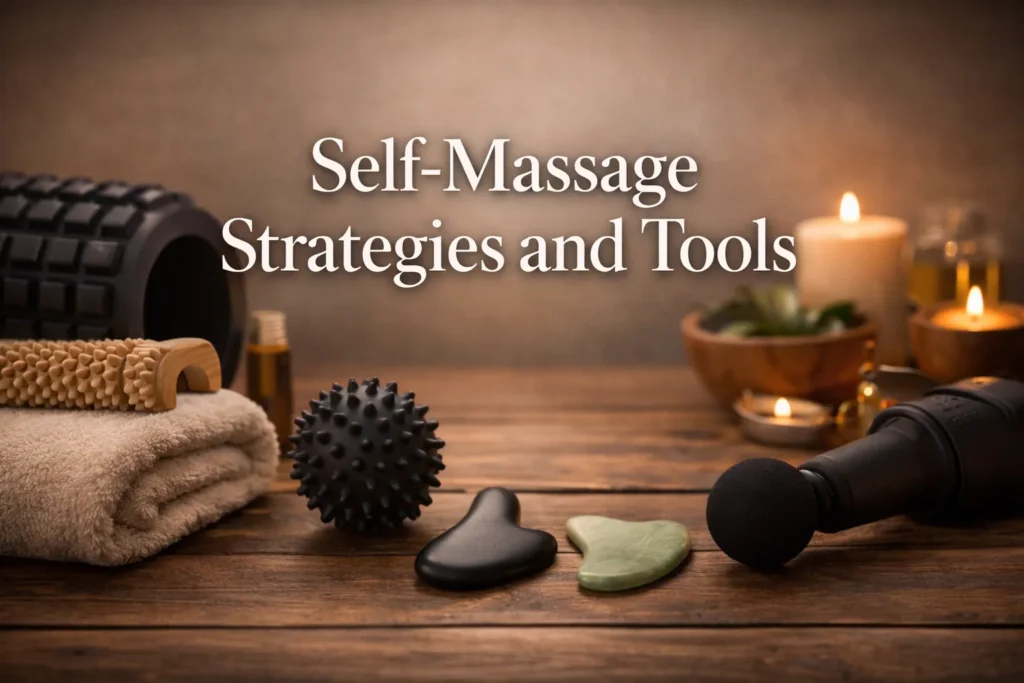
Self-massage for a pinched nerve focuses on easing muscle tightness, reducing nerve irritation, and promoting gentle blood flow. The following advice covers inexpensive tools, safe ways to apply pressure, and simple home care steps to support recovery.
Using Foam Rollers and Massage Balls
Foam rollers and massage balls target tight muscles that press on nerves. Use a soft foam roller for large areas like the upper back and glutes. Roll slowly—about 1 inch per second—and stop on tender spots for 10–20 seconds. For the neck and shoulders, choose a small, soft massage ball or a peanut-shaped ball to avoid pressing directly on the spine.
Place the ball between the muscle and a wall or the floor. Apply light pressure, then move slightly to find a comfortable spot. Do 1–2 minutes per spot, up to 10 minutes total for one area. If numbness, sharp pain, or tingling increases, stop and consult a clinician. For safe neck techniques, review guidance from a trusted source such as the American Academy of Orthopaedic Surgeons for warning signs and limits.
Safe Self-Application Techniques
Apply pressure gently and avoid direct compression of the nerve trunk. Use fingertips or a ball to work the surrounding muscle, not the nerve itself. Keep sessions short: 5–10 minutes per area and no more than twice a day unless cleared by a therapist. Breathe slowly and relax the jaw, shoulders, and throat during each hold.
Progress from light strokes to deeper pressure only if pain decreases. Track symptoms before and after each session: note pain level, numbness, and range of motion. Stop if weakness, severe pain, or spreading numbness occurs. When in doubt, have a physical therapist or licensed massage therapist demonstrate techniques or review a video from a credible source like Mayo Clinic to ensure correct body mechanics.
Home Care After Massage
After self-massage, rest the treated muscle for at least 15–30 minutes to let inflammation settle. Apply ice for 10–15 minutes if the area feels inflamed, or heat for 15–20 minutes if muscles feel stiff and not swollen. Continue gentle stretches and posture checks to prevent recurrence—hold each stretch 20–30 seconds and repeat 2–3 times.
Stay hydrated and avoid heavy lifting or strenuous activity for 24–48 hours after an intense session. If symptoms improve, add gradual strengthening exercises to support the spine and joints. If pain persists beyond a week, worsens, or causes weakness, seek medical evaluation to rule out compression needing medical or surgical care.
When to Seek Professional Help
Watch for clear warning signs that need medical or specialist attention, and pick a therapist with proper training and a plan for nerve-related issues.
Recognizing Complicated Symptoms
Seek immediate medical care if numbness, tingling, or weakness spreads quickly, worsens, or affects hand or leg control. Trouble walking, dropping objects, or loss of bowel or bladder control are red flags that may signal serious nerve damage or spinal cord involvement.
If pain is constant, sharp, or follows a recent injury or heavy lifting, a clinician should evaluate imaging needs and treatment options. Intermittent symptoms that get steadily worse over days to weeks also require prompt assessment.
Note any signs of infection after an injury—fever, redness, or warmth—since infection can compress nerves. Document symptom timing, activities that trigger pain, and any prior spine or nerve diagnoses to share with the provider.
Choosing a Qualified Massage Therapist
Choose a therapist licensed in the local jurisdiction (for example, LMT, RMT, or equivalent). Confirm they have experience treating nerve-related conditions and ask about specific training in neuromuscular techniques, deep tissue work, or trigger-point therapy.
Ask how they screen clients. A qualified therapist should take a full health history, ask about symptoms and red flags, and get medical clearance when needed. They should explain treatment goals, risks, and a clear plan that includes referrals to doctors, physical therapists, or neurologists if symptoms don’t improve.
Look for clinics that coordinate care with physicians and provide follow-up checks. Read reviews or request references, and avoid therapists who promise quick cures or insist on aggressive pressure despite worsening symptoms.
Lifestyle Adjustments for Lasting Nerve Relief
Small daily actions make a big difference. Adjustments to work setup, regular movement, and ways to lower stress help reduce pressure on nerves and cut pain flare-ups.
Ergonomic Improvements
They should set up the workstation so the screen sits at eye level and the keyboard is close enough that elbows stay at about 90 degrees. Use a chair with good lumbar support or add a small cushion to keep the lower back curved naturally. Feet should rest flat on the floor or on a footrest to avoid hip and lower back strain.
For phone and tablet use, hold devices at eye height or use a stand to avoid neck bending. If lifting or carrying, keep objects close to the body and bend at the hips and knees, not the waist. Change position every 20–30 minutes; simple microbreaks cut sustained pressure on spinal nerves.
Stretching and Exercise
They should aim for daily gentle stretching targeted to the affected area—neck flexion/extension, shoulder rolls, and levator scapulae stretches for cervical pinches; hamstring and glute stretches for lower-back or sciatica-related pinches. Hold each stretch 20–30 seconds and repeat 2–4 times per side.
Core-strengthening moves like planks and pelvic tilts support spine alignment and reduce nerve compression risks. Low-impact cardio—walking, cycling, or swimming—improves circulation and heals irritated nerves. Progress slowly and stop if tingling, increased numbness, or sharp pain occurs; seek professional guidance if symptoms worsen.
Stress Management Practices
They should use simple breathing exercises to lower muscle tension that can press on nerves. Try diaphragmatic breathing: inhale for four counts, hold one, exhale for six. Do this for 3–5 minutes twice daily or when pain spikes.
Sleep quality affects nerve healing. A medium-firm mattress and side or back sleeping with a pillow supporting neck alignment reduce nighttime nerve stress. Limit caffeine late in the day and keep a consistent bedtime. If anxiety or chronic stress persists, consider short-term counseling, biofeedback, or guided relaxation apps to cut muscle guarding and pain flare-ups.
FAQS
Can massage cure a pinched nerve?
Massage can ease muscle tension and improve blood flow, which often reduces pressure on a nerve. It helps symptoms in many mild to moderate cases, but it does not fix structural causes like a herniated disc.
What types of massage help most?
Deep tissue, myofascial release, and neuromuscular techniques are commonly used. Gentle Swedish or trigger-point work may suit people with acute pain or high sensitivity.
How often should someone get massage for a pinched nerve?
A short course of 1–3 sessions per week for several weeks is typical. Frequency depends on symptom severity, response to treatment, and therapist guidance.
Are there risks or when to avoid massage?
Massage can worsen symptoms if done too forcefully or if the nerve compression is severe. Avoid massage with severe numbness, progressive weakness, fever, or suspected infection. Seek immediate medical care for sudden loss of bowel or bladder control.
Can a person self-massage safely at home?
Yes, gentle self-massage, stretching, and heat can help short-term. They should stop if pain, numbness, or tingling worsens and consult a professional.
When should someone see a doctor or specialist?
See a physician if symptoms are severe, persist beyond a few weeks, or include increasing numbness or weakness. A specialist may order imaging or recommend physical therapy, injections, or surgery.
- Tip: Communicate clearly with a licensed therapist about pain levels and medical history.
Conclusion
Massage can ease the symptoms of a pinched nerve by reducing muscle tightness, improving circulation, and easing pain — but it works best as part of a broader plan that includes rest, movement changes, and medical guidance when needed.
Start with gentle techniques, avoid direct pressure on sharp nerve pain, and watch for red flags like spreading numbness or weakness. When used safely, massage offers practical, low-risk relief — but it doesn’t replace a proper diagnosis when one is needed.
They should choose gentler techniques at first and avoid direct pressure on sharp nerve pain. A trained therapist can adapt strokes and depth to match tolerance and the cause of compression.
If numbness, weakness, or worsening pain appears, they must stop massage and seek medical care. Imaging or specialist referral may be needed to prevent lasting nerve damage.
Simple self-care helps between sessions: short breaks from repetitive tasks, heat or ice as advised, and targeted stretches. Consistent, modest steps often add up to steady improvement.
Helpful checklist:
- Book a licensed therapist experienced with nerve issues.
- Start light; increase pressure only if pain improves.
- Watch for red flags: progressive weakness, loss of bowel/bladder control.
- Combine massage with posture fixes, stretching, and medical advice.
When used safely, massage offers practical, non-invasive relief and supports recovery. It does not replace diagnosis or surgery when those are necessary.