
By Ryan Mitchell | Wellness & Relaxation
Quick Answer:
Mindfulness for kids means helping children notice their thoughts, feelings, breathing, and surroundings without judging themselves. Parents can introduce it through breathing games, sensory walks, mindful eating, and short listening exercises. Start with a few minutes, keep activities playful, and let children choose what feels comfortable.
Helping Children Notice the Present Moment
Children experience busy school days, changing friendships, family routines, and many new emotions. They may not always have the words to explain what they feel. Simple mindfulness activities give them an opportunity to pause, notice what is happening, and practice responding thoughtfully.
Mindfulness does not require a meditation cushion, special equipment, or a perfectly quiet room. It can happen during a walk, at the dinner table, or while listening to a favorite song. The goal is to explore awareness together rather than expect a child to sit still or feel calm every time.
Sensory Play
Emotional Awareness
Family Routines
Trust and Safety Note
This article is for general educational information only. It does not diagnose, treat, cure, or prevent any condition. It does not replace advice from a licensed healthcare professional. Readers should seek professional help for severe, worsening, unusual, or persistent symptoms.
What Is Mindfulness for Kids?
Mindfulness means paying attention to the present moment with curiosity and without judging what you notice. For a child, that might mean feeling their feet on the floor, noticing the sound of rain, or recognizing that they feel frustrated before reacting.
It is a skill children can explore through everyday experiences. They do not need to empty their minds or stop having uncomfortable emotions. Instead, they practice noticing thoughts, feelings, and sensations without immediately trying to change them.
For example, a child who feels nervous before a school presentation might notice their fast heartbeat and name the feeling as nervousness. With a supportive adult, they can pause, breathe comfortably, and decide what would help them take the next step.
Research on mindfulness programs for children suggests that some approaches may offer small, short-term benefits in areas such as behavior, attention, or emotional well-being. Results vary by age and program, and mindfulness is not more effective than every other structured support. It should be viewed as a useful skill to explore, not a guaranteed solution.
Learn more from the National Center for Complementary and Integrative Health’s guidance for children and teens.
Why Introduce Mindfulness at an Early Age?
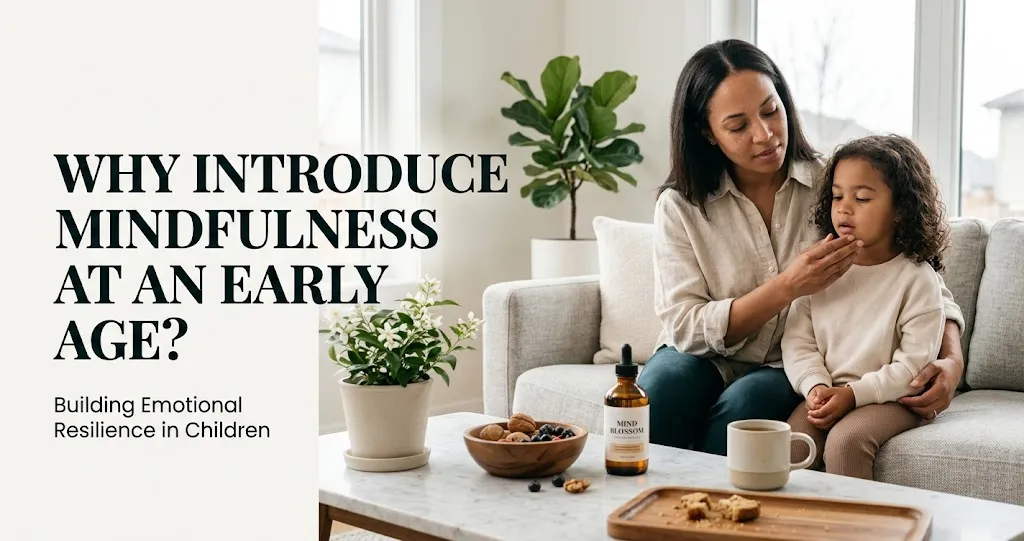
Children are learning how to understand emotions, pay attention, and navigate relationships. Mindfulness activities can provide opportunities to practice these skills in a low-pressure setting.
Recognizing Emotions
A child can practice identifying feelings such as excitement, disappointment, or worry. Naming an emotion may make it easier to explain what is happening and ask a trusted adult for support.
Practicing Attention
Listening for sounds or observing an object encourages children to direct their attention intentionally. This is practice in focusing, not a promise of better grades or perfect concentration.
Pausing Before Reacting
A brief pause can help a child notice frustration before deciding how to respond. Adults can model taking a moment, using respectful words, and seeking help when needed.
Building Self-Awareness
Noticing hunger, tiredness, muscle tension, or excitement helps children learn about their own experiences. This awareness can support conversations about what they need.
Keep expectations realistic: Mindfulness does not make difficult feelings disappear. Children may still become upset, distracted, or overwhelmed, and they may need reassurance, practical help, or professional support.
Choosing Activities That Fit Your Child’s Age
Children develop at different rates, so age ranges are starting points rather than strict rules. Choose activities that match your child’s interests, communication skills, and comfort level.
Age-Based Activity Guide
Swipe left/right to see the full table →
| Age group | Activity ideas | Adult support |
|---|---|---|
| Ages 3–5 | Stuffed-animal breathing, listening games | Play together; use simple words |
| Ages 6–8 | Sensory walks, feeling check-ins | Give short prompts and examples |
| Ages 9–12 | Mindful drawing, journaling, breathing | Offer choices and privacy |
| Ages 13–17 | Walking awareness, music, reflection | Respect independence and preferences |
Young children often learn best through play and imitation. Older children may prefer practical activities that fit into school breaks or everyday routines. If an activity feels too difficult or boring, simplify it or choose another one rather than insisting that your child finish.
6 Simple Mindfulness Activities to Try at Home
The following exercises use ordinary household items and familiar experiences. Start with one activity, let your child participate voluntarily, and keep the experience light rather than turning it into another task to complete.
1. Stuffed-Animal Breathing
Ask your child to lie down or sit comfortably and place a small stuffed animal on their belly if that feels comfortable. Invite them to notice its gentle movement as they breathe naturally. There is no need to take unusually deep breaths or hold the breath.
Try this after playtime or before a quiet activity. If watching the animal feels distracting, simply notice the feeling of the feet on the floor instead.
2. The Five-Senses Discovery Game
Invite your child to identify five things they can see, four things they can feel, three things they can hear, two things they can smell, and one thing they can taste or imagine tasting. Adjust the numbers if the full activity feels too long.
Try it during a quiet walk or while sitting together outdoors. Children should never be encouraged to taste unknown objects or smell potentially harmful substances. It is fine to skip a sense or choose a different activity.
3. Mindful Listening
Choose a familiar song or sit somewhere with ordinary background sounds. Ask your child to notice one sound, then another, without needing to name every noise. They might hear a bird, a fan, or a passing car.
This activity offers a simple way to practice attention without requiring stillness for long periods. If silence feels uncomfortable, use music at a comfortable volume instead.
4. Mindful Eating
During a normal snack or meal, invite your child to notice the food’s color, texture, smell, and taste. They might describe a crunchy apple or the warmth of a piece of toast.
Keep this exercise playful and pressure-free. Do not require children to eat unfamiliar foods, finish everything on their plate, or ignore hunger and fullness cues.
5. Feelings Weather Report
Ask your child to describe their mood as a weather pattern. They might feel sunny, cloudy, windy, or somewhere in between. Follow up with a gentle question such as, “Would you like to talk about it, have some space, or do something together?”
The aim is to help children notice feelings without labeling them as good or bad. They do not have to explain every emotion or share private thoughts if they are not ready.
6. Mindful Walking or Drawing
During a safe walk, invite your child to notice the ground beneath their feet, the colors around them, or the changing sounds. Alternatively, ask them to draw an object and notice its shapes, lines, and small details.
Walking works well for children who find sitting still difficult, while drawing offers a creative option for those who prefer quieter activities. Choose whichever feels enjoyable and accessible.
A Simple Routine for Everyday Practice
A routine does not need to be lengthy to be useful. Choose a predictable moment when your child has time and energy to participate. The sequence below is a flexible example, not a required schedule or a promise of results.
A Flexible Mindfulness Routine
Find a comfortable place or choose a gentle walking activity.
Try comfortable breathing, listening, drawing, or a sensory game.
Let thoughts and feelings come and go without demanding a particular result.
Ask whether your child wants to continue, switch activities, or stop.
This sequence can fit into a short break or a quiet part of the day. Some children prefer movement, while others enjoy listening or drawing. Consistency matters less than making the experience comfortable, flexible, and voluntary.
How Often Should Children Practice?
Swipe left/right to see the full table →
| Situation | Practical approach | What to watch for |
|---|---|---|
| First attempts | Try a brief activity | Interest and comfort |
| School transition | Listen or notice surroundings | Available time |
| Bedtime routine | Try quiet reading or listening | Whether it feels relaxing |
| Busy or difficult day | Offer a choice or skip it | Signs of overwhelm |
There is no single frequency that suits every child. A few enjoyable moments can be a reasonable starting point, but children do not need to practice daily to prove they are doing it correctly.
Making Mindfulness Comfortable and Age-Appropriate
The best activity is one your child can understand and feels comfortable trying. Offer simple options, demonstrate the exercise yourself, and allow movement or breaks whenever needed.
Choose an Activity That Fits
Likes movement
Try mindful walking, gentle stretching, or noticing sounds outdoors.
Enjoys creative play
Try mindful drawing, coloring, or describing an everyday object.
Prefers quiet activities
Try familiar music, listening games, or a brief sensory check-in.
Finds stillness difficult
Use a short, hands-on activity and avoid demanding long periods of sitting.
Children also benefit from seeing adults model the same skills. You might say, “I’m feeling rushed, so I’m going to pause and listen for a moment.” This demonstrates awareness without suggesting that adults or children must always feel calm.
Common Mistakes and Better Alternatives
Swipe left/right to see the full table →
| Common mistake | Better choice |
|---|---|
| Expecting instant calm | Focus on noticing, not results |
| Forcing closed eyes | Let children look around naturally |
| Correcting every distraction | Gently return to the activity |
| Treating it as punishment | Keep it voluntary and supportive |
| Ignoring discomfort | Pause, change activities, or stop |
Practical Tip
Offer two choices instead of giving an instruction: “Would you like to listen to music or take a mindful walk?” This gives your child a sense of control and makes it easier to find an activity they genuinely enjoy.
What If an Activity Does Not Help?

Not every child enjoys mindfulness, and the same child may prefer different activities on different days. Difficulty sitting still, wandering attention, or deciding not to participate does not mean a child has failed.
First, check whether the activity is too long, too complicated, or poorly timed. Try a shorter sensory game, switch to drawing, or simply spend time talking together. A child who is hungry, tired, upset, or overstimulated may need practical support before any reflective activity feels useful.
Some children may feel uncomfortable when asked to focus on breathing, close their eyes, or pay close attention to internal sensations. If this happens, stop the exercise and offer a neutral alternative, such as noticing objects in the room or listening to familiar music.
A Simple Decision Path
Yes
Continue briefly if they want to, then finish naturally.
No or unsure
Pause, offer another activity, or leave mindfulness for another time.
Concern continues?
If emotional or behavioral difficulties persist or interfere with everyday life, speak with a pediatric healthcare professional or qualified mental health professional.
Mindfulness should never be used to dismiss a child’s worries, discourage them from speaking up, or replace appropriate care. Listen when a child describes a problem and help them access support when needed.
Important Safety Reminder
Do not pressure a child to continue an exercise that increases distress or discomfort. Stop and offer a different approach. If a practice repeatedly causes distress, or if a child has a history of trauma or a health condition that may affect its suitability, consult an appropriate healthcare professional before trying further structured exercises.
When to Contact a Professional
Every child experiences difficult days, frustration, and worry. However, ongoing changes in mood or behavior deserve attention when they persist, become more intense, or interfere with school, sleep, friendships, family life, or everyday activities.
Consider speaking with your child’s pediatrician or a qualified mental health professional if your child experiences persistent anxiety, frequent distress, significant changes in behavior, or difficulty managing daily responsibilities. A professional can help assess what support may be appropriate.
Seek urgent medical or mental health help if your child is in immediate danger or experiences a serious, acute mental health crisis. Do not rely on mindfulness exercises to manage an emergency.
For additional information about the evidence and limitations of mindfulness practices, consult the NIH’s overview of meditation and mindfulness effectiveness and safety. Mindfulness may complement appropriate support, but it should not delay professional evaluation or replace recommended care.
When to Contact a Professional
Seek guidance if emotional difficulties are severe, persistent, worsening, or affecting daily life. If a child becomes distressed during mindfulness, stop the exercise and prioritize their comfort. For immediate danger or an urgent crisis, seek emergency assistance.
Frequently Asked Questions
At what age can children start practicing mindfulness?
Children can explore simple awareness games from preschool age, with activities adapted to their development. Young children usually benefit from play-based exercises and adult guidance.
What are the easiest mindfulness activities for kids?
Try stuffed-animal breathing, mindful listening, sensory walks, or noticing the colors and textures of food. Choose an activity your child finds comfortable and enjoyable.
How long should a child practice mindfulness?
Begin with a brief activity and adjust it to your child’s interest and comfort. There is no universal duration that every child needs to follow.
Can mindfulness help children manage stress?
Some mindfulness programs may support emotional awareness and aspects of well-being, but results vary. Mindfulness is not a guaranteed solution and should not replace professional care when needed.
What if my child cannot sit still?
Choose movement-based activities, such as mindful walking or drawing. Children do not need to sit perfectly still or keep their minds free of distractions to practice awareness.
Is mindfulness safe for every child?
Many simple activities are low risk when appropriately adapted, but not every exercise suits every child. Stop if an activity causes distress and consult a healthcare professional when health concerns or persistent difficulties arise.
Can families practice mindfulness together?
Yes. Families can listen to music, notice nature on a walk, or share a mindful meal. Participating together can make activities more approachable while giving children room to choose their level of involvement.
Final Thoughts
Mindfulness for kids can begin with everyday moments, from noticing sounds to describing emotions or taking a comfortable pause. Start with an activity that suits your child’s age and interests, and let curiosity guide the experience rather than expecting immediate results.
Keep practice flexible, respect your child’s boundaries, and remember that mindfulness is only one possible form of support. If emotional or behavioral concerns are severe, persistent, worsening, or affecting daily life, seek guidance from a qualified professional.
Author
-

Hi, I’m Ryan Mitchell, a wellness and relaxation writer at RemedyTip.com, where I focus on helping readers better understand stress management, relaxation techniques, mindfulness, sleep improvement, and everyday wellness habits. I have developed a strong knowledge of the Wellness & Relaxation field through sustained learning, in-depth research, and a continued commitment to exploring practical approaches to well-being.
My work focuses on researching wellness topics, examining available evidence, and turning complex information into clear, accessible, and actionable guidance. I’m continually exploring new findings, relaxation practices, and lifestyle strategies to help readers make informed decisions about their daily wellness routines. At RemedyTip.com, my goal is to share trustworthy, research-informed content that encourages healthier habits, greater relaxation, and a more balanced lifestyle.

