
By Ryan Mitchell | Wellness & Relaxation
Quick Answer: Jigsaw puzzles for mindfulness offer a simple way to practice present-moment awareness while sorting shapes, noticing colors, and finding patterns. Choose a comfortable puzzle, slow down, and focus on one piece at a time. The goal is not to finish quickly but to enjoy the process without judging your progress.
A gentler way to unwind
Make room for one piece at a time.
Every puzzle gives you something simple to return to: a color, an edge, a pattern, or the feel of a piece between your fingers. With a few thoughtful changes, an ordinary puzzle session can become a quiet break from multitasking and everyday distractions.
Gentle concentration
Screen-free leisure
Flexible routine
Health and wellness note: This article is for general educational information only. It does not diagnose, treat, cure, or prevent any condition. It does not replace advice from a licensed healthcare professional. Readers should seek professional help for severe, worsening, unusual, or persistent symptoms.
Why Jigsaw Puzzles Can Be a Mindful Activity
Mindfulness means paying attention to the present moment with curiosity rather than judging every thought or feeling. It does not require sitting perfectly still, emptying your mind, or making every worry disappear. Everyday activities can provide opportunities to practice this kind of awareness.
Working on a jigsaw puzzle gives your attention a clear, practical task. You might compare two shades of blue, trace a piece’s curved edge, or notice how several shapes fit together. These small observations can bring your focus back to what is happening now.
For example, imagine that you have spent the afternoon switching between messages, work tasks, and household chores. Instead of opening another app during a break, you sit down with a puzzle and spend ten minutes noticing shapes and colors. The activity gives you a different pace and something concrete to concentrate on.
However, a puzzle is not automatically a mindfulness exercise. Rushing to finish, checking your phone constantly, or criticizing yourself over every misplaced piece can turn it into another demanding task. The mindful element comes from how you approach the activity, not from completing the picture.
The National Center for Complementary and Integrative Health explains mindfulness as present-moment awareness and notes that research on meditation varies by outcome. Puzzle-specific benefits should not be assumed to match findings from formal mindfulness programs.
How to Build a Mindful Puzzle Routine
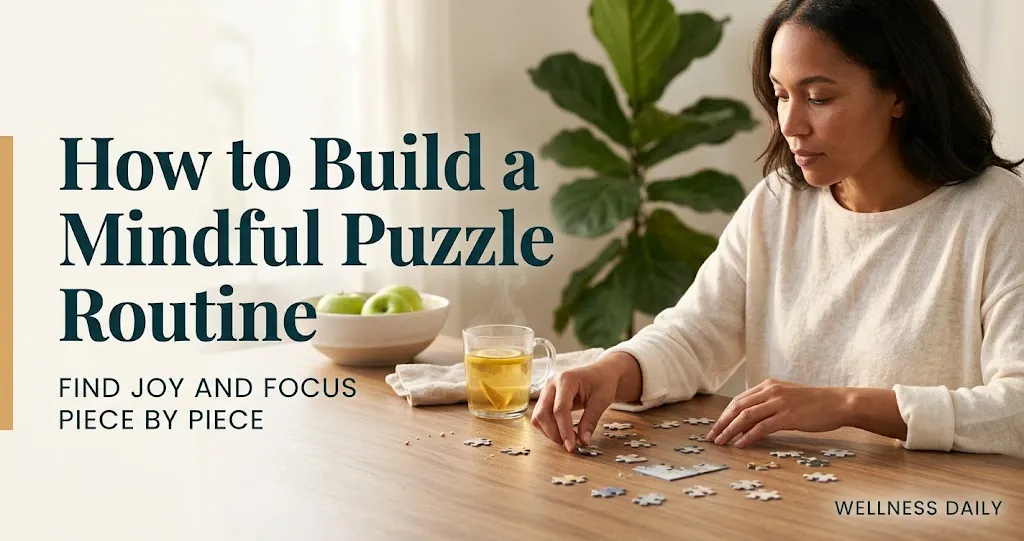
You do not need a special room, expensive equipment, or a large block of free time. Start with a manageable puzzle and a short session that fits your day. Adjust the routine according to your comfort and attention.
Use this simple sequence to turn an ordinary puzzle break into a more intentional practice.
Your mindful puzzle flow
Clear a small surface and put distractions aside.
Observe the colors, shapes, and textures in front of you.
Try one piece, then another, without rushing.
When your mind wanders, bring attention back to the puzzle.
Pause when your chosen time is up and notice how you feel.
This flow is a practical guide, not a test you must pass. If you become distracted, simply begin again at the step that feels useful. Returning your attention is part of the practice.
Step-by-step: your first session
1
2
3
4
5
Choosing a Puzzle That Fits Your Needs
The right puzzle is one you can enjoy without feeling overwhelmed. Piece count matters, but image contrast, familiarity, available space, and personal interest can matter just as much. A beginner may prefer a clear picture with distinct sections, while an experienced puzzler may enjoy a more intricate design.
Use the following table as a starting point. These are practical suggestions, not strict rules about difficulty.
Puzzle type and mindful fit
Swipe left/right to see the full table →
| Puzzle style | May suit | Mindful approach |
|---|---|---|
| Large, clear pieces | Beginners | Notice shape and color differences |
| Nature scenes | Nature lovers | Explore leaves, water, and sky tones |
| Familiar artwork | Casual sessions | Notice recognizable details |
| Complex, similar colors | Experienced puzzlers | Practice patience and flexible thinking |
When deciding between two puzzles, ask which one invites curiosity rather than frustration. You can always save a challenging design for another day.
Match the activity to your goal
Swipe left/right to see the full table →
| Your intention | Try this | Keep in mind |
|---|---|---|
| A short break | Sort a small group | Keep the task small |
| Sensory awareness | Notice texture and shape | Use gentle attention |
| Shared connection | Work with a friend | Enjoy conversation without pressure |
| Quiet evening | Choose a familiar image | Stop if you feel tired |
Mistakes That Can Make Puzzling Less Relaxing
Mindful puzzle-solving is meant to be flexible. A few common habits can make the activity feel more like an obligation than a break. The solution is usually to simplify the session, adjust your expectations, or choose a different activity.
Mistake versus better choice
Swipe left/right to see the full table →
| Unhelpful habit | Better choice | Why it helps |
|---|---|---|
| Racing to finish | Focus on one piece | Shifts attention to the process |
| Forcing a difficult piece | Switch to another area | Makes room for flexibility |
| Checking notifications | Silence alerts briefly | Reduces interruptions |
| Criticizing mistakes | Treat errors as information | Encourages a kinder attitude |
Note: You do not need to feel calm every minute for a puzzle session to be worthwhile. You may notice impatience, boredom, or unrelated thoughts. Acknowledge what is happening and decide whether to continue, take a break, or stop.
A quick focus check
Use this simple dashboard as a practical guide to where you can place your attention during a session. The percentages represent suggested emphasis, not measured psychological effects.
Practical guide to mindful attention
These values are illustrative routine priorities, not scientific scores or performance targets.
The main idea is to give more attention to the experience than to the finished picture. If you naturally enjoy tracking progress, that is fine too; simply notice when the scorekeeping starts to create pressure.
Tip: If a piece does not fit, put it down rather than repeatedly forcing it. Take a breath, look at the surrounding colors, and try a different section. This gives you a small opportunity to practice patience without turning the puzzle into a test.
How Long Should a Mindful Puzzle Session Last?
There is no required duration. A brief session may be easier to fit into a busy day, while a longer one may suit someone who enjoys puzzling as a hobby. Start with a manageable amount of time and adjust according to comfort rather than chasing a perfect routine.
A flexible timing guide
Swipe left/right to see the full table →
| Time available | Suggested activity | Good stopping point |
|---|---|---|
| 5 minutes | Sort a few pieces | When your break ends |
| 10–15 minutes | Explore one picture area | At your planned time |
| 20–30 minutes | Work at a comfortable pace | When focus or comfort changes |
| Longer hobby session | Pause periodically | Before fatigue or discomfort builds |
These time ranges are optional examples, not evidence-based prescriptions. If you notice eye strain, stiffness, frustration, or tiredness, take a break earlier. You can return later or choose a different activity.
Creating a Comfortable Puzzle Space
A comfortable setup makes it easier to give the activity your attention. Use a stable surface, adequate lighting, and a chair that lets you sit without unnecessary strain. Keep pieces within easy reach, and avoid bending over the puzzle for long periods.
Try this simple checklist before you begin:
Your mindful puzzle setup
Lighting
Make piece details easy to see.
Posture
Sit comfortably and change position when needed.
Distractions
Silence alerts or move your phone away.
Boundaries
Leave enough space to sort pieces without crowding.
Use the checklist as a practical guide, not a requirement for a perfect environment. A kitchen table or small desk can work well if you have enough room and can return the pieces to storage safely afterward.
Products and Simple Tools to Consider

You do not need to buy anything special to begin. An existing puzzle, a clear surface, and a little uninterrupted time are enough. If you decide to purchase something, prioritize usability, storage, and a picture you genuinely enjoy.
Puzzle accessories and their practical uses
Swipe left/right to see the full table →
| Item | Possible benefit | Check before buying |
|---|---|---|
| Beginner puzzle | Provides a ready-made activity | Piece count and image clarity |
| Sorting trays | Keeps groups organized | Storage space and stability |
| Puzzle mat | May help with temporary storage | Puzzle size and rolling method |
| Small organizer | Makes cleanup simpler | Ease of access and safe storage |
Choose accessories only when they solve a real problem, such as limited table space or difficulty keeping pieces sorted. Extra equipment is optional and should not become a barrier to starting.
A simple starter puzzle
A small, clearly printed jigsaw puzzle may be a practical starting point if you want to try mindful puzzling without committing to a large project. Look for an image that interests you and a difficulty level that feels inviting.
A mat for flexible puzzle sessions
A puzzle mat may be useful if you need to clear your table between sessions. Check the mat’s size, stability, and storage instructions before choosing one; it is an organizational aid rather than a mindfulness tool in itself.
Warning: Do not keep puzzling through eye strain, headaches, hand discomfort, or worsening physical symptoms simply to finish a section. Pause, change your setup, or stop. Seek professional advice for persistent or worsening symptoms rather than assuming the puzzle is the cause or the solution.
When to contact a professional: Puzzling is a leisure activity, not a substitute for care. If stress, anxiety, low mood, sleep difficulties, or other symptoms are persistent, worsening, or interfering with daily life, consider talking with a qualified healthcare professional. Seek urgent medical help for severe or sudden symptoms or an immediate safety concern.
Making the Habit Sustainable
A useful routine should fit your life rather than create another obligation. You might puzzle after lunch, during a screen break, or for a few minutes in the evening. Connect it to a time that already exists in your day, and keep the first sessions short enough to feel manageable.
Some days you may feel absorbed in the picture. On other days, you may find it difficult to focus. Both experiences are normal parts of an informal activity; neither means you are failing at mindfulness.
For broader guidance, the NHS mindfulness guide explains how present-moment awareness can be practiced in everyday life. If sitting still is uncomfortable, you can also try a short walk, a simple breathing exercise, or another ordinary activity that feels suitable for you.
Keep the routine flexible: choose a puzzle you like, make the space comfortable, and stop when you need to. The purpose is to create an opportunity for attention and enjoyment, not to measure your progress or guarantee a particular emotional outcome.
Frequently Asked Questions
Can jigsaw puzzles help with mindfulness?
They can provide an opportunity to practice present-moment attention by noticing shapes, colors, and patterns. They are not a proven replacement for formal mindfulness training or professional care.
How long should I do a mindful puzzle?
Start with five to fifteen minutes if that feels manageable. There is no required duration, so adjust the session to your schedule, attention, and comfort.
What type of puzzle is best for beginners?
Choose a puzzle with a clear image, distinguishable colors, and a manageable piece count. The best starting point is one that feels interesting rather than overwhelming.
Should I puzzle in silence?
No. Quiet may reduce distractions, but gentle background music or comfortable conversation can also work. Choose an environment that helps you pay attention without adding pressure.
What if my mind keeps wandering?
Notice that your attention has wandered, then gently return to a piece, color, or shape. You do not need to stop every thought to practice present-moment awareness.
Do I need special puzzle accessories?
No. A suitable puzzle, comfortable seating, and enough light are usually sufficient. Trays or a mat are optional if they make sorting or storage easier.
Can puzzles replace meditation or mental health treatment?
No. Puzzles can be one enjoyable way to practice attention, but they do not replace formal mindfulness instruction, professional assessment, or recommended mental health treatment.
Final Thoughts
Jigsaw puzzles for mindfulness can turn a familiar hobby into a simple opportunity to slow down, notice details, and return to the present. Begin with a comfortable puzzle, focus on the process rather than completion, and take breaks whenever you need them. If ongoing stress or other symptoms are severe, worsening, unusual, or persistent, seek guidance from a qualified professional.
Author
-

Hi, I’m Ryan Mitchell, a wellness and relaxation writer at RemedyTip.com, where I focus on helping readers better understand stress management, relaxation techniques, mindfulness, sleep improvement, and everyday wellness habits. I have developed a strong knowledge of the Wellness & Relaxation field through sustained learning, in-depth research, and a continued commitment to exploring practical approaches to well-being.
My work focuses on researching wellness topics, examining available evidence, and turning complex information into clear, accessible, and actionable guidance. I’m continually exploring new findings, relaxation practices, and lifestyle strategies to help readers make informed decisions about their daily wellness routines. At RemedyTip.com, my goal is to share trustworthy, research-informed content that encourages healthier habits, greater relaxation, and a more balanced lifestyle.

