
By Alex Turner
Quick Answer: What is the use of an infrared massager? It is generally used to combine massage with infrared-generated warmth to promote relaxation, ease the feeling of muscle tightness, and support temporary comfort. It can be a useful wellness tool, but it is not a cure for an underlying medical condition.
What Is an Infrared Massager?
An infrared massager is a massage device that combines mechanical massage, such as vibration, tapping, rolling, or kneading, with an infrared heat function. The massage component provides physical stimulation, while the infrared component is intended to create warmth in the treated area.
What is the use of an infrared massager in everyday wellness? The main idea is simple: the device is designed to make massage feel warmer and potentially more relaxing. Some devices let you use massage and infrared heat together, while others allow the heat function to be switched on separately.
Trust & Safety: This article is for general educational information only. It does not diagnose, treat, cure, or prevent any condition. It does not replace advice from a licensed healthcare professional. Readers should seek professional help for severe, worsening, unusual, or persistent symptoms.
How Infrared Massage Works
Infrared radiation is a form of electromagnetic radiation that sits beyond visible red light. Depending on the device, infrared technology may be used primarily to generate warmth or may involve specific light wavelengths intended for photobiomodulation. Those technologies should not automatically be treated as identical.
In a typical infrared massager, the practical sensation is warmth combined with mechanical massage. Heat can influence how comfortable a tight or stiff area feels, while massage provides direct mechanical stimulation. Research on infrared therapies has reported potential benefits for some musculoskeletal pain conditions, but results vary by technology, condition, and treatment method. :contentReference[oaicite:0]{index=0}
This distinction matters because marketing language can make every infrared product sound like it provides the same therapeutic effect. It does not. A handheld massager that produces warming heat is different from a clinical photobiomodulation device with a specified wavelength and treatment protocol.
How the two components may contribute
1. Massage
Mechanical movement can provide a soothing sensation and may temporarily reduce the feeling of tightness or tension.
2. Warmth
Gentle heat can make an area feel warmer and more comfortable, particularly when stiffness is associated with feeling cold or tense.
3. Combined experience
Using both functions can create a relaxing routine without meaning that the device treats the cause of pain.
4. Comfort check
The goal should be comfortable warmth and massage, not intense heat, pressure, or discomfort.
The practical takeaway is that the massage and heat functions should be viewed as complementary comfort features rather than proof that the device can repair an injury or cure a disease.
What Is the Use of an Infrared Massager?
The most common everyday purpose is temporary muscle comfort and relaxation. People may choose this type of device when they want a convenient way to combine massage with soothing warmth around areas such as the shoulders, back, arms, thighs, or calves.
What is the use of an infrared massager when an area simply feels tight after ordinary activity? In that situation, the warmth and massage may make the area feel more relaxed. Local heat itself has evidence for short-term effects on pain and physical function in some musculoskeletal situations, although that does not establish that every infrared massager will produce the same result. :contentReference[oaicite:1]{index=1}
Infrared research also has limitations. A systematic review found potentially helpful effects in several musculoskeletal conditions, but the studies used different infrared technologies and treatment approaches. The review also found mixed findings for low-back pain and sports-related muscle recovery. :contentReference[oaicite:2]{index=2}
Swipe left/right to see the full table →
| Potential use | What it may provide | Important limit |
|---|---|---|
| Muscle relaxation | Warm, soothing massage | Temporary comfort |
| Stiffness | Gentle warmth | Does not identify the cause |
| Post-activity comfort | Relaxing routine | Not guaranteed to speed recovery |
| General relaxation | Massage plus warmth | Not medical treatment |
Where Might an Infrared Massager Fit?
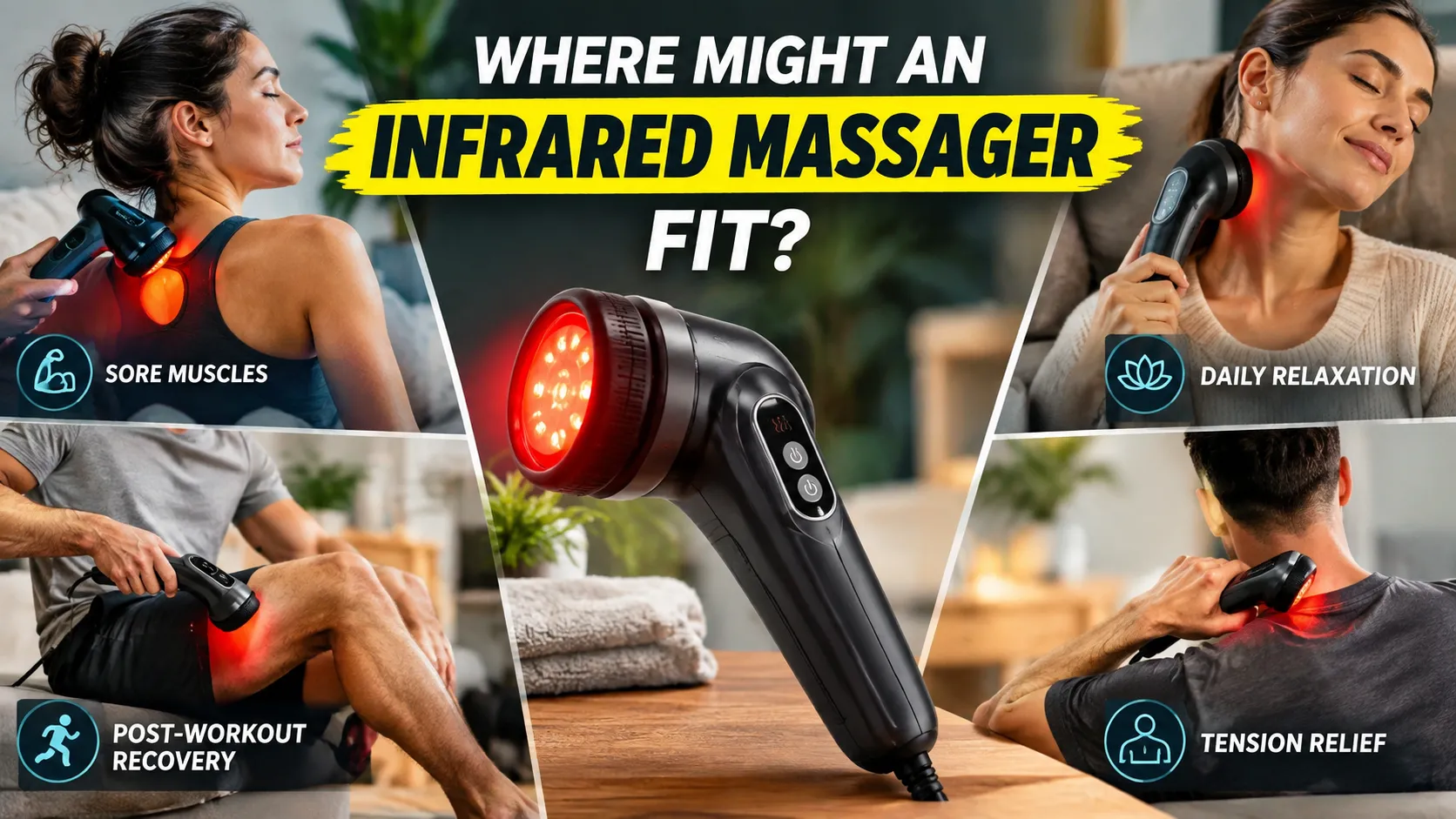
For everyday use, the most sensible role is as a comfort tool. The right fit depends less on the word “infrared” and more on what the device actually does, how much heat it produces, what massage mechanism it uses, and whether those features match the user’s goal.
A practical body-area fit guide
Shoulders
May fit a gentle relaxation routine for ordinary muscle tension. Avoid direct pressure over painful or injured structures.
Back
May provide warmth and massage comfort, but persistent or unexplained back symptoms deserve proper evaluation.
Arms & legs
Can be considered for general muscle relaxation when the area is healthy and the device instructions allow it.
Joints
Use caution with direct pressure. A painful, swollen, or injured joint should not simply be treated as ordinary muscle tightness.
The device should never be used simply because a body area hurts. Pain can have many causes, and a warming sensation may temporarily change how an area feels without addressing the reason the symptom developed.
Swipe left/right to see the full table →
| Goal | Potential fit | Use extra caution |
|---|---|---|
| Relaxation | Gentle massage + warmth | If heat feels uncomfortable |
| Muscle tightness | Comfort-focused routine | Severe or unexplained pain |
| After normal activity | Light, comfortable massage | Recent injury or swelling |
| Persistent symptoms | Professional assessment first | Do not rely on massage alone |
For someone who wants relaxation, the device may fit naturally into a broader routine. For someone with persistent pain, numbness, weakness, significant swelling, or a recent injury, the priority changes from comfort to finding out what is causing the problem.
Note: “Infrared” does not automatically mean “deep healing.” Different devices use different technologies, wavelengths, heat levels, and massage mechanisms. Check the actual product instructions rather than assuming every infrared massager works in the same way.
Benefits and Limitations to Keep in Mind
What is the use of an infrared massager is best answered by separating reasonable comfort goals from claims that go beyond the evidence. Infrared therapy has been studied for musculoskeletal conditions, and some research suggests possible reductions in pain, but the evidence is not uniform across conditions or device types. :contentReference[oaicite:3]{index=3}
For example, heat-based approaches can have short-term effects on pain and physical function in some musculoskeletal settings. That does not mean an infrared massager will repair damaged tissue, eliminate inflammation, or make an injury heal faster.
Swipe left/right to see the full table →
| Potential benefit | Reasonable interpretation | Do not assume |
|---|---|---|
| Warmth | May feel soothing | Guaranteed healing |
| Massage | May reduce feeling of tension | Treating the underlying cause |
| Relaxation | May make a routine more comfortable | Replacing professional care |
| Possible pain relief | Evidence varies | A guaranteed result |
Typical routine priority — practical guide, not scientific data
Comfort
Gentle warmth
Relaxation
Condition treatment
The visual above is a practical way to think about the device, not a measurement of clinical effectiveness. Its strongest everyday role is generally comfort and relaxation rather than replacing assessment or treatment for a medical problem.
Safe Use: Heat and Massage Are Not Risk-Free
Infrared and other heat-producing devices can become uncomfortable or cause skin injury if they become too hot or are used incorrectly. The FDA notes that controlled infrared light procedures can produce heating and that light-based energy devices can have complications including burns and other skin effects. :contentReference[oaicite:4]{index=4}
The safest approach is to follow the specific manufacturer’s instructions, use only the intended body areas, and stop if the skin becomes painful, excessively hot, numb, or irritated. Avoid treating a painful area more aggressively simply because the first session did not produce enough sensation.
Warning: Do not use an infrared massager over broken, burned, infected, or significantly irritated skin. Extra caution is appropriate if you have reduced heat sensation, circulation problems, a condition that affects sensation, or another medical reason that makes heat or massage unsuitable. When in doubt, ask a healthcare professional before use.
Do’s and don’ts for a comfort-focused routine
Do
Follow the device instructions, begin conservatively, and keep the sensation comfortable.
Check the skin and stop if unusual heat, pain, irritation, or numbness develops.
Don’t
Do not assume stronger heat or pressure means better results.
Do not use massage to ignore severe, persistent, or unexplained symptoms.
Swipe left/right to see the full table →
| Mistake | Better choice | Why it matters |
|---|---|---|
| Turning heat very high | Use a comfortable setting | Limits excessive heat exposure |
| Pressing harder | Keep pressure gentle | More pressure is not automatically better |
| Using it on injured skin | Wait and follow professional advice | Heat and pressure may aggravate irritation |
| Ignoring persistent pain | Get the symptom assessed | Comfort does not explain the cause |
When Should You Choose Something Else?
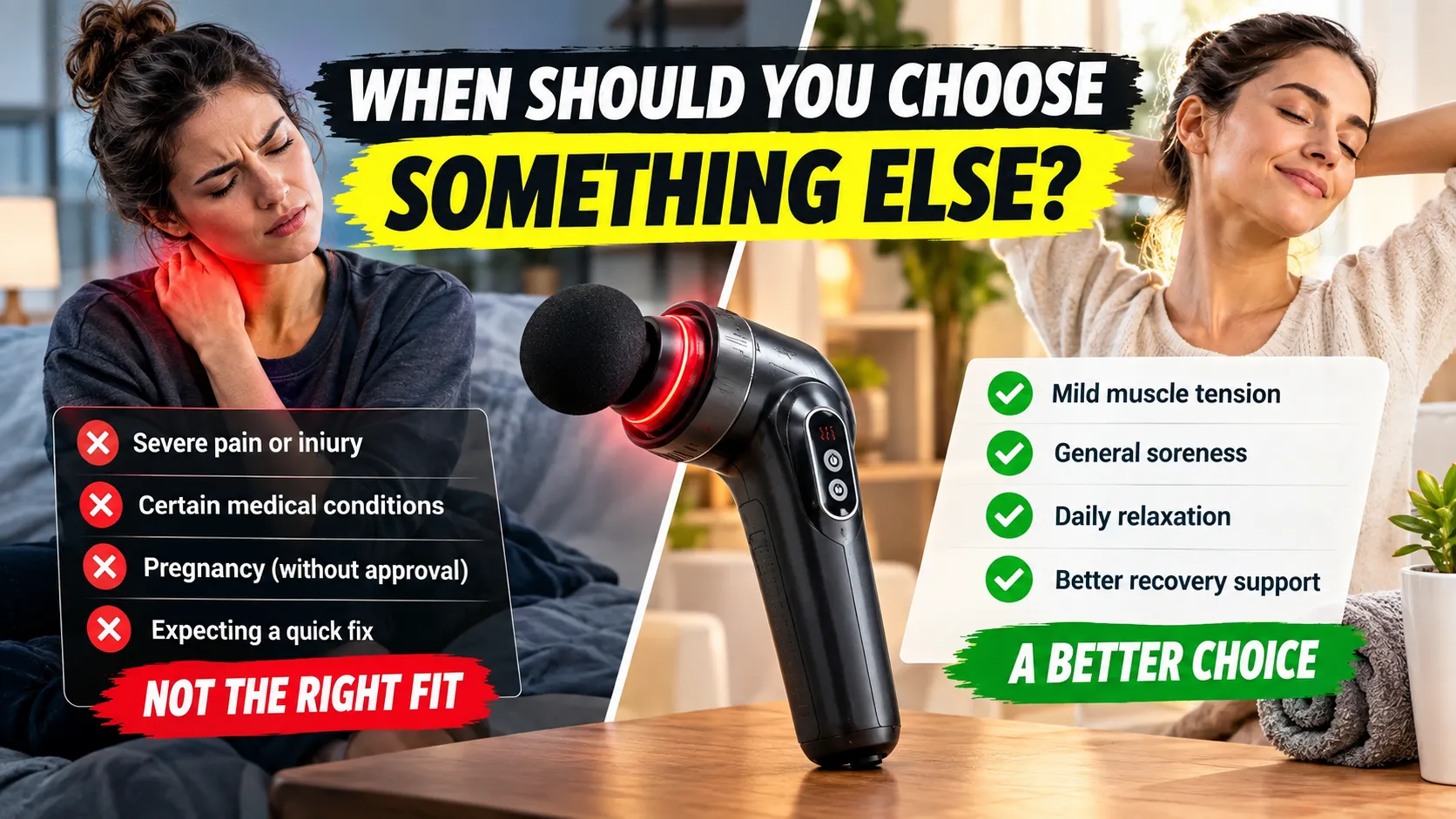
What is the use of an infrared massager becomes a different question when symptoms are severe, unusual, persistent, or connected with an injury. A home massage device is not a substitute for evaluation when there may be a problem that requires a more specific approach.
A professional assessment is especially important if symptoms include significant weakness, numbness, severe or worsening pain, major swelling, fever, chest pain, symptoms after a significant injury, or loss of bladder or bowel control. These symptoms should not be managed simply by increasing massage or heat.
Comfortable, mild tension
A gentle comfort routine may be reasonable if the area is otherwise healthy and the device instructions allow use.
Symptoms keep returning
Consider discussing the recurring symptom with a healthcare professional instead of relying on repeated massage alone.
Severe, worsening, or unusual symptoms
Stop relying on the device and seek appropriate medical evaluation.
Swipe left/right to see the full table →
| Situation | Self-care may fit | Professional evaluation |
|---|---|---|
| Mild temporary tightness | Possible | If it persists or worsens |
| Recurring unexplained pain | Limited role | Recommended |
| Recent significant injury | Do not assume it is suitable | Recommended |
| Numbness or weakness | Not a massage-only problem | Prompt evaluation |
When to contact a professional: Seek professional medical advice for severe, worsening, unusual, or persistent symptoms, especially when pain comes with weakness, numbness, fever, significant swelling, chest pain, or a significant injury. Do not use a massager to delay evaluation of a concerning symptom.
Common Mistakes About Infrared Massagers
One common mistake is assuming that infrared automatically means deeper, stronger, or more effective treatment. Another is treating marketing claims as if they apply equally to every device. The technology, wavelength, temperature, massage mechanism, and intended use all matter.
Another mistake is expecting a massage device to produce a predictable recovery result after exercise. Research has not consistently shown that every infrared approach improves athletic muscle recovery, and evidence varies considerably between applications. :contentReference[oaicite:5]{index=5}
Four questions to ask before using one
What does the device actually do?
Look for the massage mechanism and the manufacturer’s description of the infrared feature.
What is my goal?
Relaxation and temporary comfort are different goals from treating an injury or persistent pain.
Is the area appropriate?
Do not assume that every painful or swollen body area is suitable for heat or massage.
Do I need professional guidance?
If symptoms are persistent, severe, unusual, or associated with concerning signs, professional evaluation comes first.
Tip: Think of an infrared massager as a comfort tool rather than a cure-all device. A useful routine should leave the area feeling comfortable, not irritated, overheated, bruised, or more painful.
Frequently Asked Questions
What is the use of an infrared massager?
It is generally used to combine massage with warming infrared heat for relaxation, muscle comfort, and a soothing self-care routine. It should not be treated as a cure for an underlying condition.
Does an infrared massager help tight muscles?
The warmth and massage may make tight muscles feel more relaxed or comfortable. The effect is generally best viewed as temporary comfort rather than treatment of the underlying cause.
Is infrared massage the same as red-light therapy?
Not necessarily. Different devices use different wavelengths and mechanisms, and some infrared massagers primarily provide warming heat while other light-based therapies use specific photobiomodulation protocols.
Can an infrared massager relieve pain?
Some infrared therapies have been studied for musculoskeletal pain, with some studies reporting reduced pain. Results vary by condition and technology, so a home massager should not be expected to provide a guaranteed result.
Can you use an infrared massager every day?
The appropriate frequency depends on the specific device and its instructions. Follow the manufacturer’s directions and avoid increasing heat, pressure, or duration simply to obtain a stronger sensation.
Who should be cautious with infrared massage?
People with reduced heat sensation, circulation problems, damaged or irritated skin, significant injuries, or other conditions that may make heat or massage unsuitable should seek professional guidance before use.
When should I stop using an infrared massager?
Stop if you develop unusual heat, skin irritation, numbness, significant pain, or worsening symptoms. Persistent or concerning symptoms should be assessed by a healthcare professional.
Final Thoughts
What is the use of an infrared massager? Its most practical role is combining massage with warmth to support relaxation and temporary muscle comfort. It can fit into a general recovery or self-care routine when used according to the device instructions.
The key is to keep expectations realistic. Infrared technology varies between devices, research findings are not uniform, and a home massager should not replace professional evaluation for severe, worsening, unusual, or persistent symptoms.
If a symptom does not improve or keeps returning, getting the underlying issue assessed is more useful than simply increasing massage intensity or heat.
Author
-

I’m Alex Turner, a massage product reviewer and wellness writer at RemedyTip. I specialize in researching, evaluating, and comparing massage and recovery products to help readers make informed purchasing decisions. My focus is on practical, evidence-informed product guidance covering muscle recovery, relaxation, everyday comfort, and wellness.
I take a research-driven approach to every product I review. I examine product specifications, features, materials, performance claims, user feedback, durability, comfort, ease of use, and overall value. When appropriate, I also consult trusted industry and health-related sources to verify important information and provide readers with a more complete and balanced view.
I cover a wide range of products, including massage guns, handheld massagers, neck and shoulder massagers, foot massagers, massage chairs, foam rollers, and other recovery tools. Rather than focusing only on marketing claims, I look at how products compare in real-world use and who they are actually suitable for. I also consider different budgets, use cases, and user needs when making recommendations.
At RemedyTip, I’m committed to accuracy, transparency, and unbiased product information. I clearly distinguish between manufacturer claims, available evidence, and my own product analysis so readers can understand the basis of each recommendation. I continuously research new products, technologies, and developments in the massage and recovery space to keep my content current and useful.
My goal is simple: to provide trustworthy, easy-to-understand information that helps readers choose massage and recovery products with greater confidence.

