
By Alex Turner
If you’ve ever finished a session with a massage gun and started scratching right after, you’re not imagining it. A lot of people quietly search why does percussion massage make me itch after noticing the same pattern session after session. The good news is that in most cases, the cause is simple and fixable with a few routine changes.
Percussion Massage Skin Sensitivity Massage Gun Recovery Itch Relief Self-Care Routine
Why Percussion Massage Can Trigger an Itch
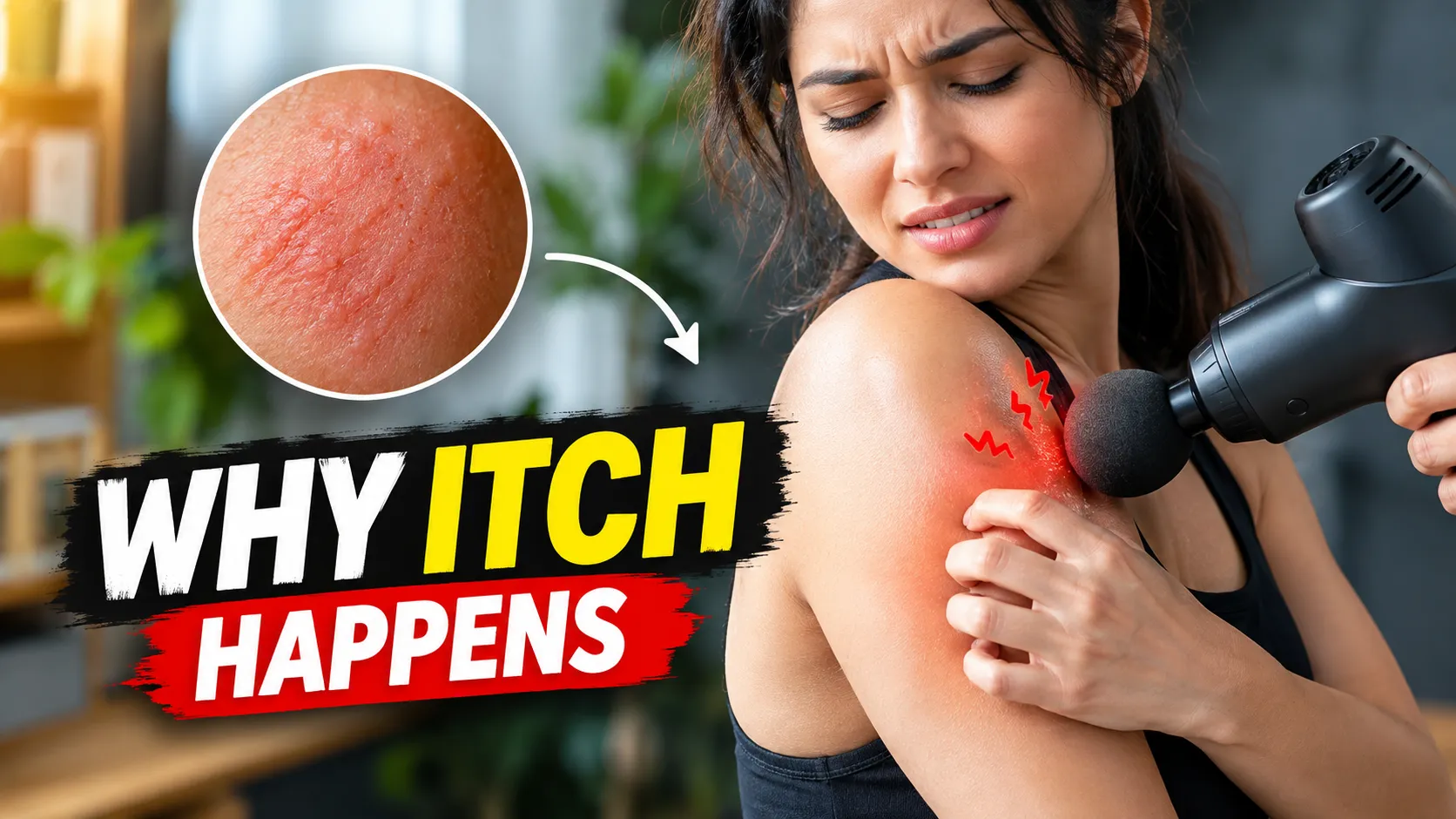
Percussion massage tools work by delivering rapid, repeated taps into muscle tissue. That motion increases local blood flow and stimulates the nerve endings just under the skin. When circulation ramps up quickly, the body can release histamine, the same compound involved in allergic reactions. A small histamine release near the skin’s surface is a common reason why does percussion massage make me itch feels so specific to this type of tool rather than regular stretching.
This reaction is usually harmless and temporary. It’s similar to the tingly, itchy feeling some people get after a hot shower or a brisk walk in cold air — the skin is simply responding to a sudden change in blood flow.
Common Everyday Causes Behind the Itch
Beyond the histamine response, a few everyday habits make itching more likely. Dry or dehydrated skin has fewer natural oils to buffer vibration. A brand-new device or attachment head can feel more intense than skin is used to. Holding the massager in one spot too long, using a high-intensity setting, or applying it directly over thin-skinned areas can all add to the sensation.
Swipe left/right to see the full table →
| Itch Pattern | Likely Cause |
|---|---|
| Mild tingling during use, fades fast | Normal blood-flow and nerve response |
| Itching worse on dry areas (shins, arms) | Dehydrated skin barrier |
| Itching only with new attachment head | Material sensitivity or unfamiliar texture |
| Small raised bumps or redness appear | Pressure set too high for the area |
| Itching spreads or lingers for hours | Worth professional evaluation |
Here’s a quick map of where itch triggers usually come from:
Skin Factors
Dry skin, thin skin over bone, or recent sun exposure can all lower tolerance to vibration.
Device Factors
A firm attachment head, high speed, or long dwell time in one spot intensifies sensation.
Body Response
Increased circulation and a short histamine release cause the classic tingly-itchy feeling.
Habit Factors
Skipping moisturizer, using the tool over clothing seams, or overuse on the same muscle group.
In practice, most itching traces back to one or two of these groups working together, not a single hidden cause.
Red Flags to Watch For
Most people who wonder why does percussion massage make me itch are dealing with a mild, temporary reaction. But a smaller number of people experience a condition sometimes called vibration-induced hives, where vibration itself triggers raised, itchy welts. Watching for the signs below helps you tell normal from concerning.
Red-flag checklist:
!
Raised welts or hives that appear within minutes of vibration
!
Itching that spreads beyond the treated area
!
Swelling, dizziness, or trouble breathing
!
Itching that lasts more than a day or keeps returning
Safer Self-Care Options
Small adjustments often solve the problem without giving up percussion massage altogether. Moisturizing beforehand, lowering the intensity, and shortening session length are the easiest first steps.
Swipe left/right to see the full table →
| Safe Routine | Risky Routine |
|---|---|
| Moisturize skin before a session | Using the device on bare, dry skin |
| Start on the lowest speed setting | Jumping straight to max intensity |
| Keep sessions to 1-2 minutes per muscle | Holding one spot for 5+ minutes |
| Move the head across the muscle | Pressing directly over bone or joints |
Soft-Foam Massage Gun Attachment Set
A softer, rounded head may help distribute pressure more evenly for sensitive or dry skin.
Choosing Settings and Skin Prep the Right Way
Matching the setting to your skin type is one of the most overlooked steps. Someone with naturally dry or sensitive skin will usually tolerate percussion massage better on a lower speed with a softer attachment, while firmer skin can often handle more intensity.
Swipe left/right to see the full table →
| Skin Type | Suggested Fit |
|---|---|
| Dry or sensitive | Soft round head, low speed, moisturize first |
| Normal skin | Standard head, medium speed |
| Thin skin over bone areas | Avoid direct contact; treat surrounding muscle instead |
Do
Warm up skin, start low, move the device instead of holding it still.
Don’t
Use over broken skin, sunburn, or straight after shaving.
Fragrance-Free Body Lotion
A gentle, fragrance-free lotion can help support comfortable skin before and after a massage session.
Mistakes That Make Itching Worse
A few habits quietly make percussion massage make me itch more than it should. Recognizing them is often enough to fix the problem.
Swipe left/right to see the full table →
| Mistake | Better Choice |
|---|---|
| Using the highest setting right away | Build up gradually from low to medium |
| Massaging over clothing seams | Use on bare, moisturized skin |
| Scratching the itch immediately | Apply a cool, damp cloth instead |
When to Contact a Professional

Quick decision path:
1
Mild itch, fades in minutes → continue with lower intensity next time
2
Itch with redness that lingers → moisturize, pause massage for a day
3
Welts, spreading itch, or breathing changes → seek professional care
Reliable general background on itching and skin reactions is available from MedlinePlus and on hives from Cleveland Clinic.
Frequently Asked Questions
Why does percussion massage make me itch every time I use it?
Repeated vibration on the same skin can consistently trigger a small histamine response, especially on dry or sensitive areas. Moisturizing and lowering intensity usually helps.
Is itching after a massage gun a sign of an allergy?
Not usually. It’s more often a normal response to increased blood flow. True allergy-like reactions, such as spreading welts, are less common but worth checking with a professional.
Should I stop using my massage gun if I itch?
Mild, short-lived itching doesn’t usually mean you need to stop. Try a lower setting and moisturized skin first, and pause if itching worsens or spreads.
Can dry skin really cause itching from percussion massage?
Yes. Dry skin has a weaker barrier, so vibration and friction are felt more intensely, which often shows up as itching.
What is vibration-induced hives?
It’s a rare skin response where vibration itself triggers raised, itchy welts. It’s uncommon, but repeated welts with massage use are worth discussing with a professional.
How can I prevent percussion massage from making me itch?
Moisturize before your session, start on a low setting, keep sessions short, and move the device instead of holding it in one spot.
When should I see a doctor about itching from a massage gun?
See a professional if itching spreads, welts return each session, or you notice swelling or breathing changes.
For most people, a little itching after percussion massage is simply the skin’s normal response to fresh blood flow, and small routine changes like moisturizing and lowering intensity make it manageable. If itching spreads, keeps returning, or comes with welts or swelling, that’s your cue to check in with a licensed professional rather than pushing through it.
Author
-

I’m Alex Turner, a massage product reviewer and wellness writer at RemedyTip. I specialize in researching, evaluating, and comparing massage and recovery products to help readers make informed purchasing decisions. My focus is on practical, evidence-informed product guidance covering muscle recovery, relaxation, everyday comfort, and wellness.
I take a research-driven approach to every product I review. I examine product specifications, features, materials, performance claims, user feedback, durability, comfort, ease of use, and overall value. When appropriate, I also consult trusted industry and health-related sources to verify important information and provide readers with a more complete and balanced view.
I cover a wide range of products, including massage guns, handheld massagers, neck and shoulder massagers, foot massagers, massage chairs, foam rollers, and other recovery tools. Rather than focusing only on marketing claims, I look at how products compare in real-world use and who they are actually suitable for. I also consider different budgets, use cases, and user needs when making recommendations.
At RemedyTip, I’m committed to accuracy, transparency, and unbiased product information. I clearly distinguish between manufacturer claims, available evidence, and my own product analysis so readers can understand the basis of each recommendation. I continuously research new products, technologies, and developments in the massage and recovery space to keep my content current and useful.
My goal is simple: to provide trustworthy, easy-to-understand information that helps readers choose massage and recovery products with greater confidence.

