
A neck massager may also ease tension in certain body areas, but its design and intensity matter. Most models work best on large, muscular areas such as the shoulders, upper back, and thighs—not directly on the spine, joints, or front of the neck.
Using the wrong setting or applying too much pressure can cause soreness or injury. This guide explains which areas may be suitable, which require extra care, and how Michael Hayes of RemedyTip.com recommends using these devices safely.
Key Takeaways
- Use the device on soft, muscular areas.
- Avoid bones, joints, and the front of the neck.
- Stop if pain, numbness, or dizziness occurs.
How Neck Massagers Work
Neck massagers use pressure, vibration, rolling, electrical pulses, or heat to affect soft tissue around the neck and shoulders. Their design determines whether they can also be used safely on areas such as the upper back, arms, or legs.
Common Massage Mechanisms
Different devices create different sensations and work best on specific body areas:
| Mechanism | How it works | Suitable areas |
|---|---|---|
| Shiatsu nodes | Rotating nodes apply firm, kneading pressure. | Shoulders, upper back, lower back |
| Vibration | Rapid movement helps relax surface muscle tension. | Arms, thighs, calves, shoulders |
| Percussion | A moving head delivers repeated taps to muscle tissue. | Large muscle groups, such as thighs and glutes |
| Electrical stimulation | Small electrical pulses cause gentle muscle contractions. | Only areas listed in the device instructions |
| Heat | Warmth may increase comfort and help loosen stiff muscles. | Areas approved by the manufacturer |
A neck device may work on other body parts if its shape, pressure, and instructions allow it. It should not press directly on the spine, joints, the front of the neck, or areas with broken or irritated skin.
Built-In Safety Features
Many neck massagers include timers, automatic shutoff, adjustable intensity, and several massage modes. These features help limit sessions, reduce excessive pressure, and let the user begin at a lower setting. Heat controls also help prevent uncomfortable temperatures during use.
The device’s shape provides an important safety guide. A wraparound model may fit the shoulders but apply uneven pressure on a leg or arm. A handheld model usually offers more control across larger muscles, while an electrical-pulse device may have strict placement rules.
The user should follow the manual before applying the massager to another body part. They should stop if they feel sharp pain, numbness, tingling, dizziness, skin irritation, or worsening symptoms. People with pacemakers, reduced sensation, circulation problems, blood clots, recent injuries, or unexplained pain should seek medical advice before using one.
Suitable Body Areas
A neck massager may work on large muscle groups, but its design limits where it can be used safely. The shoulders, upper back, arms, hands, legs, and calves usually tolerate gentle massage when the device manual allows those areas.
Shoulders And Upper Back
The shoulders and upper back are often suitable because they contain broad muscle areas. A person can place the massager over the trapezius muscles, which run from the neck to the shoulders and upper back.
The device should stay on the muscle, not the spine, shoulder blades, or ribs. It should also avoid the front and sides of the neck, where major blood vessels are located. Low speed and light pressure provide a safer starting point.
| Area | Safer placement |
|---|---|
| Shoulders | On the thick muscle above the shoulder blade |
| Upper back | Beside the spine, over the muscle |
| Spine and shoulder blades | Avoid direct pressure |
Each area should receive only a short session. The user should stop if they feel sharp pain, numbness, dizziness, bruising, or increased discomfort.
Arms And Hands
A neck massager may suit the upper arms and forearms when it uses gentle kneading or vibration. It should move along the muscle rather than press hard into the elbow, wrist, or other joints.
The user should avoid the inner upper arm, especially near the armpit, because it contains sensitive nerves and blood vessels. A handheld device should not remain in one spot. Slow movement with light pressure helps reduce the chance of soreness or skin irritation.
Hands require extra care. A neck massager should not press directly on the fingers, palm bones, or wrist bones unless the manufacturer specifically approves that use. People with numbness, swelling, an injury, or poor circulation should avoid massaging the area until a health professional provides guidance.
Legs And Calves
The thighs and calves contain large muscle groups that may suit gentle massage. The device should move along the muscle from one area to another instead of staying fixed in one place.
It should not press directly on the knees, ankles, shins, or other bones. Users should also avoid visible varicose veins, swollen areas, bruises, wounds, and recently injured tissue. Sudden calf pain, warmth, redness, or swelling requires medical attention rather than massage.
People with a history of blood clots, circulation problems, diabetes-related nerve loss, or recent surgery should ask a health professional before using a neck massager on the legs. The user should stop if the leg becomes painful, numb, or unusually swollen.
Areas That Require Extra Caution
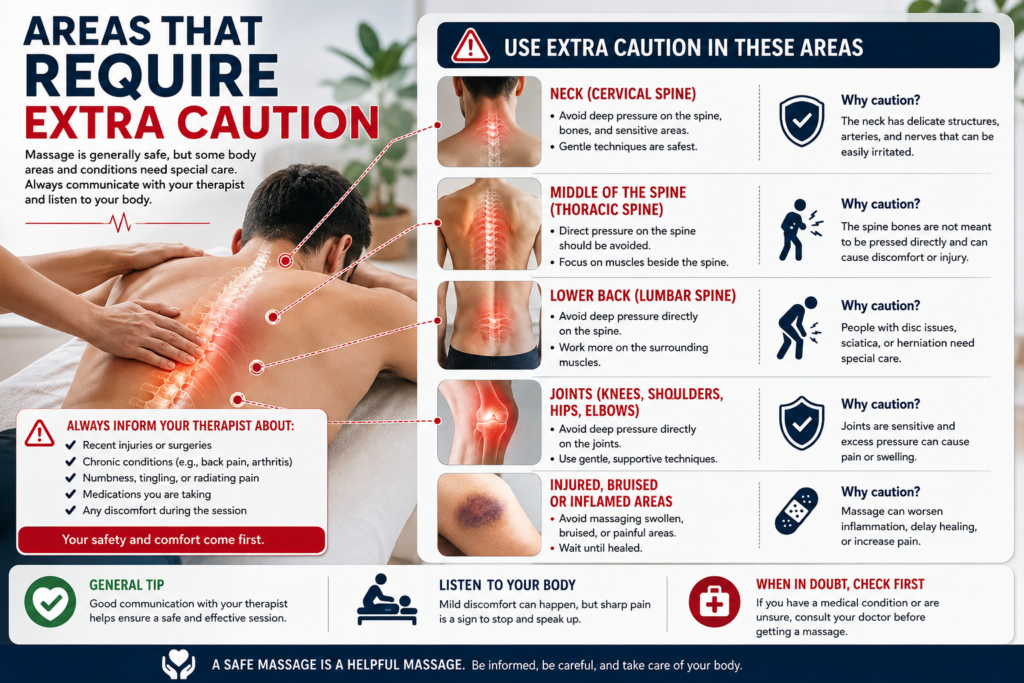
A neck massager may work on some large muscle groups, but sensitive areas need careful handling. Users should avoid organs, blood vessels, nerves, fragile bones, and places with little muscle protection.
Lower Back And Abdomen
The lower back contains the spine, kidneys, and many nerves. A massage device should not press directly on the spine or kidneys. If the device is used on nearby back muscles, it should stay on the lowest setting and use light pressure.
The abdomen needs more caution because it has less muscle protection over internal organs. Users should avoid using a strong vibrating or percussive massager over the stomach, sides, or lower abdomen. Pregnant people should not use a massager on the abdomen and should ask a healthcare professional about safe alternatives.
| Area | Safer approach |
|---|---|
| Lower back muscles | Use light pressure beside the spine |
| Spine and kidneys | Avoid direct contact |
| Abdomen | Avoid percussive devices |
| Pain, swelling, or bruising | Stop use and seek medical advice |
Feet And Ankles
The feet contain small bones, joints, tendons, and nerves. A massager may be used on the thick muscle of the sole with gentle pressure, but it should not press hard on the heel, arch, toes, or top of the foot. Users should stop if they feel sharp pain, numbness, or increased soreness.
The ankle has little soft tissue over its bones and tendons. A device should not be placed directly on the ankle bones, Achilles tendon, or swollen areas. People with diabetes, reduced sensation, poor circulation, open wounds, or foot problems should consult a healthcare professional before using a massager.
Joints And Bony Areas
Massage devices can bounce on hard surfaces and may cause pain, bruising, or tissue irritation. Users should avoid direct contact with the spine, neck bones, kneecaps, elbows, wrists, hips, and other joints. The front and sides of the neck also contain important blood vessels, nerves, and the throat, so a massage gun should not be used there.
A device is generally safer on the muscles around a joint, such as the thigh or calf, when it stays away from the joint itself. It should be used briefly, with low pressure, and never over swelling, an injury, broken skin, or unexplained pain.
Choosing The Right Settings
The right setting depends on the body part, the device type, and the user’s comfort. Lower intensity usually works best for sensitive areas, while heat requires careful timing and temperature control.
Intensity And Speed
A user should start at the lowest intensity and speed for one to two minutes. This approach helps reveal how the muscles and skin respond before stronger pressure is applied. The device should move over soft muscle, not bones, joints, the front of the neck, or the spine.
For shoulders, upper back, thighs, and calves, a moderate setting may suit larger muscle groups. Hands, forearms, feet, and the lower back may need gentler pressure. A neck massager designed for one body area may press too deeply or fit poorly on another area, so the user should follow the product manual.
| Body area | Suggested starting approach |
|---|---|
| Shoulders and upper back | Low to moderate intensity |
| Thighs and calves | Low to moderate, with slow movement |
| Hands and feet | Low intensity and short sessions |
| Joints, spine, and bony areas | Do not apply the massager directly |
The user should stop if they feel sharp pain, numbness, tingling, bruising, or increased soreness. A session should usually remain within the device’s recommended time limit, often about 10 to 15 minutes.
Heat Function Use
Heat can make tight muscles feel more comfortable, but it does not suit every body part or condition. The user should choose the lowest heat setting first and check the skin often, especially when the massager presses against the body.
Heat works best over broad muscle areas, such as the shoulders, upper back, thighs, and calves. It should not be used over broken, irritated, swollen, or numb skin. The user should also avoid placing heat directly over joints, the front of the neck, or areas with reduced ability to sense temperature.
People with diabetes, poor circulation, nerve damage, or reduced skin sensation should ask a health professional before using heat. The user should not fall asleep while the heat function runs, and should stop immediately if the skin becomes very red, painful, or unusually warm.
Safe Use Guidelines
A neck massager may work on some large muscle areas, but its shape and force may not suit every body part. Short sessions, gentle pressure, and placement on soft muscle tissue help reduce the risk of bruising, pain, or nerve irritation.
Session Length
A first session should last 5 to 10 minutes on one body area. If the skin and muscles feel normal afterward, the user may gradually increase the time, but should follow the device’s instructions and avoid long, continuous use.
The user should stop immediately if they feel sharp pain, numbness, tingling, dizziness, weakness, or unusual swelling. Mild muscle tenderness can occur, but worsening pain or bruising signals excessive pressure or duration.
A neck massager should not be used while sleeping. The user should also avoid repeated sessions on the same area when it remains sore. For guidance on safe physical activity with certain health conditions, they can review information from NHS exercise guidance.
Positioning And Pressure
The user should place the massager only on soft muscle, such as the upper shoulders, upper back, calves, or thighs, if the manufacturer permits those areas. They should keep it away from the front and sides of the neck, spine, joints, bones, the abdomen, and areas with open wounds or reduced sensation.
The lowest setting provides the safest starting point. The user should keep the device moving when possible rather than pressing it into one spot. They should not use a neck-specific device on the head, face, throat, or groin.
People with blood-clotting problems, a pacemaker, reduced sensation, recent surgery, pregnancy, or serious circulation problems should ask a health professional before using one. A doctor should assess unexplained pain, swelling, weakness, or persistent numbness.
When To Avoid Use
A neck massager may harm areas with fragile tissue, poor sensation, or an active injury. People with certain health conditions should get medical advice before using one, especially on the neck or other sensitive areas.
Medical Conditions And Injuries
People should avoid using a neck massager over open wounds, bruises, rashes, burns, swelling, broken bones, sprains, or recent surgery. They should also avoid the front and sides of the neck, where the throat and major blood vessels are located. A device designed for the neck may apply too much pressure to thinner muscles or bony areas elsewhere on the body.
Medical advice is important for people with blood-clotting problems, a history of blood clots, bleeding disorders, severe osteoporosis, nerve damage, or reduced sensation. People who use blood thinners, have a pacemaker or other implanted device, or have uncontrolled high blood pressure should ask a clinician before use. Anyone with diabetes should check the skin carefully, since reduced sensation or slow healing can make injuries harder to notice.
Symptoms That Need Professional Care
A person should stop using the massager and seek medical care for new or worsening pain, numbness, tingling, weakness, loss of movement, or unusual swelling. Severe headache, dizziness, fainting, trouble speaking, vision changes, chest pain, or trouble breathing requires urgent medical attention.
Pain that follows a fall, crash, sudden twisting injury, or forceful impact also needs assessment before massage. A massager should not be used to treat unexplained pain, a growing lump, fever, or skin redness and warmth. If symptoms continue after stopping use, a qualified health professional should determine the cause and recommend safe treatment.
Cleaning And Maintaining The Device
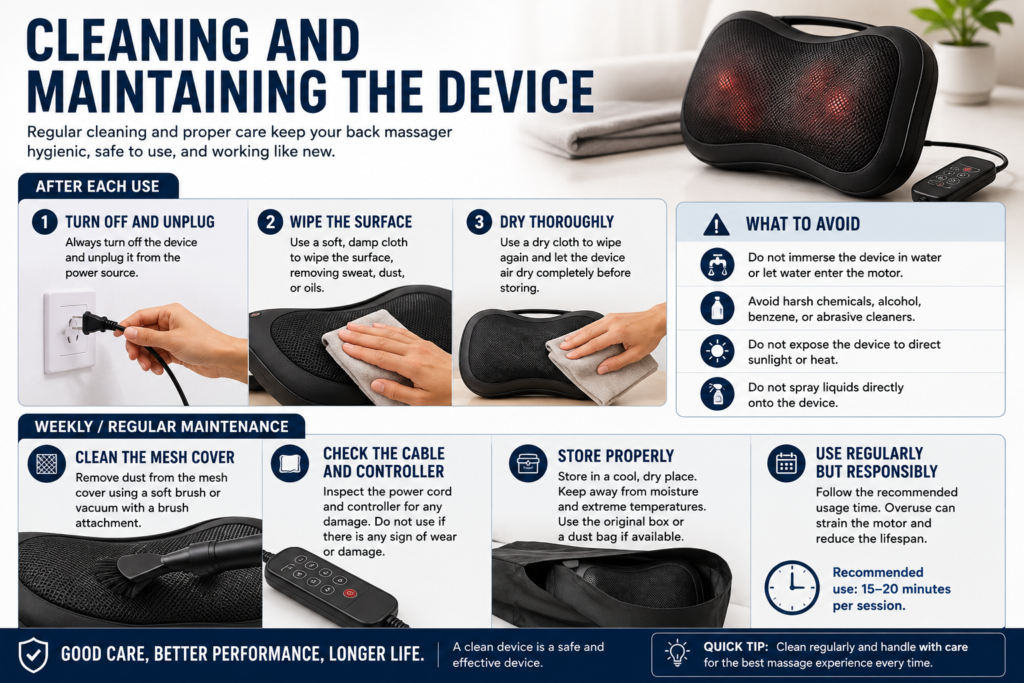
A neck massager can collect sweat, skin oils, and lotion when used on the shoulders, back, arms, or legs. The user should turn it off, unplug it, and let it cool before cleaning.
- Wipe the massage heads and outer surfaces with a soft cloth lightly dampened with mild soap and warm water.
- Use a clean, damp cloth to remove soap residue.
- Dry every surface fully before storage or use.
- Keep water away from the motor, controls, charging port, and power cord.
The user should follow the device manual because cleaning methods differ. Unless the manufacturer states that the device is waterproof, it should not be submerged, rinsed under a tap, or placed in a washing machine.
If the device touches broken, irritated, or infected skin, the user should clean it before anyone else uses it. A separate towel can help prevent the spread of skin oils and germs. The user should avoid harsh chemicals, alcohol, abrasive cleaners, and rough scrubbers because they may damage plastic, silicone, fabric, or protective coatings.
The device should be stored in a clean, dry place away from direct sunlight, heat, and moisture. Removable batteries should be taken out if the device will sit unused for a long time. The user should inspect the cord, casing, and massage heads regularly and stop using the device if it shows cracks, exposed wires, unusual heat, or other damage.
FAQs
Can a neck massager be used on other body parts?
Some models can work on the shoulders, upper back, arms, and legs. The device manual should confirm which areas are safe. A neck massager should not replace a body massager if its shape or pressure is designed only for the neck.
Can it be used on the lower back?
Only if the manufacturer allows it. The user should avoid placing the device directly over the spine, kidneys, or painful areas. Gentle settings and short sessions reduce the chance of soreness.
Can it be used on the arms or legs?
Many handheld or vibrating models can be used on large muscles, such as the thighs and calves. The user should avoid joints, bones, open wounds, bruises, and areas with swelling or numbness.
Can it be used on the abdomen?
The user should avoid using a strong kneading or vibrating device on the abdomen unless a healthcare professional approves it. Pregnancy, recent surgery, and abdominal pain require medical advice first.
When should someone avoid using it?
A person should ask a healthcare professional before use if they have nerve problems, poor circulation, blood clots, osteoporosis, a recent injury, or another medical condition. They should stop if the device causes sharp pain, tingling, numbness, dizziness, or skin changes.
How long should each session last?
The user should start with the lowest setting and follow the manual’s time limit. Short sessions help reveal how the body responds before longer use.
Conclusion
Many neck massagers can be used on other muscle areas, such as the shoulders, upper back, lower back, and legs. The device’s design and instructions determine which areas are suitable.
Users should place the massager on soft muscle, not on the spine, throat, joints, bones, or injured skin. They should start with the lowest setting, use short sessions, and stop if they feel pain, numbness, dizziness, or unusual discomfort.
A neck massager may ease temporary muscle tightness, but it cannot treat every cause of pain. People with a recent injury, neck instability, nerve symptoms, blood vessel problems, or other health concerns should ask a health professional before using one.

