
Written by Alex Turner
Quick Answer: Trigger point massage can feel tender, intense, or briefly uncomfortable because it applies focused pressure to a sensitive area. It should not feel sharply painful, unbearable, or increasingly worse. Pressure should be adjusted to a tolerable level, especially when working near the neck, spine, joints, or an injured area.
Why Trigger Point Massage Can Feel Intense
Trigger point work uses focused pressure rather than broad, gentle strokes. That can make a sensitive muscle area feel more noticeable during the massage. Some people describe the sensation as pressure, tenderness, aching, or a feeling that seems to spread within the nearby muscle.
The important distinction is between tolerable therapeutic pressure and pain that feels sharp, burning, electric, severe, or progressively worse. Massage should be adjusted around your comfort level rather than treated as a test of how much discomfort you can tolerate.
Pressure matters Tender areas Safer technique Know the warning signs
Safety note: This article is for general educational information only. It does not diagnose, treat, cure, or prevent any condition. It does not replace advice from a licensed healthcare professional. Readers should seek professional help for severe, worsening, unusual, or persistent symptoms.
Is Trigger Point Massage Painful or Just Tender?
A trigger point can be sensitive when pressure is applied, so some discomfort does not automatically mean something is wrong. However, the goal should not be to create as much pain as possible. A trained practitioner can modify pressure, positioning, duration, and technique when an area feels too sensitive.
There is also an important limit to what a sensation can tell you. A tender spot may feel like a trigger point, but pain can have many possible causes. If pain is persistent, severe, unusual, or accompanied by other concerning symptoms, it is better to have the problem assessed rather than repeatedly pressing the same area.
Note: You do not need to “push through” strong pain for trigger point work to be worthwhile. If the pressure makes you tense, hold your breath, pull away, or feel increasingly uncomfortable, ask for lighter pressure or stop the technique.
Research on massage and myofascial trigger points has examined changes in pain sensitivity and other outcomes, but results vary by technique and condition. A recent systematic review found that evidence for friction massage at trigger points remains limited and called for better long-term research.
How Different Sensations Usually Compare
The table below is a practical way to separate ordinary pressure sensations from signals that deserve more caution. It is not a diagnostic test.
Swipe left/right to see the full table →
| Sensation | What it may feel like | Practical response |
|---|---|---|
| Mild pressure | Firm but manageable | Usually reasonable |
| Tender ache | Sensitive or sore | Reduce pressure if needed |
| Sharp pain | Sudden or stabbing | Stop and reassess |
| Burning/electric | Hot, tingling, shooting | Stop pressure and seek guidance if persistent |
Massage therapy is generally considered low risk when performed appropriately, but rare serious complications have been reported, particularly with vigorous forms of massage or in people with increased risk factors.
What Can Make Trigger Point Work More Uncomfortable?

Several factors can change how pressure feels. A muscle that has been heavily used may already feel tender. Stress can also make people brace or tighten the muscles being worked, which may make firm pressure feel less comfortable.
Technique matters too. Direct, sustained pressure can feel much more intense than broad massage strokes. The amount of pressure that feels reasonable on a large muscle may not be appropriate around a smaller or more sensitive area.
Practical comfort guide
These levels are a practical guide, not scientific pain measurements. Your comfort and symptoms should guide the pressure.
The main lesson is simple: stronger pressure is not automatically better. A massage therapist should be able to adjust the session when you report discomfort rather than expecting you to tolerate escalating pain.
Common Reasons Pressure Feels Too Strong
Recent muscle overuse, an already irritated area, poor positioning, dehydration-related discomfort, anxiety, or simply personal sensitivity can affect the experience. None of these factors proves what is causing pain, so avoid treating the massage itself as a diagnostic test.
Some people also mistake soreness after a session for evidence that the technique “worked.” That conclusion is not reliable. Feeling sore does not establish that a specific muscle was successfully released or that more pressure would be beneficial.
Tip: Tell the practitioner exactly what you feel instead of simply saying “that hurts.” For example, say whether the sensation is dull, sharp, burning, tingling, or spreading. This gives them useful information for changing the technique.
How to Make Trigger Point Massage More Comfortable
If you choose to try trigger point work, start conservatively. A comfortable session is easier to control than one that begins with aggressive pressure.
Safer-practice flow
Use light pressure and give the area time to respond.
Look for manageable pressure rather than sharp or escalating pain.
Reduce pressure, change position, or stop if the sensation becomes concerning.
Pay attention to whether symptoms settle or continue to worsen.
This approach is especially useful for self-massage. You can control the pressure immediately, unlike during a session where another person is applying the force.
Safer Routine vs. Riskier Approach
The following comparison focuses on technique rather than promising a particular result.
Swipe left/right to see the full table →
| Safer choice | Riskier choice |
|---|---|
| Gradual pressure | Sudden heavy pressure |
| Stop with sharp pain | Pushing through severe pain |
| Work on muscle tissue | Press directly on bone or a joint |
| Ask for technique changes | Assume more pressure is always better |
Where Extra Caution Is Important
Not every painful area is appropriate for firm massage. Avoid aggressive pressure over an acute injury, open wound, irritated skin, or an area that is swollen or unusually warm. Conditions that affect bleeding or clotting can also change the safety picture.
NCCIH notes that people with certain health conditions may need to modify or avoid massage, and specifically advises caution with forceful deep-tissue techniques for people with bleeding disorders, low platelet counts, or those taking anticoagulant medicines.
Situations That Call for More Caution
Swipe left/right to see the full table →
| Situation | Practical approach | Why caution matters |
|---|---|---|
| Recent injury | Avoid aggressive pressure | Pain may need assessment first |
| Open or damaged skin | Do not massage the area | Pressure can irritate tissue |
| Bleeding risk | Ask a healthcare professional | Deep pressure may increase risk |
| Persistent unexplained pain | Consider professional assessment | Massage may not address the cause |
Cleveland Clinic similarly recommends discussing massage with a healthcare provider when medical conditions or other risk factors may affect whether massage is appropriate.
Warning: Avoid turning trigger point massage into aggressive self-treatment. Do not repeatedly press harder because an area remains tender. Pain that continues outside the massage session, changes significantly, or comes with other symptoms deserves attention rather than more pressure.
Can You Feel Sore After a Session?
Mild soreness can occur after massage, particularly when tissue has received pressure that feels stronger than your usual routine. NCCIH notes that massage is generally low risk when appropriately performed, while also documenting rare reports of more serious adverse effects.
What matters is the overall pattern. A mild, temporary feeling of tenderness is different from severe pain, rapidly increasing symptoms, new weakness, significant numbness, or other unusual changes.
After-session check
Monitor
Mild tenderness that settles and does not interfere significantly with normal activity.
Reduce pressure
Soreness is stronger than expected or the same technique repeatedly makes symptoms worse.
Seek guidance
Pain is severe, worsening, persistent, unusual, or accompanied by concerning symptoms.
Stop the technique
You develop sharp, burning, electric, or strongly radiating pain during pressure.
The goal is not to predict exactly how long soreness will last. Instead, use the trend and severity of your symptoms to decide whether continuing the same technique makes sense.
When to Stop Trigger Point Massage
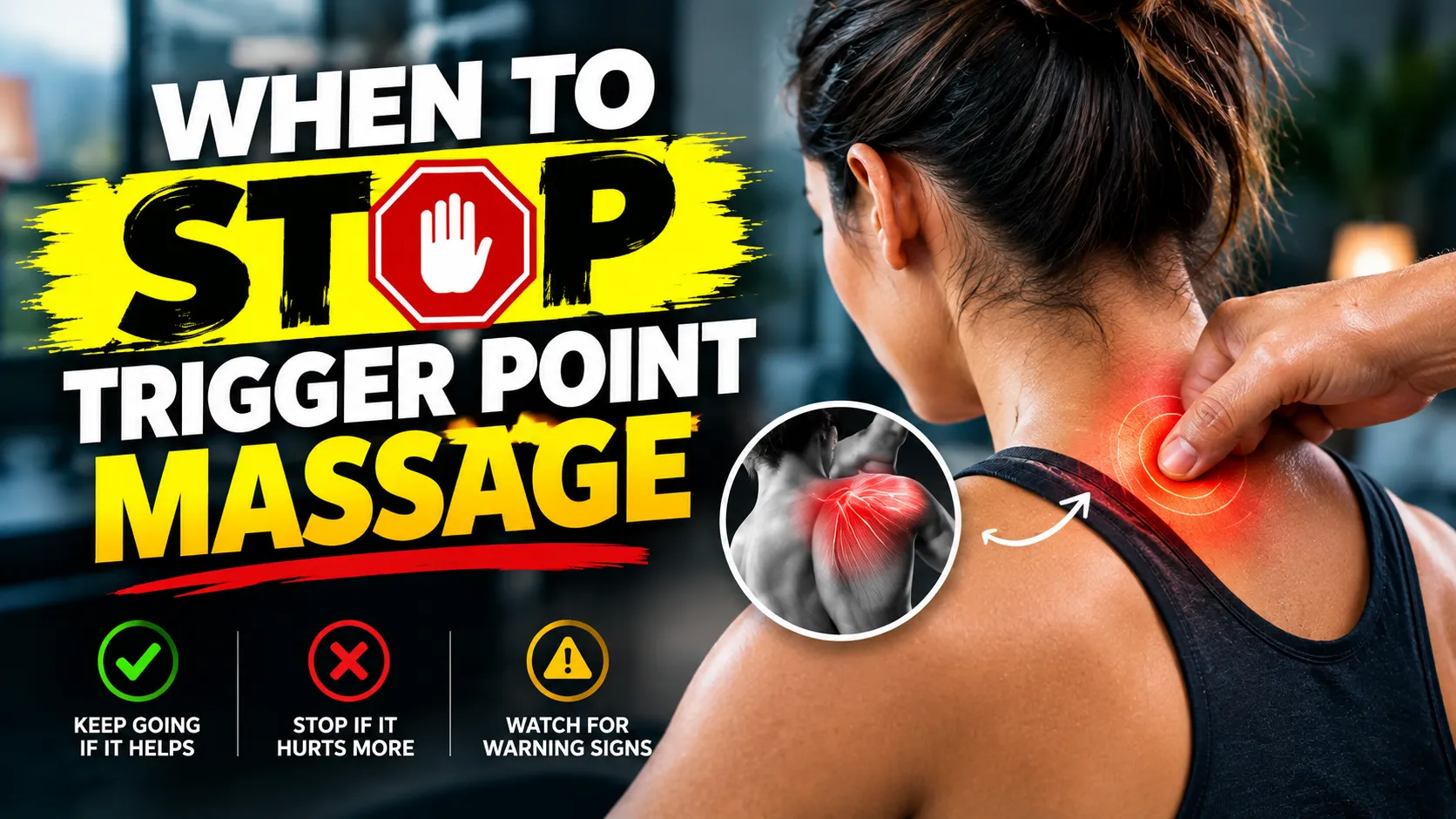
Stop the massage if pressure causes sharp, severe, burning, electric, or rapidly increasing pain. You should also stop if you develop new numbness, weakness, marked swelling, or another unusual symptom during the session.
Do not assume that a painful sensation means you have found the “right” spot. The body can produce pain for many reasons, and pressing harder cannot determine which one applies.
Safety decision path
Pressure feels comfortable →
Continue gently and reassess the sensation as you go.
Pressure feels too intense →
Reduce pressure, change position, or stop.
Sharp, burning, electric, severe, or unusual symptoms →
Stop the technique and consider professional guidance.
Severe or worsening symptoms →
Seek prompt medical evaluation rather than continuing self-massage.
Self-Care or Professional Help?
Swipe left/right to see the full table →
| Situation | Reasonable next step |
|---|---|
| Mild muscle tenderness | Use gentle care and monitor |
| Pain keeps returning | Consider professional assessment |
| Numbness or weakness | Seek medical guidance |
| Severe or rapidly worsening pain | Seek prompt medical attention |
| Fever, major injury, chest pain, or loss of bladder/bowel control | Seek urgent medical care |
When to contact a professional: Seek professional help for severe, worsening, unusual, or persistent pain, especially when it follows an injury or occurs with numbness, weakness, fever, chest pain, significant swelling, or loss of bladder or bowel control. These symptoms should not be managed by repeatedly applying massage pressure.
What Does Research Say About Trigger Point Massage?
Research does not support a simple rule that trigger point massage must hurt to be effective. Studies have examined massage directed at myofascial trigger points and have reported changes in pressure-pain sensitivity, but results depend on the technique, muscle group, condition, and study design.
For example, one randomized controlled trial involving people with tension-type headaches found increased pressure-pain thresholds after trigger point release massage. That finding shows that sensitivity can change with massage, but it does not establish that painful massage is necessary or appropriate for everyone.
A 2025 systematic review also found that evidence around friction massage for myofascial trigger points remains limited, with uncertainty around some outcomes.
That is why comfort, symptom response, and appropriate safety precautions are more useful than trying to reach a particular pain level during a session.
Common Mistakes to Avoid
One of the biggest mistakes is assuming that more force produces better results. Another is repeatedly working the same painful location without considering whether the symptoms are changing or whether professional assessment is needed.
It is also easy to confuse a trigger point with any painful spot. A tender muscle area does not tell you by itself what caused the pain. If symptoms persist, the safest approach is to step back from repeated self-treatment and consider an appropriate healthcare evaluation.
Finally, do not ignore pain simply because a massage session is already underway. You are allowed to ask for less pressure, a different technique, or an end to the session at any point.
Frequently Asked Questions
Is trigger point massage painful for everyone?
No. Some people experience firm pressure or tenderness, while others find the technique uncomfortable. Pressure should be adjusted to the person’s tolerance.
Should trigger point massage hurt to work?
No. Pain is not a reliable measure of whether a massage technique is appropriate or effective. Strong, sharp, burning, or escalating pain is a reason to reduce pressure or stop.
Why does trigger point massage feel sore?
Focused pressure can make an already sensitive muscle area feel sore or tender. However, severe or unusual pain should not be assumed to be normal massage soreness.
Can trigger point massage make pain worse?
It can leave an area feeling more irritated if pressure is too strong or the technique is not appropriate. If pain is severe, worsening, or persistent, stop and seek professional guidance.
How much pressure should be used?
Use only as much pressure as you can comfortably tolerate. Start gently, communicate during professional massage, and reduce pressure if symptoms become sharp, burning, or increasingly painful.
When should I avoid trigger point massage?
Use caution with recent injuries, damaged skin, bleeding risks, unexplained persistent pain, or other medical conditions that may affect massage safety. Ask a healthcare professional when unsure.
What should I do if massage causes severe pain?
Stop the massage rather than pushing through it. Seek appropriate medical guidance, particularly if severe pain is worsening or occurs with numbness, weakness, fever, chest pain, major injury, or other concerning symptoms.
Final Thoughts
Trigger point massage can involve noticeable pressure and tenderness, but it should not be treated as a contest to tolerate pain. Start gently, communicate clearly, and stop when a sensation becomes sharp, severe, burning, or otherwise concerning.
If pain is severe, worsening, unusual, persistent, or associated with symptoms such as numbness or weakness, seek professional medical guidance rather than continuing self-massage.
Author
-

I’m Alex Turner, a massage product reviewer and wellness writer at RemedyTip. I specialize in researching, evaluating, and comparing massage and recovery products to help readers make informed purchasing decisions. My focus is on practical, evidence-informed product guidance covering muscle recovery, relaxation, everyday comfort, and wellness.
I take a research-driven approach to every product I review. I examine product specifications, features, materials, performance claims, user feedback, durability, comfort, ease of use, and overall value. When appropriate, I also consult trusted industry and health-related sources to verify important information and provide readers with a more complete and balanced view.
I cover a wide range of products, including massage guns, handheld massagers, neck and shoulder massagers, foot massagers, massage chairs, foam rollers, and other recovery tools. Rather than focusing only on marketing claims, I look at how products compare in real-world use and who they are actually suitable for. I also consider different budgets, use cases, and user needs when making recommendations.
At RemedyTip, I’m committed to accuracy, transparency, and unbiased product information. I clearly distinguish between manufacturer claims, available evidence, and my own product analysis so readers can understand the basis of each recommendation. I continuously research new products, technologies, and developments in the massage and recovery space to keep my content current and useful.
My goal is simple: to provide trustworthy, easy-to-understand information that helps readers choose massage and recovery products with greater confidence.

