A shiatsu massager can ease muscle tension, but a pacemaker makes safety the main concern. These devices use moving pressure and may also include heat or vibration, while some electric models could create interference.
People with pacemakers should ask their cardiologist before using a shiatsu massager, especially soon after implantation or when using a device near the chest and upper body. Medical guidance can depend on the pacemaker type, healing progress, and massager design.
The full guide explains which features may raise concern, where use might be safer, warning signs to watch for, and gentler options for muscle relief.
Key Takeaways
- Cardiologist approval should come before using a shiatsu massager.
- Device location and electrical features affect potential risk.
- Stop use and seek medical advice if symptoms occur.
Pacemaker Safety Considerations
A shiatsu massager may create risks through electrical interference or direct pressure near the implanted device. The person should check the massager’s manual and ask the cardiologist or pacemaker clinic before using it, especially soon after implantation.
Electromagnetic Interference Risks
Most foot and body shiatsu massagers use small electric motors, vibration, and sometimes heat. These features do not automatically make the device unsafe, but a strong motor or poorly shielded unit could produce electromagnetic interference (EMI). EMI might briefly affect how a pacemaker senses or delivers signals.
A person should not use a massager over the chest, upper back, or near the pacemaker pocket. They should stop immediately if they feel dizziness, faintness, a racing heartbeat, chest pain, or unusual discomfort. The device manual may also list pacemakers as a reason to seek medical advice before use.
Why Device Distance Matters
Distance reduces the strength of electromagnetic fields reaching the pacemaker. A commonly advised precaution is to keep an electric massager at least six inches, or 15 centimeters, from the pacemaker and its leads. This distance applies to the motor and control unit, not only the massage attachment.
A foot massager normally stays far from the chest, which may lower the risk. However, the person should avoid placing the controller or power unit on the chest or lap and should not use the device while holding it against the upper body.
| Safety step | What to do |
|---|---|
| Before use | Ask the cardiologist or pacemaker clinic. |
| During use | Keep the device and motor at least six inches from the pacemaker. |
| If symptoms occur | Turn it off, move away, and seek medical advice. |
How Shiatsu Massagers Work
Shiatsu massagers use mechanical pressure, movement, and sometimes heat to affect muscles and soft tissue. Their physical action differs from the possible electrical interference produced by powered parts, so people with pacemakers should check the device manual and ask their cardiologist before use.
Massage Mechanisms
Most shiatsu devices contain rotating or kneading nodes that press into the feet, back, neck, or shoulders. The nodes may move in circles, alternate direction, or follow a programmed pattern. Some models also apply vibration, rolling pressure, compression, or stretching.
The pressure can feel deep because the nodes press against a fixed surface while the body rests on the device. A foot massager may also squeeze the feet with air-filled chambers. Heat can relax muscles, but it can also reduce a person’s ability to notice skin irritation or excessive pressure.
A shiatsu massager does not deliver electrical treatment through the body in the way a medical stimulation device does. However, its motor, controls, wiring, and magnets may produce electromagnetic fields. The risk depends on the specific design, so the product’s safety guidance matters.
Power Sources And Features
Shiatsu massagers usually run from a household outlet, rechargeable battery, or low-voltage adapter. They may include motors, heating elements, remote controls, timers, and adjustable intensity settings. Some devices also contain magnets or wireless components.
| Feature | How it works | Point to check |
|---|---|---|
| Rotating nodes | Knead tissue with motor-driven parts | Pressure and placement |
| Heat | Warms the contact area | Skin sensitivity and temperature |
| Vibration | Produces rapid movement | Whether the manual gives pacemaker warnings |
| Air compression | Inflates chambers around a body part | Circulation and comfort |
| Battery or outlet power | Supplies energy to the device | Manufacturer instructions and safe distance |
A pacemaker user should avoid placing a powered massager directly over the implanted device, usually located in the upper chest. The user should stop immediately if dizziness, palpitations, chest discomfort, or unusual symptoms occur and seek medical advice.
When Use May Be Appropriate
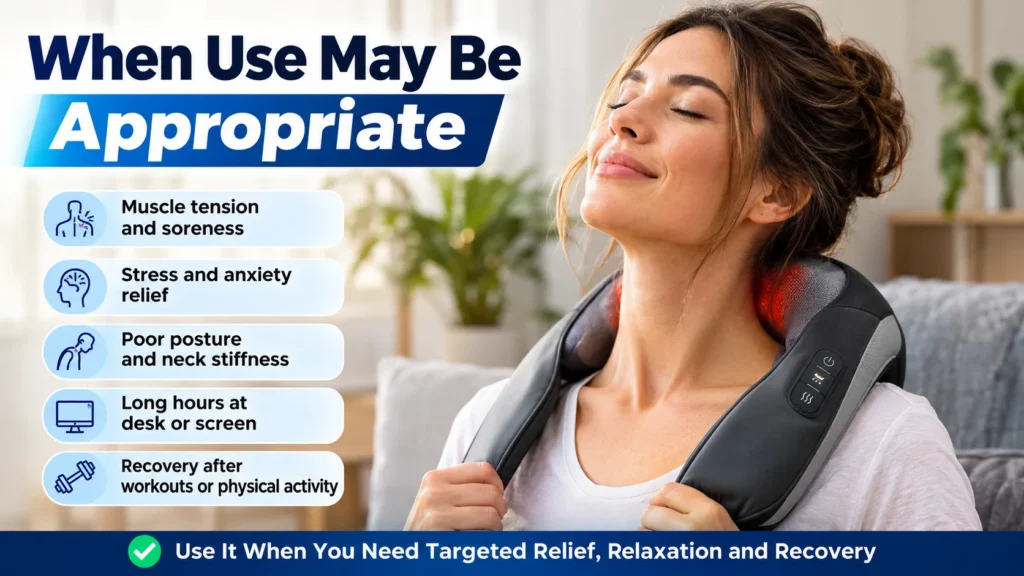
A person with a pacemaker should get approval from their cardiologist before using a shiatsu massager. Lower-power settings and areas far from the implanted device may reduce concern, but the device manual and the person’s medical history still matter.
Low-Risk Massage Settings
A clinician may allow use when the massager provides mechanical pressure, rolling, or gentle heat without electrical stimulation. The user should choose the lowest comfortable speed, avoid strong vibration, and limit the first session to a few minutes. The massager should never touch the chest or the skin directly above the pacemaker.
The user should check the manual for warnings about pacemakers. A shiatsu unit with TENS, EMS, muscle stimulation, or electrical impulse modes needs separate medical approval and may be unsuitable. A six-inch distance is sometimes suggested for electrical devices, but it does not replace advice from the cardiologist or the manufacturer.
| Setting or feature | Safer approach |
|---|---|
| Massage intensity | Start at the lowest level |
| Heat | Use mild heat and check the skin often |
| Electrical stimulation | Avoid unless the cardiologist approves it |
| Session length | Start briefly and stop if symptoms occur |
The user should stop immediately if they feel dizziness, faintness, chest discomfort, palpitations, unusual fatigue, or shortness of breath. They should contact their medical team if symptoms continue.
Choosing Suitable Body Areas
The feet, calves, and lower legs usually sit well away from a chest-implanted pacemaker. A clinician may approve gentle use on these areas when the person has no circulation problems, nerve loss, open wounds, blood clots, severe swelling, or recent surgery.
The user should avoid the chest, upper back, shoulders, neck, and upper arms unless the cardiologist gives specific instructions. Direct pressure near the pacemaker pocket could cause pain or irritate healing tissue. People with a recently implanted device should wait for medical clearance before using any massager.
The user should keep the handheld controller and motor away from the pacemaker site when possible. The device should remain still during use, and another person should stay nearby during the first session if the user has a history of heart symptoms.
Situations To Avoid
People with pacemakers should avoid placing a shiatsu massager over the implant or using equipment that is damaged, unusually powerful, or poorly controlled. They should also stop immediately if they notice dizziness, palpitations, chest discomfort, or unusual weakness.
Massage Near The Chest
A shiatsu massager should not press directly over a pacemaker or the skin covering it. The device’s kneading heads, heat, and vibration can irritate healing tissue, cause pain, or place pressure on the implant and nearby leads. This risk matters most during the first weeks after implantation, while the incision and leads heal.
The user should keep the massager away from the upper chest and shoulder area on the pacemaker side. It should not be used on the incision, even after the wound closes, unless the cardiology team approves it. A foot or back massager may still require approval because some models contain motors, magnets, or electrical parts that could create interference.
| Avoid | Safer action |
|---|---|
| Direct pressure over the pacemaker | Keep the device away from the implant |
| Massage near a fresh incision | Wait for medical clearance |
| Use after new chest symptoms | Stop and contact the care team |
Damaged Equipment And Strong Vibrations
A person with a pacemaker should not use a massager with exposed wires, a cracked casing, a loose motor, or a damaged power cord. Faults can cause shocks, overheating, or unpredictable operation. The user should follow the manufacturer’s warnings and ask the cardiologist or device clinic about the specific model.
Strong vibration can cause pain, bruising, or strain, especially after surgery or in areas with reduced sensation. The user should choose the lowest setting, avoid prolonged sessions, and keep the device away from the chest and implant. They should stop using it if the massager behaves unusually or if symptoms such as dizziness, fainting, rapid heartbeat, or chest pain occur. Seek urgent care for severe or persistent symptoms.
Guidance From A Cardiologist
A cardiologist can assess the person’s pacemaker, health history, and the massager’s features. The device manual and pacemaker manufacturer guidance also help determine whether the product’s motor, heat, vibration, or electrical stimulation creates a concern.
Questions To Discuss
The patient should give the cardiologist the exact brand and model of the shiatsu massager. The doctor may need to know whether it uses only mechanical kneading and heat or also includes vibration, magnets, electrical muscle stimulation, or wireless controls.
The patient should also explain the pacemaker type, when it was implanted, and whether symptoms occur during device use. Chest discomfort, dizziness, fainting, unusual weakness, or an irregular heartbeat requires stopping the massager and seeking medical advice promptly.
A foot-only massager usually sits far from the pacemaker, but distance alone does not prove that every model is safe. The cardiologist may recommend avoiding models with electrical stimulation or magnets, especially when the manufacturer does not provide clear compatibility information.
Manufacturer Recommendations
The patient should read both manuals before using the massager. The massager’s manual may list restrictions for people with pacemakers, while the pacemaker manufacturer may identify products that can create electromagnetic interference.
| Feature | What to check |
|---|---|
| Electrical stimulation | Ask the cardiologist before use; avoid it unless specifically approved. |
| Magnets | Keep magnets away from the pacemaker and follow the device maker’s distance rules. |
| Heat and kneading | Confirm that the model does not include prohibited electrical functions. |
| Unknown specifications | Do not use the product until the care team reviews it. |
The patient should not place the massager over the chest or pacemaker pocket. If the manual gives no pacemaker guidance, the patient should contact the manufacturer and cardiology team before using it.
Safer Alternatives For Muscle Relief

Gentle, nonpowered methods can ease muscle tension without placing an electric device near an implanted heart device. The safest choice depends on the painful area, the person’s health, and advice from the cardiology team.
Manual Massage Options
A hand massage does not produce electromagnetic fields and keeps pressure under direct control. A trained massage therapist can use gentle strokes on the legs, feet, arms, or back. The person should tell the therapist about the pacemaker and ask them to avoid pressing, kneading, or placing tools directly over the implant.
Massage should not cause chest pain, shortness of breath, dizziness, palpitations, numbness, or unusual discomfort. The therapist should avoid areas with swelling, redness, open skin, recent surgery, or suspected blood clots. People who take blood thinners may bruise more easily and should ask their clinician whether massage is appropriate.
A tennis ball or foam roller may help some muscles, but the person should use light pressure and avoid the chest and pacemaker site. A physical therapist can show safe techniques for a specific injury or movement problem.
Heat And Stretching
A warm, damp towel or a low-temperature heating pad may relax tight muscles. It should feel warm rather than hot, and each session should stay brief. The person should place a cloth between the heat source and skin, check the skin often, and avoid sleeping with the pad. Heat should not cover or press on the pacemaker.
Gentle stretching can help when stiffness causes discomfort. Slow neck turns, shoulder rolls, calf stretches, and hamstring stretches may be suitable, but the person should stop if pain, dizziness, breathlessness, or heart-related symptoms occur. A clinician or physical therapist can recommend movements that match the person’s condition.
People with reduced sensation, poor circulation, diabetes, or recent surgery should ask a healthcare professional before using heat. The pacemaker manufacturer’s guidance and the cardiologist’s advice should take priority.
Warning Signs During Use
A person with a pacemaker should stop using a shiatsu massager if unusual symptoms occur. Prompt action can help distinguish normal muscle pressure from a possible heart rhythm problem or another medical issue.
Symptoms Requiring Immediate Attention
The user should turn off the massager and move away from it immediately if they feel:
- Faint, confused, very weak, or unusually light-headed
- A racing, pounding, fluttering, or irregular heartbeat
- Chest pain, pressure, or tightness
- Trouble breathing or sudden shortness of breath
- A shock-like feeling, especially in someone with an ICD
- New sweating, nausea, or severe discomfort
The person should not restart the device to test whether the symptoms return. If symptoms are severe, continue for more than a few minutes, or include chest pain, breathing trouble, or fainting, someone should call emergency services. The user should keep the massager away from the pacemaker area and follow the device manufacturer’s safety guidance.
When To Seek Medical Care
A person should contact the cardiology team promptly after any unusual symptom, even if it stops after the massager is turned off. The care team may need the pacemaker checked and may review the massager’s motor, heating, vibration, and electrical features.
Medical advice is also needed for repeated palpitations, new fatigue, dizziness, worsening pain near the implant, swelling, redness, warmth, drainage, or changes in the skin over the pacemaker. These signs may point to a heart rhythm issue, device concern, or infection rather than simple muscle soreness.
If the massager causes symptoms more than once, the user should stop using it until a clinician approves it. The pacemaker clinic or device manufacturer can provide guidance about safe distance and electromagnetic interference.
FAQs
Can someone with a pacemaker use a shiatsu foot massager?
Many people can use one, but they should ask their cardiologist first. Most foot massagers do not sit near the pacemaker, yet some models may produce electromagnetic interference or other risks.
Does a foot massager affect pacemaker function?
The risk depends on the device. Motors, magnets, vibration systems, and electrical stimulation features may differ by model. The person should check the product manual and share the exact model with the cardiac care team.
Is a six-inch distance always safe?
No fixed distance guarantees safety for every device. A six-inch rule may apply to some equipment, but the pacemaker manufacturer and doctor should provide the correct guidance.
Which features require extra caution?
They should avoid devices that use electrical muscle stimulation unless the cardiologist approves them. They should also use caution with strong magnets and stop using the massager if they feel dizziness, palpitations, chest discomfort, or unusual symptoms.
Can someone use one soon after pacemaker surgery?
They should wait for medical clearance. Recovery instructions may limit activity and pressure, and the incision must heal before using equipment that could affect comfort or movement.
What should they do if symptoms occur?
They should stop the device immediately and move away from it. If symptoms continue or become severe, they should contact their medical team or seek emergency care.
Conclusion
Many people with pacemakers may use a shiatsu foot massager, but safety depends on the device and the person’s health. A foot massager’s pressure, vibration, or heat usually does not affect a pacemaker directly. However, some electric devices may create electromagnetic interference.
The person should ask their cardiologist or pacemaker clinic before using one, especially soon after implantation or when the device includes strong motors, magnets, or electrical stimulation. Medical advice matters more than general safety rules because pacemaker models and health conditions differ.
If a clinician approves use, the person should:
- Follow the massager’s instructions.
- Keep the device away from the chest and pacemaker site.
- Stop immediately if they feel dizziness, palpitations, chest discomfort, or unusual symptoms.
- Contact their medical team if symptoms continue.
A shiatsu massager should not be confused with devices that deliver electrical current, such as some TENS or muscle-stimulation products. Those devices may require separate restrictions.