An OSIM neck massager can help ease everyday neck and shoulder tension when used correctly. The user should review the model’s controls, place the device comfortably, and choose a gentle setting that matches their needs.
The safest approach is to follow the model’s manual, begin with a short, low-intensity session, and stop if pain, numbness, dizziness, or unusual discomfort occurs. The guide will explain how to position the massager, adjust heat or massage modes, care for the device, and recognize situations that require medical advice.
Key Takeaways
- Use the manual and start with gentle settings.
- Position the device without forcing the neck.
- Stop use when discomfort or warning signs appear.
Getting to Know Your OSIM Neck Massager

OSIM neck massagers differ by model, but most include power, mode, intensity, and heat controls. Their programs may use kneading, vibration, or other massage patterns, so the user should identify each control before starting.
Identifying Key Controls
The power button starts and stops the massager. The mode button changes the massage program, while intensity controls adjust the strength. Some models use a remote, while others place buttons on the device or use a phone app.
A heat button may activate warmth on supported models. The user should check whether the heat setting works separately from the massage and should stop using it if the skin feels too hot or irritated.
Common controls include:
| Control | Function |
|---|---|
| Power | Starts or stops the device |
| Mode | Selects a massage program |
| Intensity | Raises or lowers massage strength |
| Heat | Turns warmth on or off, if available |
The user should confirm the control layout in the manual for the exact OSIM model, such as the uNek Plus, uCozy, or uPapa Hug IV.
Understanding Massage Modes
Each mode changes how the massager moves or vibrates. A kneading or drum-style program may suit users who want stronger pressure, while a vibration program can provide a lighter sensation. Some OSIM models also offer adjustable speed or intensity levels.
The user should begin with the lowest intensity and run the device for a short period. If the setting feels comfortable, he or she can increase the intensity gradually. The massager should rest on the neck and shoulders without forcing it into the body.
Heat, when available, adds warmth to the massage. It should be used only at a comfortable temperature, and the user should follow the model’s recommended session time. Different OSIM models have different programs, controls, and limits, so the specific manual remains the best guide for operation.
Preparing for a Safe Session
The user should check the massager’s fit, position, and controls before starting. A quiet, stable space also helps the user stay relaxed and stop the device quickly if discomfort occurs.
Checking Fit and Positioning
The user should read the model’s manual because OSIM neck massagers differ in shape, controls, massage modes, and heat functions. He or she should inspect the device, power cord, and controls for damage before use.
The massager should rest evenly on the neck and shoulders without pressing on the throat, spine, or front of the neck. The user should sit upright, keep the head in a natural position, and adjust the device so its massage points contact the muscles rather than the bones.
| Check | Safe approach |
|---|---|
| Fit | It should feel secure but not tight |
| Position | Massage points should rest on the neck or shoulder muscles |
| Pressure | Start with the lowest setting |
| Heat | Use only if the manual allows it and the warmth feels comfortable |
The user should keep hair, loose clothing, and jewelry away from moving parts. He or she should stop the session if there is sharp pain, numbness, dizziness, skin irritation, or unusual discomfort.
Setting Up a Comfortable Environment
The user should choose a firm chair with back support. A stable seat helps prevent sudden movement while the massager operates. He or she should keep the control unit within easy reach and avoid using the device while standing, walking, driving, or lying in a position that could restrict breathing.
The area should have enough space for the user to sit upright and remove the massager quickly. The power outlet should be close enough to prevent the cord from stretching across a walkway. The user should keep liquids away from the device and place the manual nearby for quick reference.
He or she should begin when alert and able to monitor the body’s response. A short session on a low setting gives the user time to assess pressure and warmth before increasing either setting.
Putting On the Device Correctly
The massager should rest evenly on the neck and shoulders, with both massage nodes touching the intended muscles. The user should adjust the fit until the device feels secure without pressing hard against the throat or spine.
Aligning the Massage Nodes
The user should place the device around the back of the neck so the massage nodes sit on the muscles beside the spine. The nodes should not rest directly on the throat, the front of the neck, or the bones of the spine.
He or she should center the device before starting the massage. Both sides should sit at a similar height, and the nodes should make even contact with the neck or upper shoulders. If one side feels stronger, the user should stop the device and reposition it.
The user should begin with the lowest available intensity. The nodes may feel firm, but they should not cause sharp pain, numbness, dizziness, or unusual pressure. The massager can also be placed on other supported body areas if the specific model’s manual allows it.
Adjusting Straps and Handles
The user should hold or position the straps and handles so the massager stays against the muscles without pulling it tightly into the body. A light, even pull usually provides better control than strong pressure.
The handles should remain at a comfortable height near the sides of the body. The user can adjust the angle or grip to move the nodes slightly across the upper shoulders, but should avoid sudden movements while the device operates.
| Fit check | Correct position |
|---|---|
| Neck placement | Nodes rest beside the spine, not on the throat |
| Pressure | Firm contact without pain or pinching |
| Balance | Both sides sit at a similar height |
| Straps or handles | Secure control without excessive pulling |
The user should stop the massage before making major adjustments. If the device shifts, feels uneven, or causes discomfort, he or she should reposition it and restart at a lower setting.
Selecting Settings for Your Needs
The right settings depend on the user’s comfort, muscle tension, and sensitivity to warmth. Users should begin gently, adjust one setting at a time, and stop if they feel pain, numbness, dizziness, or unusual discomfort.
Choosing Intensity Levels
Users should start with the lowest intensity during the first session. This lets the body adjust to the massager’s drum or kneading movement. After a few minutes, they can increase the intensity if the pressure feels comfortable and useful.
A higher setting may suit users with tight muscles, but stronger pressure does not always provide better relief. Users should keep the device on the muscles beside the spine rather than placing direct pressure on the neck bones, throat, or head.
| User need | Suitable approach |
|---|---|
| First-time use | Start at low intensity |
| Mild tension | Use low or medium intensity |
| Firm muscle tightness | Increase gradually to a comfortable level |
| Pain or sharp discomfort | Stop and reassess |
The massager should move smoothly over the target area. If the pressure causes sharp pain, bruising, tingling, or lasting soreness, the user should stop using it and seek medical advice if symptoms continue.
Using Heat Functions
Heat can make a massage feel more comfortable, especially when the shoulders feel stiff. Users should activate the heat setting only if the device model includes it, then check how the warmth feels during the first few minutes.
The heat should feel warm, not hot or burning. Users should avoid placing extra blankets or clothing over the massager, since this can trap heat. They should also check their skin during use and stop if it becomes red, irritated, or painful.
People with reduced heat sensitivity, circulation problems, diabetes, or nerve conditions should ask a health professional before using heat. Users should not use the heat function on broken, inflamed, sunburned, or infected skin.
Setting Session Duration
Users should begin with a short session, such as 5 to 10 minutes, especially when trying a new intensity or heat setting. If the body responds well, they can follow the model’s manual for longer sessions and built-in timing limits.
They should not extend a session by restarting the device repeatedly. Long or frequent use can leave muscles tender, particularly when the user selects strong pressure.
The device should be turned off before the user changes its position or removes it. After each session, the user should check for unusual soreness and allow the muscles to recover before using the massager again.
Using Effective Massage Techniques
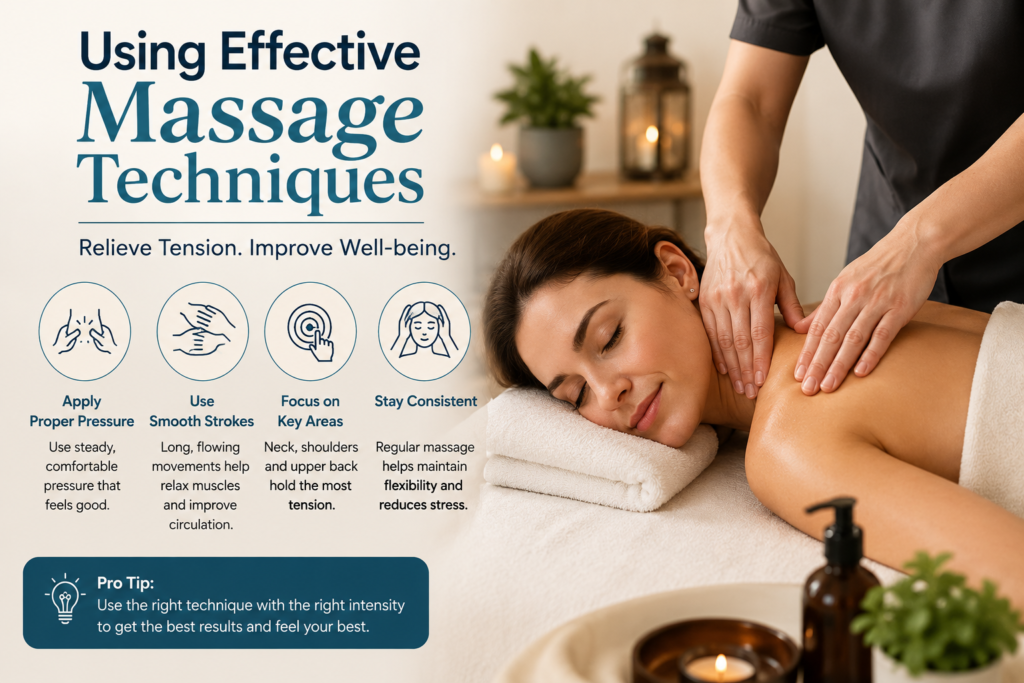
The user should start with a low intensity and keep the massager on the muscles beside the spine, not directly on the neck bones or throat. Short sessions, steady pressure, and gentle movement can help reduce muscle tension without causing soreness.
Targeting Neck and Shoulder Tension
The user should sit upright and place the OSIM massager so its nodes rest on the fleshy muscles at the base of the neck and across the shoulders. The device should feel firm but comfortable. If it pulls the head forward or causes sharp pain, the user should reposition it or reduce the intensity.
The user can begin with 5–10 minutes on a low setting. They should let the device work on one area before moving it slightly, rather than pressing hard or repeatedly crossing the same spot. Heat should remain at a comfortable level, and the user should follow the model’s manual because OSIM devices differ in controls and session limits.
The user should stop immediately if they notice numbness, tingling, dizziness, bruising, or increased pain. People with a recent injury, nerve problems, blood-clot risk, or other medical concerns should ask a health professional before using a heated or kneading massager.
Combining Massage With Gentle Movement
The user can pair the massage with slow, pain-free movements. While the device works on the shoulders, they can lower the shoulders, draw the shoulder blades gently back, and release them. They should keep the spine neutral and avoid forcing the head into a deep stretch.
After the massage, the user can turn the head slowly to the left and right, then tilt each ear slightly toward the matching shoulder. Each movement should last about 5 seconds and stay within a comfortable range. The user should breathe normally and avoid bouncing, fast circles, or strong pulling.
A simple routine includes 5 minutes of low-intensity massage, followed by three gentle neck turns on each side and three shoulder rolls in each direction. The user should wait and assess the area later rather than increasing intensity immediately.
Safety Guidelines and When to Avoid Use
Safe use requires correct placement, low starting intensity, and attention to warning signs. Some medical conditions require professional advice before using an OSIM neck massager, while pain, numbness, dizziness, or skin changes require the user to stop immediately.
Recognizing Contraindications
A user should avoid the massager or ask a health professional first if they have a neck injury, recent surgery, severe osteoporosis, a blood-clotting disorder, or unexplained neck pain. People with pacemakers or other implanted medical devices should check with their doctor and follow the device maker’s guidance. Pregnant users, people with reduced sensation, and those taking blood thinners should also seek medical advice before use.
The massager should not be used over open wounds, rashes, swelling, bruises, infected skin, or areas with reduced feeling. It should stay away from the front of the throat, the spine, and bony areas. The user should follow the specific OSIM manual because controls, attachments, and safety limits vary by model.
The device should remain dry and away from water. It should be unplugged before cleaning, and users should keep it away from heat sources.
Stopping a Session Safely
The user should stop the session immediately if the massager causes sharp pain, increasing soreness, numbness, tingling, weakness, dizziness, nausea, headache, breathing trouble, or unusual skin color. Mild pressure may feel uncomfortable at first, but pain should not be ignored or treated by increasing the intensity.
To stop, the user should press the power button, remove the massager gently, and unplug it from the outlet. They should inspect the skin for lasting redness, swelling, or irritation. If symptoms continue, worsen, or follow an injury, the user should contact a qualified health professional.
The user should never fall asleep while wearing the massager or leave it running without supervision. After each session, they should check the device for damaged cords, loose parts, or overheating and discontinue use if any problem appears.
Cleaning, Storage, and Routine Care
Regular cleaning keeps the OSIM neck massager comfortable to use and helps protect its electrical parts. The device should remain dry, unplugged, and stored away from heat, sunlight, and heavy pressure.
Cleaning Contact Surfaces
The user should disconnect the power adapter or remove the batteries before cleaning. A soft, slightly damp cloth can remove sweat, skin oils, and dust from the neck rests, fabric cover, and control area.
The user should not pour water onto the massager, immerse it, or spray cleaner directly on it. Abrasive pads, strong chemicals, alcohol-based cleaners, and rough brushes may damage the surface or finish. If a mild cleaner is needed, it should be applied sparingly to the cloth rather than to the device.
After wiping, the user should let every surface dry fully before reconnecting power or using the massager. They should also check the cable, controls, and seams for moisture or damage. If liquid enters the device, it should remain unplugged until a qualified service provider checks it.
Protecting the Device Between Uses
The user should store the massager in a cool, dry place away from direct sunlight, heaters, and damp areas such as bathrooms. Excess heat and moisture can affect the casing, wiring, battery compartment, or internal motor.
The cable should be placed loosely rather than tightly wrapped around the device. Tight bends can strain the cable and connector. The massager should also remain free from heavy objects that could press on its neck supports, massage heads, or control panel.
Before storage, the user should turn the unit off and disconnect the adapter. If the model uses batteries and will not be used for an extended period, the user should follow its manual for battery removal. They should inspect the device before each use and stop using it if they notice exposed wiring, a damaged plug, unusual noise, or a cracked housing.
FAQs
How long should an OSIM neck massager run?
The user should begin with the shortest setting and low intensity. They should follow the model’s manual and stop if they feel pain, numbness, dizziness, or unusual discomfort.
How should the massager sit on the neck?
The massage heads should rest against the sides and back of the neck, without pressing directly on the throat or the front of the neck. The user should keep the device stable and adjust its position gently.
Can the user apply heat?
Some OSIM models include a heat function. The user should check the controls and manual before turning it on. They should use a lower heat level first and stop if the skin becomes too hot or irritated.
Can it replace medical care?
No. A neck massager may ease muscle tension, but it cannot diagnose or treat an injury. A person with severe, lasting, or worsening neck pain should speak with a health professional.
Who should avoid using one?
People with recent neck injuries, reduced skin sensation, circulation problems, or implanted medical devices should seek medical advice first. Pregnant users and people with serious health conditions should also ask a clinician before use.
How should it be cleaned?
The user should unplug the device and wipe its surfaces with a soft, slightly damp cloth. They should keep water away from the controls, power connection, and internal parts.
Conclusion
An OSIM neck massager works best when the user follows the instructions for the specific model. The user should sit comfortably, place the massager correctly, and choose a gentle setting before increasing the intensity.
Short sessions can help ease everyday neck and shoulder tension. The user should stop immediately if the device causes pain, numbness, dizziness, skin irritation, or unusual discomfort.
The user should keep the device dry, inspect the power cord, and store it in a clean, safe place. They should also follow the manual’s safety guidance, especially if they have a medical condition, use an implanted device, or are unsure whether massage is suitable for them.