By Alex Turner
Quick Answer: Is infrared massager harmful? For most healthy adults, short sessions on low heat are generally considered low risk. Trouble usually comes from too much heat, too much time, or use on numb, injured, or fragile skin. Some people should ask a professional first.
Warm, soothing massage sounds harmless, yet many people ask, is infrared massager harmful, before they buy one. It is a fair question. Heat and pressure can feel wonderful, but they can also cause problems when used the wrong way.
This guide explains how these devices work, who should be careful, which warning signs matter, and how to build safer habits.
This article is for general educational information only. It does not diagnose, treat, cure, or prevent any condition. It does not replace advice from a licensed healthcare professional. Readers should seek professional help for severe, worsening, unusual, or persistent symptoms.
Is Infrared Massager Harmful? What It Is and How It Works
An infrared massager is a comfort device that adds gentle warmth to a massage action. Many models pair a small heating element with vibration, kneading nodes, or percussion. Infrared is a kind of light you cannot see, and you feel it as warmth on your skin.
People commonly use these devices on the neck, shoulders, lower back, calves, and feet after long desk days or busy workouts. Some people say the warmth helps their muscles feel looser and more relaxed. That is a comfort experience, not a treatment.
Safety mostly depends on four things. Look at the cards below and think about which ones apply to you.
Heat level
Higher settings raise the chance of skin irritation. Starting low gives your skin time to tell you how it feels.
Session length
Heat builds slowly, so a long session can feel fine until it is too much. A timer takes the guesswork out.
Pressure and intensity
Strong pressure on sore or bony areas can leave you achy instead of relaxed. Gentle settings are a smarter starting point.
Skin sensation
If you cannot feel heat well, you may not notice a problem building. This is the biggest reason some people need extra care.
Who Should Be Cautious With Infrared Massage
Healthy adults with normal skin sensation are the group these devices are usually designed for. Other situations call for a conversation with a licensed professional before use. The table shows common examples.
Who Needs Extra Care and Why
Swipe left/right to see the full table →
| Situation | Why care matters | Practical step |
|---|---|---|
| Numb or reduced skin feeling | Heat may build unnoticed | Ask a professional first |
| Pregnancy | Heat and pressure needs differ by body area | Check with your prenatal provider |
| Implanted medical device | Some massagers use vibration or magnets | Read the manual, ask your provider |
| Recent injury or swelling | Heat may irritate a fresh problem | Skip the area until cleared |
| Rashes, wounds, or sensitive skin | Heat and rubbing can irritate | Avoid that spot, protect skin |
Also check first if you have circulation or clotting concerns, since massage over a suspected clot is not a place for guesswork. The same goes if you use medicated patches or creams, because heat may change how skin responds to them. Read the product label and ask a pharmacist or clinician. Older adults may have thinner skin, and children should only use these devices with adult supervision and manufacturer approval.
A Simple Safety Decision Path Before Each Session
Run through this quick path before you turn the device on. It takes less than a minute.
Yes → pause and contact a professional | No ↓
No → skip that area | Yes ↓
↓
This path works because it puts the riskiest questions first. If any answer worries you, pausing costs nothing.
Red Flags to Watch During and After Use
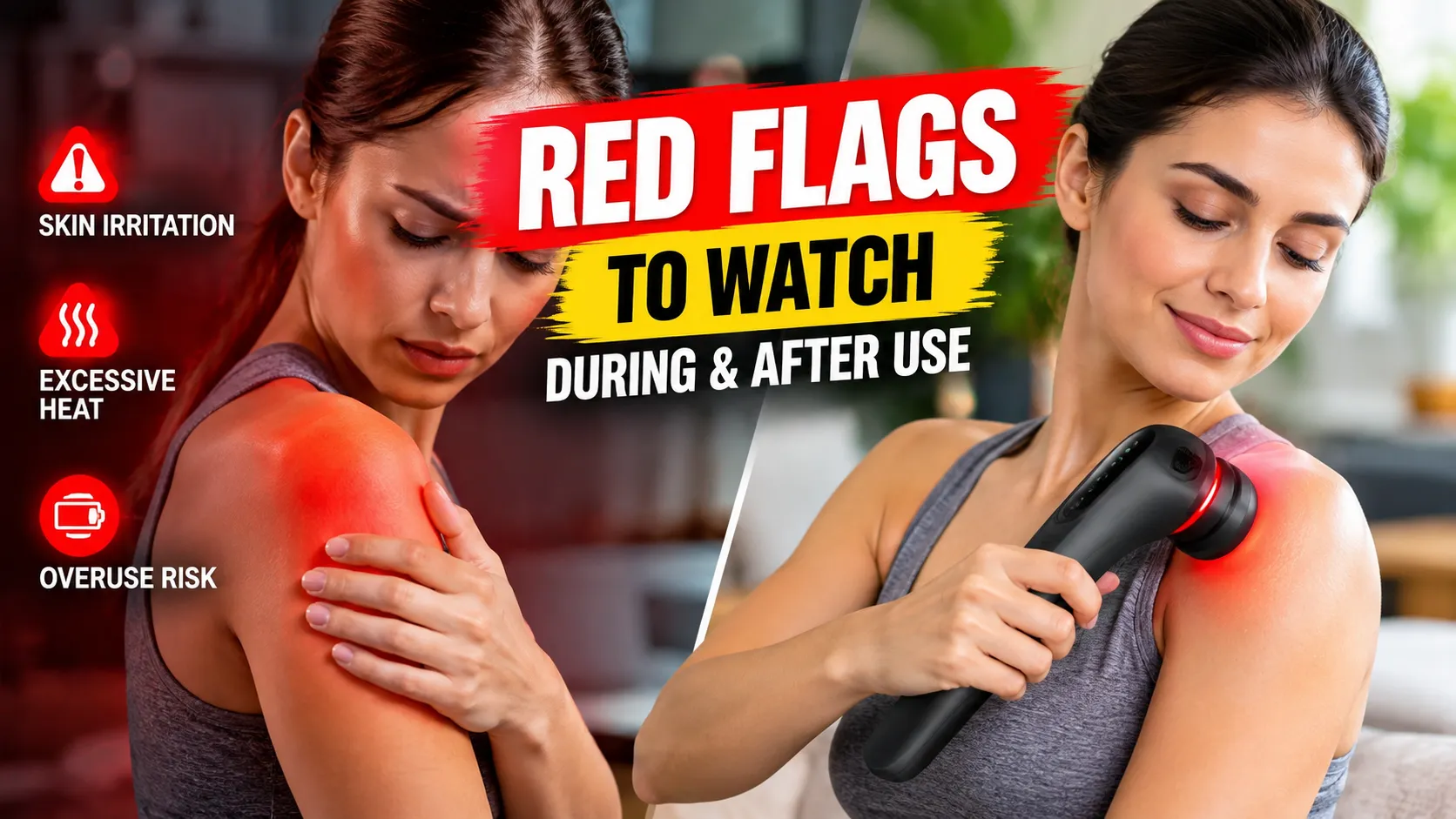
Mild warmth and a relaxed feeling are normal. The signs below are not. Treat them as reasons to stop and reassess.
Skin signals
Burning feeling, blisters, redness that does not fade, or a new rash after a session.
Pain and nerve signals
Sharp or worsening pain, numbness, tingling, or new weakness in an arm or leg.
Swelling and circulation signals
Swelling, warmth, or tender pain in one calf or limb, especially if it appeared suddenly.
Whole-body signals
Fever, dizziness, chest pain, or loss of bladder or bowel control.
If a red flag shows up, stop using the device. The most serious signs need prompt attention, not more self-care.
Warning: Stop right away if your skin feels like it is burning, looks blistered, or pain gets worse. Seek urgent medical help for chest pain, trouble breathing, sudden weakness, or loss of bladder or bowel control.
Common Ways an Infrared Massager Can Cause Trouble
So, is infrared massager harmful in everyday life? In general, problems seem tied to how the device is used rather than to the idea of gentle infrared warmth. Low burns, skin irritation, and sore muscles from too much pressure are the most likely issues.
Here is how a safer routine compares to a risky one.
Safer Routine vs Risky Routine
Swipe left/right to see the full table →
| Area | Safer routine | Risky routine |
|---|---|---|
| Heat setting | Start low, raise slowly | Jump to highest heat |
| Session length | Short, with a timer | Open-ended, no timer |
| Body area | Large muscles like shoulders or calves | Spine, throat, or bony joints |
| Awareness | Awake, checking skin | Dozing off with it on |
The risk gauge below is a general practical guide. It helps you judge where your own habits sit.
Most people can stay in the low-risk row with a timer and a habit of checking their skin. If you land in the high-risk row, change the routine or ask a professional first.
How Often and How Long to Use It
Manufacturers publish their own limits, and those come first. The table gives a general starting point when the manual is silent or unclear.
General Timing Guide
Swipe left/right to see the full table →
| Moment | Typical approach | Note |
|---|---|---|
| First time | A few minutes on low heat | See how skin reacts |
| Regular use | Short session, often 10 to 15 minutes | Follow the manual if it differs |
| After a workout | Gentle setting on sore muscles | Skip areas that feel injured |
| Before bed | Finish, switch off, then rest | Never fall asleep using it |
The bar meter below shows typical routine priority for safe use. It is a practical guide, not scientific data.
Typical routine priority (practical guide)
Check skin before and after
Start on low heat
Use a timer
Read the manual
Skin checks come first because your skin gives the earliest and clearest feedback. Everything else supports that habit.
Safer Alternatives If an Infrared Massager Is Not a Good Fit
Skipping the device does not mean skipping comfort. Several gentler options may help you unwind, and some may suit your situation better.
Comfort Options Compared
Swipe left/right to see the full table →
| Option | May suit | Watch out |
|---|---|---|
| Warm shower or towel-wrapped warm pack | Gentle, easy warmth | Water that is too hot |
| Light stretching | Stiffness from sitting | Forcing painful ranges |
| Non-heated handheld massager | People who dislike heat | Too much pressure |
| Professional massage | Health conditions or ongoing tightness | Tell them your health history |
Here is a quick split of habits to keep and habits to drop.
Do
Read the manual. Start low. Use a timer. Check your skin. Keep the cord and device dry.
Don’t
Don’t sleep with it on. Don’t use it near water. Don’t press hard on the spine, throat, or injured spots.
Common Mistakes and Better Choices
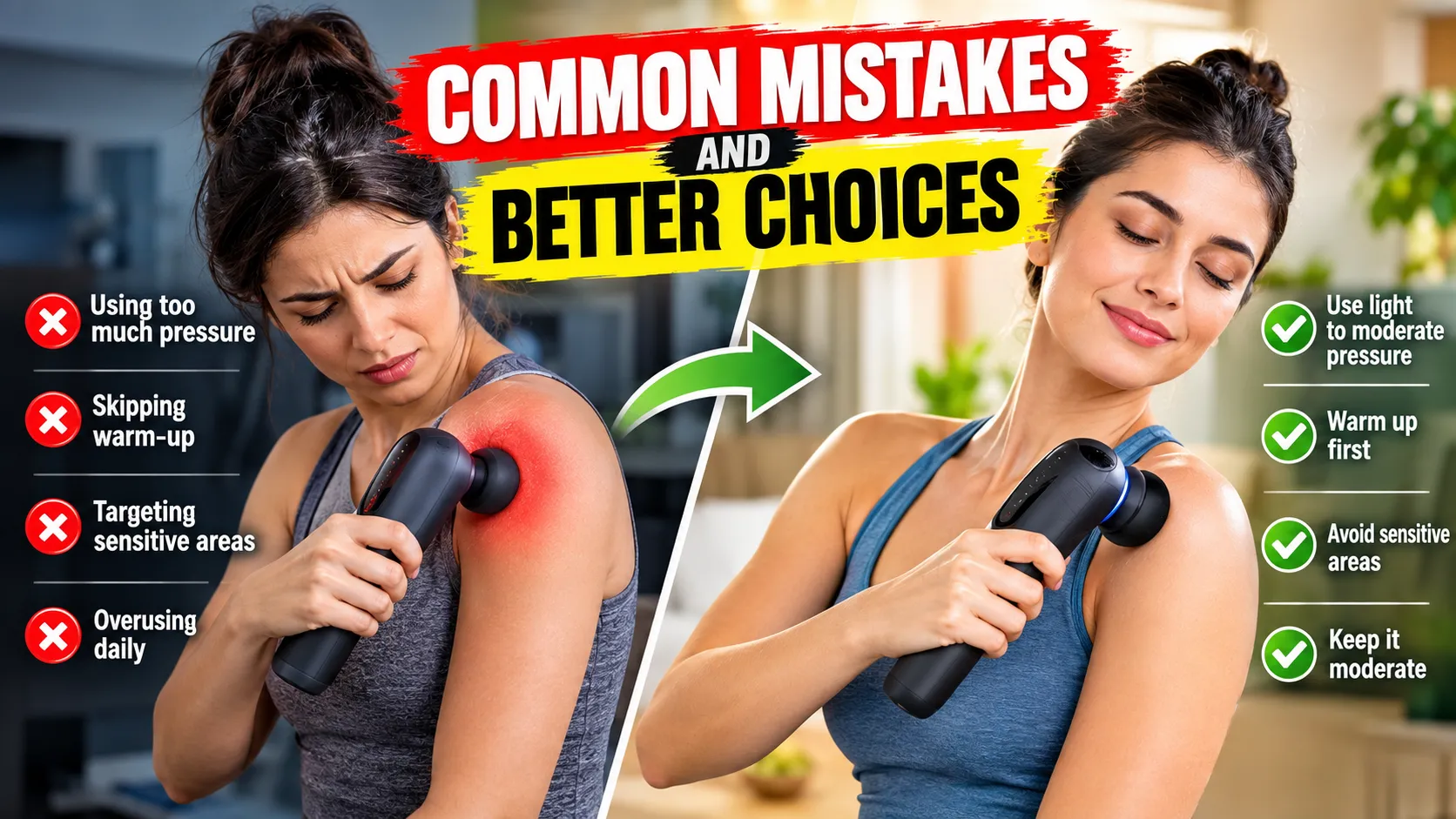
Mistake vs Better Choice
Swipe left/right to see the full table →
| Mistake | Why it backfires | Better choice |
|---|---|---|
| “More heat means faster relief” | Raises burn and irritation chances | Stay on comfortable warmth |
| Using it on a fresh injury | Heat and pressure may aggravate it | Ask a professional first |
| Skipping the manual | Each model has different limits | Read time and area guidance |
| Using a damaged device | Frayed cords or hot spots are unsafe | Replace it or contact the maker |
Note: Product pages may describe comfort features, but they do not replace advice from a licensed professional. Treat a massager as a comfort tool, not a way to deal with ongoing pain.
Tip: Before you buy, ask yourself: is infrared massager harmful for my situation? If anything in the caution table sounds like you, get a professional’s opinion first. Also look for auto shut-off, a timer, and clear heat settings.
When to Contact a Professional
Self-care has limits. A massager cannot tell you what is behind ongoing discomfort, and pushing through can delay the right help.
Talk with a licensed healthcare professional if:
Pain continues or gets worse, you notice numbness, tingling, or weakness, or swelling appears. Also reach out if skin stays red, blistered, or irritated after use, or if you have any condition on the caution list and want to use a heated device.
Seek urgent medical help for chest pain, trouble breathing, sudden weakness, severe pain after an injury, fever with pain, or loss of bladder or bowel control.
For general health information, you can browse MedlinePlus. The FDA medical devices page offers general device safety information.
This article may contain affiliate links. If you buy through these links, we may earn a small commission at no extra cost to you. We only mention products that fit the topic and do not replace professional medical advice.
Infrared Heating Pad With Auto Shut-Off
May support comfort and routine consistency, and an auto shut-off feature makes short sessions easier to manage.
Handheld Massager With Adjustable Intensity
Multiple intensity levels may make it easier to start gently and keep sessions comfortable.
Frequently Asked Questions
Is infrared massager harmful if I use it every day?
It can be fine for many healthy adults when sessions are short and heat is low. Daily use on the same spot can irritate skin, so follow the manual and check your skin.
Can an infrared massager cause burns?
Yes, any heat product can if the heat is high, sessions are long, or skin cannot sense heat well. Use low heat and a timer.
Is it safe to use one during pregnancy?
Ask your prenatal provider first, since heat and pressure needs can vary by body area and stage.
Can I fall asleep with it on?
No. Sleeping with a heated device raises the chance of overheating and skin injury, so finish your session and switch it off.
Can I use it over clothing?
Some manuals allow a thin layer, but thick layers can trap heat. Check your model’s instructions.
Should I look at the glowing heating element?
Avoid staring at a glowing element, and follow the manual’s guidance on eye safety.
When should I stop using it?
Stop if you feel burning, sharp pain, numbness, or lingering redness, and contact a professional if it continues.
Final Thoughts
So, is infrared massager harmful? The honest answer is that it depends on your health, your device, and your habits. Low heat, short timed sessions, and regular skin checks keep most routines on the safer side.
If you have a health condition, reduced skin feeling, or symptoms that are severe, worsening, unusual, persistent, or not improving, please talk with a licensed healthcare professional.
Author
-

I’m Alex Turner, a massage product reviewer and wellness writer at RemedyTip. I specialize in researching, evaluating, and comparing massage and recovery products to help readers make informed purchasing decisions. My focus is on practical, evidence-informed product guidance covering muscle recovery, relaxation, everyday comfort, and wellness.
I take a research-driven approach to every product I review. I examine product specifications, features, materials, performance claims, user feedback, durability, comfort, ease of use, and overall value. When appropriate, I also consult trusted industry and health-related sources to verify important information and provide readers with a more complete and balanced view.
I cover a wide range of products, including massage guns, handheld massagers, neck and shoulder massagers, foot massagers, massage chairs, foam rollers, and other recovery tools. Rather than focusing only on marketing claims, I look at how products compare in real-world use and who they are actually suitable for. I also consider different budgets, use cases, and user needs when making recommendations.
At RemedyTip, I’m committed to accuracy, transparency, and unbiased product information. I clearly distinguish between manufacturer claims, available evidence, and my own product analysis so readers can understand the basis of each recommendation. I continuously research new products, technologies, and developments in the massage and recovery space to keep my content current and useful.
My goal is simple: to provide trustworthy, easy-to-understand information that helps readers choose massage and recovery products with greater confidence.