
A neck massage usually relaxes tight muscles and does not cause serious harm. However, forceful pressure, deep tissue work, sudden twisting, or massage-gun use on the neck may rarely injure an artery and lead to a stroke.
A neck massage can rarely contribute to a stroke, especially when it involves forceful pressure or sudden neck movement. Understanding the warning signs and choosing safer techniques can help people reduce this risk without avoiding helpful treatment.
Key Takeaways
- Gentle massage poses a very low risk for most people.
- Forceful neck pressure and twisting deserve caution.
- Sudden weakness, speech trouble, or severe dizziness requires emergency care.
The Link Between Neck Manipulation And Stroke
Gentle massage rarely causes serious harm, but forceful pressure, rapid twisting, or high-velocity neck manipulation may injure a cervical artery. An artery tear can allow a blood clot to form and block blood flow to the brain.
Understanding Cervical Artery Dissection
A cervical artery dissection occurs when a small tear develops in the inner lining of an artery in the neck. The affected vessels may include the vertebral arteries, which supply parts of the brain, or the carotid arteries, which carry blood to much of the brain.
Strong neck rotation, sudden extension, or forceful manipulation may trigger this injury in rare cases. Ordinary massage that works on the shoulders and surface muscles has a much lower risk than techniques involving deep pressure or rapid movement. Some dissections also occur without a clear cause.
Possible symptoms include:
- Sudden neck pain or severe headache
- Dizziness, loss of balance, or double vision
- Weakness or numbness on one side
- Trouble speaking or swallowing
- Drooping on one side of the face
How A Blood Clot Can Develop
After an artery tears, blood can enter the damaged vessel wall and create a raised area. This can narrow the artery and reduce blood flow. Platelets may also gather at the injury site, forming a clot.
If part of the clot breaks free, it can travel into a smaller artery in the brain. A blockage may cause an ischemic stroke. Symptoms can begin during the neck treatment or appear hours or days later.
| Warning sign after neck manipulation | Recommended action |
|---|---|
| Sudden weakness, numbness, or facial drooping | Call emergency services immediately |
| New trouble speaking, seeing, walking, or balancing | Seek emergency care immediately |
| Severe unusual headache or neck pain with dizziness | Get urgent medical assessment |
Fast treatment can limit brain injury. A person should not drive themselves or wait for symptoms to improve.
How Common The Risk Is
Stroke after a neck massage appears to be very rare, but researchers cannot measure the exact rate well. Most neck massages do not cause serious harm. The risk matters because a neck artery injury may occur without obvious symptoms at first, and early treatment can reduce the chance of a stroke.
What Research Shows
Medical reports describe occasional strokes linked in time with neck manipulation, forceful stretching, or vigorous massage. These reports often involve cervical artery dissection, a small tear in the inner wall of an artery in the neck. The tear can allow a clot to form, which may travel to the brain.
Research has not proved that every reported stroke resulted from massage. Some artery tears occur spontaneously or after ordinary neck movement, and a massage may simply happen shortly before symptoms begin. Compared with established stroke causes—such as high blood pressure, smoking, diabetes, and atrial fibrillation—neck massage is not considered a common cause.
Why Individual Risk Varies
Risk may increase when a technique includes strong pressure over the front or side of the neck, forceful rotation, sudden stretching, or repeated high-velocity movements. A qualified therapist should avoid these methods and should not press directly over the carotid arteries.
Certain factors may also make an artery more vulnerable, including a previous artery dissection, connective-tissue disorders, recent neck injury, severe infection, or some blood-vessel conditions. Many people with a dissection have no known risk factor, so safety cannot depend on medical history alone.
People should seek emergency care for sudden weakness or numbness on one side, trouble speaking, vision loss, severe imbalance, or a new severe headache or neck pain after treatment.
Massage Techniques With Greater Concern
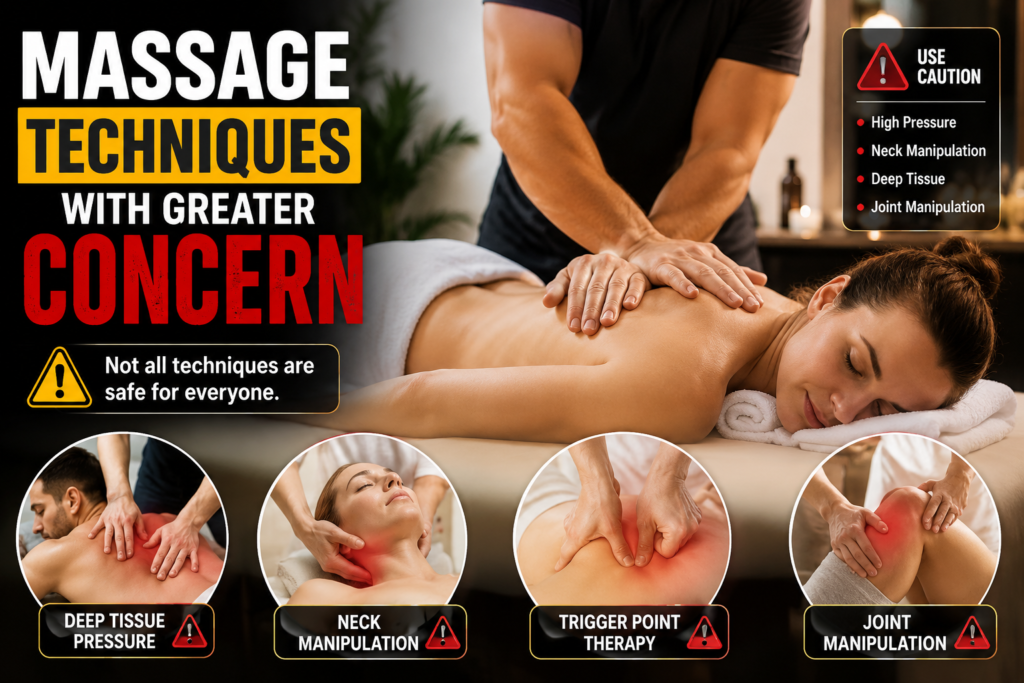
Most gentle massage does not involve the movements linked to arterial injury. Greater concern applies to techniques that use strong pressure, rapid neck movement, or both, especially when the head reaches its end range.
Forceful Neck Rotation
Forceful rotation turns the head far to one side while applying pressure to the neck. A deep massage that pushes the head into this position may place stress on the vertebral arteries, which run through the neck vertebrae and supply the brain.
The risk appears very low, but it may increase when rotation combines with neck extension, strong pressure, or repeated movements. A therapist should avoid forcing the neck past a comfortable range. The person receiving treatment should report sharp pain, unusual headache, dizziness, or visual changes immediately and ask the therapist to stop.
| Safer practice | Higher-concern practice |
|---|---|
| Gentle movement within a comfortable range | Forced end-range rotation |
| Light or moderate pressure | Deep pressure with head turning |
| No sudden movement | Rapid or repeated neck movement |
High-Velocity Cervical Manipulation
High-velocity cervical manipulation uses a quick, controlled thrust that may produce a popping sound. This technique differs from ordinary massage and carries more concern because it combines speed, force, and neck rotation or extension.
A neck injury called arterial dissection can rarely occur when the inner lining of an artery tears. A resulting clot may reduce blood flow to the brain or travel into a smaller vessel, causing a stroke. Research cannot always show whether the manipulation caused the injury or whether early symptoms led the person to seek treatment.
People should seek emergency care for sudden severe neck pain or headache, facial drooping, weakness or numbness on one side, trouble speaking, loss of balance, or vision changes. These symptoms require urgent evaluation, even if they begin after a massage or manipulation session.
Warning Signs That Need Emergency Care
Sudden neurological symptoms after neck massage need urgent medical attention, especially when they affect speech, movement, vision, balance, or alertness. The person should call emergency services immediately and should not drive themselves to the hospital.
Symptoms Of A Possible Stroke
Stroke symptoms often appear suddenly. Warning signs include:
- Face drooping, especially on one side
- Arm or leg weakness or numbness, usually on one side
- Slurred speech, trouble speaking, or difficulty understanding speech
- Sudden vision loss or double vision
- Sudden dizziness, loss of balance, or trouble walking
- A sudden, severe headache with no known cause
- Confusion, fainting, or reduced alertness
A quick check can help: the person can try to smile, raise both arms, and repeat a simple sentence. Any uneven smile, drifting arm, or unusual speech requires immediate emergency care. Symptoms that improve after a few minutes may still signal a transient ischemic attack and need urgent assessment.
Symptoms Of Cervical Artery Dissection
A cervical artery dissection involves a tear in the wall of an artery in the neck. It can cause new, sudden, or persistent one-sided neck pain or headache, sometimes near the back of the head, face, or eye.
Other warning signs include a drooping eyelid or smaller pupil on one side, pulsating noise in one ear, dizziness, double vision, trouble swallowing, imbalance, or weakness and numbness. Some people develop these symptoms hours or days after the neck pain begins.
| Warning sign | Action |
|---|---|
| Sudden neurological symptoms | Call emergency services immediately |
| New severe neck pain or headache after neck manipulation | Seek urgent medical evaluation |
The person should avoid further neck manipulation and keep the neck still while waiting for medical help.
People Who May Face Higher Risk
Most gentle neck massages do not cause strokes. Risk may be higher when a person has a blood-vessel problem or when neck pain follows a recent injury or infection. These situations can weaken an artery or make its symptoms harder to recognize.
Existing Vascular Conditions
People with known blood-vessel disorders should avoid forceful neck pressure or rapid twisting unless a clinician approves it. Conditions such as cervical artery dissection, fibromuscular dysplasia, connective-tissue disorders, or a history of aneurysm may weaken an artery wall. High blood pressure, smoking, and high cholesterol can also raise vascular risk, although they do not mean that massage will cause a stroke.
A person should tell the massage therapist about any vascular diagnosis, previous stroke, unexplained severe headaches, or blood-thinning medicine. Gentle work on the shoulders and upper back may be safer than direct pressure on the front or side of the neck. Massage cannot treat artery disease, and a therapist should not perform high-velocity neck manipulation.
Sudden neck pain, a severe headache, dizziness, double vision, weakness, numbness, trouble speaking, or loss of balance requires emergency care. These symptoms can signal a stroke or artery dissection. The American Stroke Association’s stroke warning signs can help people recognize the need for urgent action.
Recent Injury Or Infection
A recent car crash, fall, sports injury, or forceful neck movement can damage a neck artery, sometimes without obvious symptoms at first. A person should avoid neck massage and manipulation until a clinician rules out a significant injury, especially when neck pain, headache, dizziness, or unusual weakness follows the event.
Recent infections may also matter. Severe coughing, vomiting, or inflammation can place stress on the neck, while some infections may affect blood vessels or cause swelling. Fever, severe throat pain, facial or neck swelling, or trouble swallowing needs medical assessment before massage.
People should not use massage to test or relieve unexplained neck pain after an injury or illness. A clinician can decide whether imaging or other tests are needed. If neurological symptoms appear suddenly, emergency services should be contacted rather than arranging a massage appointment.
Ways To Make Neck Massage Safer
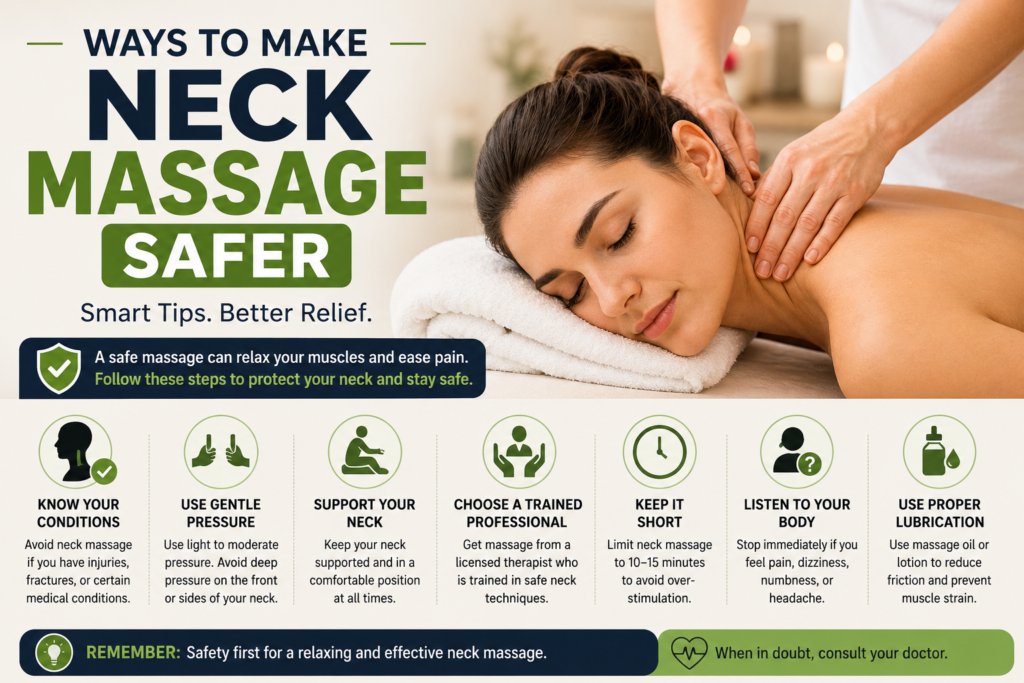
Safer neck care uses trained practitioners, light pressure, and no forceful twisting or rapid movements. People with blood-vessel conditions, recent injuries, or stroke warning signs should avoid neck massage and seek medical advice.
Choosing A Qualified Practitioner
A licensed massage therapist should ask about medical conditions, medicines, recent injuries, and symptoms before treatment. The client should mention a history of stroke, blood-clotting problems, connective-tissue disorders, high blood pressure, or neck surgery. These conditions may require medical advice before massage.
The therapist should use gentle pressure on the muscles beside the neck rather than pressing directly over the throat or the path of the carotid arteries. The session should not include forceful stretching, sudden rotation, or high-velocity manipulation. A client should be able to stop the treatment at any time.
Neck pain with a sudden severe headache, dizziness, trouble speaking, weakness, numbness, vision changes, or loss of balance requires urgent medical care. These can signal a stroke or a cervical artery problem. Treatment should stop immediately, and emergency services should be contacted.
Using Gentle Alternatives
A person can reduce neck tension with low-risk options such as a warm—not hot—compress, slow shoulder movements, or gentle stretches that stay within a comfortable range. Light massage of the shoulders and upper back may ease muscle tightness without placing direct pressure on the front or sides of the neck.
Self-massage should use the fingertips and mild pressure for a short period. It should never involve pressing deeply under the jaw, squeezing the neck, or using devices that force the head into a fixed position. Pain, tingling, dizziness, nausea, or a new headache means the activity should stop.
People with ongoing neck pain should ask a health professional about physical therapy and suitable exercises. A therapist can identify the cause and create a safe plan instead of relying on aggressive massage.
What To Do If Symptoms Occur After Treatment
Anyone who develops possible stroke symptoms during or after a neck massage should call emergency services immediately. They should not drive themselves or wait to see whether the symptoms improve.
Warning signs can include:
- Sudden weakness or numbness, especially on one side
- Trouble speaking, understanding, walking, or seeing
- Severe or unusual headache
- Dizziness, loss of balance, or repeated vomiting
- Sudden neck pain followed by neurological symptoms
The person should note when the symptoms began and tell emergency staff about the massage, including any forceful pressure or neck twisting. This timing can help guide urgent testing and treatment.
They should avoid further massage, neck manipulation, or strenuous activity until a medical professional assesses them. They should also avoid eating, drinking, or taking aspirin unless emergency clinicians advise it.
Symptoms can appear during treatment, soon afterward, or over the next several hours or days. Even if they improve, prompt medical evaluation remains important because temporary symptoms can signal a serious blood-vessel problem.
FAQs
Can a neck massage cause a stroke?
A stroke after neck massage is possible but very rare. Forceful pressure, sudden neck twisting, or rapid manipulation may contribute to a tear in a neck artery, called a cervical artery dissection. A clot can then reduce blood flow to the brain.
Is a gentle massage safe?
Most gentle massages do not cause problems. The risk may increase with deep pressure, strong stretching, or neck “cracking.” A qualified therapist should avoid forceful movements and ask about health conditions first.
What symptoms need emergency care?
Symptoms may include sudden severe neck pain or headache, dizziness, double vision, trouble speaking, weakness or numbness on one side, loss of balance, or difficulty walking. These signs require immediate emergency care, even if they improve.
Who should avoid neck manipulation?
People with a recent neck injury, unusual neck pain, a known blood-vessel disorder, or a history of cervical artery dissection should seek medical advice before treatment. A clinician can help decide which techniques are appropriate.
What should someone do after symptoms begin?
They should stop the massage and call emergency services immediately. They should not drive themselves, wait for symptoms to pass, or resume massage without medical evaluation.
Conclusion
A neck massage rarely causes a stroke, but forceful pressure, sudden twisting, or deep manipulation may injure a neck artery. This injury, called an arterial dissection, can allow a clot to form and reduce blood flow to the brain.
People can lower the risk by choosing a trained, licensed therapist and avoiding techniques that involve forceful neck rotation or pressure over the front and sides of the neck. Anyone with a history of artery problems, recent neck injury, or unusual neck pain should seek medical advice before treatment.
After a neck massage, sudden weakness, numbness, trouble speaking, vision changes, severe dizziness, loss of balance, or a sudden severe headache requires emergency medical care. These signs may indicate a stroke, and fast treatment can limit brain damage.
Gentle work on the shoulders and upper back may offer a safer option for muscle tension. A healthcare professional can help identify the cause of persistent neck pain and recommend suitable treatment.

