Your knees may ache from overuse, tight leg muscles, long periods of sitting, hard workouts, mild swelling, poor footwear, or age-related joint irritation. In many cases, easing muscle tension, improving mobility, using heat or compression, and lowering irritation can help.
Knee aches can show up after a long walk, a workout, or a full day at a desk. Sometimes the joint feels stiff. Sometimes the bigger issue is tight muscles above and below the knee changing how it moves.
I’m Ethan Carter, and I’ve spent years testing massage tools, recovery products, and pain relief methods. I focus on simple, practical advice that helps people feel better and recover faster at home. In this guide, I’ll show you what often causes aching knees, what may help at home, and which tools are actually worth considering.
What Knee Aches Usually Mean
An aching knee often means the area is being irritated more than it is recovering. That irritation may come from hard training, repeated bending, long periods of sitting, standing for hours, weak hips, stiff ankles, or tight quads and calves pulling on the knee.
One reason this feels confusing is that the ache is not always coming from one exact spot. Many people think the knee is the only problem, but the muscles, fascia, and movement patterns around it matter a lot. In my experience, tight legs and poor recovery habits are some of the biggest reasons knees feel sore, heavy, or stiff.
A dull ache is also different from a sharp injury pain. A dull ache often lines up with overuse strain, stiffness, mild swelling, or recovery delay. That is why practical home care can work well for many people.
How Knee Aches Happen in the Body
The knee is a teamwork joint
Your knee sits between the hip and the ankle. If the hips are weak, the ankles are stiff, or the feet are not getting enough support, the knee often takes extra stress. That can make everyday movement feel harder, especially stairs, squats, and long walks.
How tight muscles affect knee movement
Tight quads, hamstrings, calves, and hip muscles can all change how the knee tracks. I see this a lot in office workers, runners, and people who sit most of the day. When those muscles stay tense, they can limit range of motion, create trigger points, and make the knee feel more loaded than it should.
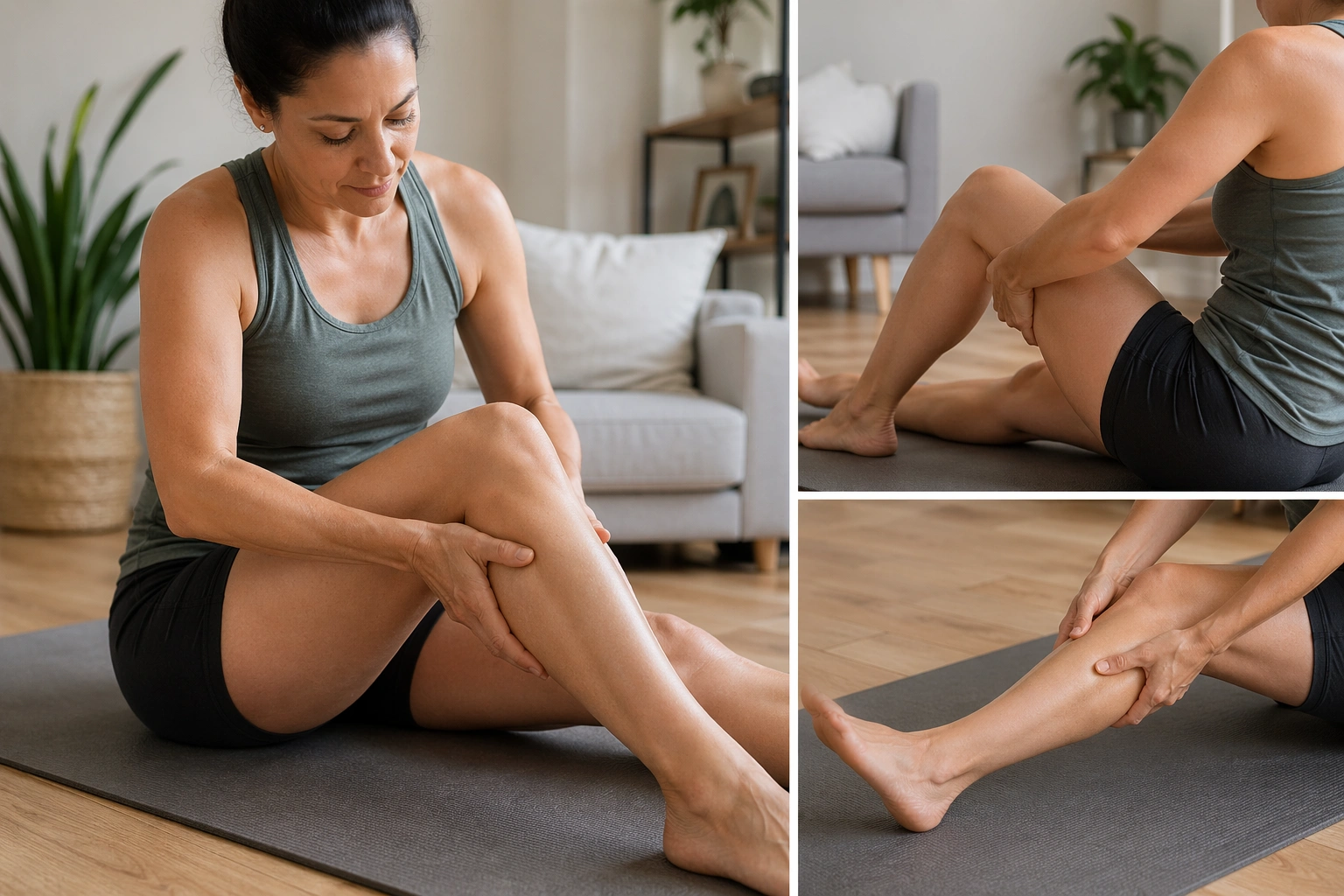
This is where massage and self massage can help. Gentle work on the soft tissue around the knee may improve blood flow, reduce muscle tension, and make movement feel smoother. The key is to work around the joint, not aggressively on the kneecap itself.
How swelling and stiffness change the feeling
Even mild inflammation or fluid buildup can make the knee feel full, tight, or achy. On the other hand, some knees ache more from stiffness than swelling. That is why heat therapy often feels better for morning tightness, while a cool pack may feel better after a hard workout or a long day on your feet.
How to Relieve Achy Knees at Home Step by Step
Step 1: Reduce the trigger for a day or two. If your knees started aching after extra activity, long standing, or a hard workout, pull back for 24 to 48 hours. You do not have to stop moving completely, but lowering the load can calm irritation.
Step 2: Use heat or cold the right way. For stiffness and chronic tightness, heat often works best. A heated wrap or heating pad before movement can make the area feel looser. For post-workout soreness or mild swelling, a cool pack may help settle things down.
Step 3: Release the muscles around the knee. I usually start with the quads, calves, hamstrings, and outer hip. Use your hands, a foam roller, or a massage gun on a low setting. Avoid jamming pressure directly into the kneecap. Focus on the soft tissue around the joint where tension often builds.
Step 4: Restore mobility. Gentle knee bends, ankle mobility, heel slides, and short walks can help bring back range of motion. If the knee feels better once it gets moving, stiffness may be a big part of the problem.
Step 5: Add support. Compression sleeves, supportive shoes, and stable daily habits can help reduce that tired, heavy feeling. This is especially useful for office workers, older adults, and anyone who stands for long hours.
Step 6: Return to activity gradually. If your knee feels better, do not jump straight back into your hardest workout. Build back up slowly. Recovery tends to go better when you keep movement consistent instead of doing too much too soon.
When Home Relief Often Works Best
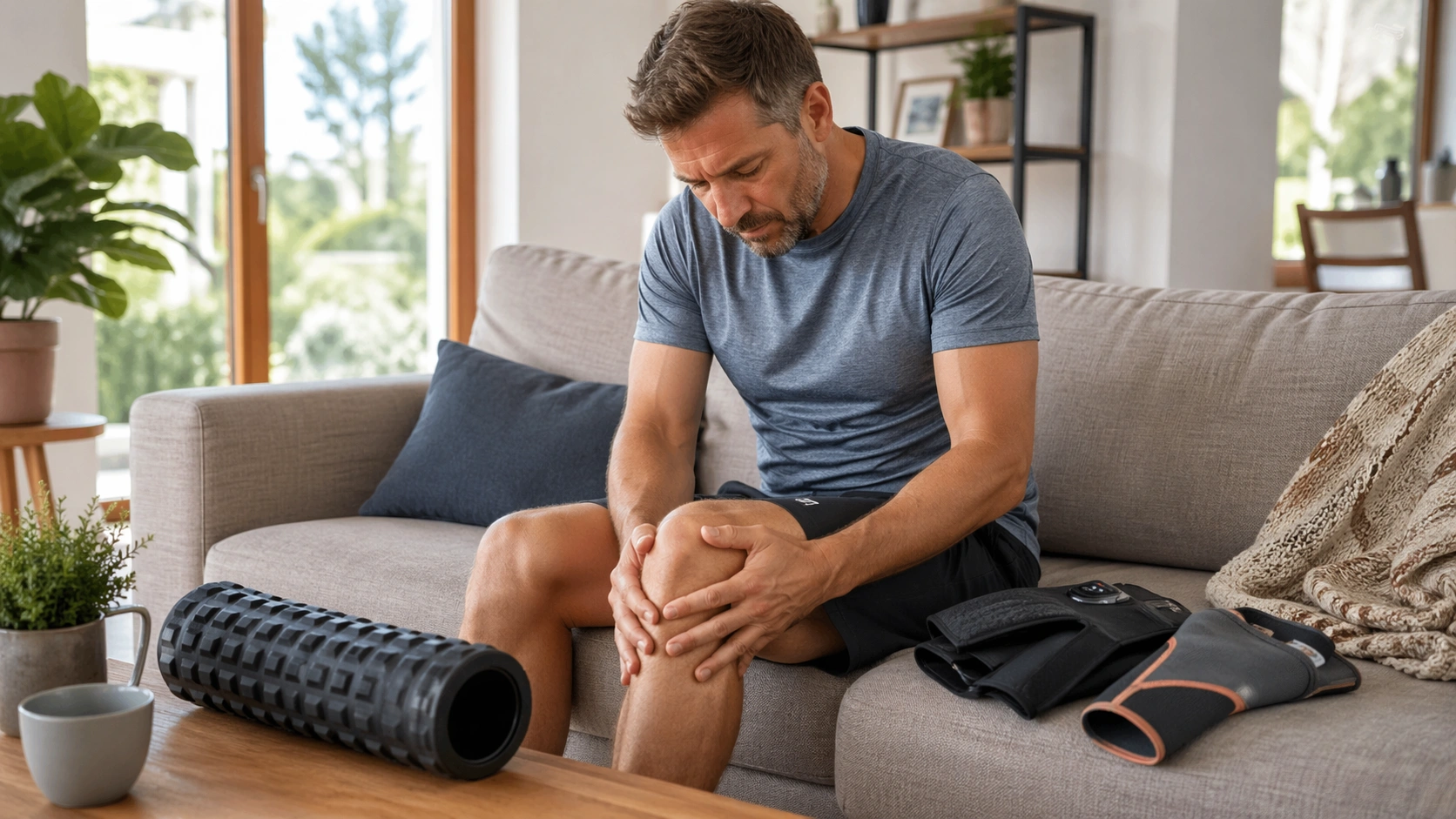
Home relief often works well when the ache is mild to moderate and linked to everyday habits or overuse. In my experience, these are some of the most common situations where massage, heat, mobility work, and support tools may help:
Office workers: Knees can ache after sitting for long periods because the hips tighten, circulation slows down, and the legs feel stiff when you finally get up.
Post-workout recovery: Hard leg days, running, hiking, and sports can leave the muscles around the knee sore and tight, which makes the joint feel achy even if it is not seriously injured.
Older adults: Many older adults deal with morning stiffness, reduced mobility, and general joint irritation. Gentle heat, compression, and light massage often work better than aggressive pressure.
Home and travel use: A simple routine with mobility work, light self massage, and a support sleeve can be easier to stick with than a complicated rehab plan.
Common Knee Ache Patterns and What May Help
| Symptom pattern | Possible trigger | What may help |
|---|---|---|
| Aching after sitting | Stiff hips, tight quads, reduced circulation, desk posture | Short walks, heat, quad release, gentle mobility |
| Aching after workouts | Overuse strain, delayed recovery, tight calves or hamstrings | Reduce load, cool pack if irritated, massage around the knee, recovery days |
| Morning stiffness | Joint tightness, low movement, mild inflammation | Heat before movement, easy walking, compression sleeve |
| Aching after standing a long time | Fatigue, poor footwear, weak hips, load buildup | Supportive shoes, compression, calf release, shorter activity blocks |
| Aching on stairs | Poor knee tracking, weak glutes, irritated front of knee | Smaller steps, glute work, quad and hip release, slower return to training |
| Aching at night | Daylong irritation, sleeping position, stiffness, swelling | Light heat, pillow support, gentle stretch, avoid hard massage late |
Common Problems and Simple Fixes
Why your knees ache after sitting all day
This is one of the biggest desk job complaints I hear. Sitting for hours can tighten the hips and quads, reduce blood flow, and make the knees feel rusty when you stand. A quick fix is to get up every hour, walk for a minute or two, and do gentle quad and calf release.
Why your knees ache after workouts
After exercise, the joint may not be the only issue. The surrounding muscles can be sore, tight, or full of trigger points. A lower-intensity recovery day, light massage on the quads and calves, and smart load management often work better than trying to push through it.
Why your knees ache at night
Nighttime aches are often the result of what built up during the day. Long standing, hard training, or not moving enough can all show up once you finally slow down. Many people find that light heat, a brief evening mobility routine, and a pillow to support the legs while sleeping can help.
Why stairs make the ache feel worse
Stairs increase demand on the knee. If the hips are weak or the quads are tight, the knee often feels that extra work fast. I usually tell people to shorten the step, use a handrail when needed, and work on hips, glutes, and calves instead of only focusing on the knee itself.
Common Mistakes to Avoid
Using a massage gun directly on the kneecap: That is usually too aggressive and does not target the soft tissue that is often the real problem.
Going too deep too fast: Hard pressure can make an irritated area more sensitive. Start light and build only if it feels helpful.
Ignoring the hips and calves: A lot of knee discomfort comes from poor movement above and below the joint.
Pushing through sharp pain: A dull ache and a sharp warning pain are not the same thing. Sharp pain is a sign to stop and reassess.
Wearing unsupportive shoes all day: Flat, worn-out, or unstable shoes can add stress to the knee over time.
Changing your activity level too quickly: Knees do better when load increases gradually.
Safety Tips and Best Practices
Home care is often helpful, but there are times to be careful. Avoid deep pressure if the knee is hot, visibly swollen, recently injured, or extremely tender. If you use a massage gun, keep it on the muscles around the knee, not on the joint itself.
Use heat for stiffness and tightness. Use a cool pack if the knee feels irritated after activity. With compression, make sure the sleeve feels supportive, not restrictive. If your foot gets numb or the sleeve leaves deep marks, it is too tight.
Stop home treatment and get checked if you cannot bear weight, the knee locks, the knee keeps giving out, swelling is significant, you heard a pop during an injury, or the ache keeps getting worse instead of settling down.
If you want a broader medical overview, these resources from Cleveland Clinic and Mayo Clinic are solid places to learn more.
Tools That May Help Aching Knees at Home
I like tools that make home relief easier without turning a simple problem into a complicated routine. For most people, the best options are supportive, gentle, and easy to use consistently.
| Tool | Best for | Why it may help | Watch-outs |
|---|---|---|---|
| Compression sleeve | Daily support, walking, long standing | May reduce that heavy, unstable feeling and offer light support | Do not wear it so tight that it causes numbness |
| Heated knee wrap or heating pad | Stiff knees, morning discomfort, evening tension | Heat may loosen tight tissues and improve comfort before movement | Avoid falling asleep on high heat |
| Foam roller or massage ball | Tight quads, calves, and hamstrings | Targets surrounding soft tissue that may be pulling on the knee | Keep pressure moderate and avoid bony areas |
| Massage gun | Post-workout muscle tension in the legs | May help relax overworked muscles when used on low pressure levels | Use it on the muscles around the knee, not on the kneecap |
Knee Compression Sleeve
Simple daily support that may help with walking, light exercise, and that tired knee feeling after long hours on your feet.
Heated Knee Wrap
A practical pick for stiffness, evening discomfort, and anyone who feels better once the joint and surrounding muscles warm up.
Heat vs Compression vs Massage vs Mobility Work
| Option | Best for | How fast it may help | Main limitation | Who it is best for |
|---|---|---|---|---|
| Heat | Stiffness, morning tightness, desk-job knees | Often fast | Less useful for fresh irritation or major swelling | Older adults, home users, evening recovery |
| Compression | Daily support, walking, standing | Usually quick | Does not fix muscle tightness by itself | Workers on their feet, travelers, light activity |
| Massage | Tight quads, calves, hamstrings, trigger points | Moderate | Too much pressure can irritate the area | Post-workout recovery and muscle tension |
| Mobility work | Stiff joints, poor movement patterns, limited range of motion | Builds over time | Needs consistency to work well | Almost everyone with achy knees |
FAQ
Why do my knees ache even when I did not injure them?
Knee aches can come from overuse, long periods of sitting, tight quads, hamstrings or calves, poor footwear, mild swelling, or age-related joint irritation.
Can tight muscles make my knees ache?
Yes. Tight muscles in the quads, calves, hamstrings, and hips can change how the knee tracks and increase stress around the joint.
Is walking good for achy knees?
Easy walking is often helpful if it does not increase sharp pain. Keep the pace gentle, use supportive shoes, and stop if the ache clearly worsens.
Should I use heat or ice for aching knees?
Heat is often better for stiffness and tightness. Ice or a cool pack may help more after activity when the knee feels irritated or mildly swollen.
Does massage help knee pain?
Massage often helps the muscles around the knee more than the kneecap itself. Gentle work on the quads, calves, hamstrings, and hips may reduce tension and improve movement.
When should I worry about aching knees?
Get checked if you cannot bear weight, the knee locks or gives out, swelling is significant, you heard a pop during injury, or the pain keeps getting worse.
Conclusion
Aching knees are often tied to everyday stress, tight muscles, recovery issues, and movement habits rather than one single cause. The good news is that simple steps like heat, mobility work, light self massage, compression, and smarter activity choices may help a lot.
If I were keeping it simple, I would start with gentle mobility, soft tissue work on the quads and calves, and a support tool that fits your daily routine. Stay consistent, keep pressure reasonable, and let the knee calm down instead of forcing it.