Sciatica pain can be debilitating, but relief is often within reach with the right strategies. This comprehensive guide provides actionable, easy-to-follow tips for managing and alleviating sciatic nerve discomfort, from immediate home remedies and targeted stretches to essential lifestyle adjustments. Learn how to identify triggers, optimize your environment, and know when to seek professional help for lasting sciatica pain relief.
Quick Sciatica Pain Relief Tips for Fast Comfort
Sciatica. Just hearing the word can send shivers down the spine of anyone who has experienced it. That sharp, shooting pain radiating from your lower back, down your buttock, and often into your leg can be truly debilitating. It can make everyday tasks, like walking, sitting, or even sleeping, feel like an impossible challenge. If you’re currently struggling with this discomfort, you’re not alone, and more importantly, there are many effective ways to find relief.
This comprehensive guide is designed to empower you with quick, practical, and actionable sciatica pain relief tips. We’ll explore everything from immediate home remedies and targeted stretches to essential lifestyle adjustments and when it’s time to call in a professional. Our goal is to help you understand your pain better and equip you with the tools to find fast comfort and work towards long-term relief from sciatica.
Let’s dive in and start your journey toward feeling better!
Key Takeaways
- Understand Your Pain: Learn what sciatica is and common causes like herniated discs or piriformis syndrome to better target your relief strategies.
- Immediate Home Remedies: Utilize heat or cold therapy, gentle movement, and over-the-counter pain relievers for quick, temporary sciatica pain relief.
- Targeted Stretches are Key: Incorporate specific gentle stretches like knee-to-chest, piriformis, and pelvic tilts to decompress the sciatic nerve and reduce tension.
- Optimize Your Environment: Adjust your workstation ergonomics, improve sleeping posture, and choose supportive footwear to prevent flare-ups and support ongoing sciatica pain relief.
- Embrace Lifestyle Changes: Stay active with low-impact exercises, maintain a healthy weight, and manage stress to support long-term healing and prevent recurrence of sciatica pain.
- Know When to Seek Professional Help: Be aware of red flag symptoms like weakness or bowel/bladder changes, and don’t hesitate to consult a doctor or physical therapist for persistent or severe sciatica pain.
Step 1: Understand Sciatica & Identify Your Pain Triggers
Before you can effectively treat sciatica, it helps to understand what’s actually happening. Knowledge is power, especially when it comes to your body’s aches and pains.
What is Sciatica?
Sciatica isn’t a condition itself; it’s a symptom of an underlying problem. It refers to pain that radiates along the path of the sciatic nerve. The sciatic nerve is the longest and thickest nerve in your body. It branches from your lower back through your hips and buttocks and down each leg. When this nerve gets irritated, compressed, or inflamed, it causes the characteristic sciatic pain.
Common Causes of Sciatica
Several issues can put pressure on the sciatic nerve. Understanding the common causes can help you identify your potential trigger and guide your sciatica pain relief strategies:
- Herniated Disc: This is the most common cause. When the soft inner material of a spinal disc pushes out through a tear in its outer layer, it can press directly on the sciatic nerve root.
- Spinal Stenosis: A narrowing of the spinal canal in your lower back can put pressure on the spinal cord and sciatic nerves.
- Piriformis Syndrome: The piriformis muscle is a small muscle deep in your buttock that runs over the sciatic nerve. If it tightens or spasms, it can compress the nerve.
- Spondylolisthesis: A condition where one vertebra slips forward over another, potentially pinching the sciatic nerve.
- Trauma: Injuries to the spine or buttocks can also lead to sciatica.
Identifying Your Specific Pain
Pay close attention to where your pain starts, where it travels, and what makes it better or worse. This information is vital for effective sciatica pain relief. Is the pain sharp, burning, tingling, or numb? Does it worsen when you sit, stand, walk, or lie down? Does coughing or sneezing aggravate it? Jotting down these details can be incredibly helpful for you and any healthcare professional you might consult.
Step 2: Immediate At-Home Sciatica Pain Relief Strategies
When sciatica strikes, you want relief, and you want it fast. Here are some immediate steps you can take at home to ease the discomfort.
Visual guide about Quick Sciatica Pain Relief Tips for Fast Comfort
Image source: fastlowerbackpainrelief.com
Apply Heat or Cold
This classic pain relief duo can work wonders for sciatica:
- Cold Therapy: For acute, sudden pain and inflammation, an ice pack can be very effective. Apply it to the painful area (lower back or buttock) for 15-20 minutes, several times a day, for the first 48-72 hours. Wrap the ice pack in a thin towel to protect your skin.
- Heat Therapy: After the initial acute phase (or if you have chronic sciatica pain), heat can help relax tight muscles that might be compressing the nerve. Use a heating pad, hot water bottle, or a warm bath for 15-20 minutes.
Some people find alternating heat and cold to be most beneficial. Experiment to see what works best for your sciatica pain relief.
Gentle Movement and Avoiding Prolonged Sitting/Lying
While rest might seem appealing, prolonged bed rest can actually make sciatica worse. Gentle movement is crucial. Think of it as lubrication for your spine and nerves. Get up and walk around for a few minutes every hour, even if it’s just to another room. Lying on your back with pillows under your knees can sometimes provide relief.
Over-the-Counter Pain Relief
For many, over-the-counter (OTC) medications can help manage sciatica pain in the short term. Non-steroidal anti-inflammatory drugs (NSAIDs) like ibuprofen (Advil, Motrin) or naproxen (Aleve) can reduce both pain and inflammation. Acetaminophen (Tylenol) can help with pain but does not reduce inflammation. Always follow the dosage instructions and consult your doctor if you have underlying health conditions.
Positional Relief for Sciatica
Adjusting your position can sometimes provide instant sciatica pain relief:
- Sleeping Position: Try sleeping on your side with a pillow between your knees to keep your hips and spine aligned. If you sleep on your back, place a pillow under your knees.
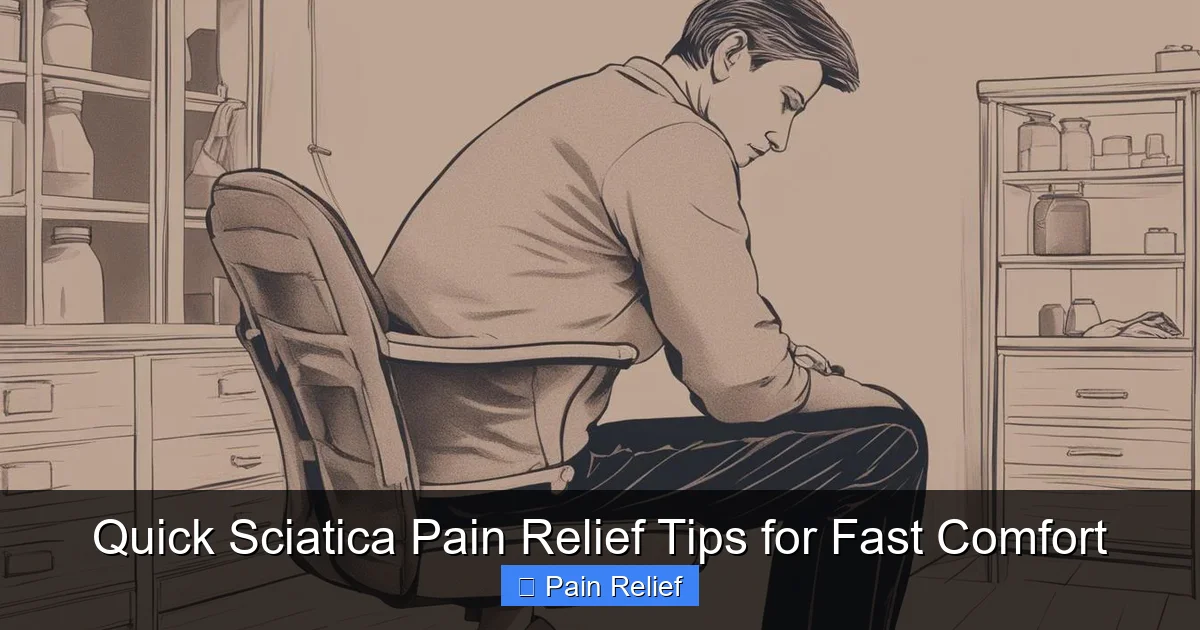
- Sitting Posture: Avoid slouching. Sit with your back against the chair, feet flat on the floor. A rolled-up towel or small pillow placed behind the curve of your lower back can provide lumbar support. Take frequent breaks to stand and stretch.
Step 3: Targeted Sciatica Pain Relief Stretches & Exercises
Specific stretches and gentle exercises are often the most powerful tools for sciatica pain relief. They can help decompress the nerve, stretch tight muscles (especially the piriformis), and improve spinal mobility. Always move slowly and gently, and stop immediately if you feel increased pain.
Visual guide about Quick Sciatica Pain Relief Tips for Fast Comfort
Image source: fastlowerbackpainrelief.com
Knee-to-Chest Stretch
This stretch helps gently decompress the lower spine and can alleviate pressure on the sciatic nerve.
- Lie on your back with your knees bent and feet flat on the floor.
- Gently pull one knee towards your chest, using your hands to assist. Hold for 20-30 seconds.
- Lower the leg and repeat with the other leg.
- You can also try pulling both knees to your chest if comfortable.
Piriformis Stretch (Figure-4 Stretch)
Often, a tight piriformis muscle is a major culprit in sciatica pain. This stretch targets it directly.
- Lie on your back with your knees bent and feet flat on the floor.
- Cross your right ankle over your left knee, forming a “figure-4” with your legs.
- Grasp your left thigh and gently pull it towards your chest until you feel a stretch in your right glute/hip.
- Hold for 20-30 seconds. Repeat on the other side.
Seated Spinal Twist
This stretch helps mobilize the spine and can release tension in the lower back.
- Sit on the floor with your legs extended in front of you.
- Bend your right knee and place your right foot flat on the floor outside your left knee.
- Place your right hand on the floor behind you for support.
- Hook your left elbow around your right knee or place your left hand on your right knee.
- Gently twist your torso to the right, looking over your right shoulder.
- Hold for 20-30 seconds. Repeat on the other side.
Pelvic Tilts
Pelvic tilts strengthen your core and improve lower back stability, crucial for sciatica pain relief.
- Lie on your back with your knees bent and feet flat on the floor, about hip-width apart.
- Flatten your lower back against the floor by tightening your abdominal muscles and tilting your pelvis upward.
- You should feel your tailbone lift slightly off the floor.
- Hold for 5-10 seconds, then release. Repeat 8-12 times.
Cat-Cow Stretch
This gentle yoga pose promotes spinal flexibility and can relieve tension in the lower back.
- Start on your hands and knees, wrists directly under shoulders, knees directly under hips.
- Cat Pose: As you exhale, round your spine towards the ceiling, tucking your chin to your chest.
- Cow Pose: As you inhale, arch your back, dropping your belly towards the floor, lifting your head and tailbone.
- Flow smoothly between Cat and Cow poses for 10-15 repetitions.
Gentle Cobra Stretch
For some, gentle back extension can help decompress the spine, but be cautious if it increases pain.
- Lie on your stomach with your hands flat on the floor under your shoulders, elbows tucked in.
- Gently press your hands into the floor and lift your head and chest a few inches, keeping your hips on the floor.
- Keep your neck long, avoiding crunching.
- Hold for a few seconds, then slowly lower back down. Repeat 5-10 times.
Always listen to your body. If any stretch increases your sciatica pain, stop immediately.
Step 4: Optimize Your Environment for Sciatica Pain Relief
Your daily environment plays a huge role in contributing to or alleviating sciatica pain. Making a few strategic adjustments can make a significant difference.
Visual guide about Quick Sciatica Pain Relief Tips for Fast Comfort
Image source: fastlowerbackpainrelief.com
Ergonomics at Work and Home
If you spend a lot of time sitting, proper ergonomics are non-negotiable for sciatica pain relief:
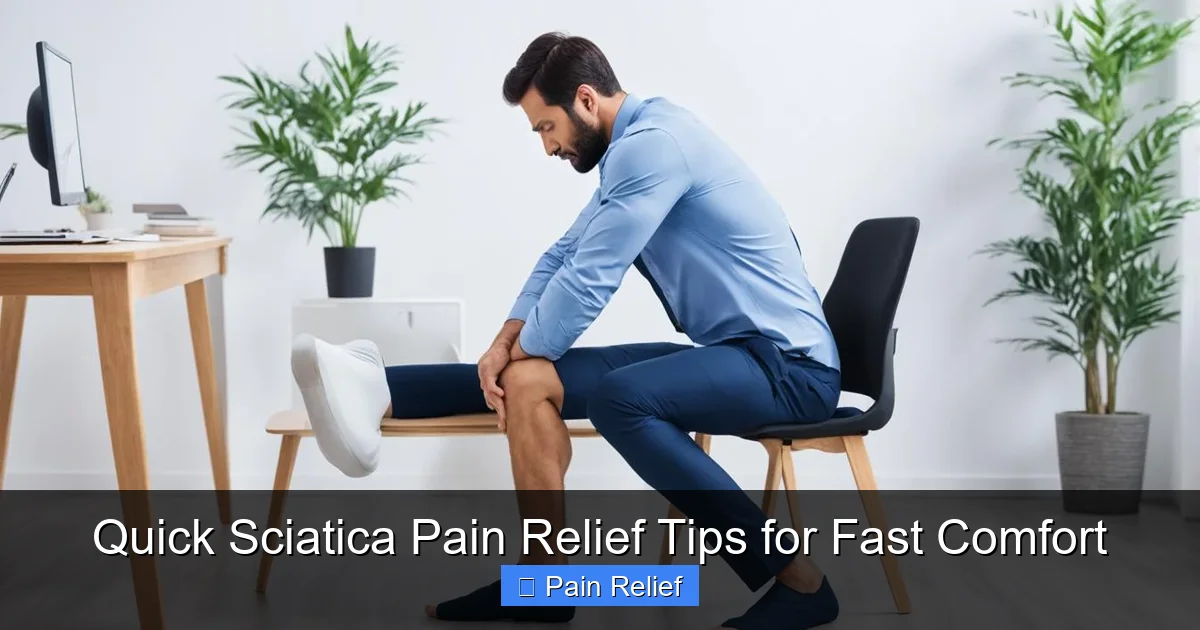
- Chair: Choose an ergonomic chair with good lumbar support. If your chair lacks support, use a rolled towel or lumbar cushion. Your feet should be flat on the floor, and your knees at a 90-degree angle.
- Desk Height: Ensure your desk allows you to type with your elbows bent at 90 degrees.
- Monitor: Position your monitor at eye level to prevent neck strain, which can indirectly affect your back.
- Regular Breaks: Stand, stretch, and walk for a few minutes every 30-60 minutes.
Proper Lifting Techniques
Many sciatica flare-ups are triggered by incorrect lifting. Protect your back:
- Lift with Your Legs: Bend at your knees, not your waist. Keep your back straight.
- Hold Close: Keep the object close to your body.
- Avoid Twisting: Pivot your feet rather than twisting your spine when carrying an object.
Footwear Choices
The shoes you wear can impact your spinal alignment and contribute to sciatica. Opt for supportive, comfortable shoes with good arch support. Avoid high heels or completely flat shoes, which can alter your gait and put undue stress on your lower back.
Mattress and Pillow Support
A good mattress and pillow are essential for supporting your spine throughout the night. A medium-firm mattress is often recommended for sciatica pain relief, as it provides support without being too hard. Your pillow should support the natural curve of your neck. Experiment with placing a pillow between your knees if you sleep on your side, or under your knees if you sleep on your back.
Step 5: Lifestyle Adjustments for Long-Term Sciatica Pain Relief
While immediate strategies offer quick comfort, long-term sciatica pain relief often comes from consistent healthy lifestyle choices.
Stay Active with Low-Impact Exercise
Regular, low-impact exercise strengthens your core, improves flexibility, and promotes blood flow, all of which are vital for a healthy spine and preventing sciatica recurrence.
- Walking: A simple yet effective way to stay active. Start with short walks and gradually increase duration.
- Swimming/Water Aerobics: The buoyancy of water reduces stress on your joints and spine, making it an excellent option.
- Cycling: Stationary cycling can be a good choice, as it often provides a supported, slightly forward-leaning posture that can be comfortable for some.
- Yoga/Pilates: Focus on gentle classes that emphasize core strength, flexibility, and proper alignment.
Maintain a Healthy Weight
Excess body weight, especially around the abdomen, puts additional strain on your lower back, increasing the risk and severity of sciatica. Losing even a small amount of weight can significantly reduce pressure on your sciatic nerve and contribute to sciatica pain relief.
Practice Mindfulness & Stress Reduction
Stress and tension can manifest physically, often exacerbating muscle tightness and pain. Incorporating stress-reduction techniques into your daily routine can be highly beneficial for sciatica pain relief:
- Deep Breathing Exercises: Simple deep breaths can calm the nervous system.
- Meditation: Even 5-10 minutes a day can make a difference.
- Mindful Movement: Gentle yoga or Tai Chi can combine movement with relaxation.
- Adequate Sleep: Prioritize 7-9 hours of quality sleep to allow your body to heal and repair.
Hydration and Nutrition
A healthy diet and proper hydration support overall well-being and can help manage inflammation. Focus on:
- Anti-Inflammatory Foods: Incorporate fruits, vegetables, lean proteins, and healthy fats (like omega-3s found in fish, nuts, and seeds).
- Hydration: Drink plenty of water throughout the day. Dehydration can affect the health of your spinal discs.
- Avoid Processed Foods: Limit sugary drinks, refined carbohydrates, and unhealthy fats that can promote inflammation.
Step 6: When to Seek Professional Help
While many cases of sciatica can improve with self-care, there are times when professional medical attention is necessary. Don’t hesitate to seek help if:
- Pain is Severe and Worsening: If your sciatica pain is unbearable, progressive, or doesn’t improve with home care.
- Weakness, Numbness, or Tingling Increases: Especially if it affects your entire leg or causes muscle weakness that makes it difficult to walk or lift your foot.
- Bowel or Bladder Dysfunction: This is a rare but serious “red flag” symptom (cauda equina syndrome) that requires immediate medical attention.
- Pain Follows a Traumatic Injury: If your sciatica started after a fall or accident.
- No Improvement After a Few Weeks: If your sciatica pain persists despite consistent self-care efforts, it’s time to see a doctor.
Types of Professionals Who Can Help with Sciatica Pain Relief
- General Practitioner (GP): Your first point of contact for diagnosis and referral.
- Physical Therapist: Can provide specific exercises, stretches, manual therapy, and education tailored to your condition for long-term sciatica pain relief.
- Chiropractor: May use spinal adjustments to alleviate pressure on the sciatic nerve.
- Acupuncturist: Some find relief from acupuncture, which aims to reduce pain and inflammation.
- Pain Management Specialist: For chronic or severe cases, they may offer injections or other advanced therapies.
Troubleshooting Common Sciatica Challenges
Even with the best efforts, sciatica can present persistent challenges. Here are solutions to common issues:
Pain Worsens with Movement
If gentle movement increases your sciatica pain, it’s crucial to stop that specific movement. Focus on resting in positions of least pain for a short period, then try very subtle movements. If a stretch aggravates it, avoid it. This is when professional guidance from a physical therapist is particularly valuable.
Difficulty Sleeping
Sciatica can severely disrupt sleep. Revisit the positional relief tips from Step 2. Experiment with pillows – a pillow between the knees for side sleepers or under the knees for back sleepers can provide significant sciatica pain relief. A warm bath before bed can also help relax muscles.
Recurring Sciatica Pain
If your sciatica keeps coming back, it usually means the underlying cause hasn’t been fully addressed, or your preventative measures aren’t consistent enough. Review your ergonomics, exercise routine, and lifting habits. Consistency with core strengthening and flexibility exercises is key. Consider ongoing physical therapy or regular check-ups with a specialist to identify and manage triggers.
Conclusion
Sciatica pain can be incredibly disruptive, but by taking a proactive approach, you can find significant relief. Remember that finding what works best for your sciatica pain relief might require some experimentation. Start with the immediate home remedies, then gradually incorporate targeted stretches and lifestyle adjustments.
Consistency is your greatest ally in managing sciatica. Small, regular efforts often yield the best results for fast comfort and long-term well-being. Always listen to your body, prioritize gentle movement, and don’t hesitate to seek professional guidance if your pain is severe, persistent, or accompanied by concerning symptoms. Your comfort and mobility are worth the effort!
🎥 Related Video: 4 Stretches For Sciatic Nerve Pain Relief! [Stop Sciatica Fast!]
📺 Tone and Tighten
SEE FULL VIDEO HERE: https://youtu.be/jNS_mK-NeM8 Four of the best stretches you can do at home for sciatic nerve pain relief …