
By Alex Turner, content author
Quick Answer: Yogi stress relief tea is a family of caffeine-free herbal blends, including kava, honey lavender, and blueberry sage versions. Ingredients differ a lot between them, so read your box. Some people use them as a calming evening ritual, but pregnancy, liver concerns, medications, and allergies call for a professional check first.
The name Yogi stress relief tea covers several different recipes, not just one. Some lean on kava, some on lavender and chamomile, and some on an adaptogen-style herb. This guide helps you pick a blend, read the label, and brew a calm cup with sensible safety checks.
This article is for general educational information only. It does not diagnose, treat, cure, or prevent any condition. It does not replace advice from a licensed healthcare professional. Readers should seek professional help for severe, worsening, unusual, or persistent symptoms.
What to Check Before You Pick a Box
Before buying Yogi stress relief tea, check four things on the box. Blends share a brand name but not an ingredient list, so the label matters more than the front panel.
Main herb
Look for the lead ingredient. Kava, passionflower extract, and ashwagandha each carry different cautions than gentle chamomile or lemon balm.
Supplement facts panel
Some blends list an extract with an amount per bag. That panel is your best view of what is actually in a cup, so read it before the first brew.
Caffeine and flavor
The blends I checked are caffeine free. Flavor still varies, from spicy cinnamon to floral lavender, so a small box is a smart first buy.
Your own situation
Pregnancy, nursing, liver concerns, allergies, and regular medicines all change the answer. When one applies, ask a professional before buying.
Reading the Label Without Guesswork
Two parts of the box tell the story. The first is the ingredient or supplement facts panel, which names the herbs and any extract. The second is the other ingredients line, which often covers flavors and sweeteners.
Notice the word extract. An extract is a concentrated form of a plant, so it can behave differently from a few dried leaves in a bag. A proprietary blend listing also hides individual amounts, which is another reason to ask a professional when you have a health concern.
Also look at the claim wording. Phrases like eases tension or promotes relaxation are general wellness wording. They do not mean the tea treats any condition.
Which Yogi stress relief tea blend fits your evening?
Use this table to compare three popular blends. Always confirm against the box in your hands, since recipes can change.
Swipe left/right to see the full table →
| Blend | Lead herbs | Flavor | Extra caution |
|---|---|---|---|
| Kava Stress Relief | Kava root extract, cinnamon, ginger | Warm and spicy | Liver and medication caution |
| Honey Lavender | Lavender, chamomile, lemon balm, passionflower | Floral and sweet | Drowsiness, chamomile allergy |
| Blueberry Sage | Ashwagandha, sage | Fruity, herbal | Pregnancy and medication caution |
Practical read: if you want a mild floral flavor and have no cautions, the lavender blend is an easy place to start. The kava blend deserves the most homework first.
This quick dashboard shows how much label reading each blend deserves in a typical evening routine.
Label-check priority (practical guide, not scientific data)
Higher bars mean more label reading and professional input before you start. A lower bar never means risk free, so every blend deserves a read of the box.
Kava blend: This is the spiciest cup, with cinnamon, ginger, and cardamom beside the kava root extract. It carries the most cautions, so it suits only people who have cleared it with a professional and avoid alcohol.
Honey lavender blend: Expect a floral, lightly sweet cup built around lavender, chamomile, and lemon balm, with passionflower extract in the listing I saw. It may feel drowsy for some, so save it for evenings at home.
Blueberry sage blend: This one is listed with ashwagandha, an adaptogen-style herb. Because ashwagandha has its own pregnancy and medicine cautions, confirm the current label and check with a professional if either applies.
What a Calming Cup Can and Cannot Do
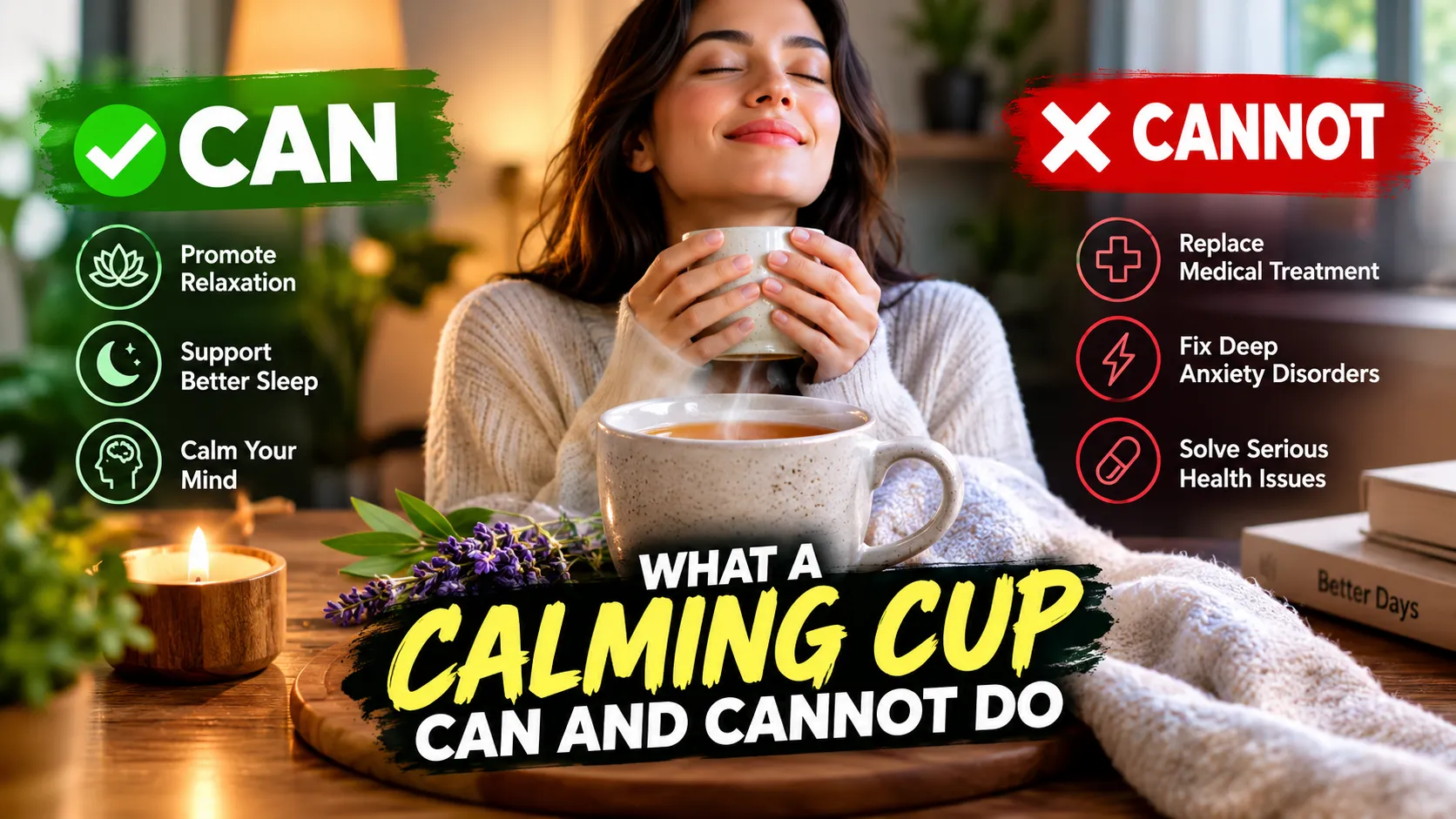
A warm cup can make a short pause feel calmer. Part of that comes from the ritual itself: slowing down, holding something warm, and stepping away from screens. Some people also enjoy the traditional herbs in these blends, but results vary and nothing here promises relief.
A realistic example: after a long workday, you brew one cup, sit near a window for ten minutes, and keep your phone in another room. That small routine may help you unwind, whichever blend you choose. It cannot replace sleep, movement, or talking with someone when stress feels heavy.
Choose a blend if you want a caffeine-free evening ritual and have no cautions. Avoid it if you are pregnant, nursing, or on medicines until a professional agrees. Seek help if stress or low mood keeps disrupting daily life.
Who Should Be Cautious With These Blends
Herbal does not always mean harmless. Even a simple cup of Yogi stress relief tea may contain ingredients that interact with medicines or cause sleepiness.
Who should check with a professional first
Swipe left/right to see the full table →
| Situation | Why it matters | Better first step |
|---|---|---|
| Pregnant or nursing | Many herbs lack safety data | Ask your clinician first |
| Liver concerns or alcohol use | Kava has rare liver-safety reports | Ask before using kava |
| Takes sedatives or other medicines | Herbs may add drowsiness | Ask a pharmacist |
| Ragweed or daisy allergy | Chamomile may trigger reactions | Check label, ask first |
If you see yourself in any row, a quick call to a pharmacist is a low-effort step. The NIH’s NCCIH explains these cautions in plain language on its kava page and its chamomile page.
Walk through this path before your first cup to see whether to proceed or pause.
Pregnant, nursing, or giving tea to a child?
Pause. Ask a professional first.
Take regular medicines or have liver concerns?
Pause. Ask a pharmacist or clinician.
Allergic to chamomile, ragweed, or any listed herb?
Pause. Choose a different tea.
This path is a general guide, not a medical screen. When you are unsure, pausing costs you nothing.
Warning: Do not combine kava-based blends with alcohol, and avoid driving or using machinery if any blend makes you drowsy. Stop using it and seek medical care if you notice yellow skin or eyes, dark urine, severe stomach pain, or a rash.
How to Brew a Calm Evening Cup
A simple routine makes Yogi stress relief tea easier to judge. Follow these steps on your first few nights.
1
2
3
4
5
6
Tip: Brew one blend at a time for a week. That makes it far easier to tell which tea you like and which one does not suit you.
Build a Calm Routine Around the Cup
Pair your cup with two or three easy habits. Try five slow breaths before the first sip, dimmer lights after dinner, and a short walk earlier in the day. Keep caffeine lower in the afternoon and aim for a steady bedtime. These habits are free, simple, and can make an evening routine feel more settled.
If stress feels constant, includes racing thoughts, or disrupts your sleep for weeks, a professional can offer support that tea cannot.
A Careful Timing Guide
There is no perfect schedule, only a careful one. The box directions beat any general guide.
Timing guide for a calm routine
Swipe left/right to see the full table →
| When | How much | Practical note |
|---|---|---|
| First day | One cup | Watch flavor and drowsiness |
| Evening wind-down | One cup after dinner | Skip screens while you sip |
| Busy afternoon | One cup if it suits you | Avoid driving if sleepy |
| Several days running | Follow the box directions | Pause if anything feels off |
Calming tea types compared
Not every relaxing drink fits every person. This table compares common option types.
Swipe left/right to see the full table →
| Option type | Typical feel | Best for | Watch for |
|---|---|---|---|
| Kava-style blend | Warm, spicy | People already cleared to use it | Liver and alcohol cautions |
| Lavender-chamomile blend | Floral, mild | Gentle evening ritual | Drowsiness, ragweed allergy |
| Adaptogen-style blend | Earthy, herbal | Routine-minded users | Pregnancy and medicine checks |
| Plain mint or ginger tea | Fresh, simple | Low-fuss comfort | Reflux or stomach sensitivity |
Practical read: a plain mint or ginger tea is often the simplest option when you want comfort without herb-specific cautions, though every herb has its own limits.
Mistakes People Make When Choosing
Most missteps come from rushing, and slowing down fixes many of them. Online reviews can help with taste, but they cannot tell you whether a blend suits your health. Treat reviews as flavor advice only.
Common mistakes and smarter choices
Swipe left/right to see the full table →
| Common mistake | Better choice | Why it helps |
|---|---|---|
| Buying by the front label | Read the ingredient panel | Blends differ widely |
| Drinking several cups fast | Start with one cup | You can spot reactions |
| Mixing with alcohol or sleep aids | Ask a professional first | Overlap can add drowsiness |
| Expecting a quick fix | Treat it as a ritual | Habits matter more than one cup |
Red Flags That Mean Stop and Get Help

Mild flavor dislike is fine. These signs are different and deserve prompt attention.
Stop the tea and seek help
For trouble breathing, seek urgent medical help right away.
Any item here is a reason to pause the tea and contact a professional. Breathing trouble or swelling needs urgent medical care.
Note: Supplement-style facts panels list extract amounts for a reason. If your box shows one, compare it with the ingredient list and keep the box for reference. Recipes can change over time.
Pro Tips for a Safer Routine
Small habits make Yogi stress relief tea easier to enjoy safely. Keep the box, track how you feel, and let flavor guide your next purchase.
Freshness matters for flavor: close the box after each use so lavender and spice notes stay lively. Store tea bags in a cool, dry place and keep the original box, because it holds the ingredient list and batch details. If children live in your home, store herbal teas out of reach.
Here is a quick split guide to keep nearby.
Do
Read the ingredient panel
Start with one cup
Keep the box for reference
Ask a pharmacist about medicines
Don’t
Mix kava with alcohol
Drink several cups at once
Give strong herbs to children
Replace prescribed care with tea
Think of this list as a quick pre-brew check. It takes less than a minute.
Helpful Gear for a Calm Tea Routine
Because ingredients and cautions vary by person, these picks focus on routine tools rather than the herbs themselves.
This article may contain affiliate links. If you buy through these links, we may earn a small commission at no extra cost to you. We only mention products that fit the topic and do not replace professional medical advice.
Covered Ceramic Mug With Infuser
A lid holds warmth and may make a steady evening routine easier.
Electric Kettle With Temperature Control
Consistent hot water can help with routine consistency from night to night.
When to contact a professional
Contact a licensed professional before using any of these blends if you are pregnant, nursing, managing liver concerns, taking regular medicines, or have known plant allergies. Seek help promptly if you notice yellow skin or eyes, dark urine, rash, swelling, or unusual sleepiness. Get urgent medical help for trouble breathing. If stress, worry, or low mood keeps affecting daily life, talk with a doctor or mental health professional; tea is not a substitute.
Frequently Asked Questions
Does Yogi stress relief tea contain caffeine?
The blends I checked, including kava and honey lavender, are listed as caffeine free. Confirm on your own box, since recipes can change.
Is it safe to drink every night?
That depends on the blend and your health situation. Ask a pharmacist or clinician if you take medicines or have a health condition, and follow the box directions.
Which blend has kava?
The Kava Stress Relief blend lists kava root extract. Kava carries extra cautions, so review the NIH page and ask a professional if you are unsure.
Can I drink it while pregnant or nursing?
Ask your doctor or midwife first. Many herbs lack enough safety information for pregnancy and nursing.
Can children drink these blends?
Check with a pediatric professional first, since herb safety in children is less clear. Never assume an herbal tea is child-safe.
How long should I wait to judge a blend?
Give it a few calm evenings, not one cup. Track flavor and how you feel, and stop if anything seems off.
Why does the box show a supplement facts panel?
Some blends include a concentrated herbal extract, so the label may follow supplement-style rules. That makes the panel worth reading closely.
Final Thoughts
Yogi stress relief tea works best as a calm, low-pressure ritual, not a fix for ongoing stress. Pick the blend by its ingredients, start with one cup, and honor any cautions that apply to you. If symptoms are severe, worsening, unusual, persistent, or not improving, please talk with a licensed healthcare professional.
Author
-

I’m Alex Turner, a massage product reviewer and wellness writer at RemedyTip. I specialize in researching, evaluating, and comparing massage and recovery products to help readers make informed purchasing decisions. My focus is on practical, evidence-informed product guidance covering muscle recovery, relaxation, everyday comfort, and wellness.
I take a research-driven approach to every product I review. I examine product specifications, features, materials, performance claims, user feedback, durability, comfort, ease of use, and overall value. When appropriate, I also consult trusted industry and health-related sources to verify important information and provide readers with a more complete and balanced view.
I cover a wide range of products, including massage guns, handheld massagers, neck and shoulder massagers, foot massagers, massage chairs, foam rollers, and other recovery tools. Rather than focusing only on marketing claims, I look at how products compare in real-world use and who they are actually suitable for. I also consider different budgets, use cases, and user needs when making recommendations.
At RemedyTip, I’m committed to accuracy, transparency, and unbiased product information. I clearly distinguish between manufacturer claims, available evidence, and my own product analysis so readers can understand the basis of each recommendation. I continuously research new products, technologies, and developments in the massage and recovery space to keep my content current and useful.
My goal is simple: to provide trustworthy, easy-to-understand information that helps readers choose massage and recovery products with greater confidence.

