Neck massagers can cause pain when they apply too much pressure, run too long, or press on the spine instead of the surrounding muscles. Poor positioning, an unsuitable attachment, or an existing neck problem can also increase soreness and stiffness.
Pain usually signals that the device’s pressure, speed, duration, or placement does not suit the person using it. Mild tenderness may fade after rest, but sharp pain, numbness, weakness, dizziness, or trouble moving the neck requires prompt medical advice. Michael Hayes of RemedyTip.com also emphasizes using gentle settings and stopping when discomfort increases.
Key Takeaways
- Excessive pressure or poor placement can cause neck pain.
- Existing injuries and health conditions may increase sensitivity.
- Stop using the device if warning signs or severe pain appear.
Normal Sensations Versus Warning Signs
Mild tenderness can occur when a neck massager presses tight muscles, especially during the first few uses. Sharp pain, nerve symptoms, skin changes, or symptoms that continue after stopping suggest the device may be causing harm.
Expected Muscle Tenderness
A person may notice mild soreness, pressure, warmth, or a tired feeling in the neck and shoulders after using a massager. These sensations should remain manageable and should improve within a few hours or by the next day.
The device should not cause sharp, burning, stabbing, or electric-like pain. It should also not leave lasting numbness, weakness, bruising, or swelling. A user should stop if the area feels more painful during the session rather than gradually more relaxed.
| Sensation | Safer response |
|---|---|
| Mild muscle tenderness | Rest the area and use less pressure next time |
| Temporary warmth or redness | Remove the device and check that the skin returns to normal |
| Increasing soreness | Stop using the massager until symptoms settle |
Short sessions and the lowest comfortable setting can reduce irritation. The massager should not press directly on the front or sides of the neck, where important blood vessels and nerves are located.
Pain That Requires Immediate Attention
A person should stop using the device immediately if neck pain becomes severe, sudden, or sharp. Medical care is needed for new weakness, numbness, loss of coordination, trouble speaking, fainting, severe dizziness, or a sudden severe headache.
Chest pain, trouble breathing, difficulty swallowing, facial drooping, or pain spreading into the arm or jaw also require urgent medical attention. These symptoms should not be treated as normal muscle soreness.
Persistent swelling, major bruising, skin burns, or pain that does not improve after stopping also needs medical evaluation. People with a recent neck injury, known blood-vessel condition, nerve disorder, or neck surgery should ask a clinician before using an electric massager.
Common Causes Of Discomfort
A neck massager can cause pain when it applies more force than the muscles can tolerate, runs for too long, or presses on sensitive structures. Discomfort may also increase when the device is used over an injury, irritated joint, nerve, or bony area.
Excessive Pressure
Too much pressure can strain the neck muscles and irritate nearby tissues. Many devices use kneading nodes, rollers, or vibration that feel stronger than expected, especially on the sides or front of the neck. Pain that feels sharp, bruised, or deep usually means the pressure is too high.
The user should start with the lowest setting and keep the device on the muscles beside the spine rather than directly over the spine. It should not press on the throat, the front of the neck, or the hard bones behind the ears. If pain begins during use, the device should be stopped instead of pushing through it.
Sessions That Last Too Long
Long sessions can overload muscles even when the pressure feels mild at first. Repeated kneading or vibration may leave the neck sore, stiff, or tender later in the day. This can happen when a user repeats several cycles because the first cycle does not provide immediate relief.
Most users should begin with a short session and follow the device’s time limit. A break between sessions gives the tissues time to respond. The user should reduce both the intensity and duration if soreness lasts into the next day. Persistent or worsening pain requires medical advice rather than more massage.
Using The Device On Sensitive Tissue
Some parts of the neck tolerate pressure poorly. A massager should not be used over the throat, the front or side of the neck where major blood vessels run, the spine, or areas with swelling, bruising, or a recent injury. It should also be avoided on skin that feels numb or unusually sensitive.
Existing conditions can make massage less suitable. A person with a neck injury, nerve symptoms, severe headaches, or unexplained pain should seek professional guidance before using a device. Numbness, weakness, tingling, dizziness, trouble speaking, or trouble swallowing after use requires prompt medical evaluation.
Technique And Positioning Issues
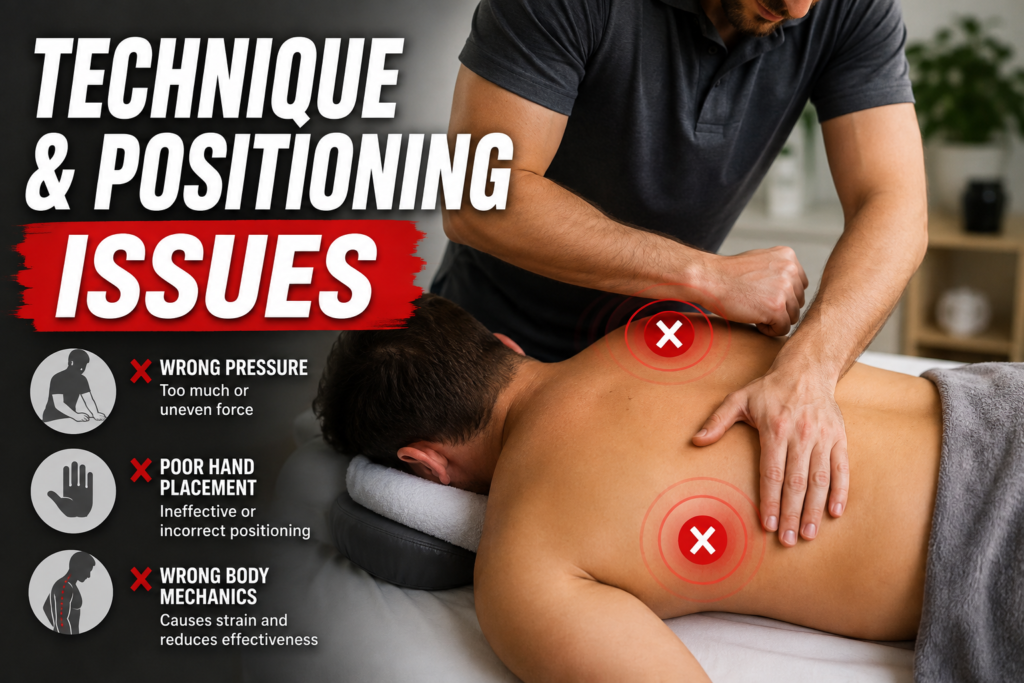
Pain often results from placing the device on the wrong tissue or using it while the neck stays bent. Correct placement and an upright posture help keep pressure on the muscles instead of the spine, throat, or other sensitive areas.
Incorrect Placement
A neck massager should rest on the muscles beside the cervical spine, not directly over the bony bumps in the middle of the neck. It should also stay away from the front and sides of the neck, where pressure may affect the throat, blood vessels, or nerves.
| Problematic placement | Possible result |
|---|---|
| Directly on the spine | Sharp or deep pain |
| Over the throat | Choking or pressure |
| Too high under the skull | Headache or scalp pain |
| Pressed tightly against one spot | Bruising or soreness |
The device should sit evenly on both sides of the neck. If the massager causes tingling, numbness, dizziness, sharp pain, or a headache, they should stop using it and remove the device. A lower setting and shorter session may help, but lasting or severe symptoms require medical advice.
Poor Posture During Use
Using a massager while leaning forward can keep the neck muscles tense and increase pressure from the device. Looking down at a phone, sitting without back support, or lying flat may also shift the massage nodes toward the spine or other sensitive areas.
They should sit upright with the head in a neutral position and the shoulders relaxed. The back should have support, and the device should remain lightly positioned rather than pulled tightly against the neck. They should avoid walking, driving, or falling asleep while wearing it.
A short session at low intensity is safer than prolonged pressure. If the neck feels worse after use, the person should rest the area for at least 24 hours before trying again with better posture and less pressure.
Health Conditions That Can Increase Sensitivity
Neck pain can worsen when a massager presses on inflamed muscles, irritated nerves, broken skin, or healing tissue. The device’s pressure, heat, and vibration may also hide warning signs or aggravate an existing condition.
Muscle Strain And Inflammation
A strained neck muscle may feel sore, tight, or painful when touched. A massager can increase discomfort if it presses directly on the injured area, especially during the first few days after sudden pain, heavy lifting, poor posture, or a sports injury.
Inflamed muscles may also react badly to deep pressure or heat. The person should stop if pain becomes sharp, swelling increases, or soreness lasts longer after use. Gentle movement and rest may help, but severe pain or limited neck movement may require medical advice.
| Symptom | Safer response |
|---|---|
| Mild tightness | Use the lowest setting briefly |
| Sharp or increasing pain | Stop using the device |
| Recent injury or swelling | Avoid massage until assessed |
Nerve Irritation
A pinched or irritated nerve can cause burning pain, tingling, numbness, or weakness that travels into the shoulder, arm, or hand. Pressure from a neck massager may intensify these symptoms, particularly when the device pushes deeply near the spine or shoulder.
Massage should stop if the person develops new numbness, weakness, electric-shock sensations, poor coordination, or pain spreading down an arm. A massager should not replace an evaluation for symptoms that persist, worsen, or affect normal hand use.
Devices should also stay away from the front and sides of the neck. Firm pressure in those areas can cause harm, and the carotid arteries should never receive direct pressure.
Skin Conditions And Recent Injuries
A massager can irritate eczema, psoriasis, rashes, sunburn, bruises, or infected skin. Heat may increase redness and discomfort, while rubbing can break the skin or spread irritation. The person should avoid using the device over open wounds, scabs, stitches, or areas with reduced sensation.
Recent surgery, injections, or other procedures also require caution. Healing tissue may not tolerate vibration or pressure, even when the surface looks normal. A healthcare professional can advise when massage is safe.
The person should stop immediately if the skin becomes painful, swollen, blistered, unusually warm, or more red. Signs such as pus, spreading redness, fever, or worsening swelling need prompt medical care.
Device Settings And Attachment Choices
Neck pain can worsen when a device presses too hard, uses the wrong attachment, or produces more heat than the skin can tolerate. Safe use requires gradual settings, correct placement over muscle, and attention to discomfort during each session.
Intensity That Is Too High
A high intensity can bruise muscles, irritate nerves, or increase soreness after use. The user should start at the lowest setting and increase it only if the pressure feels comfortable. A massage should feel like mild pressure, not sharp pain, burning, tingling, or deep throbbing.
The device should rest on the muscles beside the spine rather than directly on the neck bones, throat, or front of the neck. The user should avoid forcing the massager into the tissue or holding it in one spot for too long. Short sessions, often 10–15 minutes or the time stated in the manual, reduce the risk of irritation.
If pain continues after the device stops, the user should stop using it and allow the area to recover. New weakness, numbness, severe headache, dizziness, or pain spreading into an arm requires medical advice.
Unsuitable Massage Heads
Different heads create different types of pressure. A broad, soft attachment may suit general muscle tension, while a small, firm head can concentrate force and cause pain in a sensitive area. The user should choose the attachment recommended for the neck and avoid heads designed for large muscle groups, such as the back, thighs, or hips.
The attachment should move over muscle tissue without catching the skin or pressing on bones. A massage gun requires extra care because its repeated impacts can strain the neck. It should not be used on the front of the neck, the spine, swollen areas, bruises, or places with reduced sensation.
The user should check the attachment for cracks, loose parts, or rough edges before use. The device should be used over clothing if direct contact causes skin irritation, unless the manual gives different instructions.
Heat-Related Discomfort
Heat can make a neck massager feel soothing, but excessive warmth can irritate or burn the skin. The user should begin with no heat or the lowest heat setting and check the skin during the session. A device should feel warm, not hot, painful, or prickly.
The user should keep the session within the time limit in the manual and avoid sleeping while the heat function runs. Direct contact with bare skin may increase irritation, so light clothing can provide a safer barrier when the instructions allow it.
Heat requires extra caution for people with diabetes, poor circulation, reduced sensation, or skin conditions. They may not notice harmful temperatures quickly. Redness that lasts, blistering, swelling, or burning pain means the device should be stopped immediately.
How To Use A Neck Massager More Safely
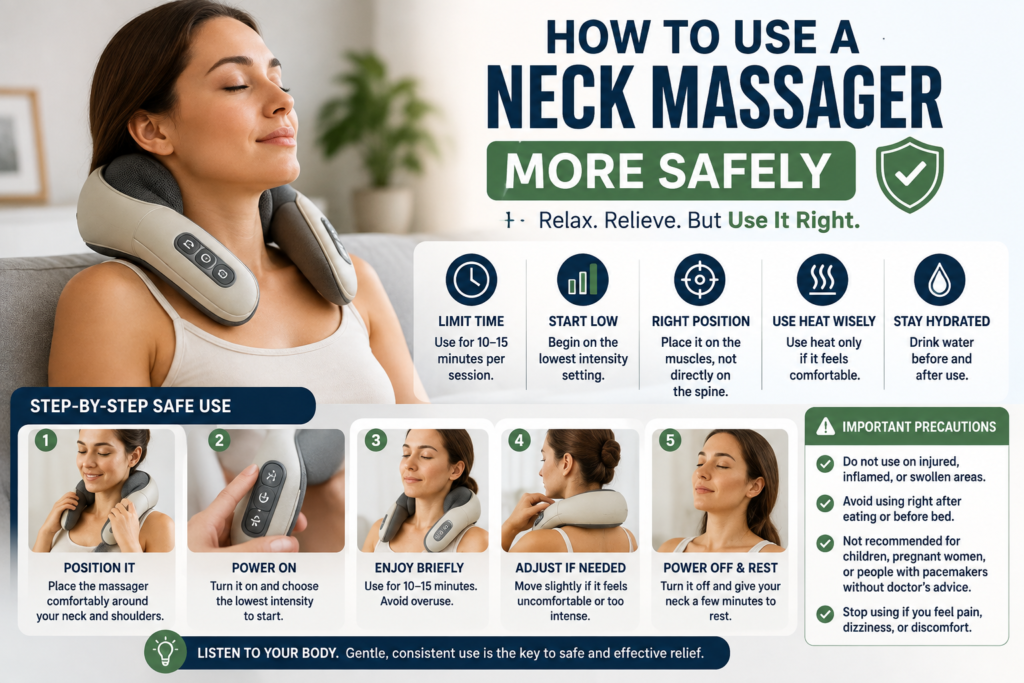
A neck massager should create mild pressure, warmth, or muscle relaxation—not sharp pain, numbness, dizziness, or a headache. Safe use depends on gentle settings, short sessions, and careful placement away from the front and sides of the neck.
Starting With Lower Settings
The user should begin with the lowest speed, pressure, or heat setting. A low setting helps the muscles adjust and makes it easier to notice irritation before it becomes painful. If the device has adjustable nodes, they should start with light contact rather than pressing the massager firmly into the body.
The user should test the device for about 2–5 minutes during the first session. Mild tenderness can occur in tight muscles, but sharp, burning, or spreading pain signals that the device should stop. The user should not increase the intensity to force a sore area to relax.
A massage gun requires extra care. It should stay on the muscles beside the spine and should not strike the neck bones, throat, or head. The user should keep the device moving and apply only light pressure.
Limiting Treatment Time
The user should follow the device instructions and keep each session short. A practical starting point is 5–10 minutes, with less time for a massage gun or a sensitive area. Longer sessions can increase soreness, bruising, skin irritation, or muscle strain.
The user should avoid repeated treatments on the same spot throughout the day. If the neck feels worse after use, it needs time to recover rather than another massage. The user should also check the skin during and after treatment, especially when using heat, because reduced sensation can allow a burn to develop.
The device should not be used while the user sleeps or when alcohol, medication, or illness reduces awareness of pain. Persistent pain, weakness, tingling, or dizziness requires medical advice instead of more massage.
Avoiding Vulnerable Areas
The massager should stay on the larger muscles at the back of the neck and upper shoulders. The user should avoid the front of the neck, the throat, the windpipe, and the areas directly over the spine. Strong pressure on the sides of the neck may affect sensitive blood vessels and nerves.
The user should also avoid broken, infected, swollen, or bruised skin. A device should not be used over a recent injury unless a health professional approves it. People with blood-clotting problems, a pacemaker, reduced sensation, recent neck surgery, or serious neck conditions should ask a clinician before use.
The user should stop immediately if symptoms include numbness, weakness, vision changes, faintness, trouble speaking, or severe headache. These symptoms need prompt medical assessment.
When To Stop And Seek Medical Advice
Neck pain from a massager may result from excessive pressure, an unsuitable setting, or an underlying condition. Certain symptoms require immediate care, while pain that continues or worsens needs a medical assessment before further use.
Symptoms That Need Urgent Care
The user should stop the massager and seek urgent medical care if they develop:
- New weakness, numbness, or tingling in the face, arms, or legs
- Trouble walking, balancing, speaking, swallowing, or breathing
- Loss of bladder or bowel control
- Severe headache, fainting, confusion, or vision changes
- Sudden, severe neck pain after a fall, crash, or other injury
These symptoms may signal nerve, spinal cord, blood vessel, or other serious problems. The person should not massage the area again or drive if the symptoms affect movement, alertness, or vision. Emergency services may be needed for sudden weakness, trouble speaking, chest pain, or breathing problems.
Persistent Or Worsening Pain
The user should stop using the device if pain lasts beyond the session, returns after each use, or becomes stronger over several days. A clinician should assess pain that spreads into the shoulder or arm, or occurs with ongoing numbness, tingling, weakness, fever, swelling, or unexplained weight loss.
Medical advice also matters before use after neck surgery, a serious injury, or when the person has a known spine, nerve, or blood-vessel condition. Until assessed, the person should avoid deep pressure, heat, and repeated sessions. Gentle movement may be reasonable if it does not increase pain, but it should not replace evaluation. Trusted guidance on neck pain is available from the National Health Service.
FAQs
Why does a neck massager hurt?
Pain may result from excessive pressure, a high setting, a session that lasts too long, or placing the device on the spine. Tight or inflamed muscles may also become more sensitive after use.
Is mild soreness normal?
Mild soreness can occur for a short time after massage, especially after deep pressure. The person should stop using the device and let the neck rest for at least 24 hours.
Where should a neck massager be placed?
The device should target the soft muscles beside the spine, not the spine, throat, front of the neck, or bony areas. The user should follow the product instructions and begin with the lowest setting.
How long should each session last?
The user should follow the device’s time limit and avoid prolonged sessions. A short session of about 10–15 minutes is a cautious starting point, unless the manufacturer gives different instructions.
When should medical care be sought?
Medical advice is needed for severe or worsening pain, numbness, weakness, dizziness, trouble speaking, trouble swallowing, or a severe headache. Care is also appropriate if symptoms continue after stopping the massager.
Conclusion
A neck massager may hurt when it applies too much pressure, runs too long, or presses on the spine and other sensitive areas. Sore muscles can also develop when the device irritates tight tissue or causes mild inflammation.
The user should stop the device if pain increases, then rest the area for at least 24 hours. If they use it again, they should choose a lower setting, limit the session, and keep the pressure on the muscles beside the spine rather than on the spine itself.
They should contact a health professional if pain lasts, worsens, or affects movement. Immediate medical care is needed for weakness, numbness, severe headache, dizziness, trouble speaking, or trouble walking. People with neck injuries, nerve problems, blood vessel conditions, or other medical concerns should ask a clinician before using a neck massager.