
By Ryan Mitchell | Wellness & Relaxation
Quick Answer: A wellness lifestyle questionnaire is a short self-check that helps you review daily habits such as sleep, movement, food, stress, and social connection. It is not a medical test. Use your answers to choose one or two small changes, and talk with a professional about ongoing or worsening symptoms.
Most of us know roughly how we feel, but not always why. Sleep slips, meals get skipped, and stress builds without a clear pattern. A simple set of questions can turn that vague feeling into something you can see and act on. This guide explains how to use one, gives you a sample you can finish in about ten minutes, and shows how to turn your answers into small, realistic steps.
This article is for general educational information only. It does not diagnose, treat, cure, or prevent any condition. It does not replace advice from a licensed healthcare professional. Readers should seek professional help for severe, worsening, unusual, or persistent symptoms.
What Is a Wellness Lifestyle Questionnaire?
A wellness lifestyle questionnaire is a set of simple questions about how you live day to day. It usually covers sleep, physical activity, eating patterns, stress, mood, relationships, and habits like screen time or caffeine. The goal is awareness. You answer honestly, notice where you feel strong and where you feel stretched, and choose a place to start.
It is different from a medical screening. Doctors use validated clinical tools for specific concerns, and trained professionals interpret them. A lifestyle check is more like a mirror. It shows patterns in your routine, not a diagnosis or a score that labels your health.
You will find these forms in workplace programs, coaching apps, gyms, and clinic intake packets. Quality varies. A helpful one is short, neutral in tone, and focused on habits you can change. A poor one pushes a product, uses fear, or claims to reveal hidden problems.
How a Wellness Check-In Works in Practice
Most formats follow the same logic. Questions are grouped by area, and each answer sits on a simple scale such as never, sometimes, often, or always. You then look at the pattern across areas instead of chasing one perfect number.
For example, someone who sleeps six hours, skips lunch, and sits all day may see that sleep and food are linked. A regular lunch break might ease the afternoon slump more than adding a new workout. The flow below shows a practical way to use any questionnaire.
Simple check-in flow (practical guide)
Notice that the flow ends with a re-check, not a final grade. Habits shift with seasons, work, and family life, so the check-in is meant to repeat.
Benefits and Limits of a Wellness Lifestyle Questionnaire

These tools help most when you know what they can and cannot do. The table sums it up.
Benefits vs limitations
Swipe left/right to see the full table →
| Benefit | Limitation |
|---|---|
| Builds awareness of daily habits | Self-reported answers can be biased |
| Gives a starting point for small changes | Cannot diagnose or rule out a condition |
| Easy to repeat and compare over time | Generic questions may miss your situation |
| Helps you prepare notes for a checkup | A number can feel more exact than it is |
Treat answers as clues, not conclusions. A clue tells you where to look, and only a professional can tell you what it means for your health.
A Sample Questionnaire You Can Use Today
This sample wellness lifestyle questionnaire takes about ten minutes. Rate each question from 0 (rarely) to 3 (almost always) for the past two weeks. There is no passing score. Look for the areas that feel lowest or most draining.
Self-check questions by area
Swipe left/right to see the full table →
| Area | Ask yourself | If answers are low | First small step |
|---|---|---|---|
| Sleep | Do I wake up feeling reasonably rested? | Bedtime routine may need attention | Set a steady wake time |
| Movement | Do I move my body most days? | Long sitting stretches may add up | Add a ten-minute walk |
| Food and water | Do I eat regular meals and sip water? | Skipped meals may affect energy | Plan one simple meal |
| Stress and mood | Do I have ways to unwind that work? | Stress may have few outlets | Try five minutes of slow breathing |
| Connection | Do I talk with someone I trust weekly? | Isolation can build quietly | Schedule one call or walk |
Review each area on its own instead of adding everything into one grand total. An area averaging 0 or 1 is a good place to start. An area averaging 2 or 3 is already working for you. If many areas feel low at once, that is worth discussing with a professional rather than fixing alone.
Tip: Answer when you are in a typical mood, not after a terrible night or a great weekend. Fill it out at the same time of day each round, and write one sentence of context next to any answer that surprises you.
Practical habits for honest answers
Use a pencil or a notes app, not a form you must submit. When the stakes are low, answers are more truthful. Keep the wording personal too. If the question says “exercise” but you walk your dog twice a day, count it. Your routine, not a template, is the point.
Turn Your Answers Into a Simple Two-Week Plan
Answers only help if they lead to action. Keep the plan so small it feels almost too easy.
Missing a day is normal. The plan works because it is flexible, so restart the next day without extra rules or guilt.
Who Benefits Most and Who Should Pause
A questionnaire is helpful for many people, but not for everyone at every moment. This table shows the difference.
Good fit vs avoid-if
Swipe left/right to see the full table →
| Good fit if | Avoid or pause if |
|---|---|
| You want to build habits slowly | You feel in distress or unsafe |
| You feel tired or stretched with no clear reason | Food or weight questions trigger unhealthy thoughts |
| You want notes for a checkup | You expect it to explain physical symptoms |
| You like simple progress tracking | Low answers leave you feeling guilty |
Note: If a questionnaire leaves you feeling judged, stop and set it aside. It is a tool for you, not a test you can fail. Good wellness habits look different for every person, age, and schedule.
Where to Start First
When several areas feel low, it helps to know which habit tends to support the others. The bars below show a typical routine order.
Typical routine priority (practical guide, not scientific data)
This order is a general starting guide only. If your own answers show connection is your weakest area, begin there. Your situation should always outrank any ranking.
How Often to Repeat Your Wellness Lifestyle Questionnaire
More frequent is not better. Checking too often can turn a helpful tool into a source of pressure.
Frequency and timing guide
Swipe left/right to see the full table →
| Situation | Suggested timing | Why |
|---|---|---|
| Trying a new habit | Every two weeks | Keeps changes small and visible |
| Stable routine | Once a month | Catches slow drift |
| Big life change | Within a few weeks | Routines often reset |
| Feeling worse despite changes | Pause and talk with a professional | Questions cannot explain symptoms |
A big change might be a new job, a move, or a new baby. In those weeks, your answers may drop for good reasons, so be patient with yourself.
Common Mistakes When Answering
Most problems come from how people use the results, not from the questions themselves.
Answering as you wish
Rating yourself by the routine you want, not the one you have, hides the real gaps. Answer for the last two weeks, even if it feels unflattering.
Fixing everything at once
Five new habits on Monday rarely survive Friday. Choose one change and let it settle before adding another.
Treating a low score as a flaw
A low answer describes a habit, not your worth. Habits can change, and many have good reasons, like a demanding job.
Ignoring symptoms
Decent answers do not cancel real symptoms. If something feels wrong, trust that signal over any form.
Warning: Do not change or stop prescribed medication, start a restrictive eating plan, or push through pain because of a questionnaire result. Ask your prescriber or healthcare professional first.
Do’s and don’ts for using your results
Do
Answer for the last two weeks
Choose one habit at a time
Note what actually helped
Share patterns with a professional if worried
Don’t
Chase perfect scores
Compare yourself with others
Use answers to self-diagnose
Skip rest to fit in more activity
The pattern is simple: use results to guide small, kind changes, never to judge yourself or label a condition.
When Self-Check Is Enough and When to Get Help
For many people, a few small habit changes are plenty. General guidance on adult sleep and activity is available from the CDC sleep page and the CDC adult activity guidelines. Use the path below to decide your next move.
Safety decision path (general practical guide)
The middle step is the one people skip most. Needing support is a normal, practical choice, not a failure of willpower.
When to contact a professional: Reach out if poor sleep, low mood, or low energy lasts more than a couple of weeks, interferes with daily life, or comes with new physical symptoms such as persistent pain, dizziness, or unexplained changes in weight. Seek urgent help for chest pain, trouble breathing, or thoughts of self-harm. In the US, call or text 988 or call 911.
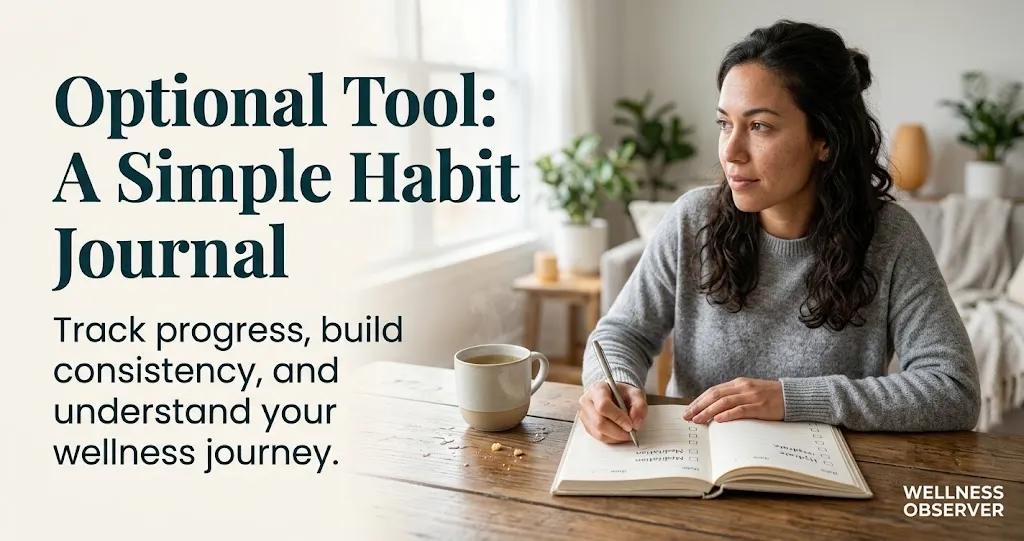
Optional Tool: A Simple Habit Journal
This article may contain affiliate links. If you buy through these links, we may earn a small commission at no extra cost to you. We only mention products that fit the topic and do not replace professional medical advice.
Undated Wellness Journal and Habit Tracker
A simple paper journal may make daily check-ins easier to repeat and review. A notes app works just as well if you prefer it.
Frequently Asked Questions
What does a wellness lifestyle questionnaire cover?
It usually covers sleep, movement, eating patterns, stress, mood, and relationships. Some also ask about screen time, caffeine, and work-life balance.
Is it the same as a health screening?
No. It reviews habits and does not diagnose anything. Clinical screening is done and interpreted by licensed professionals.
How long should it take to complete?
About ten to fifteen minutes is plenty. Longer forms often lead to rushed or less honest answers.
Can I use my results to diagnose a problem?
No. Results only point to habits you may want to adjust. Talk with a licensed professional about any symptoms.
What if most of my answers are low?
Pick one area and make one small change. If low answers come with ongoing distress or physical symptoms, talk with a professional.
Are free online wellness quizzes reliable?
Quality varies. Look for neutral wording, no fear tactics, and no pressure to buy something.
Final Thoughts
A wellness lifestyle questionnaire works best as a regular, gentle check-in rather than a test. Answer honestly, choose one small change, and repeat the check in a few weeks. If symptoms are severe, worsening, unusual, or persistent, or if you simply are not improving, talk with a licensed healthcare professional.
Author
-

Hi, I’m Ryan Mitchell, a wellness and relaxation writer at RemedyTip.com, where I focus on helping readers better understand stress management, relaxation techniques, mindfulness, sleep improvement, and everyday wellness habits. I have developed a strong knowledge of the Wellness & Relaxation field through sustained learning, in-depth research, and a continued commitment to exploring practical approaches to well-being.
My work focuses on researching wellness topics, examining available evidence, and turning complex information into clear, accessible, and actionable guidance. I’m continually exploring new findings, relaxation practices, and lifestyle strategies to help readers make informed decisions about their daily wellness routines. At RemedyTip.com, my goal is to share trustworthy, research-informed content that encourages healthier habits, greater relaxation, and a more balanced lifestyle.

