
By Alex Turner
Quick Answer: Nature’s Bounty anxiety and stress relief products are over-the-counter supplements, not treatments for anxiety. Some people use them for everyday stress support, but ingredients can interact with medicines and health conditions. Read labels, ask a pharmacist or clinician first, and seek help for ongoing or severe anxiety.
Standing in the supplement aisle, it is easy to assume a familiar brand means a safe fit for everyone. Supplements do not work that way. This guide explains what stress-support products from this brand usually are, who should be cautious, how to read a label, and which calmer daily habits can sit alongside them.
This article is for general educational information only. It does not diagnose, treat, cure, or prevent any condition. It does not replace advice from a licensed healthcare professional. Readers should seek professional help for severe, worsening, unusual, or persistent symptoms.
What Nature’s Bounty Anxiety and Stress Relief Products Usually Are
Nature’s Bounty is a well-known supplement brand sold in drugstores, grocery stores, and online. Its calming-style items are dietary supplements. That means they are not medicines, and they are not approved to treat anxiety. The FDA regulates supplements differently from drugs, and its dietary supplements page explains the basics.
Product lineups change often, so I will not list specific formulas here. Items sold for stress support often center on a few familiar ingredients. Always read the current label on the bottle in your hand.
Here are four ingredient types you may see on stress-support labels. This is a general overview, not a recommendation.
Ashwagandha
An herb often marketed for stress support. Some people say they feel calmer, but results vary. It may interact with thyroid, sedating, and immune-related medicines, so a pharmacist check matters.
Magnesium
A mineral found in many calming blends. Your food may already supply some. Higher supplement amounts can cause loose stools, and people with kidney concerns need professional guidance first.
L-theanine
An amino acid found naturally in tea and often sold for relaxation. It is usually described as gentle. Still, it can add up with other calming ingredients in a blend, so total amounts matter.
B-vitamins and blends
Many stress formulas pair B-vitamins with herbs. Blends make it harder to tell which ingredient caused a reaction. Taking one with a multivitamin can also push amounts higher than you intended.
Note: “Natural” on a label does not mean risk-free. Herbs and minerals act on the body, which is exactly why interactions and side effects can happen.
Who Should Be Cautious Before Trying Stress Support Supplements
Caution is not about fear. It is about fit. A product that suits one person can be a poor match for another, depending on health, medicines, and life stage.
Who Should Check With a Professional First
Swipe left/right to see the full table →
| Group | Why caution matters | Sensible step |
|---|---|---|
| Pregnant or breastfeeding | Safety data on many herbs is limited | Ask your prenatal clinician first |
| Taking antidepressant or anti-anxiety medicine | Possible overlap or interaction | Ask your prescriber or pharmacist |
| Thyroid, liver, kidney, or autoimmune concerns | Some ingredients may affect these areas | Get professional guidance before buying |
| Planning surgery | Some herbs may affect sedation or bleeding | Tell your surgical team about every supplement |
| Under 18 | Safe amounts are less clear | Talk with a pediatrician first |
Use this table as a prompt to ask questions, not as a verdict on your situation.
A Simple Decision Path Before You Buy

Use this path before adding Nature’s Bounty anxiety and stress relief products to your cart.
Step 1: Is your anxiety severe, constant, or getting in the way of daily life?
Yes: Contact a healthcare professional before buying anything.
Step 2: Do you take medicine, have a health condition, or are you pregnant or breastfeeding?
Yes: Ask a pharmacist or clinician first.
Step 3: Does the label show every ingredient and amount clearly?
No: Skip it and choose a clearer label.
Step 4: Follow the label directions, try one product at a time, and stop and ask for advice if anything feels wrong.
Notice that two of the four steps lead to a professional, not a purchase. That is intentional. A quick question early can prevent a bad reaction later.
How to Read a Supplement Label Without Getting Lost
Front-label words like “calm” and “relax” are marketing. The Supplement Facts panel is where the real information lives. MedlinePlus offers a plain-language guide to dietary supplements if you want more background.
Label Habits to Keep and Habits to Drop
Swipe left/right to see the full table →
| Do this | Not this |
|---|---|
| Check each ingredient and its amount on the Supplement Facts panel | Trust front-label words like “calm” or “relax” |
| Look for a third-party testing mark, such as USP or NSF, where one is shown | Assume any seal proves the product will work for you |
| Read “other ingredients” and allergen lines | Skip the small print |
| Note serving size and servings per day | Take extra servings hoping for faster results |
| Check the expiration date and tamper seal | Use a bottle with a damaged seal |
If a label is vague about amounts or uses a “proprietary blend” without listing quantities, that is a good reason to pause and ask a pharmacist.
Red Flags: When a Supplement Is Not the Right Tool
Everyday stress is normal. Some signs, though, call for a professional rather than a bottle. This dashboard shows the difference.
Get urgent help now
- Thoughts of harming yourself (in the US, call or text 988)
- Chest pain or trouble breathing
- Fainting, or a racing heartbeat that will not settle
- Swelling of the face, lips, or throat, or hives after a product
Contact a professional soon
- Anxiety lasting weeks, or repeated panic attacks
- Sleep, work, or relationships suffering
- Stomach upset, dizziness, or a rash after starting a product
- Yellow skin or eyes, or dark urine
If any item in the left column applies, skip the checklist and get help right away. For the right column, stop the product and call your clinician or pharmacist for advice.
Warning: Never stop or lower prescribed medication to try a supplement. Any change to a medicine should happen only with your prescriber’s guidance.
Common Shopping Mistakes and Better Choices
Most problems with Nature’s Bounty anxiety and stress relief shopping come from habits, not from the bottle itself.
Mistake vs Better Choice
Swipe left/right to see the full table →
| Common mistake | Better choice |
|---|---|
| Stacking several calming products at once | Add one product at a time and track total ingredients |
| Using a supplement instead of seeking care | Treat it, if used at all, as an add-on to professional support |
| Buying from star ratings alone | Compare label facts and ask a pharmacist |
| Mixing with alcohol or sleep aids | Ask before combining anything that may cause drowsiness |
| Expecting a fast fix | Keep expectations modest and focus on steady daily habits |
A realistic example: someone buys a calming blend, a sleep gummy, and a magnesium tablet in one week. If they feel off, they cannot tell which product is responsible. One at a time avoids that guesswork.
Safer Alternatives: Where Supplements Fit in a Stress Routine
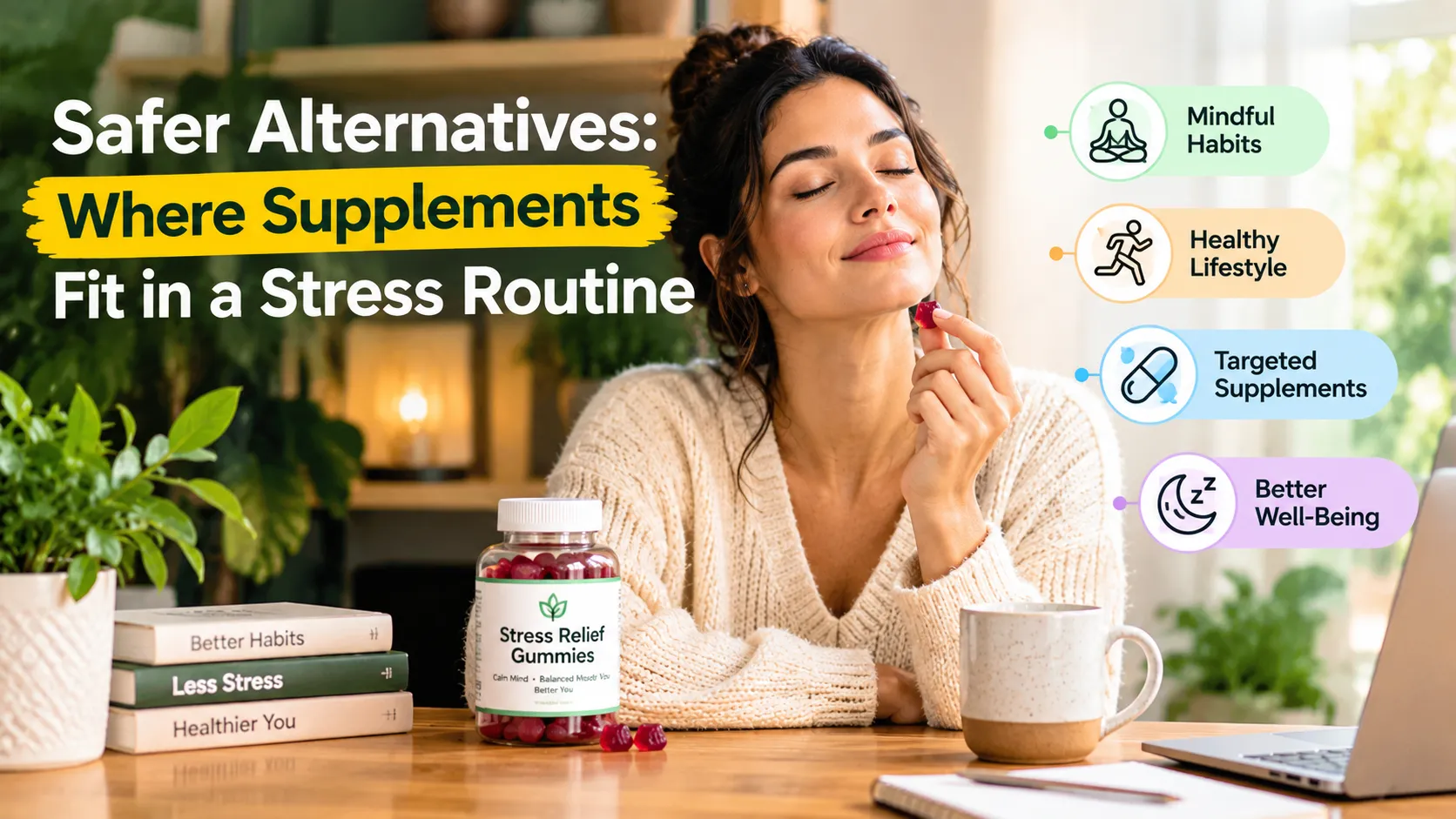
Daily habits tend to carry more weight than any bottle. The bars below show a typical routine priority, not scientific data.
Typical routine priority (practical guide)
Steady sleep and wake times
Daily movement and outdoor time
Breathing and wind-down habits
Caffeine and alcohol awareness
Supplements, only after professional advice
If your basics are shaky, a supplement is unlikely to be the first thing to fix. Start with the top of the list.
Calming Options and Who They Suit
Swipe left/right to see the full table →
| Option | What it offers | Good fit if |
|---|---|---|
| Steady sleep schedule | A predictable daily rhythm | You feel wired at bedtime |
| Short daily walks | Easy movement and a mental break | You sit most of the day |
| Slow breathing or short mindfulness | A free pause you can use anywhere | Stress spikes during the day |
| Counseling or talk therapy | Structured support from a trained professional | Worry feels constant or hard to control |
| Cutting back on caffeine | May ease jittery feelings | You drink several coffees a day |
None of these require a purchase, and none carry the interaction concerns that supplements do.
Daily Habits: Do and Don’t
This quick panel sums up the everyday choices that most often shape how stressed you feel.
Helpful habits
- Eat regular meals and drink water
- Keep a short note of mood and triggers
- Set a screen-free wind-down window
- Talk with someone you trust
Habits that can add stress
- Skipping meals or sleep
- Leaning on caffeine all day
- Scrolling bad news before bed
- Keeping worries to yourself
Small changes on the left side usually beat any product, and they cost nothing.
Tip: Take a photo of the Supplement Facts panel and bring it to your pharmacist. They can check it against your medicines in a few minutes.
When to Talk With a Professional About Stress or Anxiety
If Nature’s Bounty anxiety and stress relief items have not made a difference, that is useful information, not a personal failure. It may simply mean your stress needs a different kind of support. The National Institute of Mental Health explains common anxiety signs and the kinds of help available.
When to contact a professional
Reach out to a doctor, nurse practitioner, or licensed mental health professional if worry or stress lasts for weeks, keeps coming back, or interferes with sleep, work, or relationships. Do the same if you take regular medicine, are pregnant or breastfeeding, or notice side effects after starting any supplement.
If you feel unsafe or think about harming yourself, call or text 988 in the US, or call 911 right away. Bring the bottle or a photo of the label to your appointment.
Frequently Asked Questions
Is Nature’s Bounty anxiety and stress relief safe to take every day?
It depends on the ingredients, your health, and your medicines. Check the label and ask a pharmacist or clinician before daily use.
Can supplements treat anxiety?
No. Supplements are not approved to treat anxiety disorders. Ongoing anxiety deserves a professional evaluation.
Can I take stress supplements with antidepressants?
Some ingredients may interact with antidepressants or other medicines. Ask your prescriber or pharmacist first, and never change prescribed medication on your own.
How long do stress supplements take to work?
Responses vary, and some people notice nothing at all. Follow the label directions rather than increasing amounts to speed things up.
Are “natural” stress products always safer?
No. Herbs and minerals can cause side effects and interactions just like other products.
What should I look for on the label?
Check each ingredient and amount, the serving size, allergen statements, and any third-party testing mark.
Final Thoughts
Shopping for Nature’s Bounty anxiety and stress relief works best when it starts with questions rather than hopes. Read the label, check your medicines and health situation, and add only one product at a time, if at all.
Sleep, movement, and supportive conversations usually do more than any bottle. If your symptoms are severe, worsening, unusual, persistent, or not improving, please talk with a licensed healthcare professional.
Author
-

I’m Alex Turner, a massage product reviewer and wellness writer at RemedyTip. I specialize in researching, evaluating, and comparing massage and recovery products to help readers make informed purchasing decisions. My focus is on practical, evidence-informed product guidance covering muscle recovery, relaxation, everyday comfort, and wellness.
I take a research-driven approach to every product I review. I examine product specifications, features, materials, performance claims, user feedback, durability, comfort, ease of use, and overall value. When appropriate, I also consult trusted industry and health-related sources to verify important information and provide readers with a more complete and balanced view.
I cover a wide range of products, including massage guns, handheld massagers, neck and shoulder massagers, foot massagers, massage chairs, foam rollers, and other recovery tools. Rather than focusing only on marketing claims, I look at how products compare in real-world use and who they are actually suitable for. I also consider different budgets, use cases, and user needs when making recommendations.
At RemedyTip, I’m committed to accuracy, transparency, and unbiased product information. I clearly distinguish between manufacturer claims, available evidence, and my own product analysis so readers can understand the basis of each recommendation. I continuously research new products, technologies, and developments in the massage and recovery space to keep my content current and useful.
My goal is simple: to provide trustworthy, easy-to-understand information that helps readers choose massage and recovery products with greater confidence.

