A neck massager may ease muscle tension during pregnancy, but safety depends on the device, setting, pregnancy stage, and personal health. People with a low-risk pregnancy can often use a gentle neck massager briefly, but they should ask their healthcare professional before using one.
Pregnancy can increase neck and shoulder discomfort, yet strong vibration, heat, or deep pressure may cause problems for some people. This guide explains safer settings, areas to avoid, warning signs, and when professional advice matters.
Key Takeaways
- Gentle use may be suitable for some low-risk pregnancies.
- Avoid strong pressure, high heat, and prolonged sessions.
- Seek medical guidance when symptoms or pregnancy risks exist.
Pregnancy Safety Considerations
Pregnancy can change muscle tension, blood flow, and sensitivity to pressure. A neck massager may be suitable for some people, but gentle settings, limited use, and advice from a prenatal healthcare provider help reduce risks.
Changes in Muscle Tension and Circulation
Hormonal changes and added physical strain can tighten the neck, shoulders, and upper back. A low-intensity massager may ease muscle tension in these areas during a low-risk pregnancy, especially after the first trimester.
She should use the lowest effective setting and keep each session short. The device should stay on the neck and shoulders, avoiding the front of the neck, spine, abdomen, and lower back. It should not cause pain, numbness, dizziness, bruising, or skin irritation.
Pregnancy also increases the risk of blood clots, particularly in the legs. A neck massager should not replace medical care for sudden swelling, warmth, redness, chest pain, or shortness of breath.
When Extra Caution Is Needed
A healthcare provider should approve use if she has a high-risk pregnancy, high blood pressure, bleeding, placenta problems, a history of preterm labor, or another pregnancy complication. The provider may recommend avoiding massage if she has symptoms that need evaluation.
She should stop using the massager and contact her provider if it causes abdominal tightening, bleeding, fluid leakage, severe pain, faintness, or reduced fetal movement. She should also avoid devices that deliver strong percussion, heat, or electrical stimulation unless her provider specifically approves them.
A trained prenatal massage therapist can offer safer positioning and pressure. She should avoid lying flat on her back for long periods later in pregnancy, because this position can affect blood flow and cause dizziness.
What Neck Massagers Do
Neck massagers apply mechanical pressure or movement to muscles around the neck, shoulders, and upper back. Their settings may include gentle vibration, rolling, kneading, or percussion, while some models also add heat.
Common Device Types
Vibrating massagers use small motors to create rapid, light movements. They usually feel gentler than kneading or percussion devices and may suit people who want mild muscle stimulation.
Shiatsu-style devices use rotating nodes that press and knead the muscles. Many fit around the shoulders and upper back, but users should keep the pressure away from the front and sides of the neck.
Percussion massagers deliver repeated tapping through a small massage head. They can apply stronger force than vibration, so they require careful positioning and low settings around the neck.
Handheld and wraparound models differ in control and pressure. A handheld device lets the user target a specific area, while a wraparound model may apply steady pressure without precise control.
Heat, Vibration, and Percussion Features
Heat may relax tight muscles and make a massage feel more comfortable. It can also reduce awareness of excessive warmth, so the user should choose a low setting, limit the session, and check the skin often. Pregnancy can affect heat tolerance and circulation, which makes extra caution important.
Vibration creates rapid, shallow movement. Percussion produces deeper, repeated impacts and may irritate muscles or nerves when used with too much force. A pregnant person should avoid pressing directly on the front of the neck, the spine, or any painful, swollen, numb, or injured area.
| Feature | Typical action | Safer approach during pregnancy |
|---|---|---|
| Heat | Warms the skin and nearby muscles | Use low heat and short sessions |
| Vibration | Creates gentle, rapid movement | Start at the lowest setting |
| Percussion | Delivers repeated tapping | Avoid the neck and use professional guidance |
Any device should be used according to its instructions, with sessions kept brief. A health professional can advise whether its features suit the pregnancy, especially when complications or medical conditions exist.
Potential Benefits for Neck Discomfort
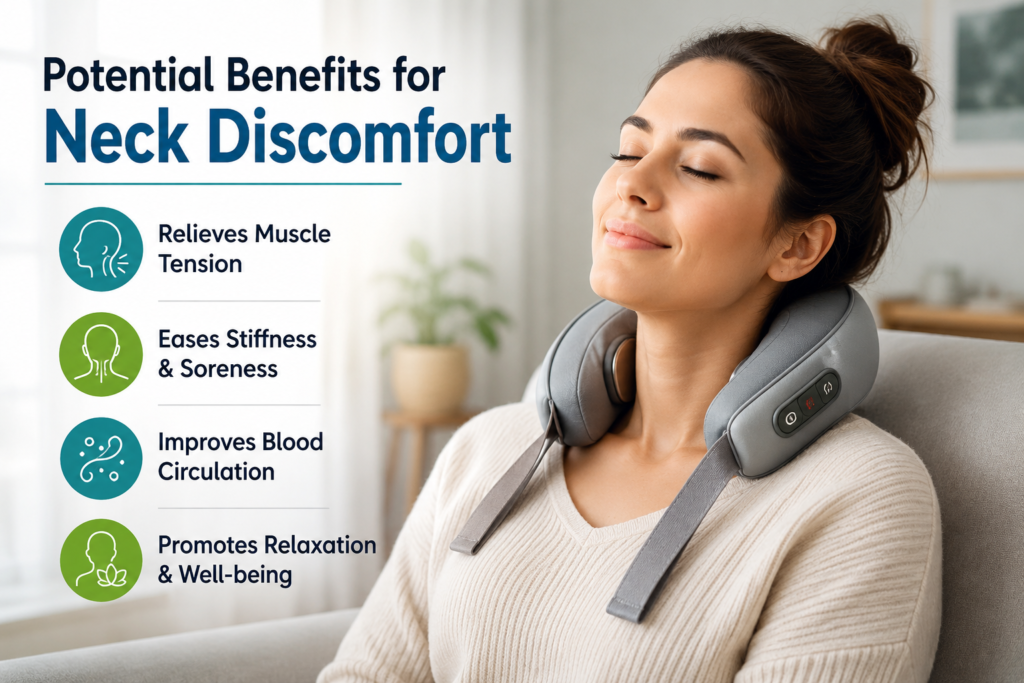
A neck massager may provide short-term relief from muscle tightness and help reduce stress during pregnancy. Its benefits depend on the device, the pregnancy’s risk level, and how gently it is used.
Temporary Relief of Muscle Tightness
Pregnancy can change posture and place extra strain on the neck, shoulders, and upper back. A low-intensity massager may loosen tight muscles and reduce mild, short-term discomfort in these areas.
The person should use the device only on the neck muscles, shoulders, and upper back, avoiding the front and sides of the neck. Gentle settings are safer than strong vibration, deep pressure, or heat. The device should not cause pain, numbness, dizziness, bruising, or tingling.
| Safer approach | Avoid |
|---|---|
| Use low intensity for a short period | Deep or forceful pressure |
| Keep the device on muscle tissue | The throat and front of the neck |
| Stop if discomfort develops | Use over swollen, injured, or numb areas |
A healthcare professional should approve use before a pregnant person starts, especially during the first trimester or in a high-risk pregnancy. Conditions such as bleeding, placenta problems, preterm-labor risk, or blood-clot concerns may require avoiding massage devices.
Stress Reduction and Relaxation
Gentle massage may ease muscle tension linked to stress and may help a person relax. Reduced tension can make ordinary neck discomfort feel less noticeable, but a neck massager does not treat pregnancy-related medical conditions.
The person should sit in a supported position, keep sessions brief, and avoid lying flat on the back for long periods later in pregnancy. A manual massage from a qualified prenatal therapist, gentle stretching approved by a clinician, or a warm—not hot—compress may offer safer alternatives.
The device should be stopped if it causes contractions, abdominal discomfort, light-headedness, shortness of breath, bleeding, or unusual pain. New, severe, persistent, or radiating neck pain needs medical assessment rather than continued self-treatment.
Risks to Consider
A neck massager can cause problems if it uses strong pressure, high vibration, or excessive heat. Pregnancy can also make the skin more sensitive and the joints less stable, so careful settings and medical guidance matter.
Excessive Pressure and Intensity
Strong kneading or vibration may cause pain, bruising, dizziness, or muscle strain. Pregnancy hormones loosen ligaments, which can make the neck and shoulders more prone to injury. A massager should stay on its lowest setting, use light contact, and remain on the neck muscles rather than the spine or throat.
Sessions should be short, such as 5 to 10 minutes, with breaks between uses. The user should stop immediately if she feels pain, numbness, tingling, headache, nausea, contractions, vaginal bleeding, fluid leakage, or reduced fetal movement.
A neck massager should not replace medical care for severe neck pain, swelling, weakness, or signs of a blood clot. Anyone with a high-risk pregnancy, blood-clotting disorder, uncontrolled high blood pressure, or another pregnancy complication should ask a healthcare professional before using one.
Heat Exposure and Skin Sensitivity
Some electric neck massagers produce heat. Excessive heat can irritate sensitive skin and may raise body temperature if the device stays in place too long. The heat should feel mild, and the device should not cause sweating, burning, redness, or discomfort.
She should place a thin layer of clothing between the device and her skin, follow the manufacturer’s time limit, and check the skin during and after use. A heated massager should not be used over a rash, wound, reduced-sensation area, or swollen tissue.
She should avoid using it while sleeping or while taking medicines that reduce awareness of heat. If redness, blistering, persistent soreness, dizziness, or feeling overheated develops, she should stop using the device and contact her healthcare professional.
How to Use a Device More Safely
A pregnant person should use a neck massager gently, for a short time, and only on suitable muscle areas. They should also confirm its use with their prenatal healthcare provider, especially if they have a high-risk pregnancy, blood-clot concerns, or neck pain with other symptoms.
Choosing Gentle Settings
The user should select the lowest vibration, heat, and pressure settings. A device should feel comfortable, not painful, numb, or intensely stimulating. If it causes dizziness, nausea, headache, tingling, or increased pain, they should stop using it.
The massager should stay on the thick muscles of the shoulders and upper back. The user should avoid the front and sides of the neck, throat, spine bones, and areas with swelling, bruising, or broken skin. They should not use a device on the abdomen or lower back unless their healthcare provider specifically approves it.
Heat requires extra care because pregnancy can increase sensitivity to overheating. The user should avoid high heat and check the skin often for redness or burning.
Limiting Session Length
Short sessions reduce the chance of skin irritation, muscle soreness, and overheating. A user can begin with 5 to 10 minutes, then stop and check how the body feels before using the device again.
The device should not remain in one spot. The user should keep it moving slowly over the shoulder muscles and follow the manufacturer’s time limit. Using it while sleeping can lead to prolonged pressure or heat, so the device should be turned off before sleep.
The user should stop immediately if contractions, abdominal pain, vaginal bleeding, fluid leakage, shortness of breath, faintness, or unusual swelling occurs. Calf pain or one-sided leg swelling also requires prompt medical advice because pregnancy increases the risk of blood clots.
Positioning the Massager Correctly
The user should sit upright with the back supported and keep both feet stable on the floor. This position helps reduce strain and lowers the risk of losing balance while handling the device.
The massager should rest on the shoulder or upper-back muscles rather than pressing directly against the neck bones or spine. The user should apply only light contact and avoid placing the device over the front of the neck, where important blood vessels and the airway are located.
They should avoid lying flat on the back for long periods later in pregnancy unless their healthcare provider approves it. A partner should not forcefully press the device into the neck or shoulders. NHS pregnancy massage guidance can provide additional safety information.
When to Avoid Self-Massage Devices
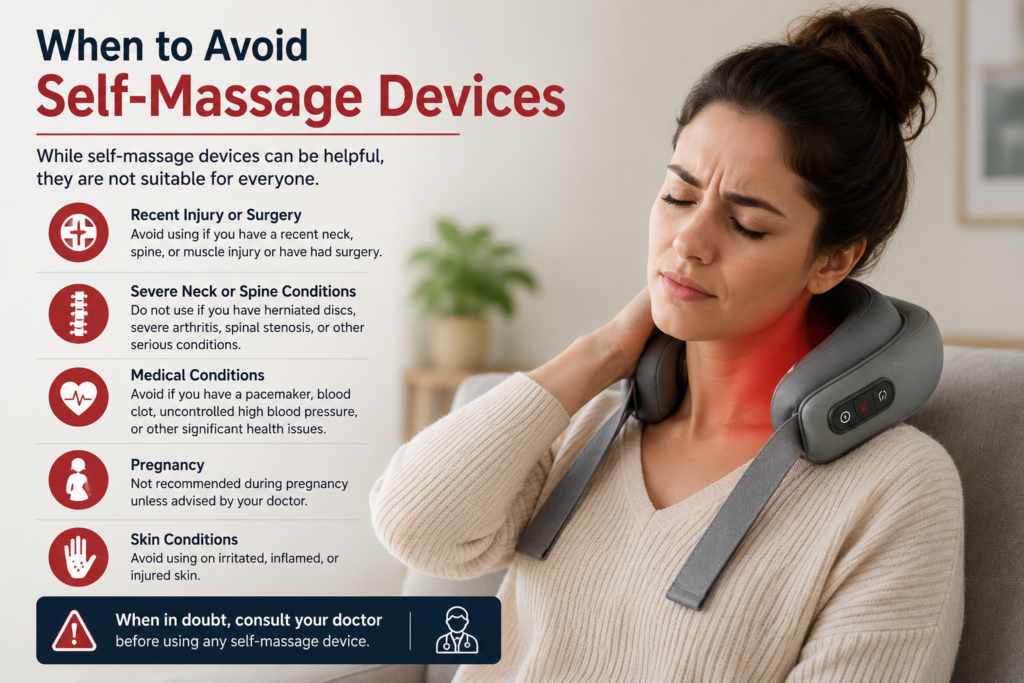
Some pregnant people should avoid electric neck massagers unless their obstetric clinician approves them. New or severe symptoms also require medical advice instead of self-treatment.
High-Risk Pregnancy Conditions
People with a high-risk pregnancy should ask their obstetric clinician before using a neck massager. This includes those with preeclampsia or high blood pressure, placenta previa, vaginal bleeding, a history of preterm labor, cervical problems, blood-clotting disorders, or other pregnancy complications.
They should also avoid self-massage devices if a clinician has advised pelvic rest, reduced activity, or bed rest. A device may apply strong pressure, heat, or vibration that does not suit their condition. A clinician can advise whether gentle hand massage is safer and which areas to avoid.
People with reduced sensation, nerve problems, or skin injury should not use the device without medical guidance. They may not notice excessive pressure or heat. Any device that causes pain, bruising, numbness, or skin irritation should be stopped.
Concerning Symptoms Requiring Medical Care
A pregnant person should stop using the massager and contact a medical professional for vaginal bleeding, fluid leakage, regular contractions, severe abdominal or pelvic pain, sudden swelling, severe headache, vision changes, chest pain, shortness of breath, fainting, or one-sided leg swelling and pain.
Neck symptoms also need prompt evaluation when they include severe pain, weakness, numbness, trouble walking, confusion, fever, or a sudden headache. These signs may point to a condition that massage cannot treat.
If dizziness, nausea, racing heartbeat, skin burns, or worsening pain develops during use, the person should turn off the device and rest. Emergency services may be needed for chest pain, severe breathing trouble, fainting, or symptoms of a stroke.
Getting Guidance From a Healthcare Professional
A healthcare professional can assess the pregnancy, check for conditions that may make massage unsafe, and recommend safer settings. They can also suggest other ways to manage neck pain without placing pressure on sensitive areas.
Questions to Ask Your Obstetric Provider
Before using a neck massager, the pregnant patient should ask the obstetric provider whether it is appropriate for her stage of pregnancy and health history. She should mention the device type, vibration strength, heat setting, session length, and the exact areas where she plans to use it.
Important questions include:
- Can she use the device on the neck, shoulders, or upper back?
- Should she avoid heat, deep pressure, or strong vibration?
- How long should each session last?
- Are there signs that require stopping immediately?
- Does she have conditions such as high blood pressure, bleeding, placenta problems, or a risk of blood clots?
The provider may advise against self-treatment in a high-risk pregnancy. She should stop using the device if it causes dizziness, pain, bleeding, contractions, shortness of breath, or unusual swelling.
Alternative Options for Pain Relief
If the provider recommends avoiding a neck massager, lower-risk options may help. Gentle neck stretches, posture changes, and short breaks from screens can reduce muscle strain. A warm, not hot, cloth placed on the shoulders may also provide comfort.
A prenatal massage from a therapist trained in pregnancy care can offer hands-on treatment with proper positioning and pressure. The therapist should avoid the abdomen and use extra care around the lower back and legs.
Other options include supportive pillows, light movement, and cold or warm packs used for short periods. Before taking acetaminophen or another pain medicine, she should ask her healthcare provider about the correct product and dose. Persistent, severe, or worsening pain needs medical assessment rather than repeated home treatment.
FAQs
Can a pregnant person use a neck massager?
A neck massager may be safe during a low-risk pregnancy when used gently on the neck and shoulders. They should ask their healthcare provider first, especially during the first trimester or if the pregnancy has complications.
Which settings are safest?
They should choose the lowest vibration or massage setting and use the device for short periods. The massager should not cause pain, numbness, dizziness, or discomfort.
Which areas should they avoid?
They should avoid the abdomen and lower back. They should also avoid pressing hard on the front or sides of the neck, where important blood vessels are located.
When should they stop using it?
They should stop if they develop pain, bleeding, contractions, dizziness, shortness of breath, or unusual swelling. A healthcare professional should assess symptoms that continue or worsen.
Can a neck massager cause labor?
There is no strong evidence that normal, gentle use on the neck causes labor. However, pregnancy safety guidance remains limited, so medical approval offers the safest approach.
Who should avoid using one without medical advice?
People with high-risk pregnancies, blood-clot concerns, high blood pressure, or other medical conditions should speak with their healthcare provider before using a neck massager. Device instructions should also be followed carefully.
Conclusion
A neck massager may be safe during pregnancy when a clinician approves its use and the pregnancy has no complications. The user should choose the lowest comfortable setting and use the device for short sessions on the neck, shoulders, and upper back.
They should avoid the abdomen, pelvis, and lower back. They should also avoid strong pressure, heat settings, and massage over swollen, painful, or injured areas. A massage gun or high-intensity vibration device may require extra caution.
A pregnant person should ask a prenatal clinician before using a massager, especially during the first trimester or with a high-risk pregnancy. Medical advice is also important for anyone with high blood pressure, bleeding, placental problems, or a history of blood clots.
They should stop immediately if they feel pain, dizziness, contractions, bleeding, fluid leakage, numbness, or unusual discomfort. Medical care may be needed if symptoms continue.