By Michael Hayes
Quick Answer: To use castor oil for lymphatic drainage safely, apply a small amount topically or use a short castor oil pack on healthy, unbroken skin only. Patch test first, avoid irritated or swollen skin, keep sessions short with low or no heat, and see a doctor for sudden swelling, signs of infection, or symptoms that don’t improve.
This guide explains how to use castor oil for lymphatic drainage in a careful, realistic way. Castor oil is often used in wellness routines as a topical oil or castor oil pack, but it should not be treated as a cure, detox treatment, or replacement for medical care. The safest goal is skin comfort, gentle self-care, and clear red-flag awareness.
Castor Oil Packs Patch Testing Lymph Safety Skin Red FlagsHealth and safety note: This article is for general educational information only. It does not diagnose, treat, cure, or prevent any condition. It does not replace advice from a licensed healthcare professional. Readers should seek professional help for severe, worsening, unusual, or persistent symptoms.
How to use castor oil for lymphatic drainage: the safe view
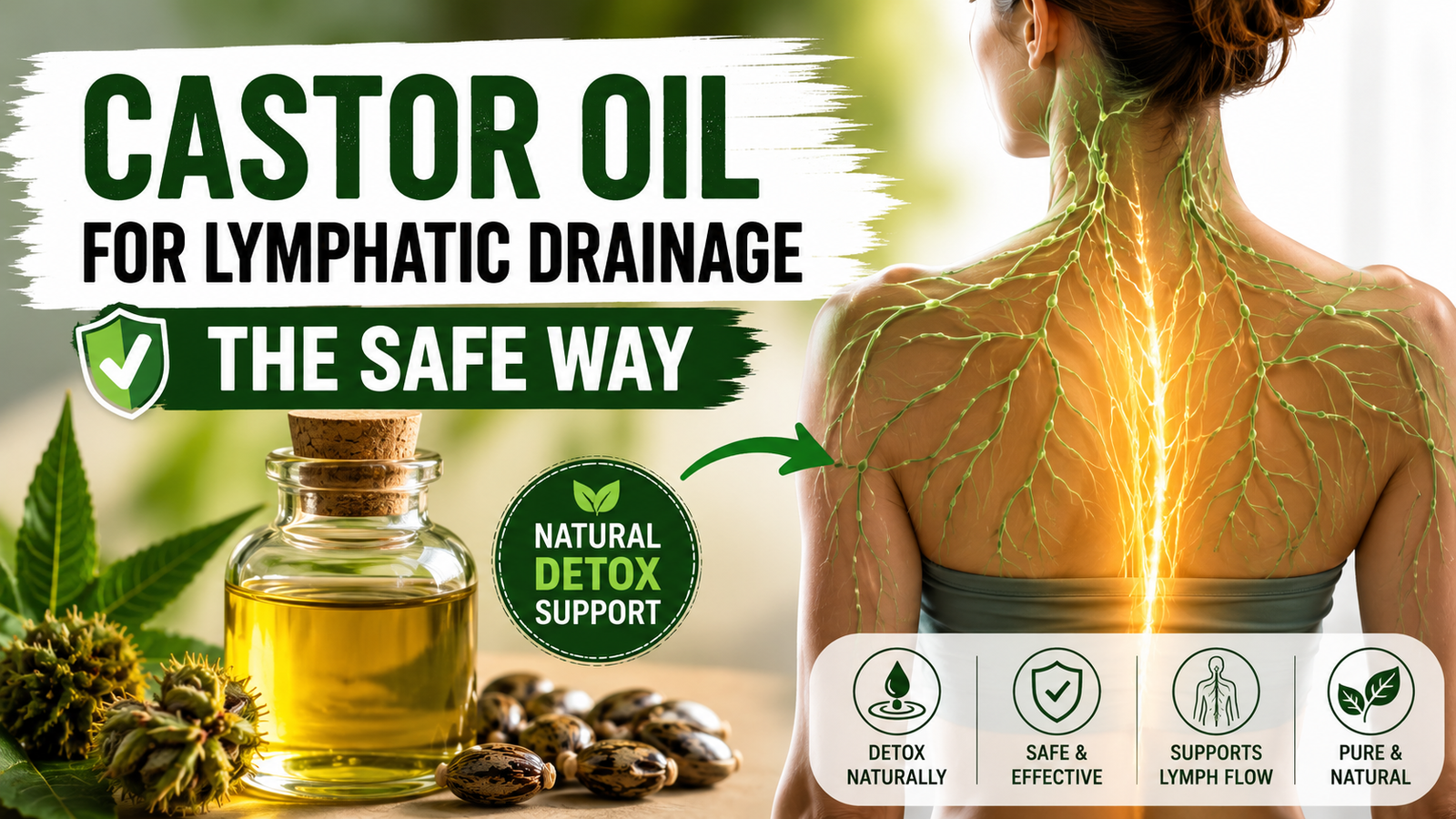
Castor oil is a thick plant oil made from castor beans. In personal care, people often use it on the skin as a massage oil or as a castor oil pack, which means oil is applied to a cloth and placed on the skin for a short period. Some wellness routines describe this as “lymphatic drainage,” but the evidence for castor oil directly draining lymph fluid is limited.
The lymphatic system helps move lymph fluid, supports immune function, and returns fluid to the bloodstream. A medical overview from Cleveland Clinic on the lymphatic system explains how lymph vessels, lymph nodes, and organs work together. Castor oil should not be used to treat swelling, lymphedema, infection, or unexplained symptoms.
The safest way to think about castor oil is topical comfort support. It may help the skin feel moisturized and may make a gentle massage or warm pack feel relaxing. It does not “pull toxins” through the skin, and it should not be used as a medical drainage method.
A beginner can check the fit by asking, “Is my skin healthy, and am I doing this for mild self-care?” A more experienced reader should notice whether the routine includes a patch test, short timing, clean materials, no harsh pressure, and a clear stop rule.
Note: Castor oil packs are popular online, but popularity is not the same as proof. Use careful wording: castor oil may support comfort and routine consistency; it should not be described as a proven detox or lymph drainage treatment.
Comparison table: castor oil methods and safer alternatives
Before you apply castor oil: screen your skin and symptoms
Before using castor oil, check whether your concern is a mild self-care issue or a possible medical symptom. If you have sudden swelling, painful swelling, red or warm skin, fever, a wound, a rash, or swelling on one side of the body, do not use castor oil as the first step.
This matters because topical oil can make irritated skin worse, trap heat, stain clothing, and delay proper care if someone assumes swelling is just “poor drainage.” Castor oil may be safe for many people on healthy skin, but it can still cause allergic reactions, itching, redness, or irritation.
A practical example: using a small amount of castor oil on dry skin after a patch test is different from applying a warm pack over a swollen, painful area. The first may be routine self-care. The second may hide a problem that needs professional evaluation.
The flow chart below shows the safest order before applying castor oil.
Routine Flow Chart
Rule out sudden, painful, red, hot, one-sided, or worsening swelling.
Apply a tiny amount to a small area and watch for irritation.
Try a small amount of oil or a brief pack on healthy skin.
Stop if redness, itching, burning, pain, or swelling appears.
Use this as a safety routine, not a medical protocol. The first step is always symptom screening.
Symptoms or problems vs possible reasons table
Step-by-step: how to use castor oil for lymphatic drainage safely
This routine is for general topical self-care only. It does not treat lymphedema, swollen lymph nodes, infection, or unexplained swelling. The safest version uses a patch test, a small amount of oil, short timing, and no aggressive massage.
Use only external castor oil for this routine. Do not drink castor oil for lymphatic drainage. Oral castor oil can act as a stimulant laxative and may cause cramping, diarrhea, dehydration, medication interactions, or pregnancy-related concerns. For general drug information, see MedlinePlus information on castor oil.
Patch test first. Apply a tiny amount of castor oil to a small area, such as the inner forearm. Wait and watch for itching, rash, burning, swelling, or redness before using it more broadly.
Choose healthy skin only. Avoid broken skin, rashes, infection signs, bruises, swollen lymph nodes, wounds, surgical sites, varicose veins, or painful areas.
Use a small amount. Castor oil is thick. Apply a thin layer or lightly soak a soft cotton cloth. More oil does not mean better lymph support.
Apply gently. Use light, comfortable strokes or place the cloth on the skin. Do not press hard, dig into tissue, or rub swollen nodes.
Keep heat optional and low. If using warmth, use a safe warm pack over a barrier and keep it comfortable. Never use high heat, sleep with heat, or microwave an oil-soaked cloth.
Limit the session. Start with 10 to 20 minutes. If your skin tolerates it, some people use longer sessions, but avoid long or overnight use unless a healthcare professional says it is safe for you.
Clean and recheck. Wipe excess oil away, wash fabric as needed, and check your skin later. Stop if you notice rash, itching, swelling, burning, blisters, or worsening symptoms.
Tip: Keep your first routine simple: patch test, small area, short time, no heat or very low warmth, and no hard massage. This makes it easier to tell how your skin responds.
Safe routine vs risky routine table
Safety checks: when not to use castor oil
Knowing when not to use castor oil matters as much as knowing how to use castor oil for lymphatic drainage. Avoid topical castor oil on broken skin, infected skin, burns, active rashes, open wounds, painful swelling, surgical sites that have not healed, or skin that is unusually red, hot, or spreading.
Ask a healthcare professional first if you are pregnant, breastfeeding, have a chronic skin condition, have diagnosed lymphedema, recently had surgery, are receiving cancer care, have unexplained swelling, or have a history of allergic reactions to oils or skin products. The CDC lymphedema guidance for cancer survivors explains why swelling after cancer treatment should be discussed with a doctor.
This decision path helps you choose self-care, professional advice, or urgent help.
Safety Decision Path
Is swelling sudden, painful, one-sided, red, hot, or worsening?
Yes: do not use castor oil as self-treatment. Contact a qualified healthcare professional.
Is there fever, chest pain, shortness of breath, fainting, or severe illness?
Yes: seek urgent medical help.
Is the goal mild comfort on healthy skin with no red flags?
Yes: patch test first, then use a short, gentle routine.
The safe interpretation is clear: castor oil may fit mild topical self-care, but warning signs need professional evaluation.
Warning: Do not drink castor oil for lymphatic drainage. Do not use castor oil packs over infected, broken, irritated, red, hot, swollen, painful, or recently operated skin. Do not use heat if you cannot feel temperature well or if your skin is fragile.
Use this red-flag dashboard before and after each routine.
Red-Flag Checklist Dashboard
Especially one-sided or rapidly increasing.
Do not cover it with oil or heat.
Wash the oil off and stop using it.
Contact a healthcare professional.
If any red flag appears, stop the routine. A safe self-care habit should not make skin or symptoms worse.
Tools, products, and setup that fit this routine
You do not need many products. A simple setup is better: castor oil for external use, a soft cotton cloth if making a pack, an old towel to prevent stains, and a gentle cleanser for cleanup. Castor oil can stain fabric, so protect bedding and clothing.
Choose products that make the routine cleaner and easier, not stronger. Avoid products that make medical claims, promise detox, or encourage overnight heat without safety guidance.
Product, tool, or routine fit table
This dashboard shows which tools fit common needs.
Product and Routine Fit Dashboard
Use only a tiny amount after a patch test.
Use clean cotton cloth and protect clothing from stains.
Skip fragrance and stop at the first sign of irritation.
Choose professional evaluation before home remedies.
The best setup is simple, clean, and easy to stop. If a product encourages extreme heat, deep pressure, or detox claims, skip it.
Affiliate disclosure: This article may contain affiliate links. If you buy through these links, we may earn a small commission at no extra cost to you. We only mention products that fit the topic and do not replace professional medical advice.
Cold-Pressed Castor Oil for External Use
A plain castor oil may support a simple topical routine by adding slip and moisture during gentle self-care. Use externally only, patch test first, and avoid irritated skin.
Check Price on AmazonCotton Flannel Castor Oil Pack Cloth
A soft cotton cloth may make a short castor oil pack easier to apply without rubbing. Keep it clean, replace it often, and stop if your skin reacts.
Check Price on AmazonReusable Castor Oil Pack Wrap
A loose reusable wrap may help hold a cloth in place during a short routine. It should feel comfortable, not tight, hot, or compressive.
Check Price on Amazon
Common mistakes and better choices
The most common mistake is using castor oil as a treatment for swelling instead of a comfort routine. Swelling can have many causes, and some need prompt care. Another mistake is leaving packs on too long, using too much heat, or applying oil over irritated skin.
If you are learning how to use castor oil for lymphatic drainage, focus less on “more oil” and more on skin response. A safe routine should leave skin calm. It should not create burning, itching, rash, pain, or worsening swelling.
Mistake vs better choice table
The priority meter below is a practical guide, not scientific research data.
Typical Routine Priority Meter
Red-flag screening
Patch testing
Short, gentle use
Detox claims
The safest routine gives more weight to screening and skin tolerance than to online detox promises.
What professionals check that beginners often miss
A professional does not only ask where you want to apply castor oil. They ask why you want to use it, whether symptoms are new, whether swelling is one-sided, whether the skin is warm or red, and whether there is a history of surgery, cancer care, lymphedema, pregnancy, medication use, or chronic skin disease.
Beginners often focus on placement. More experienced readers should focus on risk. The same oil routine can be low risk on calm skin and a poor choice on inflamed, broken, swollen, or infected skin.
Symptom pattern
Professionals care whether swelling is sudden, one-sided, painful, or linked to surgery, travel, infection, or cancer care. This changes the safest next step.
Skin condition
Healthy skin may tolerate oil better than fragile or inflamed skin. Redness, heat, wounds, rashes, and blisters are reasons to stop.
Heat tolerance
Warmth can feel relaxing, but heat can also burn or irritate skin. People with reduced sensation or fragile skin should be extra cautious.
Aftercare response
Comfort is acceptable. Worsening swelling, rash, itching, burning, pain, fever, or spreading redness means the routine should stop.
Safety Note: If you have diagnosed lymphedema, recent surgery, cancer treatment history, active infection, unexplained swelling, fragile skin, pregnancy, or frequent skin reactions, ask your healthcare team before using castor oil packs or lymph-focused self-care routines.
When to contact a professional:
Contact a qualified healthcare professional if swelling is sudden, severe, one-sided, painful, red, warm, spreading, persistent, or worsening. Seek urgent medical help for chest pain, shortness of breath, fainting, confusion, high fever, or symptoms that feel serious or unusual.
FAQ
How do you use castor oil for lymphatic drainage safely?
Patch test first, use a small amount on healthy skin, keep the routine short, avoid hard pressure or high heat, and stop if irritation or swelling worsens.
Does castor oil actually drain the lymphatic system?
There is limited proof that topical castor oil directly drains lymph fluid. It is safer to view it as topical comfort support, not a proven drainage treatment.
Where should I put castor oil for lymph support?
Use it only on healthy, intact skin for general comfort. Do not apply it directly over swollen lymph nodes, wounds, rashes, painful areas, or hot red skin.
Can I leave a castor oil pack on overnight?
Overnight use is not a good starting point. Begin with a short session and avoid sleeping with heat, oil-soaked cloth, or anything that may irritate skin.
Can I drink castor oil for lymphatic drainage?
No. Do not drink castor oil for lymphatic drainage. Oral castor oil can act as a laxative and may cause side effects or interact with health conditions or medications.
Who should avoid castor oil packs?
Avoid them on broken, infected, irritated, painful, red, hot, or swollen skin. Ask a professional first if pregnant, recently had surgery, or have lymphedema.
When should I stop using castor oil and seek help?
Stop and seek help for rash, burning, blisters, severe itching, worsening swelling, fever, spreading redness, chest pain, shortness of breath, or unusual symptoms.
Final thoughts
Using castor oil for lymphatic drainage safely starts with realistic expectations. Use it externally only, patch test first, keep the routine gentle, and steer clear of irritated or swollen areas. Castor oil may support comfort — but symptoms that are severe, worsening, unusual, or persistent need professional care, not a home remedy.