By Ryan Mitchell | Wellness & Relaxation
Quick Answer: Here is how to give a stress relief massage: set a quiet scene, ask about comfort, then use slow, steady pressure on the shoulders, upper back, and neck muscles. Avoid the spine and sore spots, check in often, and stop if sharp pain, numbness, or dizziness appears.
Most of us can offer a calming touch with no training. Learning how to give a stress relief massage mostly means slowing down, listening, and keeping pressure comfortable. You do not need fancy tools or special techniques, only a little preparation and attention.
This guide covers setup, a simple routine, common mistakes, and the signs that mean you should pause.
This article is for general educational information only. It does not diagnose, treat, cure, or prevent any condition. It does not replace advice from a licensed healthcare professional. Readers should seek professional help for severe, worsening, unusual, or persistent symptoms.
Why Tension Builds Up and Where It Shows
Stress often shows up in the body before we name it. Long hours at a desk, phone use, poor sleep, and constant worry can leave the shoulders lifted and the jaw tight. Many people feel it most in the neck, upper back, and hands. Gentle touch may help the body feel calmer, though results vary from person to person.
In my own routines, I notice that tension eases more easily when the room is quiet and the pressure stays slow. Rushing tends to make muscles tighten again. The goal is comfort and relaxation, not forcing a knot to release.
For a balanced look at what is known about touch-based approaches, the NCCIH massage therapy overview explains the evidence and its limits.
How to Give a Stress Relief Massage Step by Step
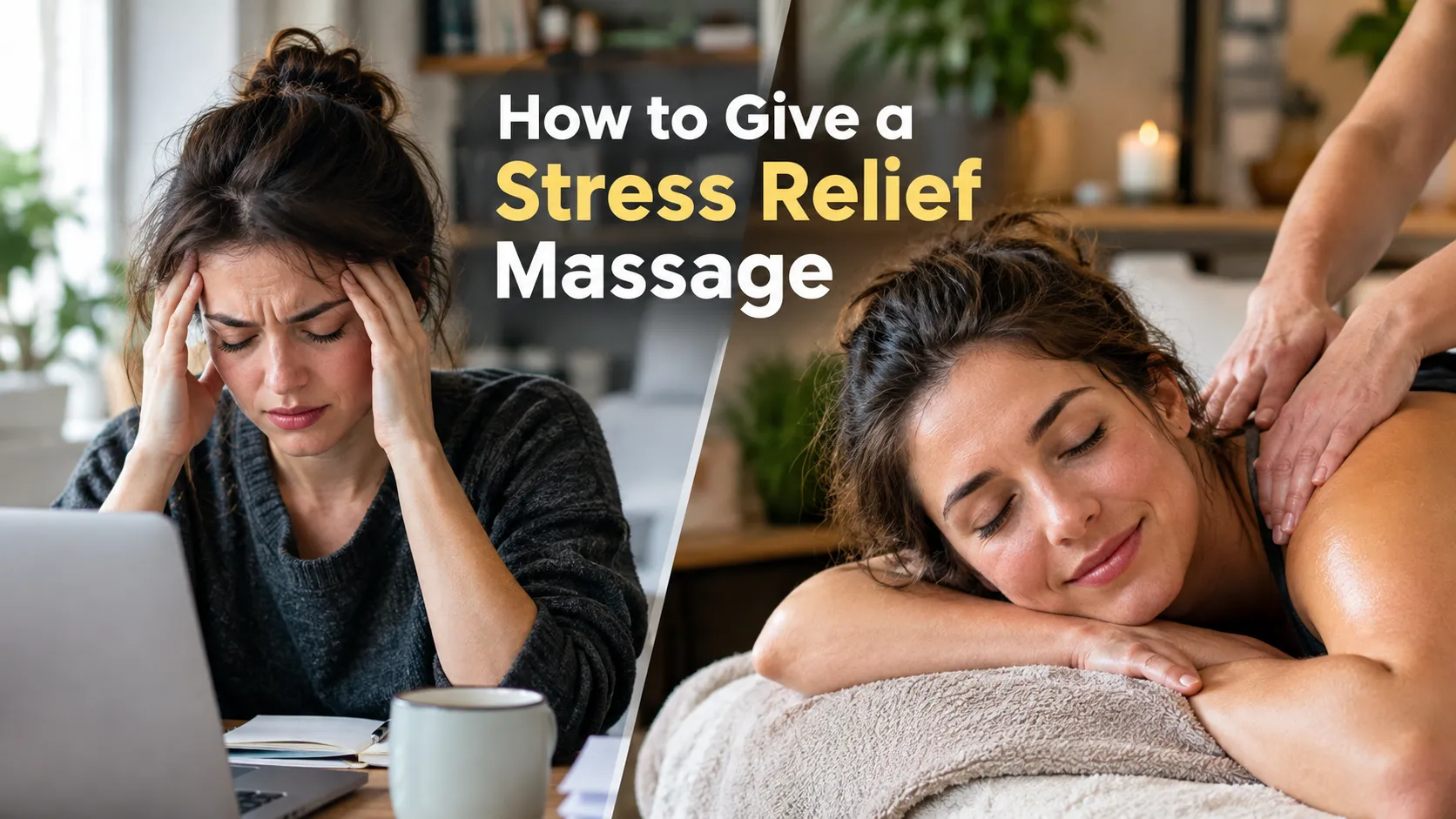
This routine focuses on the shoulders, upper back, and neck muscles, the places most people hold stress. A session of 10 to 15 minutes is plenty for a first try.
1
2
3
4
5
6
Keep both hands in contact as much as you can. Smooth, continuous touch usually feels more soothing than jumpy, stop-and-start movements. Match your pace to their breathing, and let the pressure rise only if they ask for it.
Here is the same routine as a quick visual you can glance at during a session.
Routine Flow: One Calm Session
Notice that comfort questions come before touch, not after. If you skip that early check, every later step becomes harder to adjust.
What You Need Before You Begin
Swipe left/right to see the full table →
| Item | Why it helps | Simple choice |
|---|---|---|
| Quiet space | Lowers distraction | Dim light, soft music |
| Unscented lotion | Reduces skin drag | Fragrance-free, patch tested |
| Pillow or towel | Supports posture | Under arms or head |
| Sturdy chair | Keeps shoulders reachable | Low-back dining chair |
Note: Test any lotion or oil on a small patch of skin first, and skip it if there is redness, itching, or stinging. Plain, unscented products are the safest starting point for most people.
Mistakes That Make a Massage Less Relaxing
Most problems come from enthusiasm, not from lack of skill. A few small changes usually fix them.
Common Mistakes vs Better Choices
Swipe left/right to see the full table →
| Mistake | What goes wrong | Better choice |
|---|---|---|
| Pressing too hard | Muscles guard and tense | Light to medium touch |
| Moving too fast | Feels hurried, not calming | Match their breathing pace |
| Pressing the spine or front of neck | Sensitive areas can be irritated | Work the muscles beside them |
| Never checking in | Discomfort goes unspoken | Ask every few minutes |
The bars below show a typical routine priority. They are a practical guide, not scientific data.
What Matters Most (Typical Routine Priority)
Comfort and communication
Slow, steady pace
Gentle pressure
Advanced technique
Communication and pace outrank technique. A beginner who listens well usually gives a more relaxing session than someone using complicated moves.
How Long and How Often to Do It
Short and regular usually works better than long and rare. Let the person’s comfort set the limit, and stop earlier if they seem restless or tired.
Timing Guide by Situation
Swipe left/right to see the full table →
| Situation | Typical length | General frequency |
|---|---|---|
| Quick desk reset | 3 to 5 minutes | When needed |
| Evening wind-down | 10 to 15 minutes | A few nights a week |
| Full upper-body session | 20 minutes | About once a week |
| Hand massage | 2 to 3 minutes | During breaks |
Safer Routine vs Riskier Routine
Swipe left/right to see the full table →
| Area | Safer approach | Riskier approach |
|---|---|---|
| Pressure | Gentle, adjustable | Deep, “no pain no gain” |
| Neck | Light strokes on back of neck | Twisting or cracking |
| Skin | Intact, healthy skin only | Over rashes or wounds |
| Aftercare | Water, rest, quiet minute | Standing up quickly |
This split panel sums up the habits worth keeping.
Do
Warm your hands. Keep strokes slow and continuous. Ask for feedback often. Let them breathe deeply.
Don’t
Press on bones or joints. Push through discomfort. Use hot oil. Continue after they say stop.
When in doubt, lighter and slower is the better rule.
Warning: Avoid massaging over bruises, swollen areas, skin infections, or recent injuries. If the person has a health condition, is pregnant, or takes blood-thinning medication, suggest they check with a healthcare professional first.
Troubleshooting Common Problems
They flinch or tighten up. Your pressure is probably too firm or your hands are cold. Lighten up, slow down, and warm your hands for a moment.
Your hands tire quickly. Use your whole forearm and body weight instead of only the thumbs. Switch between palms, fingers, and knuckle-free strokes to share the work.
They cannot stay quiet or still. Some people feel awkward being touched. Keep it short, stay in the shoulder area, and let them lead the conversation if they want it.
It feels awkward the first time. That is normal. Anyone learning how to give a stress relief massage tends to get smoother after two or three sessions, once the hand movements feel familiar.
Pro Tips for a More Calming Session
Sync Your Breathing
Inhale as you prepare each stroke and exhale as you glide. Your calm rhythm often helps the other person settle too.
Warm the Oil First
Rub a small amount between your palms before applying. Cold lotion on bare skin can make people tense up.
Keep Contact Steady
Try not to lift both hands at once. Constant contact feels reassuring and keeps the rhythm unbroken.
Include the Hands
Many people hold stress in the palms and fingers. A short hand massage at the end is easy and often appreciated.
Tip: Add a one-minute “reset” by asking the person to drop their shoulders and breathe out slowly before you start. It primes the muscles to relax.
Safety Signs to Watch During the Massage
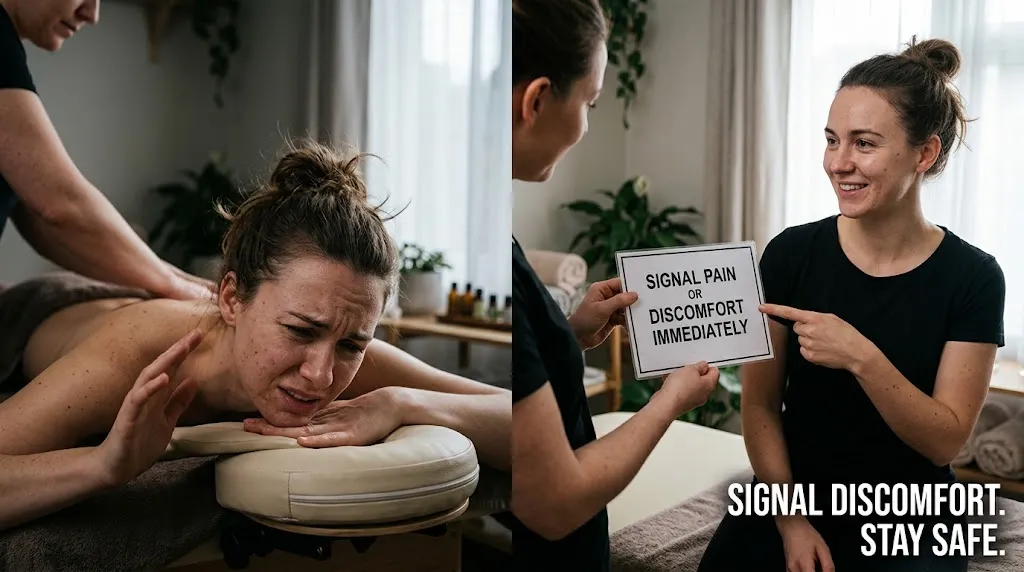
Gentle touch is low risk for most healthy adults, but stop right away if any of these appear. The checklist below is a practical guide.
Stop and Reassess Checklist
If any item appears, stop, help them rest, and do not restart that session. Chest pain, trouble breathing, or fainting needs urgent medical help.
This simple path helps you decide what to do next.
Decision Path: Continue or Stop?
Pausing early is always the safer choice. You can try again another day with a lighter touch.
When Results Don’t Improve
Gentle massage is a comfort practice, not a fix for ongoing pain or heavy stress. If tension keeps returning, look at the bigger picture: sleep, screen posture, breaks, and workload. Small daily changes often matter as much as the massage itself.
Self-Care vs Seeking Help
Swipe left/right to see the full table →
| Situation | Gentle self-care may fit | Seek professional help |
|---|---|---|
| Tight shoulders after a long day | Short, light massage | Lasts weeks despite rest |
| Pain after an injury | Not a good fit | Get it checked first |
| Tingling or numbness | Stop massaging | Contact a professional |
| Constant worry or low mood | Calming touch as a supplement | Talk with a licensed provider |
When to contact a professional: Reach out to a healthcare provider for severe pain, numbness, weakness, fever, chest pain, loss of bladder or bowel control, or symptoms that are worsening or persistent. Seek urgent medical help if you notice chest pain, trouble breathing, or sudden weakness. For more background, see the Mayo Clinic massage overview.
This article may contain affiliate links. If you buy through these links, we may earn a small commission at no extra cost to you. We only mention products that fit the topic and do not replace professional medical advice.
Unscented Massage Lotion
A fragrance-free lotion may make smooth strokes easier and more comfortable. Patch test before use.
Soft Foam Massage Ball
A soft ball can make gentle self-massage of the shoulders easier when no helper is around. Use light pressure only.
Frequently Asked Questions
How long should a stress relief massage last?
Ten to fifteen minutes is enough for most people. Shorter sessions are fine if they feel relaxed sooner.
What pressure is best for relaxation?
Light to medium pressure that feels pleasant is usually best. Always follow their feedback instead of aiming for deep pressure.
Can I give myself a stress relief massage?
Yes, many people gently rub their shoulders, neck, and hands. Keep the pressure light and stop if anything feels sharp or uncomfortable.
Which areas should I avoid?
Avoid the spine, front of the neck, joints, bruises, wounds, and any swollen or injured spot. Stay on the large muscles of the shoulders and upper back.
Should I use oil or lotion?
Either can work, and unscented options are the safest start. Patch test first and skip it if the skin reacts.
Who should check with a professional first?
People who are pregnant, recently injured, or recovering from surgery should ask a healthcare professional first. The same goes for anyone with a medical condition or who takes blood thinners.
How do I learn how to give a stress relief massage as a beginner?
Start with the shoulders, use slow strokes, and ask for feedback often. A few short practice sessions will build confidence.
Final Thoughts
A calming massage comes down to a quiet setting, slow hands, and honest communication. Once you know how to give a stress relief massage, a few minutes can become a simple, caring habit.
If pain or stress is severe, worsening, unusual, persistent, or not improving, please talk with a licensed healthcare professional.
Author
-

Hi, I’m Ryan Mitchell, a wellness and relaxation writer at RemedyTip.com, where I focus on helping readers better understand stress management, relaxation techniques, mindfulness, sleep improvement, and everyday wellness habits. I have developed a strong knowledge of the Wellness & Relaxation field through sustained learning, in-depth research, and a continued commitment to exploring practical approaches to well-being.
My work focuses on researching wellness topics, examining available evidence, and turning complex information into clear, accessible, and actionable guidance. I’m continually exploring new findings, relaxation practices, and lifestyle strategies to help readers make informed decisions about their daily wellness routines. At RemedyTip.com, my goal is to share trustworthy, research-informed content that encourages healthier habits, greater relaxation, and a more balanced lifestyle.