To ease neck stiffness, start with gentle heat, slow neck and shoulder movement, light self-massage, and better posture. Many people get the best results by combining short stretches with a simple desk or sleep-position fix instead of forcing hard movement.
Neck stiffness can make simple things feel annoying. Turning your head. Checking blind spots. Looking down at your phone. Even sleeping can feel off.
I’m Ethan Carter, and I’ve spent years testing massage tools, recovery products, and pain relief methods. I focus on simple, practical advice that helps people feel better and recover faster at home. In this guide, I’ll show you what usually causes a stiff neck, what helps most, what mistakes to avoid, and which tools can make relief easier.
Quick Answer
If your neck feels stiff, use gentle heat for 10 to 15 minutes, do easy neck and shoulder movements, and try light self-massage around the tight muscles. Do not force deep stretching. If you have numbness, weakness, severe pain, fever, or pain after a fall, get medical advice instead of treating it like normal stiffness.
Why Your Neck Feels Tight and What Actually Helps
Common causes of neck stiffness
Most neck stiffness comes from everyday strain. In my experience, these are the biggest triggers:
- Long hours at a desk with your head pushed forward
- Stress that keeps your shoulders and upper traps tight
- Sleeping in an awkward position
- Heavy workouts that leave the upper back and neck sore
- Too much phone time with your chin dropped down
- Trigger points in the upper traps, neck base, or between the shoulder blades
Both Cleveland Clinic and Mayo Clinic note that poor posture and muscle strain are common reasons neck pain and stiffness show up.
Why early relief matters
When you catch neck stiffness early, it is usually easier to calm down. Gentle movement may help reduce muscle guarding. Heat can support blood flow. Self-massage may loosen tight spots before they turn into a full day of discomfort.
How Neck Stiffness Works in the Body
Muscle tension, trigger points, and fascia
A stiff neck is often more about tight soft tissue than one single problem area. The muscles around your neck, upper shoulders, and upper back work together all day. When one area gets overloaded, nearby tissue often tightens too.
That is where trigger points come in. These are tight, irritated spots inside a muscle that can make your neck feel sore, tight, or hard to turn. Fascia can also feel less flexible when you sit still too long or repeat the same posture for hours.
Why blood flow, movement, and heat often help
Gentle movement tells the area it is safe to relax. Heat often feels good because it can loosen tight muscles. Light massage may help reduce that guarded, braced feeling many people get around the neck and shoulders.
How posture affects the neck, shoulders, and upper back
When your head drifts forward, the muscles at the back of your neck and upper shoulders stay loaded longer than they should. That is why desk job pain often shows up as neck tightness, shoulder tension, and headaches near the base of the skull.
How to Ease Neck Stiffness at Home Step by Step
Step 1: Rule out red flags
Stop and get medical advice if your neck stiffness comes with any of these:
- Numbness or tingling in the arm or hand
- Noticeable weakness
- Pain shooting down the arm
- Fever, severe headache, or feeling unwell
- Recent fall, crash, or injury
- Sharp or worsening pain that does not settle
Step 2: Use gentle heat
I usually start here. A warm shower or heating pad on low for 10 to 15 minutes can help the muscles relax before you stretch or massage them. This works especially well for desk stiffness, stress tension, and morning tightness.
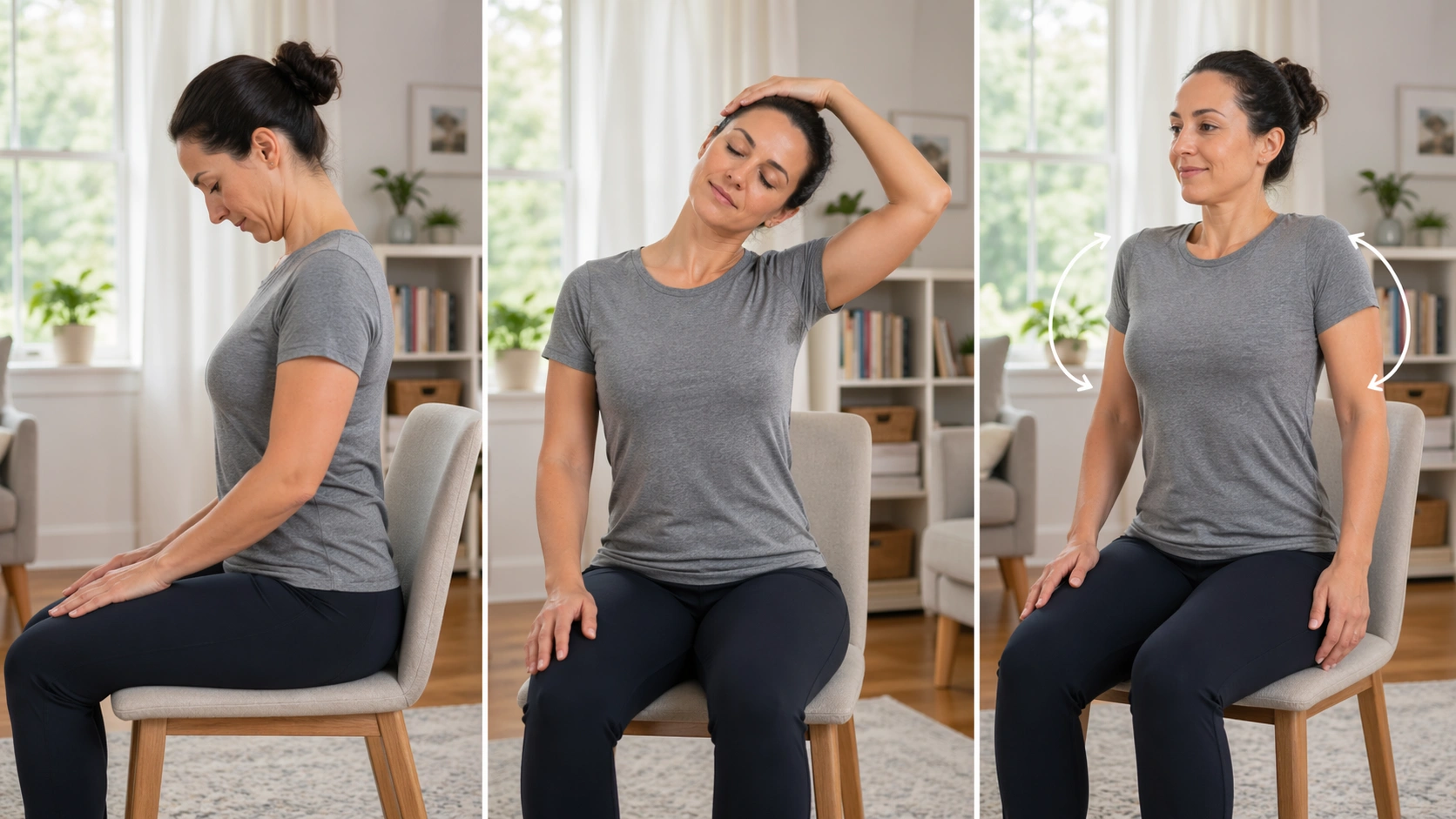
Step 3: Start with easy mobility moves
Do not yank your neck around. Start small. Move slowly. Stay in a comfortable range.
- Look straight ahead and take 3 slow breaths.
- Turn your head a little to the right, then back to center.
- Turn a little to the left, then back to center.
- Gently tilt one ear toward one shoulder.
- Repeat on the other side.
- Roll your shoulders backward 8 to 10 times.
If the area warms up and feels easier to move, you are on the right track.
Step 4: Try neck self massage
Use your fingertips on the muscles beside the neck, not the front of the throat. You can also massage the upper traps, the top of the shoulders, and the muscles between the shoulder blades. Those areas often hold more tension than people realize.
Use light to medium pressure. Hold on a tender spot for 20 to 30 seconds. Breathe slowly. If the pain gets sharper, back off.
Step 5: Reset posture and desk setup
If your setup keeps pulling you forward, the stiffness keeps coming back. Make these quick changes:
- Raise your screen closer to eye level
- Keep shoulders relaxed instead of shrugged
- Bring your phone higher instead of dropping your head
- Support your lower back when sitting
- Take a movement break every 30 to 60 minutes
Step 6: Repeat a short relief routine during the day
A two-minute routine done three or four times often works better than one long stretching session. I like this simple sequence:
- Heat or warm shower
- Shoulder rolls
- Chin tucks
- Gentle side bend stretch
- Upper trap self-massage
Best Stretches and Self Massage Techniques for a Stiff Neck
Chin tucks
This is one of my favorite moves for desk-related stiffness. Sit tall. Pull your chin straight back without tipping your head up or down. Hold for 3 to 5 seconds. Repeat 8 to 10 times.
Best for: forward head posture, phone use, office work
Side bend stretch
Sit tall. Gently lower one ear toward one shoulder until you feel a light stretch on the opposite side. Hold 15 to 20 seconds. Switch sides.
Best for: upper trap tightness, stress tension, waking up stiff
Shoulder rolls and scapular squeeze
Roll both shoulders backward 10 times. Then gently squeeze the shoulder blades together for 5 seconds. Repeat 5 to 8 times.
Best for: upper back tightness that pulls on the neck
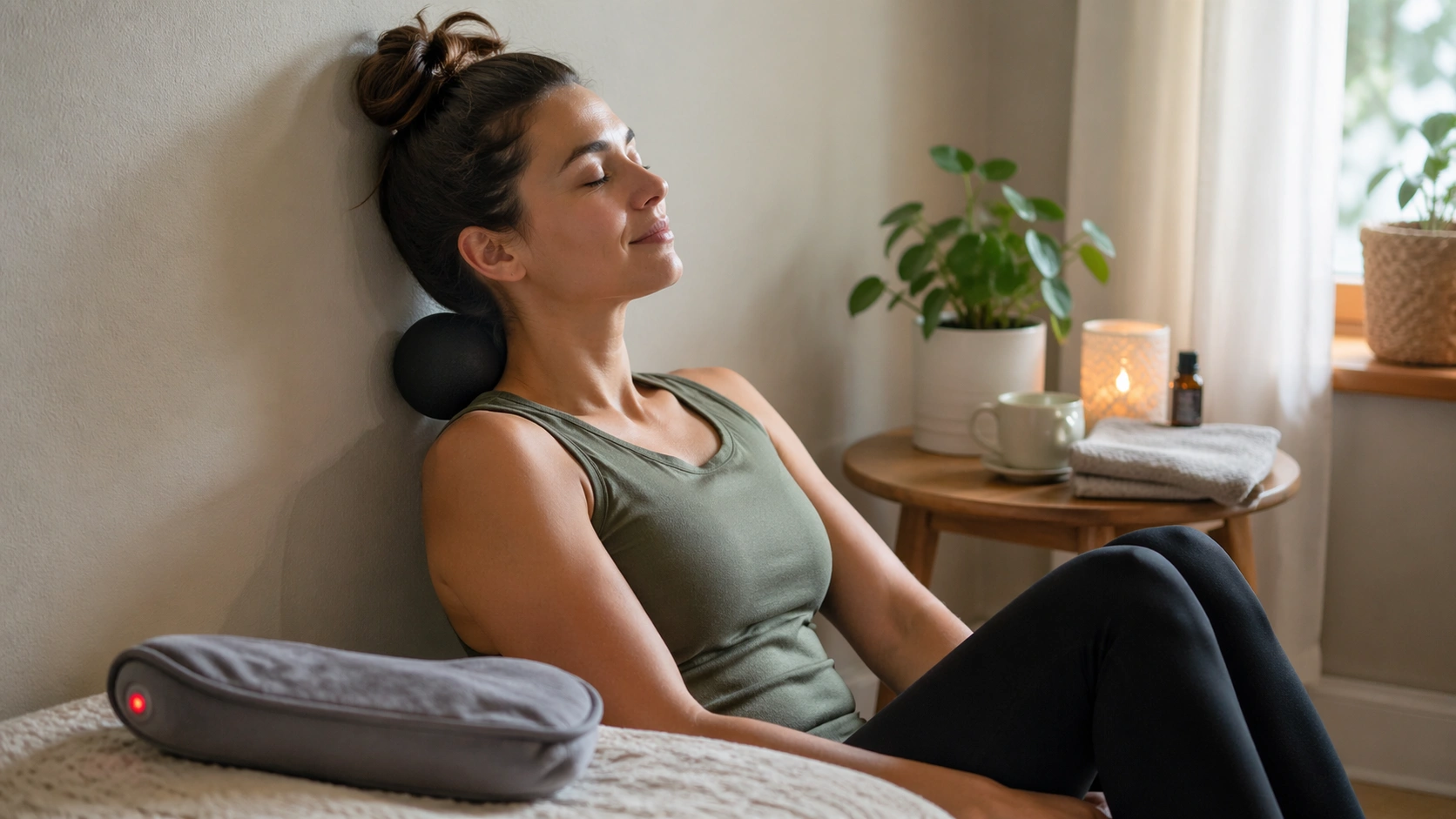
Tennis ball or peanut massage
Place a tennis ball or peanut massage ball between your upper back or upper shoulder and a wall. Lean in gently and move slowly. Keep pressure off the front of the neck and directly on the spine.
Best for: trigger points around the upper traps and shoulder blade area
Finger pressure on upper trap trigger points
Use your opposite hand to find a tight, sore spot on the top of the shoulder. Press gently and hold while breathing slowly. This often works well when your neck feels stiff from stress or long computer sessions.
For more stretch ideas, Healthline has a useful overview of stiff-neck self-care and mobility ideas.
Benefits and Best Uses
What works best for office workers
Office workers usually do best with chin tucks, shoulder blade work, light heat, and better screen height. The goal is not just short relief. It is reducing the posture habit that started the problem.
What works best after workouts
If your upper traps or shoulders feel sore after training, use light mobility, a warm shower, and short self-massage. Go easy if the muscles feel irritated or overworked.
What works best before bed
At night, I like a simple heat-and-breathe routine. Use gentle heat, do slow side bends, and relax the shoulders. This often helps if stress keeps your neck tense late in the day.
What works best for older adults needing gentle relief
Keep it simple. Heat, easy range-of-motion work, and very gentle massage are often the best place to start. Aggressive tools and forceful stretching usually are not the answer.
Common Neck Stiffness Problems and Quick Fixes
| Problem | Likely Trigger | What Usually Helps |
|---|---|---|
| Morning neck stiffness | Sleep position or pillow setup | Warm shower, gentle side bends, light shoulder rolls |
| Desk job neck pain | Forward head posture, long sitting | Chin tucks, screen height fix, movement breaks |
| Stress tension at the base of the neck | Upper trap tightness and shoulder shrugging | Heat, slow breathing, upper trap self-massage |
| Neck soreness after exercise | Overuse strain, tight traps, poor recovery | Light mobility, warm shower, easy massage |
| Can’t turn head fully to one side | Guarded muscle spasm or trigger point | Gentle movement only, heat, stop if pain sharpens |
| Neck tightness with upper back stiffness | Weak postural support and long sitting | Shoulder blade squeezes, wall ball massage, posture reset |
Common Mistakes to Avoid
- Stretching too hard too soon
- Using a massage gun aggressively on the neck
- Ignoring your desk setup and phone posture
- Only treating the neck and skipping the upper back and shoulders
- Pushing through sharp pain, tingling, or arm symptoms
- Using heat when the area feels acutely swollen or freshly injured
One mistake I see a lot is going straight to high pressure. With neck stiffness, lighter often works better.
Safety Tips and Best Practices
Who should be careful with neck massage or stretching
- People with recent injuries or whiplash
- Anyone with severe pain after a fall or car accident
- People with numbness, tingling, or weakness
- Anyone with fever, severe headache, or pain that feels unusual
- People who feel worse with basic movement instead of better
Signs you should see a healthcare professional
Get checked if the stiffness lasts more than a few days without improving, keeps coming back, or travels into your shoulder or arm. Mayo Clinic and Cleveland Clinic both note that symptoms like arm weakness, numbness, or radiating pain deserve more attention.
How often to do neck mobility safely
For everyday stiffness, I prefer short sessions done a few times a day. Think 1 to 3 minutes at a time. Stop if pain gets stronger, sharper, or more nerve-like.
Helpful Tools That Can Make Relief Easier at Home
| Tool | Best For | Why It Helps | Who It Fits Best |
|---|---|---|---|
| Heating pad | Stress tension, morning stiffness | Warms tight muscles before movement | Home users, office workers, older adults |
| Shiatsu neck massager | Upper trap tightness and daily tension | Provides steady kneading without using your hands | People who want easy home relief |
| Peanut or massage ball | Trigger points in shoulders and upper back | Targets tight spots against a wall | Users comfortable with self-massage |
| Cervical support pillow | Waking up stiff | Can support a better sleep position | Side and back sleepers |
Microwavable or Electric Neck and Shoulder Heating Pad
A simple first-step tool that can make stiff muscles easier to move before stretching or self-massage.
Shiatsu Neck and Shoulder Massager
Good for daily tension when you want light kneading at home without working your hands and shoulders.
Heat vs Stretching vs Self Massage vs Neck Massager
| Method | Works Best When | Main Benefit | Watch Out For |
|---|---|---|---|
| Heat | You feel tight, guarded, or stiff from sitting | Helps muscles relax before movement | Avoid overusing on irritated or freshly injured areas |
| Stretching | Your neck feels mildly tight, not sharply painful | Can improve range of motion | Do not force deep stretches |
| Self massage | You can feel trigger points in traps or upper back | Targets sore tight spots | Keep pressure light to medium |
| Neck massager | You want easy home relief with less effort | Convenient daily use | Use low intensity and avoid sensitive areas |
If I had to keep it simple, I would say this: start with heat, add gentle movement, then use self-massage or a neck massager if the area still feels guarded.
FAQ
How do you ease neck stiffness fast at home?
Use gentle heat, slow neck and shoulder movement, and light self-massage. Most people do better with a short routine repeated during the day instead of one hard stretch session.
Is heat or ice better for neck stiffness?
For everyday tightness and muscle tension, heat usually feels better. Ice may be more useful right after a fresh strain or when the area feels irritated.
Should you stretch a stiff neck?
Yes, but keep it gentle. Stay in a comfortable range and avoid forcing your head into a deep stretch.
Can massage help neck stiffness?
Yes, light massage often helps relax tight muscles and trigger points around the neck, shoulders, and upper back. Keep pressure moderate and avoid sensitive areas.
Why is my neck stiff after sleeping?
It is often linked to sleep position, pillow height, or sleeping with the neck turned too long. A better pillow setup and a short morning mobility routine may help.
Are neck massagers worth it?
They can be worth it if you deal with frequent muscle tightness and want an easy home tool. They work best as part of a routine, not as the only fix.
When should I worry about neck stiffness?
Get medical advice if you also have numbness, weakness, pain shooting into the arm, fever, severe headache, or pain after an injury.
Conclusion
For most people, the best way to ease neck stiffness is simple: warm the area, move it gently, massage the tight muscles lightly, and fix the habit that keeps bringing the tension back. In my experience, consistency matters more than intensity. If you want an easier routine, a heating pad or gentle neck massager can be a helpful add-on without overcomplicating things.