
Written by Alex Turner
Quick Answer:
Trigger point massage uses focused pressure on sensitive areas within tight muscle tissue. The goal is to reduce local muscle tension and support easier movement. Pressure should be tolerable, not sharply painful, and persistent or unusual symptoms should be assessed by a healthcare professional.
A focused approach to tight, sensitive muscles
Trigger point massage is a focused form of hands-on bodywork that targets areas of muscle that feel unusually tight or tender. Rather than treating the whole body with the same pressure, the technique concentrates attention on specific spots that may be contributing to discomfort or restricted movement.
The experience can range from gentle pressure to a stronger but manageable sensation. Understanding what the technique is intended to do—and what it cannot establish on its own—can help you use it more thoughtfully.
This article is for general educational information only. It does not diagnose, treat, cure, or prevent any condition. It does not replace advice from a licensed healthcare professional. Readers should seek professional help for severe, worsening, unusual, or persistent symptoms.
What are trigger points?
A trigger point is commonly described as a particularly sensitive area within a muscle or surrounding tissue. It may feel tighter or more tender than nearby tissue, and pressing the area can sometimes reproduce discomfort that a person recognizes from another nearby location.
That description does not mean every tender spot is a trigger point, and finding one does not identify the underlying cause of pain. Muscle soreness can have many possible explanations, including recent activity, prolonged positioning, repetitive movement, or an injury. A healthcare professional is better placed to evaluate symptoms that are persistent, severe, or difficult to explain.
Trigger point massage therefore works best as a comfort-focused technique rather than a way to determine what is medically causing a symptom.
What makes the approach different?
General massage may use broad strokes across an area, while trigger point work usually spends more time on selected sensitive spots. A practitioner may apply pressure, hold it briefly, release it, and then reassess how the area feels and moves.
The exact response varies. Some people notice a temporary sense of looseness or easier movement, while others may find focused pressure uncomfortable or simply not useful.
How does trigger point massage work?
The basic idea is straightforward: identify a sensitive area, apply controlled pressure, monitor the response, and avoid excessive force. The proposed effects involve changes in muscle tension, local sensitivity, and how the nervous system responds to pressure, although the precise biological mechanisms behind trigger-point phenomena remain an area of ongoing discussion.
During a session, the practitioner may first ask where you feel discomfort and whether particular movements make it better or worse. They may then examine the surrounding muscles before using focused pressure.
The pressure should remain within a tolerable range. A sensation of pressure or moderate tenderness can occur, but sharp, burning, electric, or escalating pain is a reason to communicate immediately and change the approach.
Importantly, stronger pressure is not automatically more effective. The purpose is controlled input, not forcing a muscle to tolerate as much pressure as possible.
Trigger-point process: practical guide
Identify a sensitive muscle area.
Use controlled, tolerable pressure.
Notice comfort and movement changes.
Stop or adjust if symptoms worsen.
This sequence highlights an important principle: the response during and after the technique matters more than chasing a particular amount of pressure.
What might you feel?
You might feel pressure, tenderness, a stretching sensation, or temporary soreness afterward. Some people report that a previously tight area feels easier to move after focused work. Others may not notice a meaningful change.
Note: A tender spot is not automatically the source of a symptom. Avoid assuming that every painful area needs increasingly firm pressure.
Common situations and possible explanations
Several everyday factors can make muscles feel tight or sensitive. The table below is a practical way to separate common contributors from situations that deserve more caution.
| Situation | Possible contributor | Practical response |
|---|---|---|
| After unusual activity | Temporary muscle soreness | Gentle movement and recovery |
| Long sitting | Prolonged positioning | Change position regularly |
| Repeated movement | Overuse or local irritation | Reduce aggravating activity |
| Severe or unusual pain | Needs assessment | Seek professional guidance |
Swipe left/right to see the full table →
Potential benefits and realistic limits
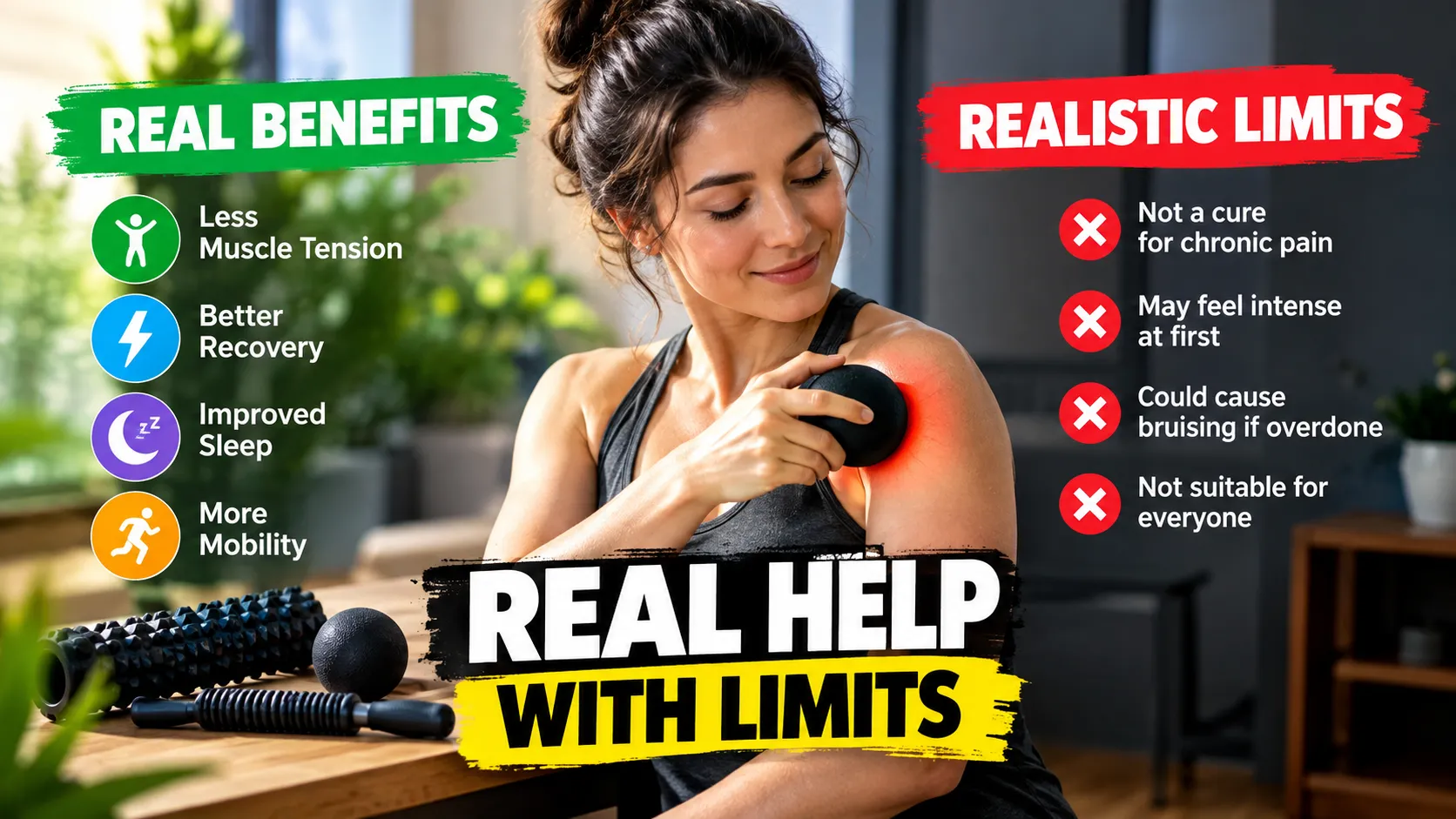
Focused massage may support short-term comfort, relaxation, and easier movement for some people. It can also help someone become more aware of which positions or activities make a muscle area feel tense.
Those possible benefits should not be confused with diagnosing or correcting the underlying reason for pain. Massage does not establish whether symptoms come from a muscle, joint, nerve, injury, or another source.
What the technique may support
May help some people feel temporarily more comfortable.
May make a tight area feel easier to move.
Focused bodywork may feel calming for some people.
Can highlight positions or activities linked with tension.
The practical takeaway is to judge the technique by a reasonable response, such as comfortable movement or reduced tension, rather than by how painful the pressure feels.
Benefits versus limitations
| May help with | Does not establish |
|---|---|
| Temporary muscle comfort | The medical cause of pain |
| A sense of looseness | That a painful spot is a true trigger point |
| Relaxation during bodywork | That symptoms will permanently disappear |
| Better awareness of muscle tension | Whether another treatment is medically needed |
Swipe left/right to see the full table →
A practical routine for gentle self-care
If you are considering self-massage for ordinary muscle tightness, keep the approach simple. The goal is controlled comfort rather than aggressive pressure.
Choose a manageable area. Start with a muscle that feels tight after normal activity rather than an unexplained or severe pain site.
Use light-to-moderate pressure. Let the tissue respond instead of immediately pressing as hard as possible.
Pause and reassess. Notice whether the sensation stays manageable and whether movement feels comfortable.
Stop if symptoms escalate. Sharp, unusual, radiating, or worsening pain should not be pushed through.
Give the area time. Avoid repeatedly working the same sensitive spot just because it remains tender.
Practical routine flow →
Comfortable, familiar muscle tightness
Stay within a tolerable range
Check sensation and movement
Stop when symptoms become sharp or worse
This routine is a general comfort approach, not a treatment plan. If a symptom keeps returning or does not improve, the more useful next step may be professional evaluation rather than increasingly frequent massage.
Safe routine versus risky routine
| Safer choice | Riskier choice |
|---|---|
| Moderate, tolerable pressure | Maximum pressure |
| Short, controlled sessions | Repeatedly attacking a sore spot |
| Stop when symptoms worsen | Pushing through sharp pain |
| Professional evaluation for persistent symptoms | Using massage to ignore ongoing symptoms |
Swipe left/right to see the full table →
Tip: Think “comfortable pressure with feedback,” not “the more it hurts, the better it works.” Your response during and after the technique is more useful than chasing intense sensations.
How often should you use it?
There is no single schedule that fits everyone. Frequency should depend on why you are using massage, how your body responds, and whether the underlying issue is improving.
| Pattern | Practical approach |
|---|---|
| Occasional tightness | Use only when helpful and comfortable |
| Soreness after activity | Prioritize gentle recovery and movement |
| Repeated symptoms | Consider professional assessment |
| Symptoms worsening | Stop self-massage and seek guidance |
Swipe left/right to see the full table →
The key decision is not whether you can fit more sessions into your routine. It is whether the approach remains comfortable and whether your symptoms are moving in a sensible direction.
Warning: Do not use focused pressure as a way to push through severe pain, a new significant injury, unexplained swelling, numbness, weakness, fever, chest pain, or other unusual symptoms.
Common mistakes that can reduce comfort
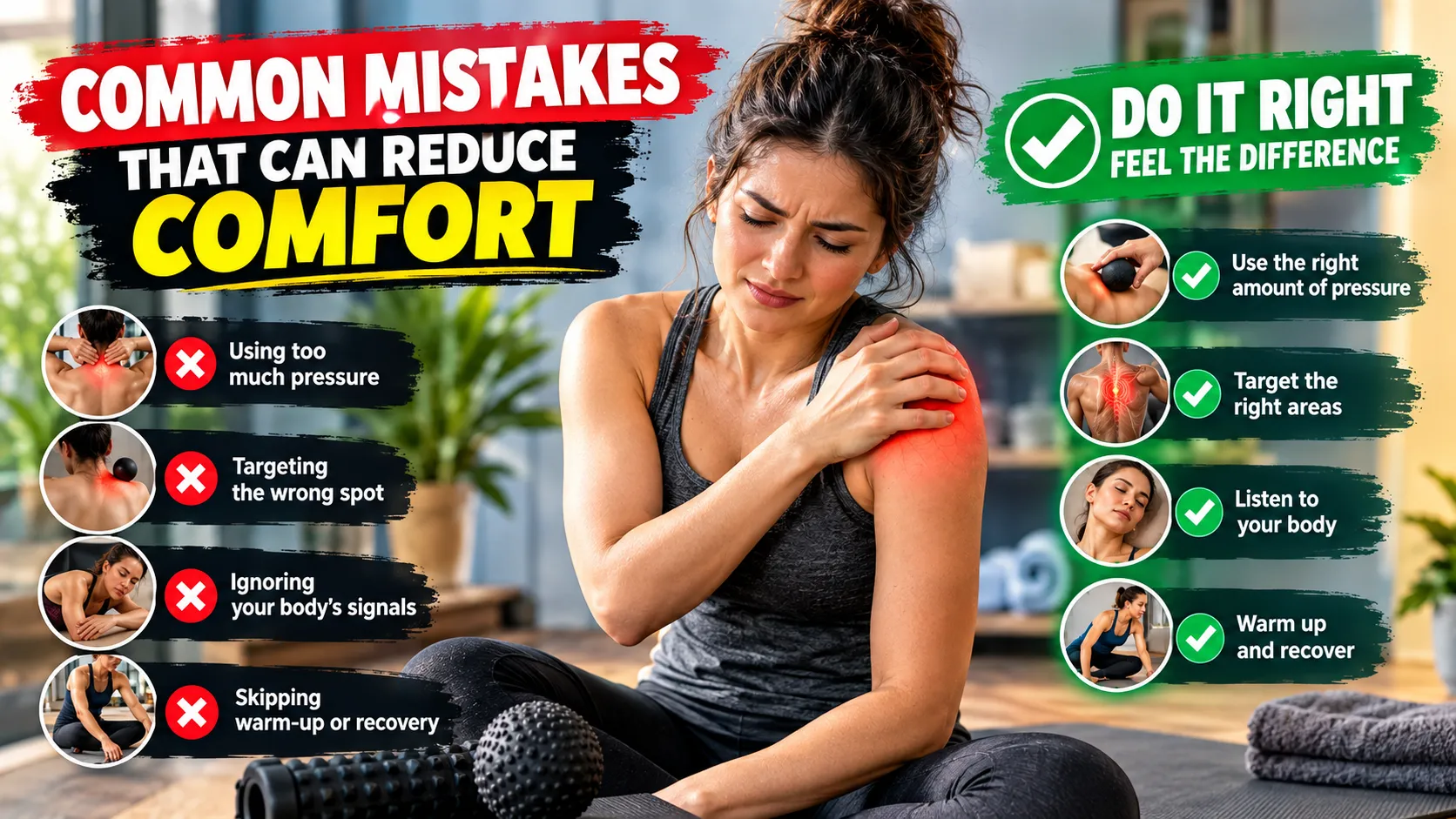
One of the most common mistakes is assuming that every painful spot needs deeper pressure. A sensitive area can become more irritated if it is repeatedly pressed despite worsening symptoms.
Trigger-point practice map
Identify the area and consider what activity or position may have contributed.
Use controlled pressure and communicate if another person is providing the massage.
Notice comfort and movement instead of repeatedly checking the tender spot.
Shift from repeated self-care toward professional evaluation.
Another mistake is focusing only on the painful spot while ignoring the activity that repeatedly aggravates it. Adjusting posture, taking movement breaks, modifying repetitive tasks, and allowing appropriate recovery can be useful parts of a broader comfort routine.
Mistake versus better choice
| Mistake | Better choice |
|---|---|
| Pressing until it hurts | Keep pressure tolerable |
| Treating every tender spot | Focus on ordinary, familiar muscle tightness |
| Ignoring repeated symptoms | Consider an assessment |
| Assuming massage fixes the cause | Use it as one comfort strategy |
Swipe left/right to see the full table →
When should you contact a professional?
Massage is not appropriate as a substitute for evaluation when symptoms suggest something more than ordinary muscle tension. Seek professional medical guidance for severe, worsening, unusual, or persistent symptoms.
When to contact a professional: Seek prompt medical advice for severe or worsening pain, numbness, weakness, significant injury, fever, chest pain, loss of bladder or bowel control, or symptoms that remain unexplained or persistent.
Safety decision path
Gentle self-care may be reasonable if symptoms are familiar and manageable.
Consider professional assessment rather than repeatedly increasing massage.
Stop self-massage and seek appropriate medical help.
This decision path keeps massage in its proper role: a possible comfort strategy for suitable situations, not a diagnostic test or replacement for healthcare.
A simple red-flag checklist
Pause and reassess if you notice:
These signs do not tell you what condition is present. They indicate that focused massage should not be used as the main response without appropriate professional assessment.
The bottom line
Trigger point massage is a focused approach that applies controlled pressure to sensitive areas of muscle. It may support temporary comfort, relaxation, or easier movement for some people, but the exact mechanism and individual response can vary.
Use tolerable pressure, pay attention to how your body responds, and avoid treating severe or unexplained symptoms with repeated self-massage. Seek professional help when symptoms are severe, worsening, unusual, persistent, or not improving.
Frequently Asked Questions
How does trigger point massage work?
It uses controlled pressure on sensitive areas of muscle, with the goal of supporting comfort and easier movement. The precise biological mechanism is not fully settled.
Should trigger point massage hurt?
Some pressure or tenderness can occur, but sharp, burning, electric, or worsening pain is not a reason to keep pushing harder.
Can I do trigger point massage myself?
For ordinary, familiar muscle tightness, gentle self-massage may be reasonable. Avoid using it to manage severe, unexplained, or worsening symptoms.
Does trigger point massage permanently remove pain?
It should not be treated as a guaranteed or permanent solution. Persistent pain may require evaluation to understand the underlying cause.
How often can I use trigger point massage?
There is no universal schedule. Use it only when comfortable and reassess if symptoms persist, repeatedly return, or become worse.
When should I stop trigger point massage?
Stop if pressure causes sharp or worsening symptoms, and seek professional guidance for severe, unusual, persistent, or red-flag symptoms.
Is a tender spot always a trigger point?
No. A tender area can have several possible explanations, so tenderness alone does not establish that a particular spot is causing your symptoms.
Author
-

I’m Alex Turner, a massage product reviewer and wellness writer at RemedyTip. I specialize in researching, evaluating, and comparing massage and recovery products to help readers make informed purchasing decisions. My focus is on practical, evidence-informed product guidance covering muscle recovery, relaxation, everyday comfort, and wellness.
I take a research-driven approach to every product I review. I examine product specifications, features, materials, performance claims, user feedback, durability, comfort, ease of use, and overall value. When appropriate, I also consult trusted industry and health-related sources to verify important information and provide readers with a more complete and balanced view.
I cover a wide range of products, including massage guns, handheld massagers, neck and shoulder massagers, foot massagers, massage chairs, foam rollers, and other recovery tools. Rather than focusing only on marketing claims, I look at how products compare in real-world use and who they are actually suitable for. I also consider different budgets, use cases, and user needs when making recommendations.
At RemedyTip, I’m committed to accuracy, transparency, and unbiased product information. I clearly distinguish between manufacturer claims, available evidence, and my own product analysis so readers can understand the basis of each recommendation. I continuously research new products, technologies, and developments in the massage and recovery space to keep my content current and useful.
My goal is simple: to provide trustworthy, easy-to-understand information that helps readers choose massage and recovery products with greater confidence.

