By Ryan Mitchell | Wellness & Relaxation
Quick Answer: The best foods and drinks for stress relief are steady, balanced choices: water, regular meals with protein and fiber, fruits, vegetables, whole grains, and limited caffeine, alcohol, and sugar. They may support mood and energy on hard days, but they do not treat anxiety or any condition.
Stress changes what you reach for, and when. A skipped lunch, a third coffee, or a late-night snack can leave you feeling more on edge than before. This guide covers simple foods and drinks for stress relief, shows how to fit them into a normal day, and explains when food alone is not enough.
Balanced meals Hydration Caffeine check Evening wind-down Safety first
This article is for general educational information only. It does not diagnose, treat, cure, or prevent any condition. It does not replace advice from a licensed healthcare professional. Readers should seek professional help for severe, worsening, unusual, or persistent symptoms.
Why Stress Changes What You Eat and Drink
Stress puts your body on alert. Appetite may jump or disappear, and your brain often asks for fast energy like sweets, chips, or another coffee. That is a common response, not a personal failure.
The trouble starts when quick fixes become the whole plan. Long gaps between meals, heavy caffeine, and too little water can leave you shaky, tired, or irritable. Those feelings can then feel like even more stress. In my own routine, I notice that a steady day of eating makes busy afternoons feel far easier to handle.
Food will not remove stress. What it can do is give your body steadier fuel while you deal with the real causes. Here are four common eating triggers on stressful days.
Common Stress-Eating Triggers (General Guide)
Busy mornings push food aside. By mid-afternoon, hunger can drive rushed, sugary choices.
Sweet and salty snacks feel rewarding fast. The lift often fades quickly, which can invite more snacking.
Extra coffee or energy drinks can add jitters and make sleep harder, which may feed the next day’s stress.
Too little water can feel like fatigue. Alcohol may feel relaxing at first but can disturb sleep later.
If one of these sounds familiar, start there. Fixing one habit is easier than changing everything at once.
Foods and Drinks for Stress Relief: What to Keep on Hand
You do not need special products. Most helpful picks are ordinary, affordable items from a regular grocery store. The goal is balance: some protein, some fiber, some healthy fat, and plenty of fluids.
Everyday Food and Drink Fit Table
Swipe left/right to see the full table →
| Food or drink | How it may help | Easy way to use it |
|---|---|---|
| Water and water-rich fruit | Mild dehydration can feel like tiredness or headache | Keep a bottle in view; snack on oranges or cucumber |
| Whole grains (oats, brown rice) | Slow-digesting carbs and fiber for steadier energy | Oatmeal at breakfast; whole-grain bread at lunch |
| Protein foods (eggs, fish, beans, yogurt) | Can help you feel full between meals | Add one protein to every meal |
| Fruits and vegetables (berries, greens) | Provide fiber, vitamins, and plant compounds | Fill half the plate at lunch or dinner |
| Nuts and seeds | Healthy fats and minerals such as magnesium | A small handful as a snack (skip if allergic) |
| Warm decaf drinks | May make a calming pause easier | Sip decaf tea or lemon water slowly in the evening |
Think of this table as a menu, not a rulebook. Pick two or three items you already enjoy and use them often. A food you like and will actually eat beats a perfect food you ignore.
Note: You may see claims that one “superfood” fixes stress. No single food does that. Patterns over several weeks matter more than any one meal.
A Simple Daily Routine for Stress-Friendly Eating
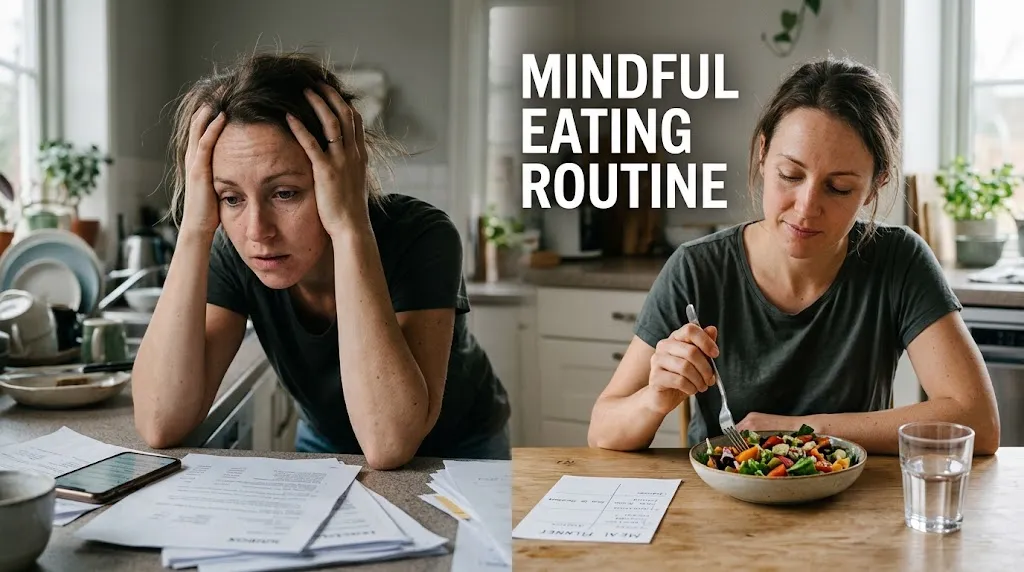
For example, a normal workday might include a glass of water, a protein-rich breakfast, a mid-morning snack, a balanced lunch, an earlier caffeine cutoff, and a warm decaf drink at night. Here is how to build that rhythm. Adjust the times to fit your own schedule.
One-Day Flow Chart
This chart shows the same routine at a glance, from morning to night.
Water first
→
Protein + fiber
→
Fruit or nuts
→
Balanced plate
→
Last caffeine
→
Warm decaf drink
Use this flow as a guide, not a strict schedule. Shift workers and parents of small children can slide each step to match their own hours.
How Often and When Table
Swipe left/right to see the full table →
| Moment | Practical target | Why it helps |
|---|---|---|
| On waking | One glass of water | Replaces fluids lost overnight |
| Every 3-4 hours | A meal or small snack | Helps avoid energy crashes |
| Each meal | Protein plus fiber | Supports steadier fullness |
| After early afternoon | Limit caffeine | May protect sleep, which affects stress |
| Once or twice a week | Plan and prep meals | Cuts last-minute choices when busy |
Prepping ahead is the habit people skip most, and it often makes the biggest difference on chaotic days.
Mistakes That Make Stress Eating Harder
Even with good intentions, a few habits can undo your effort. When you build your own plan for foods and drinks for stress relief, watch for these common traps and the small swaps that fix them.
Mistake vs Better Choice Table
Swipe left/right to see the full table →
| Common mistake | Better choice |
|---|---|
| Skipping breakfast, then eating sweets at 3 p.m. | Eat a small protein-rich meal earlier in the day |
| Using energy drinks to push through | Water, a modest coffee or tea, and a real snack |
| Relying on alcohol to unwind | A warm decaf drink, a short walk, or a call with a friend |
| Cutting out whole food groups | Keep balanced meals unless a professional advised otherwise |
| Eating at the desk while scrolling | Take ten quiet minutes away from screens |
Each fix is small. You are not banning comfort foods, only giving them a better supporting cast.
Not every habit carries equal weight. The meter below shows typical routine priority as a practical guide, not scientific data.
Typical Routine Priority (Practical Guide)
Start at the top. Regular meals and fluids usually give the biggest return for the least effort, while treats can be enjoyed without guilt.
Troubleshooting Common Problems
When You Crave Sweets or Salty Snacks
Eat a balanced snack first, such as apple slices with peanut butter. If the craving remains, enjoy a small portion slowly and sitting down. Pairing a treat with protein or fiber often feels more satisfying than eating it alone.
When You Have No Appetite
Stress can switch hunger off. Try small, easy items like yogurt, a smoothie, soup, or toast, and keep sipping fluids. If your appetite stays low for several days, talk with a professional.
When Caffeine Makes You Jittery
Cut back gradually, since stopping suddenly may cause headaches in some people. Try smaller cups, half-decaf blends, or switching to tea. The Mayo Clinic caffeine guide explains general limits for adults.
When Your Stomach Feels Upset
Stress can affect digestion. Gentle foods like oatmeal, bananas, rice, and plain yogurt are often easier to tolerate, while very spicy or greasy meals may feel worse. Ongoing stomach problems deserve a professional’s opinion.
Here is a quick do-and-don’t split you can screenshot for busy days.
Eat at regular times.
Carry water with you.
Choose fiber and protein.
Set a caffeine cutoff.
Sit down to eat.
Skip meals to “save time.”
Rely on energy drinks.
Use food or alcohol as your only coping tool.
Try extreme detoxes.
Compare your plate to others.
If the Don’t column looks like your week, pick one item to swap, not all of them.
Tip: Keep a two-minute note on your phone for one week. Write what you ate, what you drank, and how you felt. Patterns often show up fast, and the notes give you something concrete to share with a professional.
Pro Tips for Busy Weeks
Good intentions fade when you are tired, so make healthy choices the easy ones.
Keep nuts, whole-grain crackers, and fruit where you work. When hunger hits, the better choice is already within reach.
Make a double batch of soup, beans, or roasted vegetables. Tomorrow’s lunch is then ready without extra effort.
Fill a bottle each morning and finish it by evening. Lemon slices or berries can make plain water more appealing.
Sharing a meal gives your mind a break from the day. Even a short chat with a coworker or family member can help the pause feel restful.
Warning: Check with a doctor or pharmacist before changing your diet if you take prescription medication, are pregnant or nursing, have diabetes or kidney disease, or have a history of disordered eating. Herbal teas and supplements can interact with medicines, so this guide does not recommend them.
Simple Tools That Make the Routine Easier
You can follow this plan with items you already own. A few basic tools just reduce friction on hectic days.
Tool Fit Table
Swipe left/right to see the full table →
| Tool | Why it helps | Best fit for |
|---|---|---|
| Reusable water bottle | Keeps sipping visible | Desk workers |
| Glass meal containers | Store prepped meals | Busy weeks |
| Small insulated lunch bag | Carries snacks safely | Commuters |
| Favorite mug | Makes a warm evening ritual feel special | Night-time wind-down |
Choose only what you will really use. Tools support the routine, but the habits do the work.
When Results Don’t Improve: Know the Signs
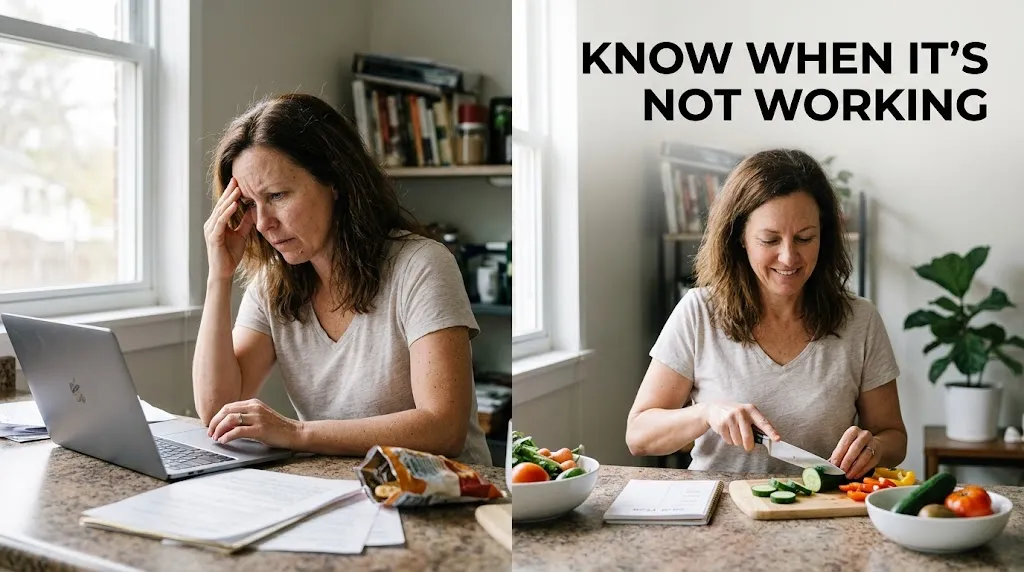
Better eating can support daily coping, but it has limits. If you eat well and still feel overwhelmed, that is useful information, not failure. The National Institute of Mental Health shares general information about stress and when to get help.
Use the checklist below. If several items match your life, reach out to a professional rather than waiting.
Red-Flag Checklist
The first four items call for a conversation with a professional soon. The last two need urgent help right away.
Self-Care vs Seek-Help Table
Swipe left/right to see the full table →
| Area | Self-care may be enough | Seek professional help |
|---|---|---|
| Stress level | A busy week that eases afterward | Lingers long after the pressure ends |
| Sleep | An occasional poor night | Poor sleep most nights for weeks |
| Appetite | A short-term change | A marked change that continues |
| Daily life | You still manage work and home | You feel panicky, hopeless, or unable to cope |
When to contact a professional
Reach out to a doctor, registered dietitian, or licensed mental health professional if stress feels unmanageable, your eating changes sharply or feels out of control, or you rely on alcohol to cope. Seek urgent medical help for chest pain, trouble breathing, or thoughts of harming yourself. In the U.S., you can call or text 988 at any time.
This article may contain affiliate links. If you buy through these links, we may earn a small commission at no extra cost to you. We only mention products that fit the topic and do not replace professional medical advice.
Insulated Stainless Steel Water Bottle
May make staying hydrated easier throughout the day, at your desk or on the go.
Glass Meal Prep Containers With Lids
Can help with routine consistency by making planned meals and snacks easy to grab.
Frequently Asked Questions
What are the best foods and drinks for stress relief?
Balanced meals with protein, fiber, fruits, vegetables, and plenty of water are a good base. They may support steady energy, but they do not treat stress or anxiety.
Does coffee help or worsen stress?
It depends on the person. Some feel alert, while others feel jittery or sleep poorly, so try a smaller amount earlier in the day.
Is herbal tea a good way to relax?
Many people enjoy a warm cup as a calming ritual, but herbal blends can interact with some medicines. Ask a pharmacist or doctor first if you take medication or are pregnant.
Can dark chocolate help with stress?
A small piece can be an enjoyable treat. It also contains sugar and some caffeine, so keep portions modest.
How long until I notice a difference?
It varies. Some people feel steadier within days of regular meals and water, while others need longer or need extra support.
Should I take supplements for stress?
This article does not recommend supplements. Talk with a doctor or pharmacist before trying any, especially if you take medication.
Final Thoughts
The most useful foods and drinks for stress relief are the simple ones you can repeat: regular meals, steady water, colorful plants, and a caffeine cutoff that protects your sleep. Start with one small change this week, then add another when it feels natural.
Food can support your day, but it cannot replace care. If your stress is severe, worsening, unusual, or not improving, please talk with a qualified healthcare professional.
Author
-

Hi, I’m Ryan Mitchell, a wellness and relaxation writer at RemedyTip.com, where I focus on helping readers better understand stress management, relaxation techniques, mindfulness, sleep improvement, and everyday wellness habits. I have developed a strong knowledge of the Wellness & Relaxation field through sustained learning, in-depth research, and a continued commitment to exploring practical approaches to well-being.
My work focuses on researching wellness topics, examining available evidence, and turning complex information into clear, accessible, and actionable guidance. I’m continually exploring new findings, relaxation practices, and lifestyle strategies to help readers make informed decisions about their daily wellness routines. At RemedyTip.com, my goal is to share trustworthy, research-informed content that encourages healthier habits, greater relaxation, and a more balanced lifestyle.