By Alex Turner · General educational health information
Quick Answer: No good evidence shows that trigger point massage removes “toxins” from the body. Massage may support temporary comfort, relaxation, and movement, but soreness or feeling tired afterward does not mean toxins are being released. Your body already has organs that process and remove waste.
What Trigger Point Massage Can—and Cannot—Do
Trigger point massage uses focused pressure on areas of muscle and soft tissue that feel especially tender or tight. People often use it as part of a comfort routine when certain muscles feel tense after work, exercise, prolonged sitting, or repetitive movement.
The important distinction is between feeling better and removing toxins. Massage may influence comfort and relaxation, but that does not mean unwanted substances are being flushed out through the muscles.
Safety & Trust Note: This article is for general educational information only. It does not diagnose, treat, cure, or prevent any condition. It does not replace advice from a licensed healthcare professional. Readers should seek professional help for severe, worsening, unusual, or persistent symptoms.
The “Toxin Release” Claim: Myth or Fact?
The idea that massage “releases toxins” is common in wellness marketing and everyday conversation. It is also easy to understand why the claim sounds believable. A firm massage changes how the area feels, the skin may become warmer or pinker, and a person may feel relaxed, tired, or mildly sore afterward.
Those sensations do not establish that toxins have left the muscle. The word toxin also has a specific meaning in biology: it generally refers to a poisonous substance produced by a living organism. In casual wellness language, however, “toxins” is often used much more broadly for waste products or substances that supposedly build up in tissues.
The body has normal systems for handling waste and unwanted substances. The liver, kidneys, lungs, digestive tract, and other processes have important roles in maintaining internal balance. Massage should not be presented as a substitute for those normal functions or as a special detoxification procedure.
Research on massage therapy does support some possible short-term effects for certain pain and comfort concerns, but the mechanisms are not fully understood. That is different from showing that massage removes toxins from muscle tissue.
Note: A change in how a muscle feels after massage is not the same thing as evidence that a substance has been “flushed out.” Comfort, relaxation, pressure sensitivity, and temporary soreness can have several possible explanations.
Myth vs Fact: What the Sensations Mean
Swipe left/right to see the full table →
| Common belief | More careful interpretation |
|---|---|
| Soreness means toxins left the muscle | Soreness can reflect pressure or tissue irritation |
| Feeling relaxed proves detox | Relaxation is a possible massage response |
| Tender spots contain trapped waste | Tenderness does not prove toxin buildup |
| More pressure means more detox | More pressure can increase discomfort or injury risk |
This distinction matters because it prevents a common mistake: increasing pressure simply because a session does not feel intense enough. A massage does not need to hurt to be useful as a comfort practice.
Practical evidence dashboard
Practical guide, not scientific measurements.
The visual above is a practical way to separate reasonable expectations from the detox claim. Massage may be useful as a comfort-focused practice, while the specific idea of removing toxins from muscle has not been established.
Why Can Trigger Point Massage Feel So Intense?
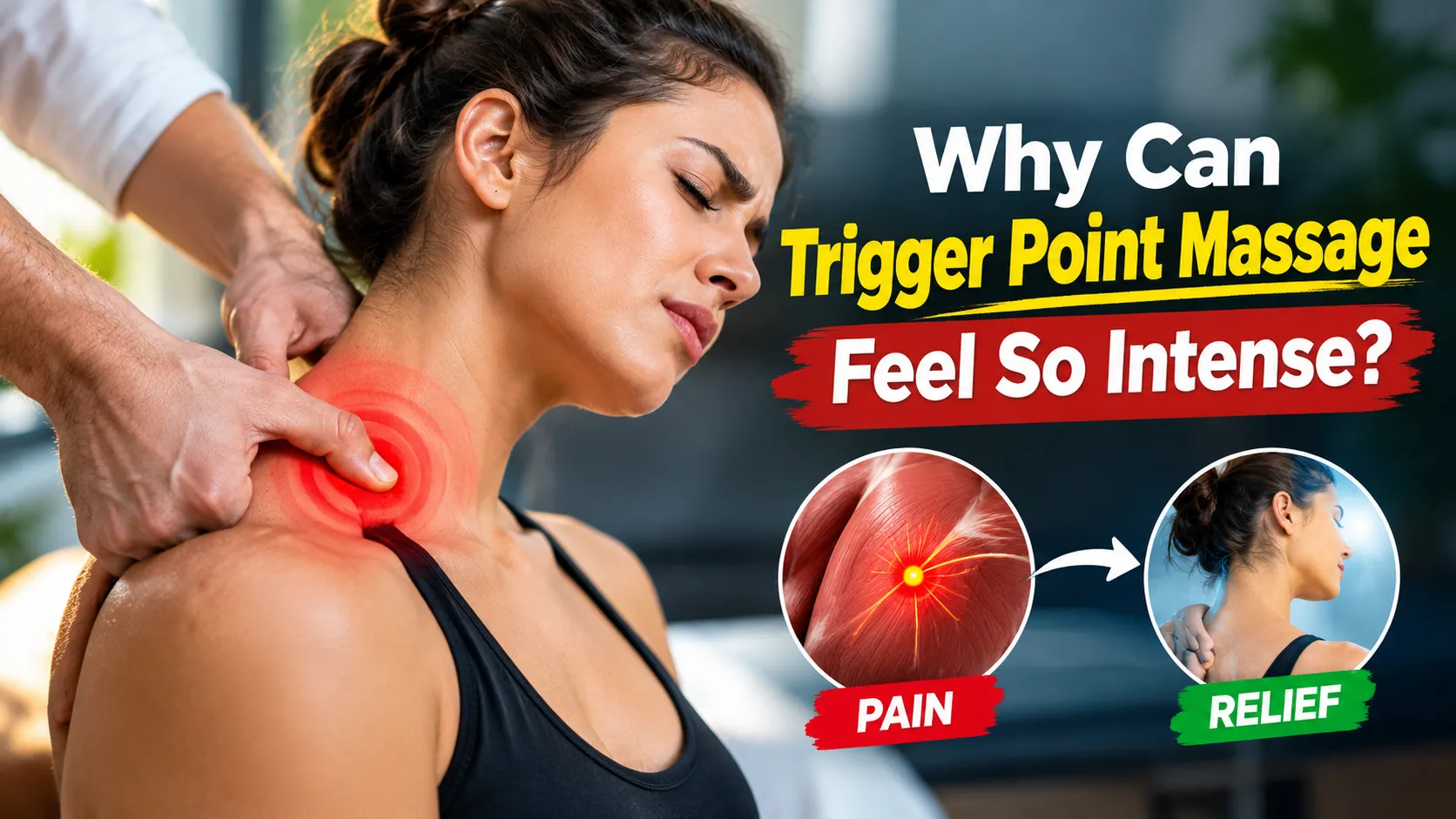
Trigger point work often feels different from light, relaxing massage because pressure is concentrated on a small area. When a tender spot is pressed, the sensation can be sharp, achy, or uncomfortable. Some people also notice that the area feels different for a while afterward.
That does not mean the muscle was storing toxins. A more useful question is whether the pressure is appropriate for your comfort and whether the area settles afterward.
Trigger-point sensation map
Focused contact may feel intense because the area is sensitive.
A calmer feeling may follow when the session is comfortable.
Mild temporary tenderness can occur after firm work.
Severe or unusual symptoms need more attention.
In other words, intensity is not a reliable measure of effectiveness. If you repeatedly need very hard pressure to feel that a session “worked,” it is worth changing the approach rather than chasing stronger sensations.
Possible Reasons for Post-Massage Soreness
Swipe left/right to see the full table →
| What you notice | Possible explanation |
|---|---|
| Mild muscle tenderness | The pressure may have been firm |
| Temporary fatigue | Relaxation or the overall session experience |
| Bruising | Pressure may have been too forceful |
| Severe or worsening pain | Needs professional assessment |
The table is not a diagnostic tool. It is simply a way to avoid interpreting every post-massage sensation as “detox.” The more unusual, severe, or persistent the symptom, the less appropriate it is to assume that massage caused a harmless cleansing response.
Tip: If you use trigger point work, aim for tolerable pressure rather than maximum pressure. A comfortable session gives you a better opportunity to judge how your body responds without turning soreness into the goal.
What Massage May Actually Change
Massage can affect how the body feels in several ways, but those effects should not be confused with detoxification. Research on massage has examined pain, relaxation, and other symptoms, with findings that vary by condition and technique. For some pain problems, benefits may be short term, and the exact mechanisms are not always clear.
For someone with a tight-feeling shoulder after a long day at a desk, for example, a comfortable massage may make movement feel easier for a period of time. That experience can be useful even without a toxin explanation.
Similarly, someone who feels calmer after a massage does not need a detox theory to explain the experience. Relaxation itself can be a reasonable goal of a personal-care routine.
A more useful way to think about massage
This approach keeps the focus on observable comfort and safety instead of an unproven toxin-release explanation.
Common Mistakes and Better Choices
Swipe left/right to see the full table →
| Mistake | Better choice |
|---|---|
| Chasing painful pressure | Use tolerable, controlled pressure |
| Calling every sensation detox | Observe the actual symptom |
| Repeating intense work on soreness | Allow recovery and reassess |
| Ignoring unusual symptoms | Ask a healthcare professional |
Warning: Do not assume that increasing pressure will increase a supposed detox effect. Vigorous massage has been associated with rare serious adverse events, including nerve injury, blood clot, or bone fracture, particularly in higher-risk situations.
How to Keep Trigger Point Work Safer
If you choose to use trigger point massage as part of a personal comfort routine, keep the goal simple: controlled pressure, reasonable duration, and attention to how you feel during and afterward.
Safe-practice decision path
Safe vs Risky Approaches
Swipe left/right to see the full table →
| Safer approach | Riskier approach |
|---|---|
| Tolerable pressure | Painful pressure |
| Short, controlled sessions | Repeated intense sessions |
| Stop when symptoms worsen | Pushing through worsening pain |
| Professional advice for concerns | Using massage to avoid evaluation |
People with certain health conditions may need modified massage techniques or professional advice before using them. This is especially important when symptoms are unexplained, significant, or changing rather than simply related to everyday muscle tightness.
When Massage Should Not Be Your Main Answer
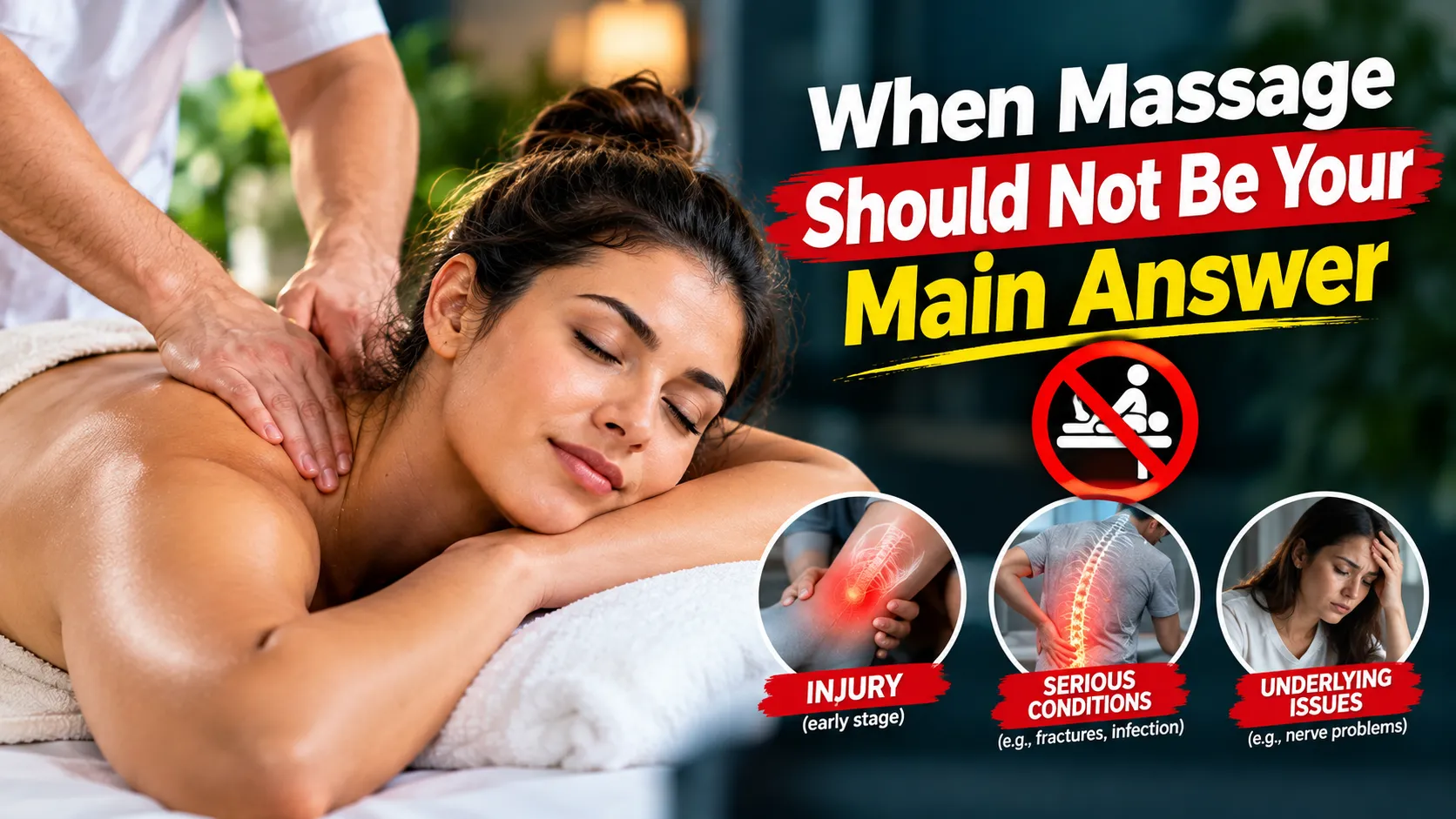
Massage is a comfort practice, not a way to investigate every source of pain. If a symptom has no clear everyday explanation, keeps returning, becomes more intense, or interferes with normal activity, it may be more useful to seek an appropriate evaluation than to keep applying pressure.
Red-flag checklist dashboard
Do not assume it is a normal massage response.
Seek professional assessment rather than deeper massage.
Unexplained systemic symptoms need attention.
Seek urgent medical help.
When to Self-Care vs When to Seek Help
Swipe left/right to see the full table →
| Situation | Reasonable next step |
|---|---|
| Mild, familiar tightness | Gentle comfort routine |
| Repeated or persistent pain | Discuss with a professional |
| Numbness or weakness | Seek medical evaluation |
| Severe chest pain or breathing trouble | Seek urgent medical help |
When to contact a professional: Seek professional help for severe, worsening, unusual, or persistent symptoms. Numbness, weakness, significant injury, fever, chest pain, breathing difficulty, or loss of bladder or bowel control should not be explained away as a massage “detox” response.
So, Does Trigger Point Massage Release Toxins?
Does trigger point massage release toxins? The available evidence does not establish that trigger point massage removes toxins from muscle tissue. Massage may still be useful for comfort, relaxation, and certain short-term symptoms, depending on the person and situation.
The most practical approach is to judge massage by reasonable outcomes: Does it feel comfortable? Does it support relaxation or temporary ease? Does your body respond normally afterward? Those questions are more useful than trying to measure an invisible “detox” effect.
There is also no good reason to chase soreness as proof that a session was effective. Stronger pressure is not automatically better, and very vigorous massage can carry more risk in some situations.
Practical priority guide
Practical guide, not scientific data.
The bottom line is simple: massage can be a reasonable part of a comfort routine, but “toxin release” is not a useful or established explanation for what you feel afterward.
Frequently Asked Questions
Does trigger point massage release toxins?
No good evidence shows that trigger point massage removes toxins from muscle tissue. Massage may support comfort or relaxation, but that is different from detoxification.
Why do I feel sore after trigger point massage?
Firm or focused pressure can leave an area temporarily tender. Soreness should not automatically be interpreted as evidence of toxins leaving the body.
Can massage flush waste products from muscles?
Massage may influence how an area feels, but the claim that it flushes toxins or waste from muscles has not been established as a general detox effect.
Does painful massage work better?
Not necessarily. More pressure can increase discomfort, and massage does not need to be painful to be part of a useful comfort routine.
Is trigger point massage safe for everyone?
Massage has relatively few risks for many people, but certain health conditions may require modified techniques or professional advice before massage.
When should I stop self-massage?
Stop if symptoms become severe, unusual, or clearly worse. Seek professional help for persistent symptoms, numbness, weakness, significant injury, or other red flags.
What is a better goal than “detox” during massage?
Focus on comfortable pressure, relaxation, temporary ease, and normal movement rather than trying to create intense sensations or prove that toxins were released.
Final Thoughts
Trigger point massage can be used as a comfort-focused practice, but the idea that it releases toxins from muscle tissue is not supported by good evidence. Pay attention to comfort and how your symptoms respond rather than chasing soreness or intense pressure.
If symptoms are severe, worsening, unusual, persistent, or not improving, seek guidance from a licensed healthcare professional instead of relying on massage alone.
Author
-

I’m Alex Turner, a massage product reviewer and wellness writer at RemedyTip. I specialize in researching, evaluating, and comparing massage and recovery products to help readers make informed purchasing decisions. My focus is on practical, evidence-informed product guidance covering muscle recovery, relaxation, everyday comfort, and wellness.
I take a research-driven approach to every product I review. I examine product specifications, features, materials, performance claims, user feedback, durability, comfort, ease of use, and overall value. When appropriate, I also consult trusted industry and health-related sources to verify important information and provide readers with a more complete and balanced view.
I cover a wide range of products, including massage guns, handheld massagers, neck and shoulder massagers, foot massagers, massage chairs, foam rollers, and other recovery tools. Rather than focusing only on marketing claims, I look at how products compare in real-world use and who they are actually suitable for. I also consider different budgets, use cases, and user needs when making recommendations.
At RemedyTip, I’m committed to accuracy, transparency, and unbiased product information. I clearly distinguish between manufacturer claims, available evidence, and my own product analysis so readers can understand the basis of each recommendation. I continuously research new products, technologies, and developments in the massage and recovery space to keep my content current and useful.
My goal is simple: to provide trustworthy, easy-to-understand information that helps readers choose massage and recovery products with greater confidence.