
Written by Alex Turner · Recovery & Rehabilitation
Quick Answer: Yes, trigger point massage can feel tender or uncomfortable because pressure is being applied to a sensitive area. However, it should not feel sharply painful, cause tingling or numbness, or steadily make your symptoms worse. Gentle pressure and stopping when the sensation becomes concerning are safer approaches.
Why can a tender spot hurt when you press it?
A trigger point is commonly described as a sensitive area within a muscle or its surrounding tissue. When pressure is placed on a sensitive spot, you may notice tenderness, a deep aching feeling, or discomfort that seems stronger than the pressure itself. That does not automatically mean the massage is causing harm, but the quality of the sensation matters.
Research on trigger-point-focused massage has found changes in pressure-pain sensitivity after massage in some study groups, while more recent reviews also emphasize limitations in the evidence. In other words, massage may be useful for some people, but more pressure is not automatically better. :contentReference[oaicite:1]{index=1}
Important: This article is for general educational information only. It does not diagnose, treat, cure, or prevent any condition. It does not replace advice from a licensed healthcare professional. Readers should seek professional help for severe, worsening, unusual, or persistent symptoms.
What Does Trigger Point Massage Usually Feel Like?
Trigger point massage does not have one universal sensation. A sensitive muscle area may feel tender when pressure is first applied, and some people describe the sensation as a dull ache or focused pressure. You might also notice that the sensation changes as the pressure is released.
The important distinction is between manageable tenderness and a sensation that suggests you should stop. Cleveland Clinic notes that some discomfort can occur with trigger point massage, but intense pain is not the goal. Sharp pain, tingling, or symptoms that become worse with increasing pressure deserve more caution. :contentReference[oaicite:2]{index=2}
Tender pressure is different from sharp pain
A broad, dull tenderness may simply reflect sensitivity in the area being pressed. Sharp, electric, burning, or strongly radiating sensations are different and should not be treated as a signal to press harder.
If the sensation makes you tense your entire body, hold your breath, pull away, or repeatedly brace against the pressure, the intensity may be too high for your current tolerance. Reducing pressure or stopping is a more sensible response than trying to push through it.
Evidence also does not support the idea that a massage must hurt to be effective. A 2025 systematic review found that friction massage may affect pain and pressure-pain outcomes in some settings, but the authors rated the overall evidence cautiously and noted the need for better long-term research. :contentReference[oaicite:3]{index=3}
Swipe left/right to see the full table →
| Sensation | Possible meaning | Response |
|---|---|---|
| Mild tenderness | Sensitive muscle area | Use gentle pressure |
| Dull ache | Pressure sensitivity | Reduce pressure if needed |
| Sharp pain | Not a reason to push harder | Stop and reassess |
| Tingling or numbness | Needs greater caution | Stop pressure |
The table is a practical guide rather than a diagnostic test. If a sensation is unusual, persistent, or difficult to explain, professional assessment is more appropriate than repeatedly testing the area with deeper massage.
Why Can Trigger Point Massage Feel Painful?
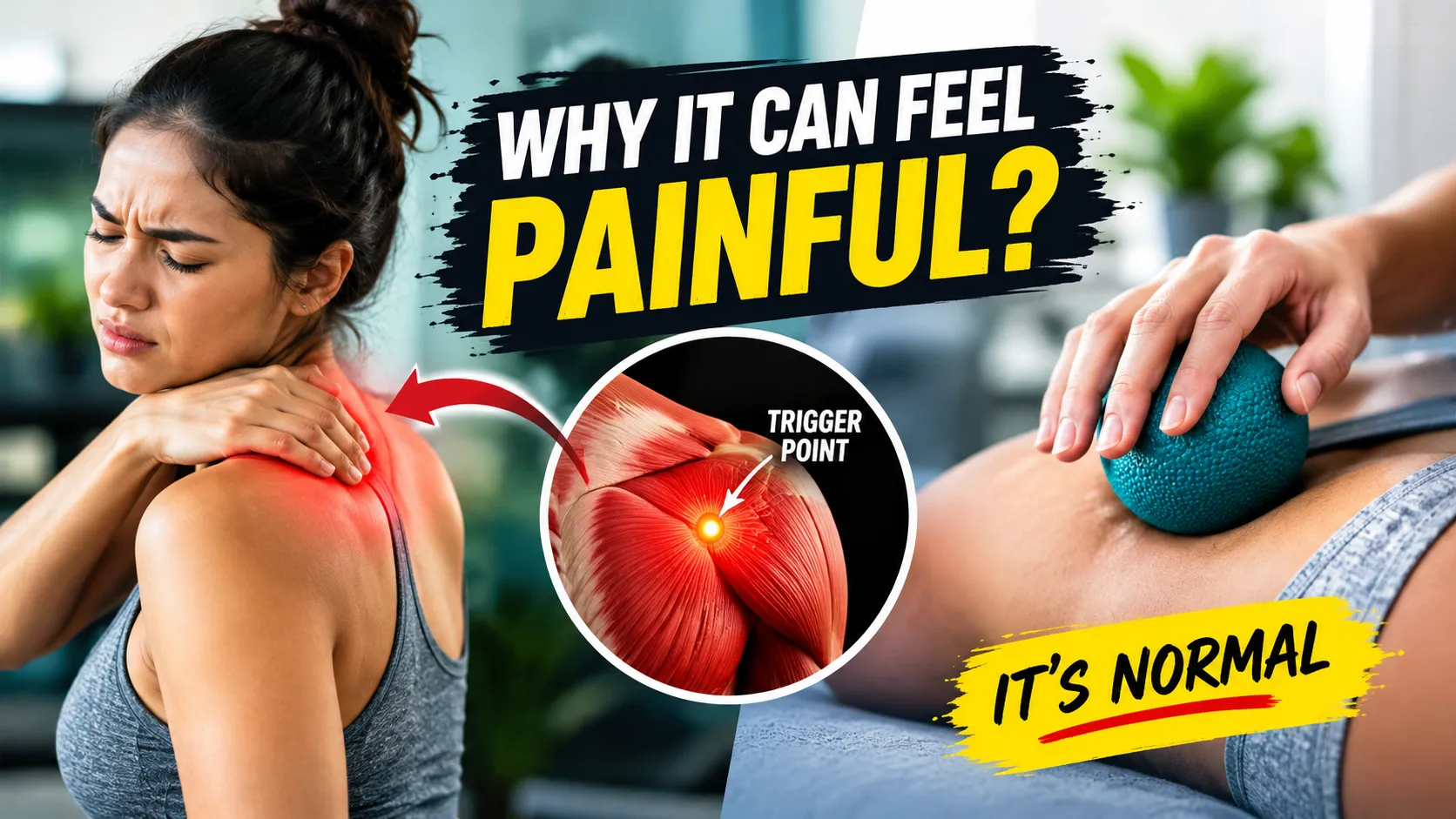
Several factors can make pressure feel uncomfortable. The area may already be sensitive, the pressure may be too strong, or the muscle may have become irritated by repetitive activity or prolonged positioning. Your individual pain sensitivity also matters, so the same technique can feel very different from one person to another.
Common Trigger / Cause Map
Already-tender tissue may respond strongly to direct pressure.
More force can increase discomfort instead of making the routine more useful.
Long periods of one position or repetitive movement may contribute to muscle discomfort.
Not every painful spot is appropriate for self-massage.
This map helps explain why simply increasing pressure is not a reliable strategy. If the underlying source of pain is uncertain, repeatedly pressing the same spot can make it harder to tell whether the area is responding normally.
Pressure, position, and sensitivity all matter
Body position can change how much pressure reaches a muscle. A massage ball against a wall, for example, may allow more body weight to be applied than using your fingertips. That can make the same general technique feel substantially stronger.
For that reason, start with the least intense approach that allows you to evaluate the sensation. Avoid treating pain intensity as a score you need to increase. A comfortable routine is easier to control and stop when something feels wrong.
When Is the Discomfort More Concerning?
Discomfort deserves more attention when it is sharp, severe, progressively worsening, or accompanied by symptoms that do not fit ordinary muscle tenderness. Numbness, tingling, weakness, significant swelling, or pain after an injury should not be managed by simply applying more pressure.
Red-Flag Checklist Dashboard
Sharp, intense, burning, or rapidly worsening pain.
Numbness, tingling, unusual weakness, or symptoms spreading beyond the area.
Pain that persists, repeatedly returns, or is not improving.
Chest pain, major injury, fever with concerning symptoms, or loss of bladder or bowel control.
This checklist is not intended to identify a specific condition. It is a safety screen for deciding when self-massage is no longer an appropriate experiment.
Pain after massage versus pain during pressure
A muscle can remain mildly tender after massage, particularly if the area was already sensitive. But worsening symptoms should not automatically be labeled a normal massage response. If discomfort continues, becomes stronger, or interferes with normal activity, consider speaking with a healthcare professional.
Cleveland Clinic similarly advises against treating intense pain as an expected part of trigger point work and notes that persistent pain deserves professional assessment. :contentReference[oaicite:4]{index=4}
How to Make Trigger Point Massage More Comfortable
If you have already decided that self-massage is appropriate for your situation, comfort should guide the routine. The goal is controlled pressure, not maximum pressure. A slow, gentle approach also makes it easier to notice changes in the sensation.
A Simple Comfort-First Flow
1
Use enough pressure to notice the area without immediately provoking strong pain.
2
Relaxed breathing can help you notice whether the pressure feels manageable rather than bracing against it.
3
Keep pressure steady only while the sensation remains tolerable and non-sharp.
4
Reduce pressure or stop if pain becomes sharp, intense, unusual, or increasingly uncomfortable.
5
Pay attention to whether ordinary movement feels comfortable rather than judging success by soreness.
The sequence is deliberately conservative. It is not a treatment protocol and should not be used to work around unexplained or severe pain.
Swipe left/right to see the full table →
| Safer approach | Riskier approach | Why it matters |
|---|---|---|
| Gentle pressure | Maximum pressure | Easier to control |
| Short check-ins | Long aggressive sessions | Limits overworking |
| Stop for unusual symptoms | Push through pain | Protects against ignoring warnings |
| Reassess afterward | Judge success by soreness | Comfort is more useful than intensity |
The safer column is a general comfort framework, not a guarantee that massage is appropriate for every painful area.
How Much Pressure Is Enough?
There is no single pressure level that is right for everyone. A practical approach is to use the minimum pressure that allows you to explore the area comfortably. If you need to tense your body to tolerate the sensation, that is a useful reason to back off.
Pressure Guide — Practical, Not Scientific
Light — 35%
Useful for first contact and sensitive areas.
Moderate — 55%
May be reasonable when the sensation remains comfortable.
High — 75%+
Not automatically better; use caution and avoid painful pressure.
These percentages are visual labels for relative pressure, not measurements or scientific thresholds. The practical priority is keeping the sensation controlled and stopping when symptoms become concerning.
Common mistakes that can make massage hurt more
One common mistake is assuming that a more painful spot needs more force. Another is repeatedly returning to exactly the same tender point for a long period. Using a tool that allows substantial body weight to be applied can also make it easy to exceed a comfortable level without realizing it.
Another mistake is using self-massage to investigate unexplained symptoms indefinitely. If a painful area is persistent or keeps returning, finding out why it hurts may be more useful than repeatedly pressing it.
What Should You Avoid?
Do not use increasing pain as proof that a technique is working. Avoid aggressive pressure over an area that is acutely injured, visibly swollen, unusually warm, or associated with neurological symptoms unless a qualified professional has advised you on appropriate care.
It is also sensible to avoid assuming that every painful knot is a trigger point. A painful area can have multiple possible causes, and massage alone cannot establish which one applies.
Swipe left/right to see the full table →
| Mistake | Better choice | Practical reason |
|---|---|---|
| Pressing harder because it hurts | Reduce pressure | Pain is not a success metric |
| Staying on one spot too long | Use brief check-ins | Limits unnecessary irritation |
| Ignoring tingling | Stop pressure | Unusual sensations need caution |
| Self-treating persistent pain | Consider professional evaluation | The cause may need assessment |
These choices keep the focus on comfort and safety rather than intensity. They are especially relevant when you are unsure why a particular area hurts.
When Should You Stop Self-Massage?
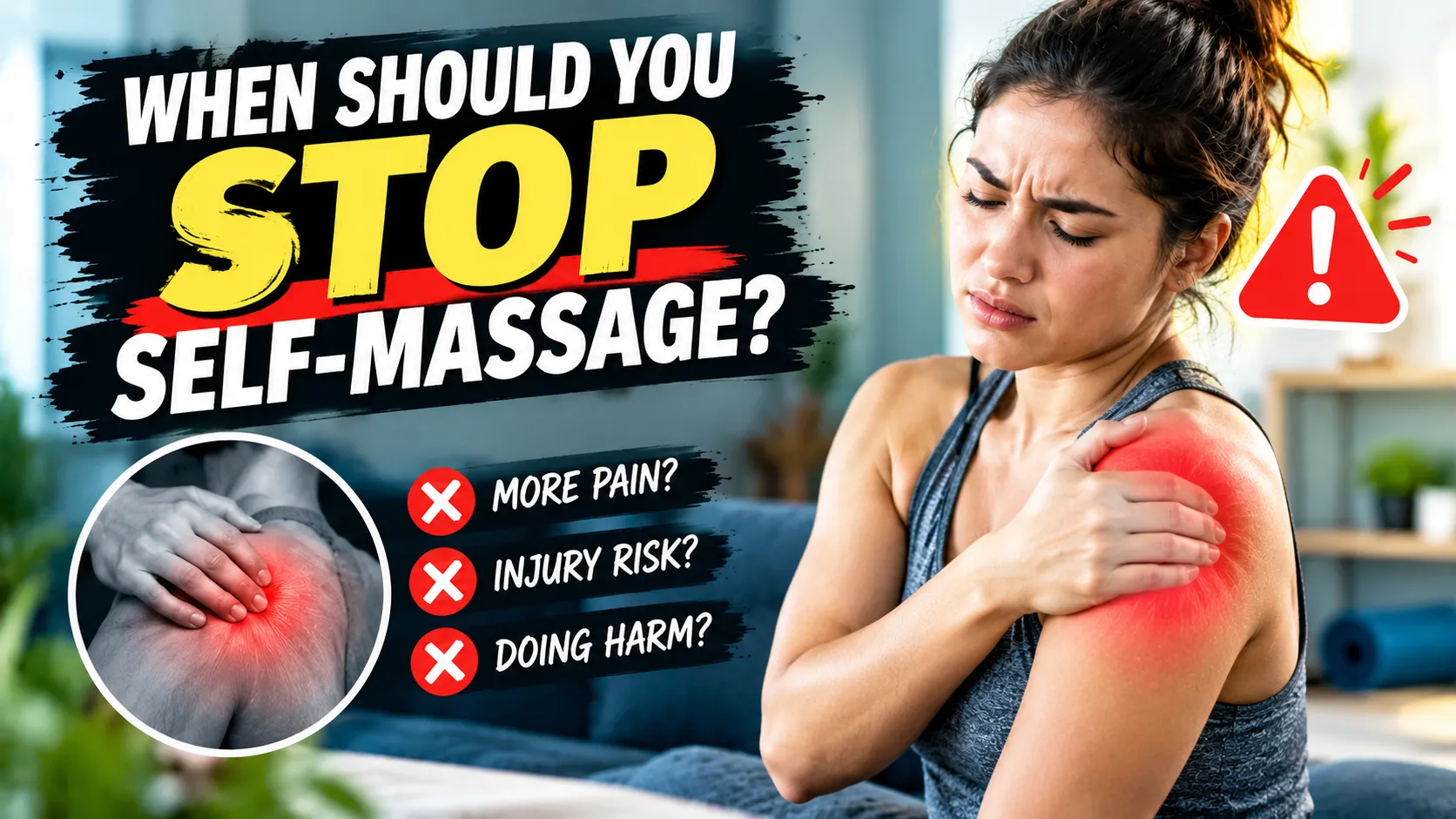
Stop if the sensation becomes sharp, severe, increasingly painful, or associated with numbness, tingling, weakness, or another unusual symptom. Stop as well if the area was recently injured and massage makes the pain worse.
Persistent pain is another reason to move away from repeated self-massage and toward professional assessment. Cleveland Clinic advises seeking healthcare evaluation when pain continues rather than assuming the problem is simply a trigger point. :contentReference[oaicite:5]{index=5}
Self-Care vs Professional Evaluation
Mild, familiar muscle tenderness that remains comfortable with gentle pressure and does not produce unusual symptoms.
Pain persists, keeps returning, affects daily activity, or you are unsure what is causing it.
Pressure causes sharp or intense pain, numbness, tingling, or rapidly worsening symptoms.
Chest pain, major injury, fever with concerning symptoms, severe neurological symptoms, or loss of bladder or bowel control.
This decision path is intentionally conservative. A healthcare professional can determine whether the symptoms are appropriate for massage or whether another evaluation is needed.
What Does Research Say About Trigger Point Massage?
Research suggests that manual techniques can influence pain sensitivity in people with myofascial trigger points, but the evidence is not a reason to equate stronger pressure with better outcomes.
A 2017 randomized controlled trial involving people with tension-type headache reported increased pressure-pain thresholds following a trigger-point-focused massage program. The study involved specific muscles and a defined treatment schedule, so its findings should not be treated as proof that every painful spot will respond the same way. :contentReference[oaicite:6]{index=6}
A 2025 systematic review of friction massage included 12 studies and reported improvements within treatment groups, while finding no clear superiority over controls for some outcomes. The authors characterized the evidence cautiously and called for higher-quality, longer-term research. :contentReference[oaicite:7]{index=7}
That distinction matters for readers searching whether trigger point massage hurts. A certain amount of tenderness can occur, but the available evidence does not justify using intense pain as a required part of the technique.
Research note: Studies of trigger-point massage use specific techniques, body areas, participant groups, and treatment schedules. Results from those studies should not be treated as a diagnosis or as a universal rule for every painful muscle.
Frequently Asked Questions
Does trigger point massage hurt?
It can feel tender or uncomfortable because pressure is applied to a sensitive area, but intense or sharp pain is not something you should try to push through.
Why does trigger point massage hurt so much?
A sensitive muscle area can react strongly to direct pressure, especially when the pressure is too intense. Pain that is sharp, severe, or unusual is a reason to stop rather than press harder.
Should trigger point massage be painful to work?
No. Some tenderness may occur, but pain should not be treated as proof that the technique is working.
Is soreness after trigger point massage normal?
Mild tenderness can occur, but worsening, severe, persistent, or unusual symptoms should not simply be assumed to be a normal massage response.
What should trigger point massage feel like?
It may feel like focused pressure, tenderness, or a dull ache. Sharp pain, numbness, tingling, or rapidly increasing symptoms are reasons to stop.
Can you massage a trigger point too hard?
Yes. More pressure is not automatically better, and excessive pressure can increase discomfort. A controlled, comfortable approach is more appropriate than trying to maximize pain.
When should I see a professional about massage-related pain?
Seek professional guidance for severe, worsening, unusual, persistent, or unexplained pain, especially when numbness, weakness, injury, fever, chest pain, or loss of bladder or bowel control is involved.
Final Thoughts
Trigger point massage can feel tender, but it should not be a contest to tolerate as much pain as possible. Use controlled pressure, pay attention to the quality of the sensation, and stop when symptoms become sharp, intense, unusual, or progressively worse.
If pain is severe, persistent, worsening, associated with injury or neurological symptoms, or not improving, seek guidance from a licensed healthcare professional rather than relying on repeated self-massage.
Author
-

I’m Alex Turner, a massage product reviewer and wellness writer at RemedyTip. I specialize in researching, evaluating, and comparing massage and recovery products to help readers make informed purchasing decisions. My focus is on practical, evidence-informed product guidance covering muscle recovery, relaxation, everyday comfort, and wellness.
I take a research-driven approach to every product I review. I examine product specifications, features, materials, performance claims, user feedback, durability, comfort, ease of use, and overall value. When appropriate, I also consult trusted industry and health-related sources to verify important information and provide readers with a more complete and balanced view.
I cover a wide range of products, including massage guns, handheld massagers, neck and shoulder massagers, foot massagers, massage chairs, foam rollers, and other recovery tools. Rather than focusing only on marketing claims, I look at how products compare in real-world use and who they are actually suitable for. I also consider different budgets, use cases, and user needs when making recommendations.
At RemedyTip, I’m committed to accuracy, transparency, and unbiased product information. I clearly distinguish between manufacturer claims, available evidence, and my own product analysis so readers can understand the basis of each recommendation. I continuously research new products, technologies, and developments in the massage and recovery space to keep my content current and useful.
My goal is simple: to provide trustworthy, easy-to-understand information that helps readers choose massage and recovery products with greater confidence.

