By Alex Turner
Face massage videos promise everything from a natural facelift to firmer, more collagen-rich skin. Some of that is rooted in real physiology — face massage does move blood and lymph through facial tissue. But collagen production is a separate, slower process that pressure alone can’t switch on. This guide breaks down what a face massage realistically does, what it doesn’t, and how to build a safe, low-risk routine around it.
Common Face Massage Claims, Checked Against the Facts
Face massage claims spread fast online, and not all of them hold up. The table below separates the popular belief from what actually happens on your skin.
Myth vs. Fact at a Glance
Swipe left/right to see the full table →
| Myth | Fact |
|---|---|
| Face massage creates new collagen instantly | Collagen forms through fibroblasts over weeks; massage doesn’t trigger this directly |
| Results from a face massage are permanent | Plumping and glow fade within hours as blood flow returns to baseline |
| Tools work better than hands for face massage | Tools mainly change glide and pressure; clean hands can achieve similar circulation |
| More pressure during massage means better results | Heavy pressure can irritate skin or break small capillaries instead of helping |
| Face massage can replace sunscreen for firmness | Sun protection has far more long-term evidence for supporting skin structure |
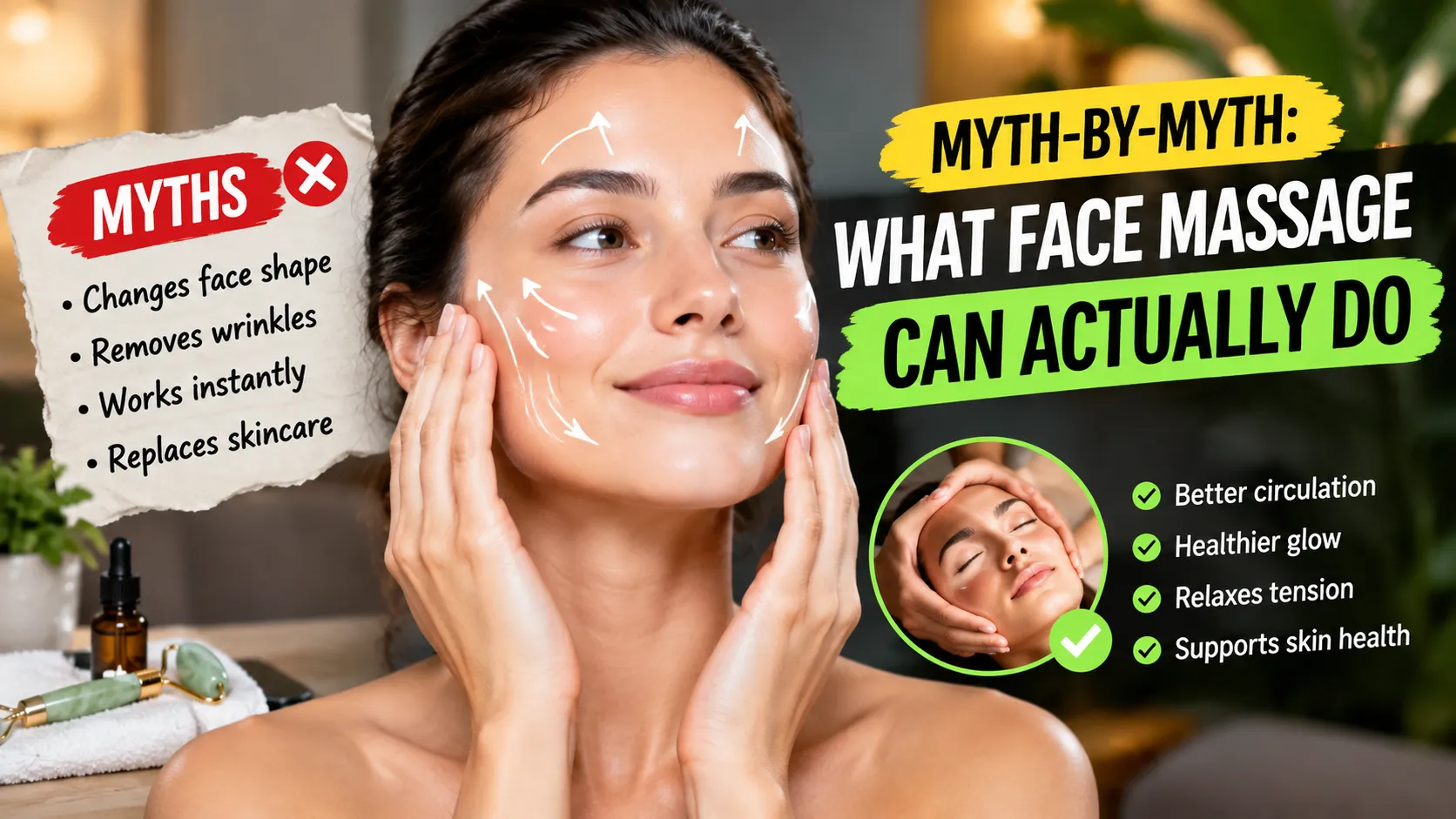
Myth-by-Myth: What Face Massage Can Actually Do
Myth: It Creates New Collagen
Collagen is made by fibroblasts, cells living deep in the skin. Their output is shaped mainly by genetics, age, sun exposure, and diet — not by hand pressure on the surface. A face massage can encourage local blood flow, which may help deliver nutrients and oxygen to skin cells, but that’s a supporting role, not collagen synthesis itself. In a daily routine, think of face massage as something that can support skin comfort, not a stand-in for proven collagen-supportive habits like daily sunscreen.
Myth: The Firming Effect Lasts All Day
That “just massaged” glow comes from increased circulation, which temporarily plumps the skin’s surface. Some people notice this fading within one to a few hours as blood flow returns to its normal resting level. It’s a real, visible effect — just not a lasting structural change. Expecting an all-day lift from a single face massage session usually leads to disappointment rather than skin damage.
Myth: More Pressure Means Better Results
Pressing harder doesn’t speed up circulation benefits and can backfire. Aggressive face massage may stretch delicate skin, worsen broken capillaries, or irritate acne-prone or sensitive areas. Gentle, consistent strokes are generally considered a safer approach than forceful kneading, especially around the eyes and jawline where skin is thinner.
Where Face Massage Realistically Helps: A Practical Guide
Here’s a rough, non-scientific practical guide to where face massage tends to make the most difference.
Temporary glow / blood flow
Relaxation / stress relief
Product absorption support
Direct collagen synthesis
In practical terms, face massage earns its place as a relaxing, circulation-friendly habit — not a collagen treatment.
What a Face Massage May Realistically Support
Relaxation & Stress Relief
A slow face massage can be genuinely calming. Some people notice tension easing in the jaw and forehead after just a few minutes.
Temporary Glow
Increased local blood flow can make skin look brighter and slightly plumper right after a face massage session.
Product Absorption Help
Massaging serums or oils in with gentle strokes can help even out product distribution across the face.
Mind-Skin Connection
Reduced stress may indirectly support skin comfort, since stress hormones can worsen flare-ups in some people.
How to Do a Safe Face Massage at Home
A gentle, consistent routine matters more than pressure or fancy tools. Below is a simple sequence many people find comfortable.
A Simple Face Massage Flow
Keeping strokes light and unhurried is generally considered gentler on skin than fast, forceful motions.
Safe Routine vs. Risky Routine
Swipe left/right to see the full table →
| Safe Approach | Risky Approach |
|---|---|
| Light, upward gliding strokes | Pinching, pulling, or dragging skin |
| Using oil or serum for glide | Massaging dry, bare skin |
| Avoiding active breakouts or cuts | Massaging over inflamed acne |
| Short 3-5 minute sessions | Long, repeated sessions daily seeking faster results |
How Often to Massage Your Face
Swipe left/right to see the full table →
| Frequency | Best Fit For |
|---|---|
| 2-3 minutes, most mornings | General glow, waking up puffiness |
| 5 minutes, a few nights a week | Stress relief, unwinding before bed |
| Skip that day | Active breakouts, sunburn, or irritation |
Hands vs. Tools: What Fits Your Goal
Swipe left/right to see the full table →
| Tool | Good Fit For |
|---|---|
| Clean hands | Beginners, sensitive skin, daily use |
| Jade roller | Light, cooling morning routine |
| Gua sha stone | Firmer, guided strokes along jaw and cheeks |
Do’s and Don’ts of Face Massage
Do
Use light pressure, clean hands, and a slippery oil or serum.
Don’t
Massage over active acne, sunburn, or broken skin.
Red-Flag Checklist Before You Continue
Pause face massage and check in with a dermatologist if you notice any of the following:
- Burning or stinging that doesn’t fade quickly
- Spreading redness or swelling
- New broken capillaries appearing repeatedly
- Worsening breakouts after several sessions
One or two of these on their own may just mean easing up on pressure; several together are worth a professional look.
Self-Care vs. Seek-Help

Swipe left/right to see the full table →
| Self-Care Fine | See a Professional |
|---|---|
| Mild, brief flushing after massage | Redness that spreads or lingers for days |
| Slight tightness that fades quickly | Swelling, warmth, or visible signs of infection |
| Occasional dryness | Worsening acne or unusual skin changes |
For general background on collagen and skin structure, resources like Cleveland Clinic’s collagen overview and the American Academy of Dermatology’s skin care basics are helpful starting points.
Gentle Jade Facial Roller
A smooth, low-friction tool that may make a light face massage easier to fit into a daily routine.
Gua Sha Facial Stone
A flat, guided-edge stone that can help make gentle, consistent strokes easier for beginners.
Frequently Asked Questions
Does face massage actually boost collagen?
Not directly. Collagen forms through fibroblasts over time; face massage mainly supports temporary blood flow, not new collagen production.
How long does the glow from face massage last?
Often just a few hours, since it comes from temporary increased blood flow rather than a lasting skin change.
Is daily face massage safe?
For most people, short and gentle daily face massage is generally considered low-risk, but it’s best avoided over active breakouts or irritated skin.
Do jade rollers work better than hands?
Not necessarily. Tools mainly add a cooling feel and consistent glide; clean hands can achieve similar circulation benefits.
Can face massage help with puffiness?
Some people notice reduced puffiness after gentle massage, likely from improved local circulation and lymphatic movement.
Should I massage my face if I have acne?
Avoid massaging directly over active, inflamed acne, since friction and pressure can worsen irritation in that area.
What should I use during a face massage?
A light facial oil, serum, or fragrance-free moisturizer helps hands or tools glide smoothly without tugging skin.
A face massage is a genuinely pleasant habit that can support relaxation and give skin a temporary, healthy-looking glow through better blood flow. It isn’t, on its own, a collagen treatment, and expecting it to replace sunscreen or dermatologist-guided care can lead to disappointment. Keep pressure light, listen to your skin, and see a professional if redness, swelling, or breakouts worsen or don’t improve.
Author
-

I’m Alex Turner, a massage product reviewer and wellness writer at RemedyTip. I specialize in researching, evaluating, and comparing massage and recovery products to help readers make informed purchasing decisions. My focus is on practical, evidence-informed product guidance covering muscle recovery, relaxation, everyday comfort, and wellness.
I take a research-driven approach to every product I review. I examine product specifications, features, materials, performance claims, user feedback, durability, comfort, ease of use, and overall value. When appropriate, I also consult trusted industry and health-related sources to verify important information and provide readers with a more complete and balanced view.
I cover a wide range of products, including massage guns, handheld massagers, neck and shoulder massagers, foot massagers, massage chairs, foam rollers, and other recovery tools. Rather than focusing only on marketing claims, I look at how products compare in real-world use and who they are actually suitable for. I also consider different budgets, use cases, and user needs when making recommendations.
At RemedyTip, I’m committed to accuracy, transparency, and unbiased product information. I clearly distinguish between manufacturer claims, available evidence, and my own product analysis so readers can understand the basis of each recommendation. I continuously research new products, technologies, and developments in the massage and recovery space to keep my content current and useful.
My goal is simple: to provide trustworthy, easy-to-understand information that helps readers choose massage and recovery products with greater confidence.