
Written by Alex Turner
Percussion massagers have become a staple in home recovery routines, and a common question is whether does a percussion massager help with lymphatic drainage the way a trained therapist’s hands do. This guide separates the common claims from what actually makes sense for your lymphatic system, plus safer ways to use the tool if you decide to try it.
What a Percussion Massager Actually Does to Tissue
A percussion massager delivers rapid, short pulses deep into muscle tissue. It’s designed for sore, tight muscles after activity, using firm, repetitive pressure to increase local blood flow and ease tension. That mechanism is very different from the lymphatic system, which is a slow, low-pressure network of vessels sitting just under the skin. This difference is exactly why the question does a percussion massager help with lymphatic drainage doesn’t have a simple yes-or-no answer — the tool and the system it’s being asked to affect work on different principles entirely.
Myth vs Fact: Percussion Massage and Lymphatic Drainage
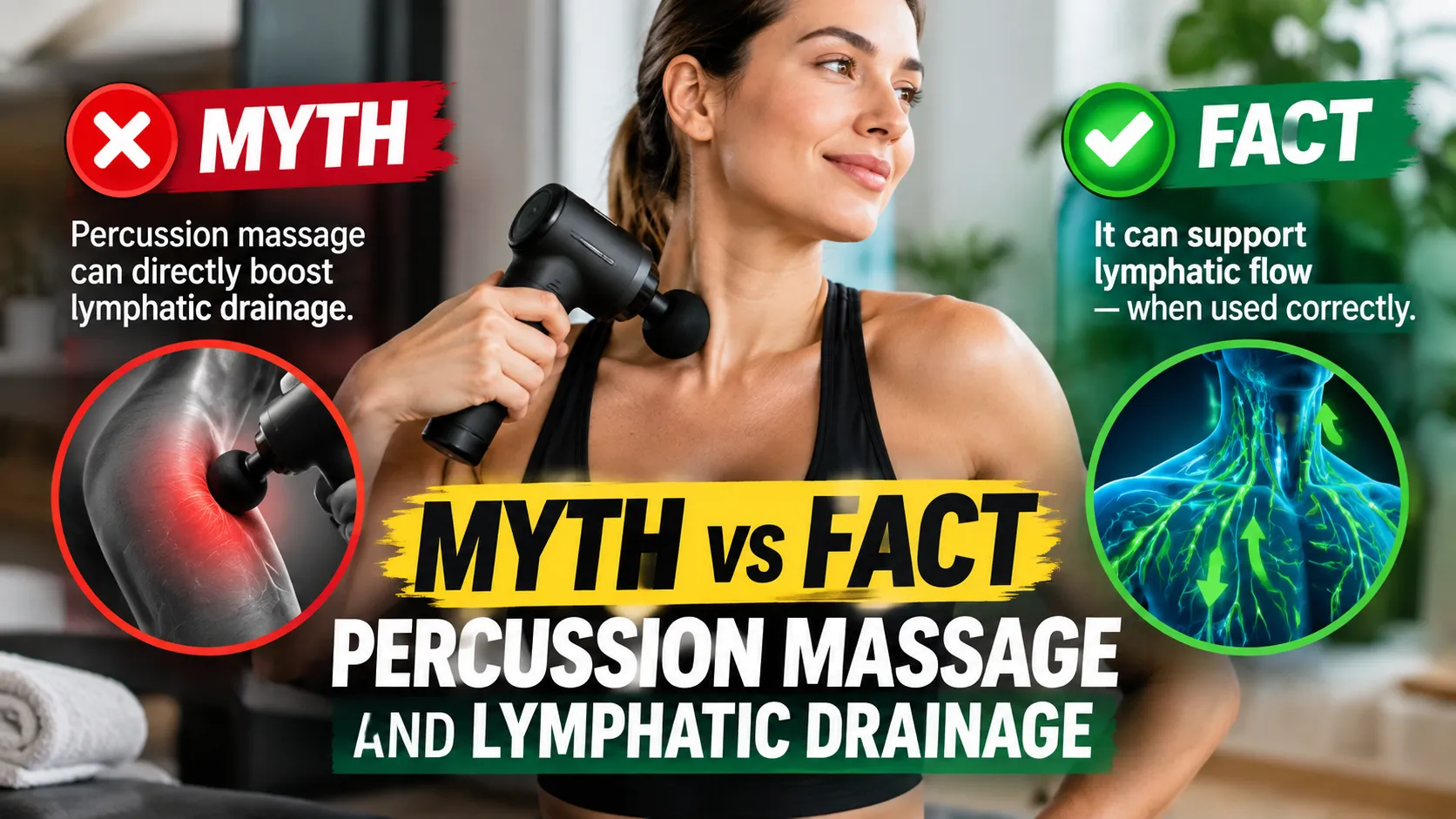
Before trying a device for lymph support, it helps to separate popular claims from what actually holds up.
Common Claims Compared to What’s Accurate
Swipe left/right to see the full table →
| Common Myth | What’s More Accurate |
|---|---|
| A percussion massager can replace lymphatic drainage massage | It uses deep, forceful pulses, while lymph drainage needs gentle, directional pressure |
| Higher intensity means faster lymph flow | Lymph vessels are shallow and delicate; strong force can irritate rather than help |
| It’s safe to use anywhere on the body for swelling | Lymph nodes and swollen areas generally should be avoided with percussion devices |
| If it feels relaxing, it’s helping lymph flow | Relaxation reflects muscle response, not confirmation of lymphatic movement |
Breaking Down Each Myth
Myth: It’s a substitute for professional drainage
Manual lymphatic drainage uses light, rhythmic strokes toward specific nodes. Percussion tools weren’t built for that precision, so they’re better thought of as a general muscle-recovery aid, not a lymph therapy replacement.
Myth: More power equals more benefit
The lowest speed setting and a light touch are usually more appropriate near lymphatic-rich areas than a deep-tissue setting, which is designed for large muscle groups like the thighs or back.
Myth: Any area is fair game
Areas with lymph nodes — underarms, groin, and the sides of the neck — are typically areas people are advised to avoid with percussion devices due to the sensitivity of those tissues.
Myth: Feeling good means it’s working
A relaxed feeling after use usually reflects reduced muscle tension, not evidence that fluid movement changed — it’s a comfort signal, not a lymphatic outcome.
Evidence-Based Reality Dashboard
A general practical guide to how percussion massage compares against actual lymphatic support methods:
In practical terms, a percussion massager may help you feel looser after a workout, but its role in true lymphatic drainage stays limited compared to purpose-built manual techniques.
Percussion Massage vs Manual Lymphatic Drainage
Seeing the two side by side makes it clearer why does a percussion massager help with lymphatic drainage is a different question than does it help you feel recovered.
Swipe left/right to see the full table →
| Feature | Percussion Massager | Manual Lymphatic Drainage |
|---|---|---|
| Pressure style | Deep, rapid pulses | Light, rhythmic strokes |
| Main target | Deep muscle tissue | Skin-level lymph vessels |
| Direction of movement | Generally freeform | Guided toward specific nodes |
| Who typically performs it | Yourself, at home | Trained therapist |
Safety Decision Path
A general self-check before reaching for a percussion massager near lymph-sensitive areas:
Safe Use vs Risky Use
Swipe left/right to see the full table →
| Safe Approach | Risky Approach |
|---|---|
| Lowest speed setting on large muscles | High speed anywhere near soft tissue |
| Short sessions, under a minute per area | Extended, repeated passes on one spot |
| Avoiding nodes, joints, and bone | Running the head directly over nodes |
| Stopping if there’s pain or discomfort | Pushing through pain expecting benefit |
Common Mistakes People Make
Swipe left/right to see the full table →
| Mistake | Better Choice |
|---|---|
| Using it as your only swelling routine | Pair general movement and elevation with professional guidance |
| Assuming stronger settings work faster | Start low and only adjust if the area tolerates it comfortably |
| Using it on unexplained swelling | Get new or one-sided swelling checked before using any device |
Do’s and Don’ts Split Panel
Do
- Use short sessions on large muscles
- Keep intensity low near soft tissue
- Ask a professional about your specific case
Don’t
- Run it directly over lymph nodes
- Use it on new or unexplained swelling
- Rely on it instead of medical guidance
When Self-Care Is Enough vs When to Seek Help
Swipe left/right to see the full table →
| Self-Care May Be Enough | Seek Professional Help |
|---|---|
| Mild, familiar muscle soreness after exercise | New, one-sided, or unexplained swelling |
| General tightness with no skin changes | Warmth, redness, or discoloration in the area |
| Comfort improves with rest and light activity | Pain, numbness, or swelling that worsens over days |
Red-Flag Checklist Dashboard
A general practical guide — check with a professional if any of these apply:
- Swelling appeared suddenly or on only one side of the body
- The skin feels warm, tight, or looks discolored
- You have a known lymphatic, vascular, or clotting condition
- Pain increases instead of easing after rest
A Practical, Low-Risk Way to Use One
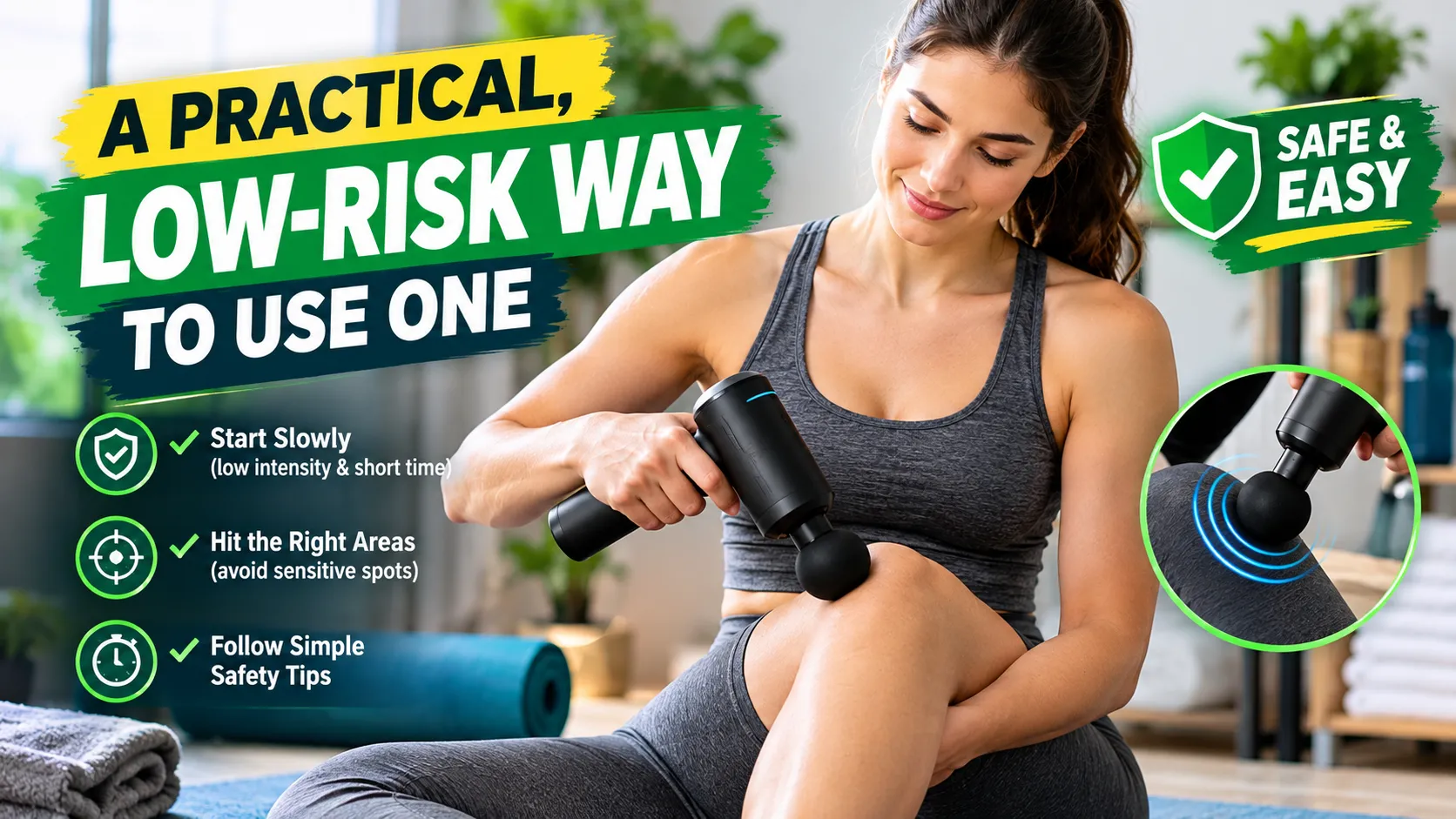
If you still want to try a percussion massager alongside general recovery habits, keep sessions short, stick to large muscle groups like calves, thighs, or the upper back, and pick the lowest setting the device offers. This keeps the experience about muscle comfort, not an attempt at direct lymphatic drainage — which stays best handled by a trained professional.
Adjustable Low-Intensity Percussion Massager
A model with a true low-speed setting and interchangeable soft heads can make it easier to stay gentle on large muscle groups instead of relying on high intensity by default.
Soft-Bristle Dry Body Brush
A gentle dry brush can support a light, skin-level self-massage habit that’s easier to keep controlled than a powered device, and may make daily routine consistency simpler.
Frequently Asked Questions
Does a percussion massager help with lymphatic drainage directly?
Not directly. It’s built for deep muscle tissue, while lymphatic drainage relies on light, guided pressure that a powerful device isn’t designed to replicate.
Is it safe to use a percussion massager on swollen areas?
New or unexplained swelling should be checked by a professional before using any percussion device on that area.
What setting should I use if I’m trying to support circulation?
The lowest available speed on large muscle groups is generally the more cautious starting point, especially near soft or sensitive tissue.
Can I use it near my neck or underarms?
Those areas contain lymph nodes and are typically areas to avoid with a percussion device, regardless of intensity setting.
What actually helps lymphatic flow if a massager doesn’t?
Gentle movement, elevation, staying hydrated, and guidance from a trained lymphatic therapist are generally more aligned with how the lymphatic system responds.
Why do people still ask does a percussion massager help with lymphatic drainage?
The relaxing feeling after use is often mistaken for a lymphatic effect, when it’s more likely from reduced muscle tension rather than fluid movement.
Should I stop using it if I have a diagnosed lymphatic condition?
Talk with your care provider before using any percussion device if you have a diagnosed lymphatic or vascular condition, since individual guidance matters most here.
So, does a percussion massager help with lymphatic drainage the way many people hope? Mostly, it’s a muscle-comfort tool, not a lymph therapy substitute. Used carefully, at low intensity, and away from lymph nodes, it can fit into a broader recovery routine — but real lymphatic support is better handled through gentle movement and professional guidance. If swelling feels new, worsening, or unusual, talk with a healthcare provider rather than relying on a device alone.
Author
-

I’m Alex Turner, a massage product reviewer and wellness writer at RemedyTip. I specialize in researching, evaluating, and comparing massage and recovery products to help readers make informed purchasing decisions. My focus is on practical, evidence-informed product guidance covering muscle recovery, relaxation, everyday comfort, and wellness.
I take a research-driven approach to every product I review. I examine product specifications, features, materials, performance claims, user feedback, durability, comfort, ease of use, and overall value. When appropriate, I also consult trusted industry and health-related sources to verify important information and provide readers with a more complete and balanced view.
I cover a wide range of products, including massage guns, handheld massagers, neck and shoulder massagers, foot massagers, massage chairs, foam rollers, and other recovery tools. Rather than focusing only on marketing claims, I look at how products compare in real-world use and who they are actually suitable for. I also consider different budgets, use cases, and user needs when making recommendations.
At RemedyTip, I’m committed to accuracy, transparency, and unbiased product information. I clearly distinguish between manufacturer claims, available evidence, and my own product analysis so readers can understand the basis of each recommendation. I continuously research new products, technologies, and developments in the massage and recovery space to keep my content current and useful.
My goal is simple: to provide trustworthy, easy-to-understand information that helps readers choose massage and recovery products with greater confidence.

