Neck pain often comes from tight muscles, poor posture, or long hours at a desk. A massage gun may ease muscle tension, but the device requires careful use because the neck contains sensitive blood vessels, nerves, and bones.
A massage gun may help relieve muscular neck pain when used on nearby muscles, such as the upper shoulders, with low pressure and a slow setting. It should not be used directly on the front or sides of the neck. Michael Hayes of RemedyTip.com emphasizes that safe technique matters as much as the potential benefit.
This guide explains where to use a massage gun, which areas to avoid, who should skip it, and what safer options may support recovery.
Key Takeaways
- Massage guns may ease tight muscles around the neck.
- Avoid the front, sides, spine, and bony areas.
- Stop use and seek medical care for severe or unusual symptoms.
How Percussive Therapy Affects Neck Muscles
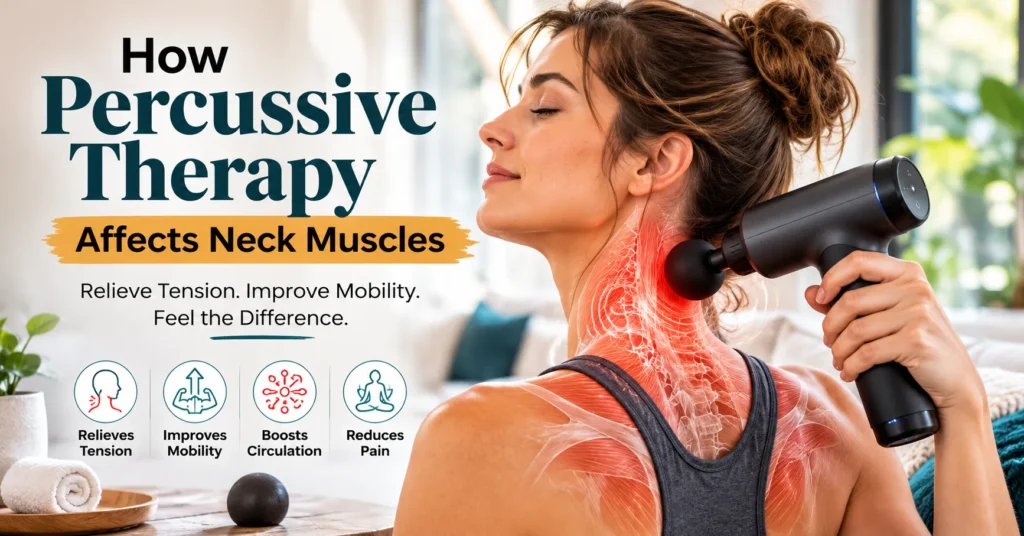
A massage gun delivers rapid, repeated pressure to soft tissue. It may ease muscle tightness for a short time, but direct use on the front or sides of the neck can injure sensitive blood vessels, nerves, and other structures.
Potential Pain-Relief Mechanisms
Percussive therapy may reduce pain by relaxing tight muscles and increasing local blood flow. It can also change how the nervous system processes pain signals, which may make movement feel easier after treatment. These effects tend to apply to large, accessible muscles rather than the spine or delicate tissues.
For neck discomfort, a person should target the upper trapezius and upper back muscles, not the neck itself. A low speed and light pressure can help reduce tension caused by prolonged sitting, stress, or exercise.
| Area | Safer approach |
|---|---|
| Upper back and shoulders | Use low speed and light pressure |
| Front and sides of the neck | Avoid direct treatment |
| Spine and bony areas | Avoid direct treatment |
Limits of Short-Term Relief
A massage gun may temporarily reduce muscle tension, but it does not correct every cause of neck pain. It cannot treat a pinched nerve, joint problem, disc injury, infection, or pain caused by a serious medical condition. Symptoms may return when the underlying problem remains.
Direct treatment of the neck also carries avoidable risks. Strong pressure near the front or side of the neck could affect sensitive structures, and reported stroke-like symptoms after neck massage require medical attention. A person should stop immediately and seek urgent care for sudden weakness, numbness, trouble speaking, severe dizziness, vision changes, or a severe headache.
When a Massage Gun May Be Appropriate
A massage gun may help with mild muscle tightness in the upper shoulders and upper back. It should target soft muscle tissue, not the front or sides of the neck, the spine, or the base of the skull.
Muscle Tightness From Posture
Long periods of looking down at a phone or working at a computer can tighten the upper trapezius and muscles around the shoulder blades. A massage gun may temporarily reduce this tight feeling by increasing local movement and relaxing the muscles.
The user should keep the device on a low setting and use a soft attachment. It should move slowly over the upper shoulders, upper back, and muscles beside the shoulder blades. Each area should receive only about 30–60 seconds of treatment.
| Safer targets | Areas to avoid |
|---|---|
| Upper trapezius muscles | Front and sides of the neck |
| Upper back | Spine and bones |
| Muscles near the shoulder blades | Base of the skull |
The device should not press directly on the neck. Stretching, movement breaks, and improved screen height may address the cause more effectively than massage alone.
Post-Exercise Soreness
After exercise, soreness in the shoulders and upper back may come from normal muscle fatigue. A massage gun may ease stiffness and improve short-term comfort when used on the surrounding muscles rather than on the neck itself.
The user should wait until normal movement feels comfortable and choose the lowest effective speed. The device should glide over the upper trapezius, rear shoulders, and upper back without lingering on one spot. It should not be used over bruises, swelling, open skin, or an acute strain.
Massage should stop if it causes sharp pain, numbness, tingling, dizziness, weakness, or a headache. Severe pain, symptoms after an injury, or soreness that does not improve requires assessment by a health professional.
Neck Areas to Avoid
A massage gun should not contact the throat, the sides of the neck, the spine, or other bony areas. These regions contain sensitive blood vessels, nerves, the airway, and joints that can react poorly to strong, repeated pressure.
Front and Sides of the Neck
The front of the neck contains the windpipe, thyroid gland, and major blood vessels. A massage gun should never touch the throat or the soft area below the jaw. Pressure there may cause pain, breathing problems, dizziness, or trouble swallowing.
The sides of the neck also need caution. They contain the carotid arteries, jugular veins, and important nerves. Direct percussion over these areas may irritate tissue or affect blood flow. A person should not use a massage gun over the pulse point beneath the jaw or along the side of the throat.
For tight muscles, the device should stay on the upper shoulders and the broad muscles at the back of the neck. It should use the lowest setting, light contact, and brief passes. A person should stop immediately if they feel dizziness, weakness, numbness, vision changes, severe headache, or unusual pain and seek urgent medical care for sudden stroke-like symptoms.
Upper Cervical Spine and Bony Areas
The upper cervical spine includes the small bones at the base of the skull and the joints between the neck vertebrae. A massage gun should not strike the spine, the base of the skull, or the prominent bones behind the ears. Percussion over these areas can irritate joints, nerves, and nearby tissues.
It should also stay away from areas with little muscle padding, including the collarbones and the tops of the shoulder blades. Instead, the device can target the thicker muscles beside—not directly on—the spine, such as the upper trapezius. Slow, gentle movement lowers the chance of applying too much force in one spot.
People with recent neck injuries, spinal conditions, nerve symptoms, blood-clotting problems, or blood-thinning medicine should ask a qualified clinician before using a massage gun.
Safe Use Techniques
A massage gun may ease muscle tightness when used on the upper back and shoulder muscles, but the front and sides of the neck contain sensitive blood vessels, nerves, and bones. Safe use requires low force, a soft attachment, short sessions, and careful avoidance of the spine and throat.
Choosing a Gentle Setting
The user should start at the lowest speed and pressure. The device should feel like mild muscle work, not sharp pain, tingling, numbness, dizziness, or pressure in the head. If any of these symptoms occur, the user should stop immediately.
The massage gun should target the upper trapezius and muscles beside the shoulder blade rather than the cervical spine. It should not touch the throat, the front or side of the neck, the spine, or areas with swelling, bruising, or open skin. The user should keep the device moving instead of holding it in one spot.
| Sensation | Action |
|---|---|
| Mild, comfortable vibration | Continue briefly |
| Sharp pain or increased pain | Stop |
| Numbness, tingling, or weakness | Stop and seek medical advice |
| Dizziness, vision changes, or severe headache | Stop and seek urgent medical care |
Using the Right Attachment
A soft, rounded attachment usually works best for large muscles in the shoulders and upper back. It spreads the force and reduces pressure on one small area. The user should avoid pointed, narrow, or hard attachments near the neck because they can place too much force on sensitive tissue.
The device should remain on muscle, not bone. The user can work around the upper shoulder while keeping the head relaxed and the massage gun away from the spine. A free hand can help identify tender areas and prevent the device from moving toward the neck.
People with blood-clotting problems, blood vessel disease, recent surgery, osteoporosis, or nerve conditions should ask a health professional before using a massage gun. It should not replace medical care for unexplained or severe neck pain.
Recommended Session Length
A short session of about 30 seconds to two minutes per muscle group is usually enough to test tolerance. The user can make slow passes over the upper shoulder and upper back, then stop and check whether the area feels better or more irritated.
The device should not remain in one place for more than a few seconds. Using it several times a day or for long periods may worsen soreness. If pain continues, spreads into an arm, or comes with weakness, numbness, fever, severe headache, or an injury, the user should stop self-treatment and seek medical advice.
Who Should Avoid Massage Guns
Massage guns can worsen some injuries and medical conditions, especially when used on the neck or other delicate areas. People with certain health risks should seek medical advice first and watch for symptoms that need prompt care.
Medical Conditions and Injury Risks
People should avoid massage guns over the front or sides of the neck, the spine, bones, joints, and areas with little muscle. Pressure in these areas may irritate nerves, blood vessels, or injured tissue. Safer targets may include large muscles in the upper back and shoulders, but only with light pressure and low speed.
A person should not use a massage gun over an open wound, rash, infection, bruise, recent surgery, fracture, or severe sprain. Medical advice is also important for people with blood-clotting problems, a history of blood clots, osteoporosis, nerve loss, uncontrolled high blood pressure, or cancer. Those who take blood thinners may bruise more easily. Pregnant people should ask a clinician before use, especially near the abdomen or lower back.
Anyone with unexplained neck pain, recent trauma, or a diagnosed blood-vessel problem should avoid self-treatment until a health professional gives guidance. A physical therapist can recommend safe areas, pressure, and settings.
Warning Signs Requiring Medical Care
A massage gun should stop immediately if it causes sharp pain, numbness, tingling, weakness, swelling, bruising, dizziness, nausea, or a severe headache. Symptoms that spread into an arm or cause loss of grip may signal nerve irritation or another condition that needs evaluation.
Sudden emergency symptoms require immediate medical care. These include facial drooping, trouble speaking, confusion, vision loss, loss of balance, fainting, or sudden weakness on one side of the body. These signs can indicate a stroke and should not be treated with more massage.
Neck pain after a fall, collision, or other injury also needs prompt assessment. A fever, stiff neck, severe headache, or pain that keeps worsening requires medical attention rather than repeated percussion. Recognizing stroke warning signs can help a person seek emergency care without delay.
Alternatives and Complementary Treatments
Gentle movement, heat, better workstation habits, and professional assessment can help manage neck pain without using a massage gun on sensitive areas. These options work best when they match the cause and severity of the pain.
Stretching and Mobility Work
Slow neck movements can reduce stiffness and restore comfortable motion. A person can gently turn the head from side to side, bring the ear toward each shoulder, and tuck the chin slightly. Each movement should stay within a comfortable range and last about 10–20 seconds. It should not cause sharp pain, numbness, dizziness, or tingling.
Shoulder and upper-back exercises can also reduce strain on the neck. Examples include shoulder rolls, chest stretches, and gentle upper-back extensions. Short sessions performed several times a day may work better than one intense session. People should stop if symptoms worsen or spread into an arm.
A physical therapist can teach targeted exercises for posture, muscle weakness, or limited mobility. Treatment may include manual therapy and a gradual strengthening plan.
Heat, Ergonomics, and Professional Care
A warm shower or heating pad may relax tight muscles and ease discomfort. A person should use low or moderate heat for about 15–20 minutes and protect the skin with a cloth. Ice may help during the first day or two after a minor strain if swelling or tenderness occurs.
Workstation changes can reduce repeated stress. The screen should sit near eye level, the shoulders should remain relaxed, and the elbows should stay close to the body. Regular breaks can prevent long periods of fixed neck posture.
Professional care may help when pain lasts more than a few weeks or keeps returning. A clinician should assess sudden severe pain, injury-related pain, weakness, numbness, fever, severe headache, or trouble walking. Acupuncture or other treatments may help some people, but a qualified health professional should guide their use.
Key Takeaways
A massage gun may ease muscle tension around the neck, especially in the upper back, shoulders, and trapezius muscles. It may also improve short-term mobility when stiffness comes from prolonged sitting, poor posture, or exercise.
Users should avoid applying the device directly to the front or sides of the neck. These areas contain sensitive structures, including major blood vessels, nerves, and the airway. The device should not touch the spine, throat, or head.
For safer use, a person should:
- Choose a soft attachment and the lowest speed.
- Apply light pressure to the upper back and shoulder muscles.
- Keep each area to a short session.
- Stop if pain, numbness, dizziness, headache, or unusual symptoms occur.
- Avoid using the device over broken skin, swelling, or areas with reduced sensation.
Gentle neck movement, stretching, posture changes, and regular activity may also help reduce stiffness. A massage gun should support these measures rather than replace them.
People with recent injuries, severe or unexplained neck pain, blood-clotting problems, nerve symptoms, or conditions affecting blood vessels should seek medical advice before using one. Pain that travels into an arm, causes weakness, or follows a serious injury needs prompt medical assessment.
FAQS
Can a massage gun help neck pain?
It may ease pain caused by tight muscles or strain. It does not treat every cause of neck pain, such as nerve problems, joint disease, or injury.
Can it be used directly on the neck?
A massage gun should not be used on the front or sides of the neck, the spine, or the head. These areas contain sensitive blood vessels, nerves, and bones. Safer targets include the upper trapezius muscles and the upper back.
How should someone use it safely?
- Use the softest attachment.
- Choose the lowest speed.
- Apply light pressure for 30–60 seconds per muscle.
- Stop if pain, numbness, dizziness, or tingling occurs.
- Avoid using it on broken, swollen, or bruised skin.
A massage gun should not replace medical care. Anyone with a recent injury, bleeding disorder, blood-clot risk, osteoporosis, or a pacemaker should ask a healthcare professional before using one.
When should medical care be sought?
Severe or persistent neck pain needs medical evaluation. Urgent care is needed for sudden weakness, numbness, trouble speaking, severe headache, vision changes, loss of balance, or pain after a major injury.
Conclusion
A massage gun may ease neck pain caused by tight or strained muscles. It can reduce muscle tension and improve short-term movement, but it does not treat every cause of neck pain.
Users should avoid applying the device directly to the front or sides of the neck, the spine, or areas with major blood vessels. They should target nearby muscles, such as the upper trapezius, with a soft attachment and low speed. Light pressure and short sessions can reduce the risk of soreness or injury.
A massage gun may not suit people with certain health conditions, including blood-clotting disorders, nerve problems, recent injuries, or unexplained neck pain. Anyone with severe pain, weakness, numbness, dizziness, trouble speaking, or other sudden symptoms should stop using it and seek urgent medical care.
For persistent or recurring neck pain, a health professional can identify the cause and recommend safer treatment. A massage gun works best as a limited tool for muscle tension, not as a replacement for medical advice or physical therapy.