By Alex Turner | Recovery Drinks by Body Concern
Quick Answer: Do stress relief gummies work? Some ingredients have limited research behind them, but results vary by person, dose, and product quality. Gummies are not a proven fix for stress. Daily habits tend to be more reliable, and anyone pregnant or on medication should check with a professional first.
Do stress relief gummies work, or is it mostly clever marketing? They are everywhere, from pharmacy shelves to social media ads. They taste like candy, promise calm, and cost more than a typical snack. Before adding them to your routine, it helps to separate packaging promises from what people can reasonably expect. This guide covers common claims, label basics, safety cautions, and everyday habits that carry more weight.
This article is for general educational information only. It does not diagnose, treat, cure, or prevent any condition. It does not replace advice from a licensed healthcare professional. Readers should seek professional help for severe, worsening, unusual, or persistent symptoms.
Stress Gummy Claims vs Reality
Here is a quick look at the most common beliefs and how they hold up when you read past the front of the package.
Myth vs Fact: Stress Gummies
Swipe left/right to see the full table →
| Common Claim | Reality Check | Practical Takeaway |
|---|---|---|
| “Melts stress away fast” | Any effect is usually mild and varies by person | Expect subtle, not instant |
| “Natural means safe” | Plant and amino ingredients can still cause side effects | Read every label |
| “More gummies, more calm” | Extra servings can raise side-effect risk | Stay within label serving |
| “All brands are the same” | Doses and quality differ widely | Choose transparent labels |
| “A gummy replaces coping habits” | Sleep, movement, and support usually matter more | Build habits first |
So, Do Stress Relief Gummies Work for Real?
Myth 1: Gummies Calm You Down Quickly
Most stress gummies are sold as supplements, not medicines. Any effect you notice tends to be gentle, and it may differ from one person to the next or from one week to the next. The candy-like taste and the small calming ritual can also shape how you feel. That is normal, and it is not a reason to feel foolish. Judge a product across a couple of weeks, not after a single evening.
Myth 2: The Ingredients Are Proven
Common ingredients include L-theanine, magnesium, lemon balm, ashwagandha, and sometimes melatonin or hemp-derived compounds. Research exists on some of them, but studies are often small, short, or built around doses that differ from a gummy serving. A well-known ingredient on the label does not guarantee the same result from a small chewable, especially when the exact amount is hidden.
Myth 3: Store-Bought Means Tested Like a Drug
In the United States, dietary supplements are not approved by the FDA before they are sold. Companies are responsible for safety and labeling, so quality can vary from brand to brand. Look for full ingredient amounts and, ideally, an independent third-party testing seal. The FDA dietary supplements page explains these rules, and MedlinePlus offers a plain-language overview.
Myth 4: Stress Gummies Fix Stress
Stress usually has causes, such as workload, sleep loss, caffeine, worry, or life changes. A gummy does not remove those causes. At best, it may feel like a small comfort inside a bigger plan. If stress feels constant or heavy, a gummy is not the right tool to lean on alone.
Why Gummies Feel So Convincing
Part of the appeal is convenience. A gummy is easy to carry, easy to take, and feels like a small act of self-care. Imagine a busy afternoon: deadlines pile up, you chew a gummy, take a short breather, and feel a bit steadier. Was it the ingredients, the pause, or the sweet taste? Probably a mix, and there is no easy way to separate them at home. That is why a fair trial matters. Change one thing at a time, keep simple notes, and avoid adding new products during the same week.
So do stress relief gummies work in practice? This practical guide shows how much weight each factor tends to carry in a typical routine.
Typical Routine Priority (practical guide, not scientific data)
Habits usually do more of the heavy lifting. A gummy, if you choose one, sits near the bottom of the priority list and works best as a small add-on rather than the main plan.
Note: Feeling calmer after a gummy is possible. Taste, ritual, and expectation can all play a part, and that is not a bad thing. Just avoid assuming it proves the product works the same way for everyone.
Reading a Stress Gummy Label
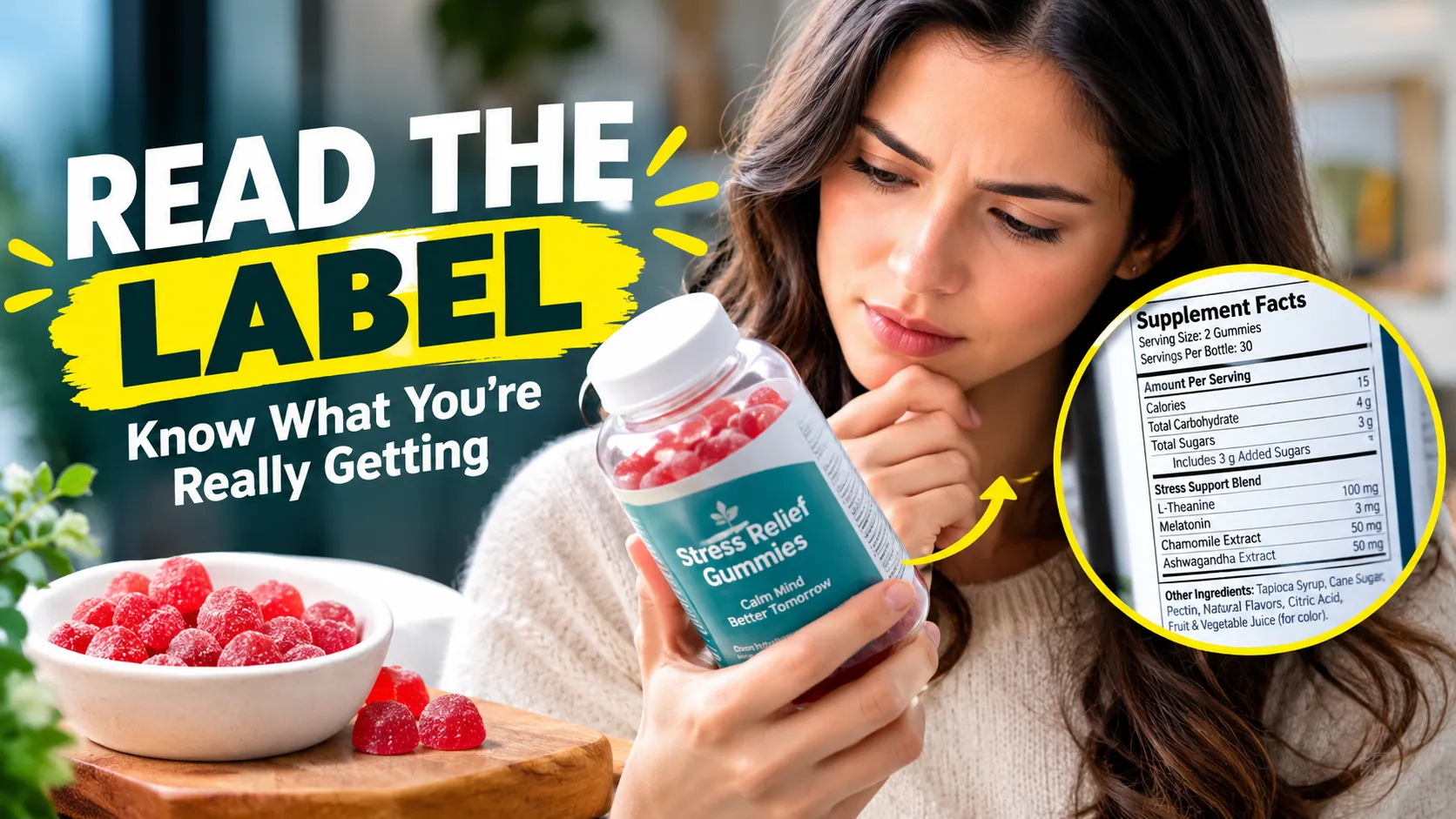
Labels tell you more than front-of-pack promises. Start with the supplement facts panel and check what each serving actually contains.
Common Ingredients and What to Know
Swipe left/right to see the full table →
| Ingredient | Why It Appears | Caution to Know |
|---|---|---|
| L-theanine | Often linked with relaxed focus | Research is limited; effects vary |
| Magnesium | General wellness mineral | Can upset the stomach; ask about kidney concerns |
| Lemon balm | Traditional calming herb | May cause drowsiness or interact with medicines |
| Ashwagandha | Popular “stress herb” | Not right for everyone; ask a professional first |
| Melatonin | Sleep-timing ingredient | Can cause grogginess; not a stress ingredient |
Also check sugar per serving, serving size, and whether the front claims match the panel. Many gummies contain added sugar, which adds up if taken daily. Skip any product that promises to treat anxiety, depression, or any other condition.
Four Questions Before You Buy
These four checks take under a minute and filter out many weak products.
Is the dose listed?
Look for exact amounts per serving, not just a vague blend name. Hidden amounts make it hard to judge safety or compare products.
Is it independently tested?
A third-party seal suggests someone checked what is inside. It does not prove the product works, but it adds transparency.
Does it fit my health?
Medication, pregnancy, and health conditions change the picture. A pharmacist can review a label in a few minutes.
Is the claim realistic?
Words like cure, treat, or instant relief are red flags. Honest brands describe general support and keep claims modest.
Who Should Be Extra Cautious
Swipe left/right to see the full table →
| Group | Why Extra Care Matters | Smart Step |
|---|---|---|
| Pregnant or nursing | Many herbs lack safety data | Ask your care provider first |
| Taking medication | Interactions are possible | Ask a pharmacist or doctor first |
| Children and teens | Adult doses are not designed for them | Avoid unless a professional advises |
| Ongoing health conditions | Ingredients may affect them | Check in before starting |
Use this simple path before trying any stress gummy.
When in doubt, the professional branch is always the safer choice, and it costs you only a short conversation.
Warning: Stop use and seek medical help for rash, swelling, trouble breathing, a racing heartbeat, fainting, or severe stomach upset. Do not combine several calming products without professional guidance.
Safer Practice: Habits First, Gummies Second

People often ask, do stress relief gummies work better than habits? For most routines, habits come first because they carry fewer unknowns. Here is a realistic example. You feel wired at 9 p.m. after a long day. A safer first move is dimming lights, putting the phone away, and having a warm caffeine-free drink. If you still want to try a gummy later, discuss it with a professional, keep to the label serving, and watch how you feel.
Before reaching for a product, check which everyday triggers might be driving the tension.
Common Stress Triggers Worth Checking First
Fixing one trigger often helps more than adding another product, and it costs little to test.
Safer vs Riskier Routines
Swipe left/right to see the full table →
| Situation | Safer Choice | Riskier Choice |
|---|---|---|
| Trying a new product | Follow the label serving | Doubling servings for faster results |
| Mixing products | Ask a professional first | Stacking gummies, teas, and sleep aids |
| Judging results | Track mood and sleep for two weeks | Deciding after one night |
| Choosing a brand | Clear labels, tested products | Vague “proprietary blends” |
If you decide to try a product after talking with a professional, these quick rules keep things simple.
Do
Check the full label.
Keep a simple mood and sleep log.
Pair with sleep and movement.
Store away from children.
Don’t
Exceed the serving size.
Use it to avoid talking about heavy stress.
Mix with alcohol.
Treat candy taste as a sign of safety.
The pattern is simple: stay modest, stay curious, and keep other people in the loop.
This general guide shows how caution tends to rise with the situation.
Caution Level (general practical guide)
If you land in the middle or higher group, a professional conversation comes before any purchase.
Tip: Take a photo of the supplement facts panel and show it to your pharmacist or doctor. It makes interaction checks quick and easy.
Self-Care or Professional Help?
When Self-Care Is Reasonable vs When to Seek Help
Swipe left/right to see the full table →
| Situation | Self-Care Step | Seek Help If |
|---|---|---|
| Occasional tense days | Walk, water, wind-down routine | Stress lingers beyond a few weeks |
| Trouble winding down | Regular bedtime, less late caffeine | Sleep problems keep returning |
| Feeling overwhelmed | Talk with a friend, split tasks | Hopelessness or panic appears |
| Unusual feeling after a gummy | Stop and monitor | Rash, swelling, chest pain, or fainting |
When to contact a professional: Talk with a licensed healthcare professional if stress, worry, or low mood lasts more than a few weeks, affects work or relationships, or comes with sleep trouble, panic, or physical symptoms. Seek urgent help for chest pain, trouble breathing, fainting, or thoughts of harming yourself. In the U.S., you can call or text 988 to reach the Suicide and Crisis Lifeline.
Frequently Asked Questions
Do stress relief gummies work for everyone?
No. Responses vary by ingredients, dose, and person, and research on many ingredients is limited. Treat gummies as an optional extra, not a fix.
How long do stress gummies take to work?
Timing varies, and there is no guaranteed window. Follow label directions and track your sleep and mood over a couple of weeks.
Are stress gummies safe to take every day?
Safety depends on ingredients, dose, health status, and any medications. Follow the label serving and ask a professional about daily use.
Can I take stress gummies with medication?
Interactions are possible, so ask a pharmacist or doctor first. Bring the supplement facts panel with you.
Are stress gummies better than exercise or a bedtime routine?
Not necessarily. Sleep, movement, and breaks are well-known ways to support daily calm, and they carry fewer unknowns.
Can stress gummies cause side effects?
Yes. Some people notice drowsiness, stomach upset, or allergic reactions. Stop use and seek medical help for serious symptoms.
What should I look for on a stress gummy label?
Look for full ingredient amounts, serving size, sugar content, and third-party testing seals. Avoid products that claim to treat conditions.
Final Thoughts
So, do stress relief gummies work? Some people feel a mild benefit, but proof is limited and results differ. Start with sleep, movement, and clear boundaries, then treat any gummy as an optional extra after checking the label and your health situation. If stress feels heavy, lasts a long time, or keeps getting worse, reach out to a licensed professional. You deserve real support, not just a snack.
Author
-

I’m Alex Turner, a massage product reviewer and wellness writer at RemedyTip. I specialize in researching, evaluating, and comparing massage and recovery products to help readers make informed purchasing decisions. My focus is on practical, evidence-informed product guidance covering muscle recovery, relaxation, everyday comfort, and wellness.
I take a research-driven approach to every product I review. I examine product specifications, features, materials, performance claims, user feedback, durability, comfort, ease of use, and overall value. When appropriate, I also consult trusted industry and health-related sources to verify important information and provide readers with a more complete and balanced view.
I cover a wide range of products, including massage guns, handheld massagers, neck and shoulder massagers, foot massagers, massage chairs, foam rollers, and other recovery tools. Rather than focusing only on marketing claims, I look at how products compare in real-world use and who they are actually suitable for. I also consider different budgets, use cases, and user needs when making recommendations.
At RemedyTip, I’m committed to accuracy, transparency, and unbiased product information. I clearly distinguish between manufacturer claims, available evidence, and my own product analysis so readers can understand the basis of each recommendation. I continuously research new products, technologies, and developments in the massage and recovery space to keep my content current and useful.
My goal is simple: to provide trustworthy, easy-to-understand information that helps readers choose massage and recovery products with greater confidence.