By Alex Turner
Handheld infrared massagers are marketed for sore shoulders and tight backs, so it’s fair to ask whether the same device belongs anywhere near your face. Facial skin is thinner, more sensitive, and sits close to your eyes — details that change how you should use an infrared massager on the face compared with using it on your shoulders or legs. This guide walks through when it’s reasonable, who should be extra careful, and what a safer routine looks like.
What Happens When You Use an Infrared Massager on the Face
Most infrared massagers combine gentle vibration or kneading with low-level heat that penetrates a few millimeters into skin and muscle. On the body, that warmth can make tight tissue feel looser. On the face, the same warmth can feel soothing across the jaw and temples, but facial skin has fewer protective layers than skin on your back or thighs, so the margin for comfortable use is smaller.
Before you decide whether you can use an infrared massager on your face, it helps to run through a few quick checks rather than guessing.
Device Design
Check if the manufacturer lists facial use as intended. A body-only device may run hotter or vibrate harder than facial skin can comfortably handle.
Skin Condition
Active acne, sunburn, eczema flares, or broken skin are reasons to skip a session until skin has calmed down.
Eye Placement
Eyes should stay closed and covered, and the device should never rest directly over the eyelids or eye socket.
Heat Setting
The lowest heat option is the safer starting point for facial skin, even if you normally use a higher setting on your back.
Who Should Be Cautious About Using an Infrared Massager on the Face
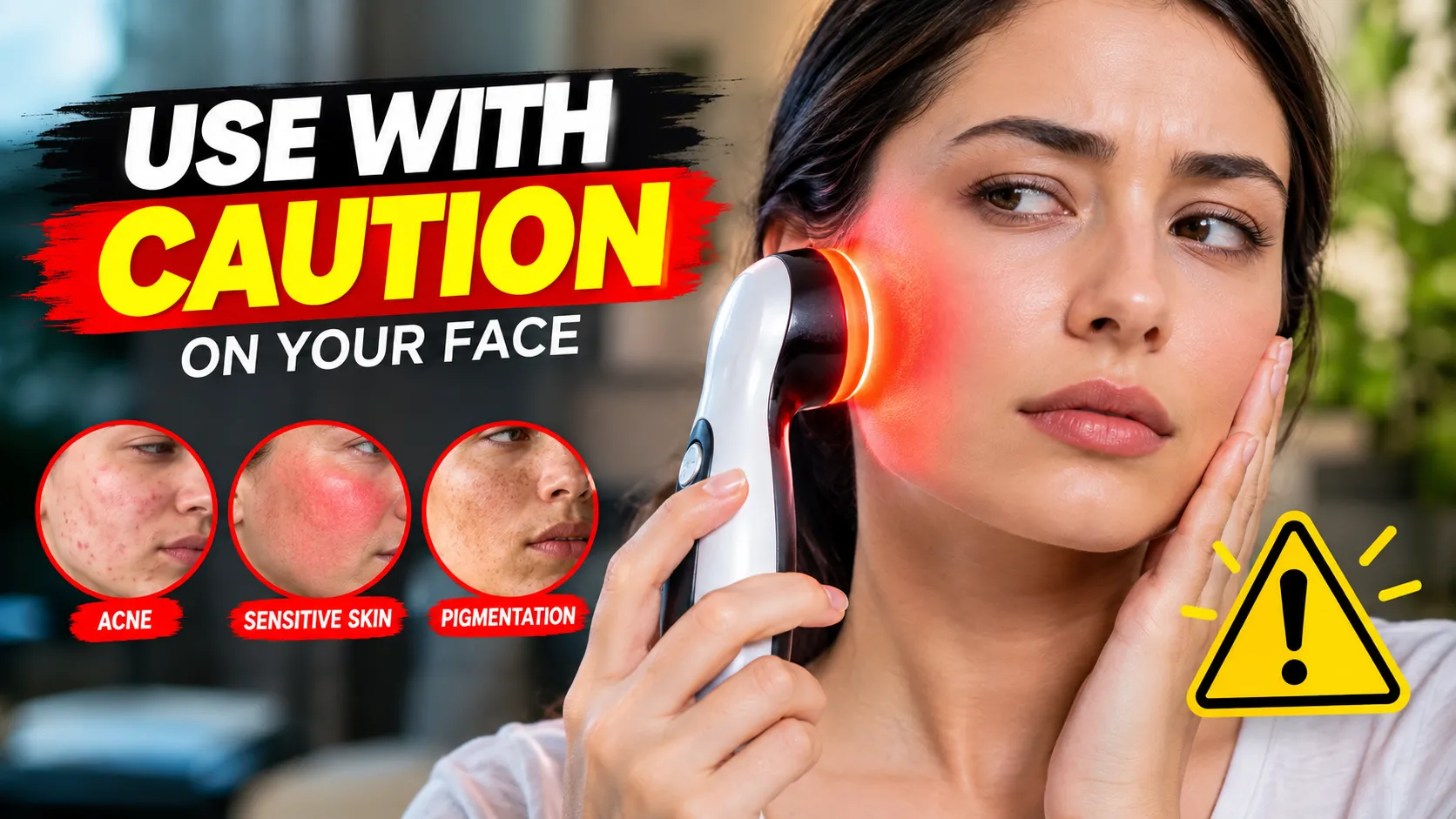
Not everyone should reach for the same routine. The table below breaks down who can generally proceed with care and who should hold off.
Who Should Be Extra Careful
Swipe left/right to see the full table →
| Group | Why Caution Matters |
|---|---|
| Active acne or open blemishes | Heat and pressure can irritate inflamed skin further |
| Rosacea or facial flushing | Heat is a common flare trigger |
| Pregnancy | Talk with a provider first, since guidance varies by device |
| Pacemaker or implanted device | Vibration and electronic devices near the head warrant medical clearance first |
A Simple Safety Decision Path
If you’re still deciding whether to try an infrared massager on your face today, this quick path can help.
This is a general practical guide, not a personalized medical assessment.
Red Flags to Watch For After Facial Use
Most people tolerate a short session fine, but it helps to know what shouldn’t happen.
Any of these signs is a cue to stop and let skin rest before trying again.
Safe vs Risky Ways to Use It on Your Face
Swipe left/right to see the full table →
| Safer Approach | Riskier Approach |
|---|---|
| Lowest heat setting on jaw and cheeks | High heat borrowed from a body setting |
| Eyes closed, device kept off eyelids | Gliding the device over closed or open eyes |
| Short 5–10 minute sessions | Long sessions “for a deeper effect” |
| Clean device before each use | Sharing a device without cleaning it |
How Often and How Long Is Reasonable
Swipe left/right to see the full table →
| Use Stage | General Practical Guide |
|---|---|
| First try | 3–5 minutes, lowest setting, once |
| If skin tolerates it well | Up to 10 minutes, 2–3 times weekly |
| After any irritation | Pause several days before trying again |
Common Mistakes vs Better Choices
Swipe left/right to see the full table →
| Mistake | Better Choice |
|---|---|
| Using a body device with heavy pressure heads | Choose a facial-rated attachment or device |
| Applying it right after sun exposure | Wait until skin has fully cooled and calmed |
| Ignoring redness that doesn’t fade | Stop sessions and let skin recover |
Facial-use priority checklist:
Eye protection:
Low heat setting:
Skin check first:
Session length limit:
Widths reflect a general practical priority guide, not measured data.
Face-Safe Alternatives If You’re Still Unsure
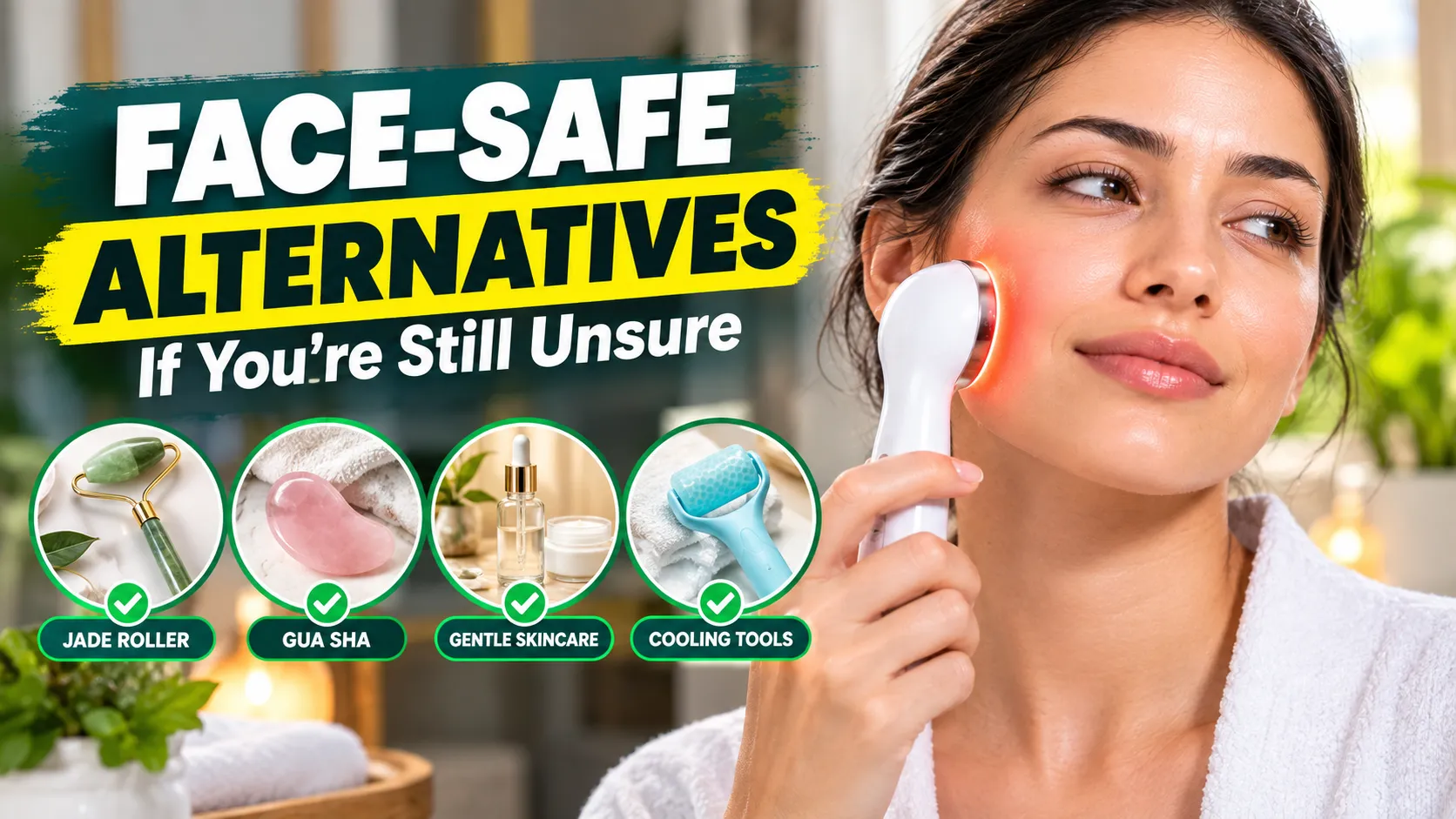
If you’d rather not use an infrared massager on your face at all right now, a few gentler options can offer similar comfort.
Swipe left/right to see the full table →
| Option | Best Fit |
|---|---|
| Facial-rated infrared device, lowest setting | Calm, non-sensitive skin |
| Cool or room-temperature facial roller | Rosacea-prone or heat-sensitive skin |
| Warm (not hot) washcloth | Anyone wanting a simple, low-tech option |
Facial-Rated Infrared Massager
May support a relaxing evening routine when used on the lowest facial-safe setting.
Protective Eye Goggles for Light/Heat Devices
Can make it easier to keep eyes fully shielded during a facial session.
Frequently Asked Questions
Can you use an infrared massager on your face every day?
Daily use isn’t usually necessary. Starting with a few short sessions a week and watching how skin responds is a more cautious approach.
Is it safe to use an infrared massager near your eyes?
No. Keep the device off eyelids and the eye socket area, and always keep eyes closed during a facial session.
Can an infrared massager cause a breakout?
Heat and pressure can aggravate already-inflamed acne for some people. If breakouts appear after use, pause and let skin settle.
Do you need a special facial device, or can a body massager work?
A device labeled for facial use is the safer choice, since body massagers often run hotter or apply more pressure than facial skin needs.
Is infrared heat on the face safe during pregnancy?
Guidance varies by device and situation, so it’s best to check with your provider before adding this to a facial routine during pregnancy.
What should I do if my face feels hot or stings during use?
Stop the session immediately, remove the device, and let skin cool. A stinging sensation is a sign the setting or duration is too much.
Can rosacea-prone skin ever tolerate an infrared massager?
Heat commonly triggers rosacea flares, so many people with rosacea are better off skipping facial heat devices or checking with a dermatologist first.
Final Thoughts
In most cases, you can use an infrared massager on your face if you choose a facial-rated setting, protect your eyes, and keep sessions short. Watch how your skin responds and adjust from there. If you notice burning, swelling, spreading redness, or a reaction that doesn’t improve, stop use and check in with a healthcare professional rather than pushing through it.
Author
-

I’m Alex Turner, a massage product reviewer and wellness writer at RemedyTip. I specialize in researching, evaluating, and comparing massage and recovery products to help readers make informed purchasing decisions. My focus is on practical, evidence-informed product guidance covering muscle recovery, relaxation, everyday comfort, and wellness.
I take a research-driven approach to every product I review. I examine product specifications, features, materials, performance claims, user feedback, durability, comfort, ease of use, and overall value. When appropriate, I also consult trusted industry and health-related sources to verify important information and provide readers with a more complete and balanced view.
I cover a wide range of products, including massage guns, handheld massagers, neck and shoulder massagers, foot massagers, massage chairs, foam rollers, and other recovery tools. Rather than focusing only on marketing claims, I look at how products compare in real-world use and who they are actually suitable for. I also consider different budgets, use cases, and user needs when making recommendations.
At RemedyTip, I’m committed to accuracy, transparency, and unbiased product information. I clearly distinguish between manufacturer claims, available evidence, and my own product analysis so readers can understand the basis of each recommendation. I continuously research new products, technologies, and developments in the massage and recovery space to keep my content current and useful.
My goal is simple: to provide trustworthy, easy-to-understand information that helps readers choose massage and recovery products with greater confidence.