By Alex Turner | Health & Wellness
Quick Answer:
Percussion massagers can be used on the stomach in most cases, but require caution. Avoid sensitive areas, recent surgery sites, and abdominal pain—and stop immediately if you feel increased discomfort, bloating, or unusual sensations. Consult a healthcare provider if you have digestive issues or pregnancy concerns.
Using Percussion Massagers Safely on the Stomach
Percussion massage devices vibrate at high frequencies to soothe muscle tension and support recovery routines. Many people find them useful for general relaxation, but the stomach is a sensitive area with organs, nerves, and delicate tissues just below the surface. Understanding when and how to use a percussion massager safely on your abdomen helps you avoid discomfort and get the benefits without risk.
Safety Precautions
When to Avoid
Red Flags
Professional Guidance
Health & Safety Disclaimer
This article is for general educational information only. It does not diagnose, treat, cure, or prevent any condition. It does not replace advice from a licensed healthcare professional. Readers should seek professional help for severe, worsening, unusual, or persistent abdominal symptoms.
How Percussion Massage Works on the Body
Percussion massagers deliver rapid, shallow vibrations—typically 1,500 to 3,200 pulses per minute—to the muscle layer just under the skin. On larger muscle groups like the back or legs, these vibrations can ease tension, reduce soreness, and support recovery after activity. The stomach, however, sits above sensitive organs: your digestive tract, liver, spleen, and kidneys are close to the surface and aren’t designed to tolerate the same intensity of vibration as dense muscle tissue.
Using a percussion massager on your stomach can be safe if you follow careful guidelines. The key is using light pressure, avoiding direct pressure on organs, and stopping immediately if anything feels wrong. Many people use gentle percussion on the outer abdominal muscles or the sides of the abdomen as part of a relaxation routine—but “gentle” is non-negotiable in this area.
Who Should Be Extra Cautious With Stomach Percussion

Swipe left/right to see the full table →
| Who Should Avoid or Be Cautious | Why | Better Alternative |
|---|---|---|
| Pregnant people | Vibration can affect fetal development; risk varies by trimester | Ask OB-GYN first; gentle hand massage only |
| Recent surgery (abdominal) | Vibration can disrupt healing and irritate incisions | Wait until doctor clears you (usually 4–8 weeks) |
| Active abdominal pain or cramping | Vibration can worsen inflammation or discomfort | Rest, heat therapy, or consult a doctor |
| IBS, Crohn’s, colitis, or ulcers | Vibration may trigger flare-ups or increase sensitivity | Check with your gastroenterologist first |
| Large or pulsing abdominal mass (unexplained) | Could indicate organ enlargement or other issues | See a doctor to rule out underlying conditions |
| Taking blood thinners or anticoagulants | Vibration may increase bruising or internal bleeding risk | Consult your doctor or pharmacist |
Is It Safe? A Decision-Path Guide
Use this flowchart to decide whether stomach percussion is right for you. Start at the top and follow the branches:
Do you have active abdominal pain, cramping, bloating, or nausea?
YES
❌ Skip percussion. Rest and hydrate.
NO
→ Continue
Are you pregnant or have you had abdominal surgery in the past 8 weeks?
YES
❌ Consult your doctor.
NO
→ Continue
Do you have IBS, Crohn’s, colitis, or stomach ulcers?
YES
⚠️ Talk to your doctor first.
NO
→ Continue
You’re a Good Fit for Light Stomach Percussion
Use a medium-intensity massager on low speed, avoid direct pressure on organs, and stop if you feel any unusual sensations.
This guide is general. When in doubt, consult a healthcare provider before starting.
Red Flags: When to Stop Immediately
If you experience any of these symptoms during or after stomach percussion, stop using the device and seek medical attention if symptoms don’t resolve quickly:
🚨 Seek Help Right Away If:
- Severe or worsening pain
- Vomiting or nausea
- Unusual bleeding or bruising
- Difficulty breathing or chest pain
- Abdominal swelling or hardness
⚠️ Stop and Monitor If:
- Sharp or stabbing pain
- Persistent bloating or gas
- Diarrhea or constipation onset
- Increased cramping
- Dizziness or lightheadedness
Note: Mild tingling or slight warmth is normal. Any sensation that feels abnormal, worsening, or different from your usual response warrants stopping and reassessing.
Safe vs. Risky Use Patterns
Swipe left/right to see the full table →
| Risky Approach | Safer Approach |
|---|---|
| Using on high intensity and speed | Start low, gradually increase only if comfortable |
| Pressing directly over belly button or sides of ribs | Focus on outer abdominal muscles; avoid organs |
| Using for more than 5 minutes per session | Limit to 2–3 minutes per session |
| Using on a full stomach or immediately after eating | Wait 1–2 hours after meals |
| Ignoring any pain or unusual sensation | Stop immediately if anything feels wrong |
| Using daily without rest days | Use 2–4 times per week with rest days |
Safer Alternatives for Stomach Comfort
If percussion massage doesn’t feel right for your stomach or if you want to explore other options, these gentler methods can support everyday comfort without vibration:
Swipe left/right to see the full table →
| Alternative Method | Best For | Safety Level |
|---|---|---|
| Warm compress or heating pad | General relaxation, minor cramping, muscle tension | Very safe; avoid if pregnant |
| Gentle hand massage (no vibration) | Light relaxation, postpartum comfort, everyday tension | Safe if gentle; skip if severe pain |
| Deep abdominal breathing exercises | Bloating, stress, gas relief, digestive support | Safe for most; check if chest pain present |
| Foam roller (carefully, on sides) | Outer abdominal muscle tension, rib mobility | Moderate; avoid direct center/organs |
| Light stretching (child’s pose, supine twist) | Everyday mobility, mild tension, post-meal comfort | Safe when done slowly; avoid if pain present |
| Gua sha tool (plastic, light pressure) | Light relaxation, outer muscle tension | Safe if very gentle; no aggressive scraping |
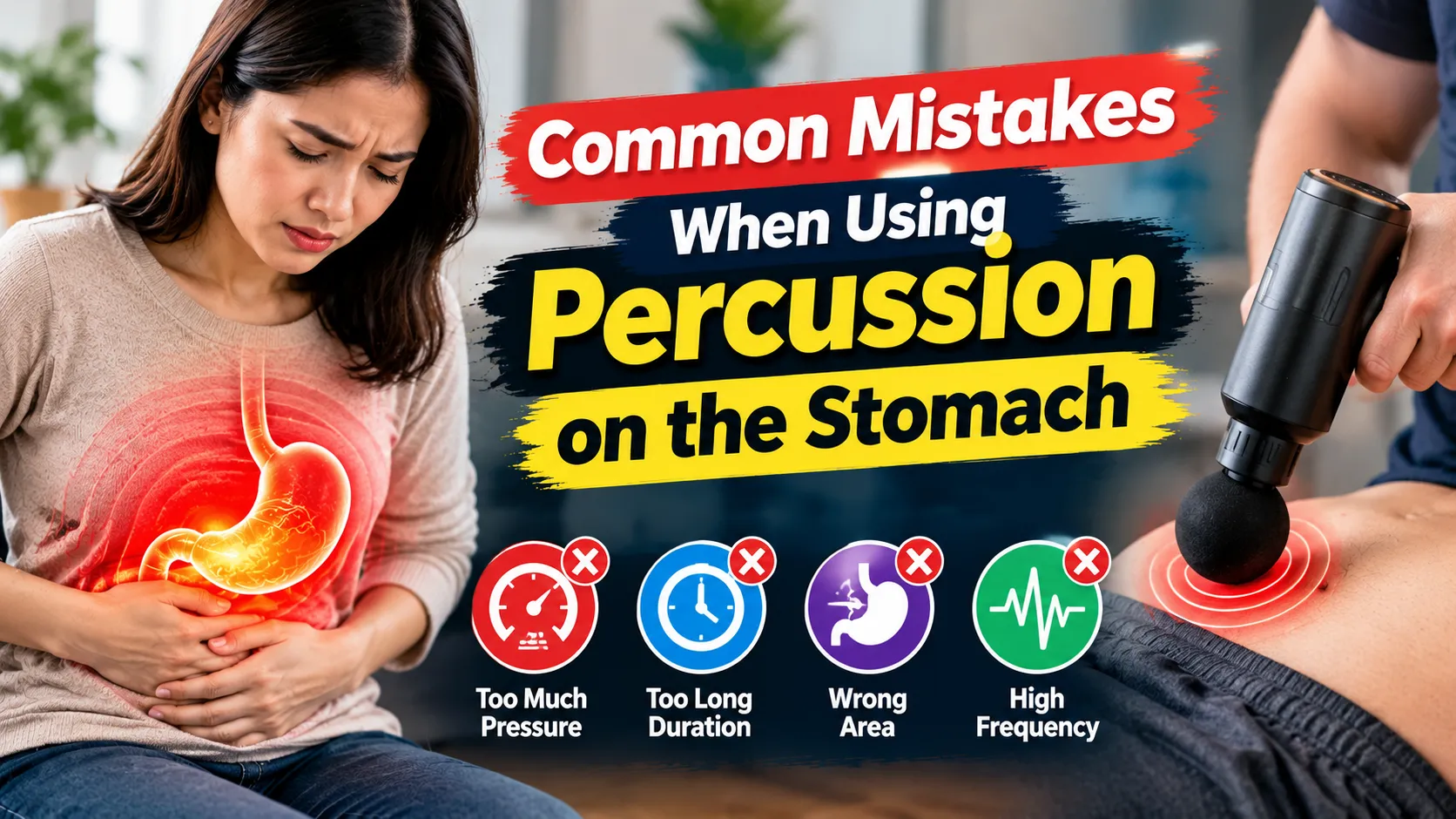
Common Mistakes When Using Percussion on the Stomach
Swipe left/right to see the full table →
| Mistake | Why It’s Risky |
|---|---|
| Thinking “more intensity = better results” | Higher vibration can irritate organs and increase discomfort instead of relieving it |
| Using on a full or bloated stomach | Vibration can trigger nausea, cramping, or digestive upset |
| Not knowing where organs are located | Pressing directly over your liver, spleen, or kidneys risks organ irritation |
| Using a massager meant for larger muscles | Devices designed for back/legs may be too intense for the stomach |
| Pushing through discomfort and hoping it passes | Discomfort is your body’s signal to stop; continuing can cause harm |
When to Contact a Healthcare Professional
Seek Medical Help If:
- Severe or sudden pain that doesn’t resolve with rest
- Persistent nausea or vomiting after using a percussion massager
- Unexplained bruising or swelling on your abdomen
- Changes in digestion (diarrhea, constipation, or gas that doesn’t improve)
- You have a pre-existing digestive condition and want to use a percussion massager safely
- Symptoms worsen or don’t improve after a few days of avoiding percussion
- You’re unsure about your health and want professional clearance before starting
Your doctor, nurse, or gastroenterologist can assess your individual situation and provide personalized guidance. If you have a history of digestive issues, surgery, or take medications that affect blood clotting, professional input is especially important.
Affiliate Disclosure
This article may contain affiliate links. If you buy through these links, we may earn a small commission at no extra cost to you. We only recommend products that fit the topic and do not replace professional medical advice. Your support helps keep our content free and accessible.
Recommended Percussion Massagers for Gentle Use
If you’ve decided percussion massage is right for you, look for models with adjustable speed (especially low-speed options), softer attachments, and a smaller, lightweight design. This massager is popular for versatile, gentle use:
Theragun Elite (or equivalent mid-range massager)
A well-reviewed percussion massager with adjustable intensity, quiet operation, and interchangeable heads. Choose a softer attachment for stomach use and keep speed on low.
Note: Always read the manufacturer’s instructions and warnings before use. Never use a device on areas the manual advises against.
Frequently Asked Questions
Can you use a percussion massager directly over your stomach muscles?
Yes, you can use light percussion on the outer abdominal muscles (rectus abdominis) in short sessions, but avoid high intensity and never press over organs. Keep vibration to 2–3 minutes per session, use low speed, and stop if you feel any unusual sensation.
Is it safe to use a percussion massager on your stomach if you have bloating?
No. Vibration can worsen bloating, cramping, and gas. Instead, try gentle hand massage, breathing exercises, or a warm compress. If bloating is chronic, ask a doctor to rule out underlying digestive issues.
How long should you use a percussion massager on your stomach?
Keep each session to 2–3 minutes maximum. Use no more than 2–4 times per week with rest days in between. Longer or more frequent sessions increase the risk of overstimulation and discomfort.
What should you avoid when using a percussion massager on your stomach?
Avoid: high intensity, pressing over organs (belly button, ribs, sides), use on a full stomach, using immediately after surgery, using if pregnant, and ignoring discomfort. Always start on low speed and increase gradually if at all.
Can you use a percussion massager during pregnancy?
No. Vibration can affect fetal development, especially in the first and second trimester. Consult your OB-GYN before using any massager. Gentle hand massage or heat therapy (if cleared by your doctor) are safer alternatives during pregnancy.
What’s the difference between using a percussion massager on the stomach vs. other body parts?
The stomach is more delicate. Large muscles like your back and legs can handle higher intensity and longer sessions. The stomach contains organs close to the surface, so you must use lower intensity, shorter sessions, and avoid certain zones. Always apply lighter pressure on sensitive areas.
Can a percussion massager help with digestion or IBS?
No. Vibration is unlikely to improve digestion and may trigger flare-ups or worsen symptoms in people with IBS, Crohn’s, colitis, or ulcers. Consult a gastroenterologist before using one if you have a digestive condition. Gentle breathing, heat, and professional dietary guidance are safer approaches.
Final Thoughts
Percussion massage can be part of a safe routine for many people, but the stomach requires extra caution. Light pressure, low speed, short sessions, and careful attention to how your body responds are key. If you have any pre-existing health conditions, are pregnant, or are unsure about safety, consult a healthcare provider before starting. Remember that discomfort is your body’s way of signaling you to stop—listen to it. When in doubt, choose gentler alternatives like heat therapy, stretching, or breathing exercises, which carry far fewer risks and can be equally effective for everyday comfort.
Author
-

I’m Alex Turner, a massage product reviewer and wellness writer at RemedyTip. I specialize in researching, evaluating, and comparing massage and recovery products to help readers make informed purchasing decisions. My focus is on practical, evidence-informed product guidance covering muscle recovery, relaxation, everyday comfort, and wellness.
I take a research-driven approach to every product I review. I examine product specifications, features, materials, performance claims, user feedback, durability, comfort, ease of use, and overall value. When appropriate, I also consult trusted industry and health-related sources to verify important information and provide readers with a more complete and balanced view.
I cover a wide range of products, including massage guns, handheld massagers, neck and shoulder massagers, foot massagers, massage chairs, foam rollers, and other recovery tools. Rather than focusing only on marketing claims, I look at how products compare in real-world use and who they are actually suitable for. I also consider different budgets, use cases, and user needs when making recommendations.
At RemedyTip, I’m committed to accuracy, transparency, and unbiased product information. I clearly distinguish between manufacturer claims, available evidence, and my own product analysis so readers can understand the basis of each recommendation. I continuously research new products, technologies, and developments in the massage and recovery space to keep my content current and useful.
My goal is simple: to provide trustworthy, easy-to-understand information that helps readers choose massage and recovery products with greater confidence.