
By Alex Turner
People often reach for the same handheld tool they use on sore shoulders and wonder if it’s fine higher up. This guide breaks down when a percussion massager on your face may be appropriate, who should avoid it, and what a gentler routine looks like instead.
Facial Safety Percussion Massagers Skin Care Self-Care Routine
What These Devices Are Actually Built For
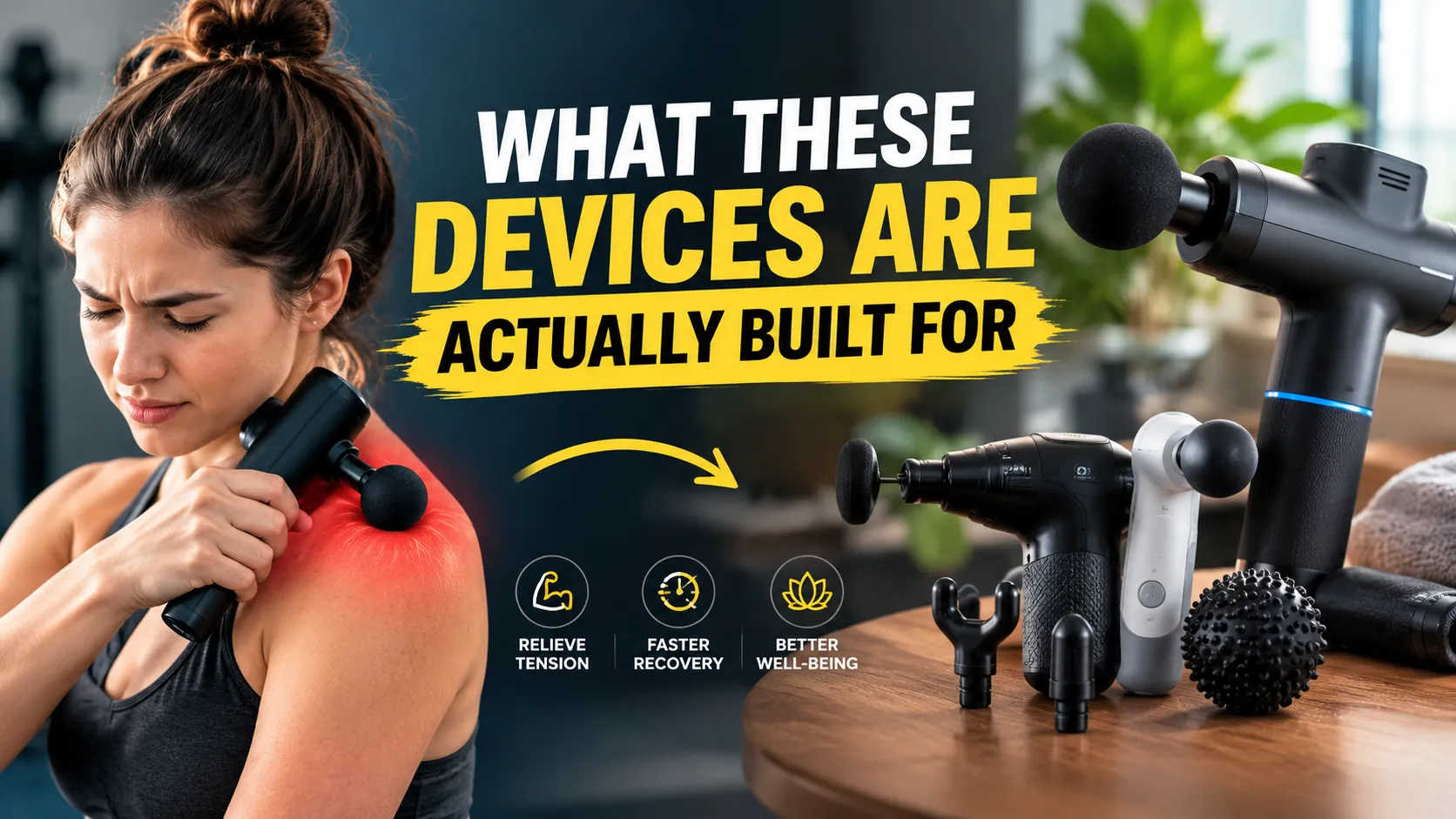
Standard percussion massagers are engineered for large muscle groups — calves, shoulders, backs. The motors deliver rapid, deep strikes meant to reach muscle tissue under a thicker layer of skin and fat. That same force applied near thin facial skin, sinuses, or bone is a different situation entirely.
Using a percussion massager on your face with a body-strength head and setting can bruise skin, irritate nerves, or aggravate sinus areas. Some brands now sell dedicated facial attachments or separate mini devices built at much lower intensity specifically because full-strength models aren’t meant for the face.
Who Should Be Extra Cautious
Situations Where Facial Use Needs More Care
Swipe left/right to see the full table →
| Situation | Why It Matters |
|---|---|
| Active acne or breakouts | Vibration can spread bacteria or worsen inflammation |
| Recent cosmetic procedures | Fillers, Botox, or peels need undisturbed healing time |
| Sinus pressure or headaches | Percussion near the sinus area can worsen discomfort |
| TMJ or jaw pain | Added force near the jaw joint may flare symptoms |
| Rosacea or sensitive skin | Friction and vibration can trigger flushing or irritation |
A Simple Safety Decision Path
Before using a percussion massager on your face, walk through this:
This is a general practical guide, not a substitute for a professional recommendation.
Red Flags to Stop Immediately
Stop use and reassess if any of these appear:
- Bruising, welts, or broken skin near the massaged area
- Sharp or worsening headache after use near the temples or sinuses
- Numbness, tingling, or a burning sensation that doesn’t fade quickly
- New swelling around the eyes or jaw
- Skin that stays red, hot, or irritated for hours
These are general warning signs, not a diagnostic list.
Common Mistakes vs Safer Choices
Swipe left/right to see the full table →
| Common Mistake | Safer Choice |
|---|---|
| Using the body head at full speed | Use a soft facial attachment on the lowest setting |
| Pressing directly on bone or jawline | Glide lightly over muscle, avoid bony ridges |
| Long sessions in one spot | Keep each area to under a minute |
| Using it on bare, dry skin | Add a light layer of moisturizer to reduce friction |
How Often and How Long
Swipe left/right to see the full table →
| Factor | General Guide |
|---|---|
| Frequency | 2-3 times a week for facial-specific devices only |
| Session length | Under 60 seconds per area |
| Intensity setting | Lowest available setting only |
Gentler Alternatives for Facial Tension
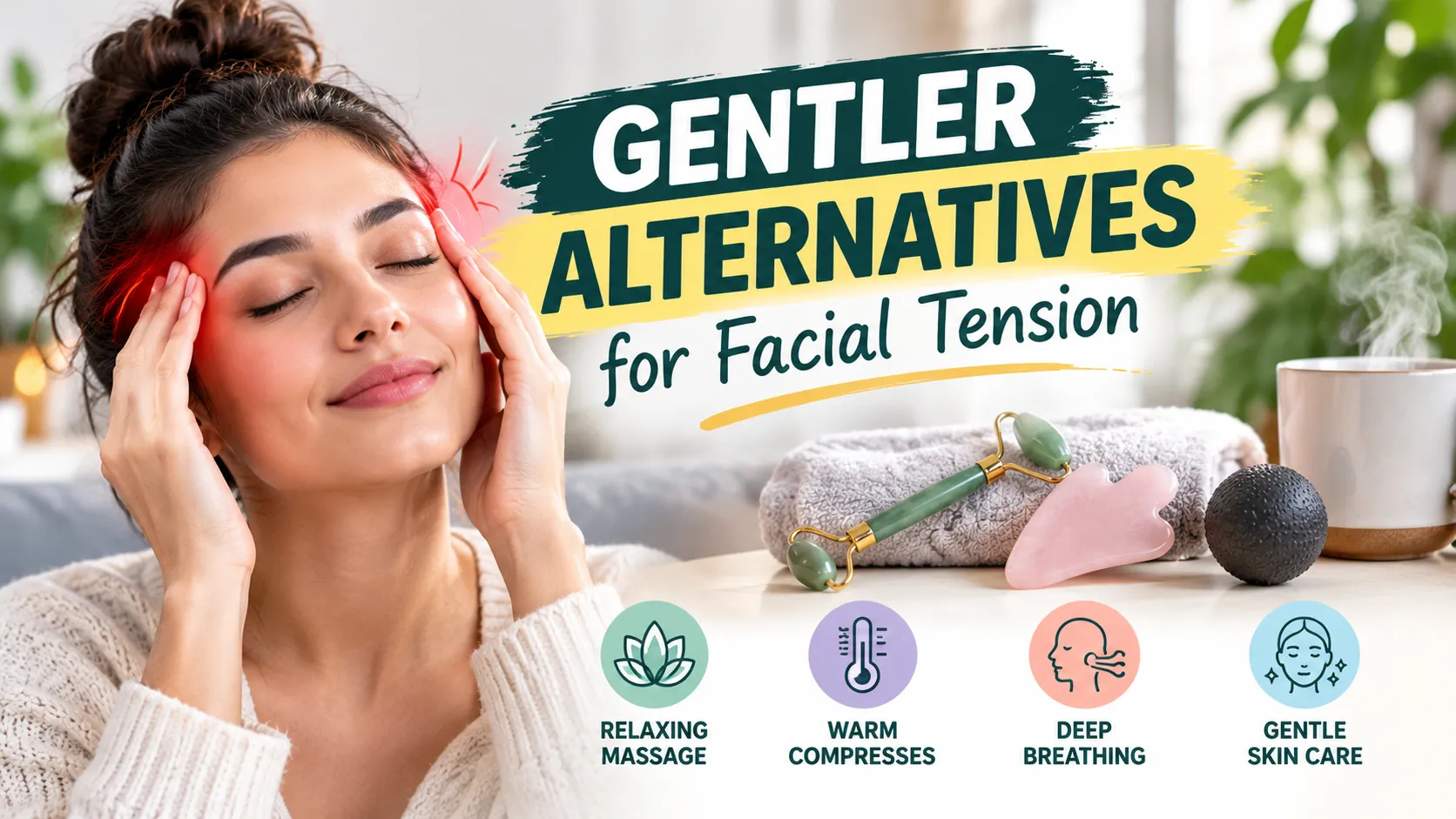
If you’re unsure whether a percussion massager on your face is worth the risk, several gentler routines target the same tension without deep-impact force.
Swipe left/right to see the full table →
| Alternative | Best For |
|---|---|
| Facial-specific mini massager | Low-intensity routine tension relief |
| Gua sha or jade roller | Gentle daily routine, no vibration |
| Manual fingertip massage | Full control over pressure, no cost |
| Warm compress | Jaw tension without impact force |
Mini Facial Percussion Massager
A low-intensity, facial-specific attachment size may support a gentler routine than a standard body device.
Do’s and Don’ts at a Glance
Do
Use only facial-rated devices, the lowest setting, and short sessions on clean, moisturized skin.
Don’t
Don’t use a body-strength percussion massager on your face, over bone, breakouts, or the eye area.
Risk Level by Face Area
General practical guide — not a medical risk assessment:
Jaw/cheek muscle area — Low
Forehead/temple area — Medium
Under-eye/orbital bone — High
When to Contact a Professional
Talk with a dermatologist or doctor before facial percussion use if you have a skin condition, recent procedure, chronic headaches, or jaw disorder. Seek prompt care for bruising, numbness, severe pain, or swelling that doesn’t settle within a day.
Frequently Asked Questions
Is it bad to use a percussion massager on your face?
A standard body-strength device can be too forceful for facial skin and bone. Facial-specific, low-intensity models are the safer option.
Can a percussion massager help with jaw tension?
Light, low-setting use near the jaw muscle (not the joint) may support comfort for some people, but stop if pain increases.
Can facial percussion massage cause bruising?
Yes, especially with too much intensity or use over bone. Choose a soft attachment and the lowest setting to lower this risk.
Is it safe to use near the eyes?
No. The eye area and orbital bone are too delicate for percussion devices, even low-intensity ones.
How is a facial massager different from a body one?
Facial models typically use softer heads, lower amplitude, and gentler speeds designed for thin skin, unlike body devices built for deep muscle tissue.
Can I use it if I have acne?
It’s best to avoid vibration devices over active breakouts, since friction and pressure can worsen irritation or spread bacteria.
What settings are safest for facial use?
Always start on the lowest available setting with a soft attachment, and keep each session under a minute per area.
Final Thoughts
A percussion massager on your face isn’t automatically off-limits, but it does call for a facial-specific device, the lowest setting, and careful placement away from bone and eyes. When in doubt, gentler tools like a jade roller or fingertip massage offer similar relief with far less risk. If you notice bruising, numbness, or pain that doesn’t ease up, check in with a healthcare professional before continuing.
Author
-

I’m Alex Turner, a massage product reviewer and wellness writer at RemedyTip. I specialize in researching, evaluating, and comparing massage and recovery products to help readers make informed purchasing decisions. My focus is on practical, evidence-informed product guidance covering muscle recovery, relaxation, everyday comfort, and wellness.
I take a research-driven approach to every product I review. I examine product specifications, features, materials, performance claims, user feedback, durability, comfort, ease of use, and overall value. When appropriate, I also consult trusted industry and health-related sources to verify important information and provide readers with a more complete and balanced view.
I cover a wide range of products, including massage guns, handheld massagers, neck and shoulder massagers, foot massagers, massage chairs, foam rollers, and other recovery tools. Rather than focusing only on marketing claims, I look at how products compare in real-world use and who they are actually suitable for. I also consider different budgets, use cases, and user needs when making recommendations.
At RemedyTip, I’m committed to accuracy, transparency, and unbiased product information. I clearly distinguish between manufacturer claims, available evidence, and my own product analysis so readers can understand the basis of each recommendation. I continuously research new products, technologies, and developments in the massage and recovery space to keep my content current and useful.
My goal is simple: to provide trustworthy, easy-to-understand information that helps readers choose massage and recovery products with greater confidence.

