A neck massager may ease muscle tension, but a pacemaker makes device choice important. People with a pacemaker should not use a neck massager until their cardiology team confirms that specific device is safe.
Vibration, heat, electrical stimulation, and motor-generated electromagnetic fields may create risks, depending on the device and implanted heart system. Michael Hayes of RemedyTip.com emphasizes checking the product manual, keeping devices away from the chest, and choosing safer comfort measures when medical guidance is unavailable.
The full article explains which massagers raise the most concern, when use may be acceptable, what warning signs require help, and how to relieve neck discomfort without risking device interference.
Key Takeaways
- A cardiology team should approve the specific neck massager.
- Electrical stimulation and strong motors may pose added concerns.
- Gentle stretching and nonpowered options may offer safer relief.
Why Pacemakers Require Magnetic Precautions
Pacemakers sense and regulate heart rhythms through electrical signals. Strong magnetic fields or electrical interference can affect sensing, pacing, or stored settings, so the safe distance depends on the device and the massager.
Electromagnetic Interference Basics
A neck massager may contain a motor, magnets, heating parts, or wireless controls. These components can create electromagnetic interference (EMI), especially when the device rests near the chest or the implanted pacemaker.
EMI may cause a pacemaker to sense signals that are not heartbeats. In some devices, this can briefly change pacing behavior. A strong magnet may also activate a built-in safety mode called magnet mode, which can alter pacing until the magnet moves away.
The neck itself is usually farther from the implant than the chest, but the massager should not touch or cover the pacemaker. The user should keep the device at least six inches from the implant unless the device maker or cardiologist gives a different distance. They should stop using it if they notice dizziness, palpitations, chest discomfort, or unusual symptoms.
Differences Between Pacemaker Models
Pacemakers differ in design, programming, magnet response, and shielding. Some models tolerate common household devices well, while others may respond more strongly to magnets or electrical fields. A combined pacemaker-defibrillator (ICD) can also react to magnets by temporarily stopping its shock-detection function.
| Device factor | Why it matters |
|---|---|
| Pacemaker model | Sets the device’s tested safety limits |
| Implant location | Determines how far the massager should remain |
| Built-in magnets | May trigger magnet mode or affect sensing |
| ICD function | A magnet may suspend shock treatment temporarily |
| Wireless controls | Can add another source of electromagnetic fields |
The patient’s device card lists the model and manufacturer. The cardiologist or device clinic can check the exact instructions before use, particularly if the massager includes strong magnets, vibration motors, or wireless charging.
Neck Massager Types And Potential Risks
A neck massager’s movement, heat, and magnetic parts create different safety concerns for people with pacemakers. The device’s manual may list warnings, but a cardiologist or pacemaker clinic should approve its use before operation.
Percussion And Vibration Devices
Percussion massagers use rapid tapping, while vibration devices shake or pulse against the skin. These movements do not usually create strong electromagnetic fields, but the device should not press directly over the pacemaker, its leads, or the upper chest.
A neck device can also place force near sensitive blood vessels and nerves. The user should avoid the front and side of the neck, especially over the carotid arteries. Safer use generally means choosing the lowest setting, keeping the device on the back shoulder muscles, and stopping immediately if dizziness, chest pain, palpitations, or unusual weakness occurs.
The device should not be used if its manual lists pacemakers or implanted cardiac devices as a contraindication. A healthcare professional should review models that include electronic controls, motors, or strong magnets.
Heated Massage Wraps
Heated wraps usually combine warmth with vibration, kneading, or electrical controls. Heat itself does not normally interfere with pacemaker function, but excessive temperature can cause burns, particularly when the user has reduced sensation or falls asleep while wearing the wrap.
The wrap should not cover the pacemaker site unless the pacemaker clinic specifically approves it. The user should place a barrier between the device and skin when advised, select a low temperature, and limit each session according to the manufacturer’s instructions. The wrap should remain loose and should never restrict breathing or swallowing.
| Feature | Primary concern | Safer approach |
|---|---|---|
| Heat | Burns or skin injury | Use low heat and check the skin often |
| Vibration | Pressure near the implant | Keep the massager away from the pacemaker |
| Electrical controls | Possible device-specific interference | Obtain medical approval first |
Magnetic Massage Products
Magnetic massage products may contain permanent magnets in pads, pillows, collars, or handheld tools. Strong magnets can interfere with some pacemakers or change their operating mode when placed close to the implanted device.
The user should avoid placing any magnetic product over the chest or near the pacemaker. The product’s advertised health benefits do not remove this risk, and a small magnet can still matter when held close to the implant. The pacemaker clinic can identify the safe separation distance for a specific model.
If the device causes a vibration, alert, dizziness, faintness, or a change in heartbeat, the user should move away from it and contact the medical team promptly. Emergency symptoms require immediate medical care.
When Use May Be Appropriate
A neck massager may be suitable for some people with a pacemaker when it stays away from the implant and uses low-risk features. The person should check the device manual and obtain approval from the cardiologist or pacemaker clinic before use.
Maintaining Safe Distance From The Implant
The massager should not rest over the pacemaker, which is usually placed beneath the skin in the upper chest. Keeping the device and its motor at least 6 inches (15 centimeters) from the implant can reduce the chance of electromagnetic interference.
A neck massager may still come close to the upper chest, depending on its shape and position. The person should use it only on the back or sides of the neck, keep the control unit away from the chest, and avoid wrapping cords or straps across the implant.
| Safer practice | What to avoid |
|---|---|
| Keep the motor at least 6 inches from the pacemaker | Placing the massager over the implant |
| Use it briefly while monitoring symptoms | Long sessions near the chest |
| Stop if dizziness, palpitations, or unusual symptoms occur | Continuing after a device warning or symptom |
The person should stop using the massager and move away from it if the pacemaker seems to behave differently or symptoms develop. The cardiologist or device clinic should provide specific guidance for the implanted model.
Choosing Lower-Risk Features
A basic neck massager with mechanical kneading or vibration may present less concern than a device that uses magnets, electrical stimulation, or strong heating components. The person should read the product specifications and avoid models labeled magnetic, magnet therapy, TENS, or electrical muscle stimulation unless the cardiologist approves them.
The device should have an accessible power switch and should not require placement near the chest. Short sessions at the lowest comfortable setting provide a cautious approach, but they do not remove the need for medical advice.
The person should avoid damaged devices, homemade equipment, and products with unclear safety information. The pacemaker manufacturer’s guidance takes priority because approved precautions can differ among pacemaker models and massagers.
Situations To Avoid
A person with a pacemaker should keep a neck massager away from the implant and stop treatment if symptoms occur. The device’s manual and the cardiology team’s advice should guide safe use.
Massage Near The Chest Or Shoulder
A neck massager should not press on the pacemaker, its pocket, or the skin over the lead area. These devices are often placed below the collarbone, so the user should avoid the upper chest and the shoulder on the implant side. Direct pressure could cause pain, skin irritation, or damage to healing tissue after surgery.
The user should also avoid massagers that provide electrical stimulation, magnetic pulses, or heat near the implant unless the cardiologist has approved the specific model. Electromagnetic interference may affect some cardiac devices. A vibrating, non-electrical massager used only on the back or side of the neck may pose less risk, but the device should still remain away from the chest.
The user should not use the massager over a recent surgical site. The cardiologist can provide a safe distance and timing based on the pacemaker model and the person’s recovery.
Symptoms During Treatment
The user should stop the massager immediately if they notice dizziness, faintness, chest discomfort, unusual tiredness, palpitations, shortness of breath, or a change in heart rate. They should move away from the device and sit or lie down safely.
If symptoms continue, worsen, or include fainting, severe chest pain, or trouble breathing, emergency medical care is needed. The user should not restart treatment to test whether the symptoms return.
The user should contact the cardiology team after any suspected interference or unexpected pacemaker alert. They should provide the massager’s brand, model, treatment setting, time of use, and symptoms. A pacemaker check may help determine whether the device detected an issue.
Guidance From Your Cardiology Team
A cardiology team can assess the exact pacemaker, massager, and medical history before use. Readers should also know which warning signs require them to stop and seek medical advice.
Why Device-Specific Advice Matters
Pacemakers differ in design, programming, and protection from electromagnetic interference. Neck massagers also vary. Some use simple vibration, while others include electrical stimulation, heat, magnets, or rechargeable motors. The risk depends on the device’s features and how close it comes to the pacemaker.
The cardiology team can review the product manual and identify its power source and functions. A massager should not press directly over the pacemaker or its leads. Unless the manufacturer or cardiologist gives different instructions, keeping the device at least six inches from the implanted device offers a cautious distance for many household products.
Patients should follow guidance from their device manufacturer, such as the Medtronic electromagnetic compatibility guide. They should stop using the massager if they feel dizziness, faintness, palpitations, chest discomfort, or unusual symptoms, and contact their care team.
Questions To Ask Before Use
Before using a neck massager, the patient should ask the cardiology team:
- Does the pacemaker model have restrictions for vibration, heat, magnets, or electrical stimulation?
- Can the massager be used on the neck while keeping it away from the chest implant?
- What minimum distance does the pacemaker manufacturer recommend?
- Does the device contain magnets, and can its manual confirm safe use with pacemakers?
- Should the patient avoid the massager during remote monitoring or soon after a pacemaker procedure?
- Which symptoms require immediate medical attention?
The patient should bring the massager, its packaging, or a clear product link to the appointment. The team can give more reliable advice when it knows the exact model rather than relying only on the product name.
Safer Options For Neck Discomfort
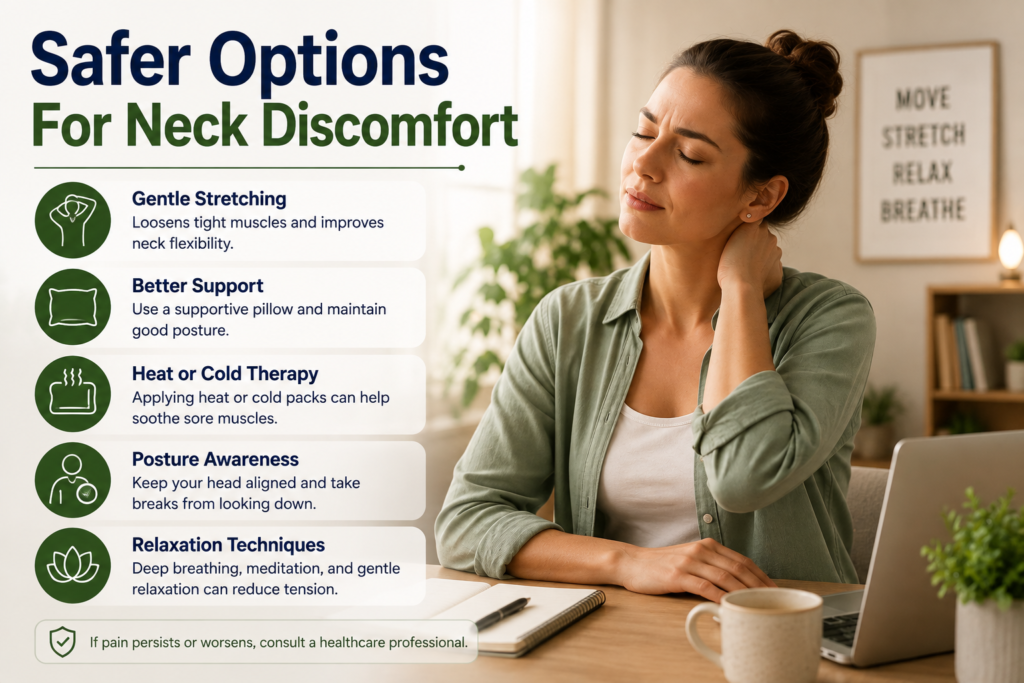
Gentle hands-on care, controlled stretching, and professional treatment can ease neck discomfort without placing an electronic massager near a pacemaker. Heat may relax tight muscles, but people with pacemakers should ask their cardiologist before using any powered device or treatment.
Manual Massage And Stretching
A person with a pacemaker can try gentle manual massage around the neck and upper shoulders, while avoiding direct pressure over the pacemaker or its leads. A trained massage therapist should know about the implant and use light pressure. Deep work near the collarbone or upper chest may cause pain or irritation.
Slow stretching may help reduce stiffness. Useful movements include:
- Turning the head slowly from side to side
- Tilting one ear toward the shoulder
- Drawing the chin gently backward
- Rolling the shoulders without forcing the movement
Each stretch should remain comfortable for about 10–20 seconds. The person should stop if pain, dizziness, shortness of breath, chest discomfort, or an irregular heartbeat occurs. A healthcare professional can help identify safe movements when neck pain follows an injury or causes arm weakness, numbness, or tingling.
Physical Therapy And Heat Therapy
A physical therapist can assess posture, muscle weakness, joint movement, and nerve symptoms. Treatment may include targeted exercises, posture training, manual therapy, and advice about daily activities. The therapist should receive the pacemaker’s details before treatment and should avoid electrical stimulation unless the cardiologist specifically approves it.
Moist heat from a warm, nonpowered towel may relax tight muscles. It should feel warm rather than hot and should remain on the neck for about 15–20 minutes. A cloth layer can protect the skin, and the person should check the skin during treatment. Heating pads, massage cushions, and other powered heat devices should not be used near the implant without medical approval. A clinician should assess persistent or worsening pain.
Emergency Steps And Follow-Up
A person with a pacemaker should stop using the neck massager if symptoms begin. Quick action, medical advice, and device checks can help identify whether the symptoms involve the pacemaker or another health problem.
Responding To Palpitations Or Dizziness
If palpitations, dizziness, fainting, chest pain, shortness of breath, or unusual weakness occurs, the person should turn off the massager and move away from it. They should sit or lie down to prevent a fall and avoid using the device again until a health professional gives advice.
The person should call emergency services for fainting, severe chest pain, trouble breathing, confusion, or symptoms that do not improve quickly. They should not drive themselves.
For milder symptoms that stop after the massager is removed, the person should contact the cardiologist or pacemaker clinic promptly. They should record the time, symptoms, massager setting, duration of use, and how quickly symptoms stopped. This information can help the clinician assess possible interference.
Reporting Possible Device Interference
The person should report suspected interference to the cardiologist or pacemaker clinic, even if symptoms stop. The clinic may review stored device data, check the pacemaker, and advise whether the massager should be avoided.
They should provide the brand and model, type of movement or electrical function, distance from the pacemaker, and exact time of use. They should also state whether the device touched the chest or stayed near the implant.
A neck massager that only uses mechanical vibration may pose less electromagnetic risk than a device with electrical stimulation, heat, or magnetic parts. However, the pacemaker manufacturer and treating cardiologist should confirm its safety. The person should follow the clinic’s instructions and attend any recommended follow-up checks.
FAQs
Can a person with a pacemaker use a neck massager?
They should ask their cardiologist or device clinic first. Risk depends on the massager’s design, motor, electrical output, and the person’s implanted device.
Is a vibrating neck massager safe?
A basic vibration-only device may pose less risk than a device that sends electrical pulses. The user should keep it away from the pacemaker, which is usually placed in the upper chest, and follow the device maker’s instructions.
Can an electric massager interfere with a pacemaker?
Some devices may create electromagnetic interference or use electrical stimulation that can affect pacemakers or ICDs. A six-inch distance is often advised for devices that may produce interference, but it does not replace medical advice.
Which neck massagers should be avoided?
- TENS or EMS devices
- Electrical muscle-stimulation massagers
- Devices with wires or pads that send current through the neck or chest
- Any device that causes dizziness, palpitations, or unusual symptoms
What should the user do if symptoms occur?
They should stop using the massager and move away from it. If symptoms continue, they should contact their health care professional or seek urgent care. The device’s manual and the pacemaker manufacturer can provide specific guidance.
Conclusion
People with pacemakers should not assume that every neck massager is safe. Some devices may produce electromagnetic interference, while vibration or pressure near the implant may cause discomfort, especially soon after surgery.
A neck massager should not be placed over the pacemaker or its leads. Many safety sources advise keeping powered devices several inches away from the implant, but the correct distance depends on the device and the pacemaker model.
Before using one, the patient should:
- Ask the cardiologist or pacemaker clinic for approval.
- Check the massager’s manual for pacemaker warnings.
- Keep the device away from the upper chest and implant site.
- Stop immediately if dizziness, palpitations, chest pain, or unusual symptoms occur.
A simple, nonpowered massage method may present fewer interference concerns, but pressure near the implant still requires care. The cardiologist can give advice based on the patient’s device, medical history, and recovery stage.