A massage gun may seem like a quick way to ease abdominal tension, but the stomach contains sensitive tissues and organs that require care. Its deep, rapid pressure can cause pain or irritation when used too forcefully.
A person may use a massage gun on the outer abdominal muscles in limited cases, but gentle manual massage is usually safer, and anyone with a medical condition should seek professional advice first. This article explains safer settings, areas to avoid, common mistakes, and when to skip percussion therapy altogether.
Key Takeaways
- Gentle use may suit some healthy adults.
- Avoid bones, organs, and painful areas.
- Medical advice matters during pregnancy or illness.
Safety Overview For Abdominal Use
A massage gun can affect more than the abdominal muscles because vital organs lie beneath the abdominal wall. Gentle, limited use may suit some healthy adults, but several conditions make percussion unsafe.
When It May Be Appropriate
A healthy adult may use a massage gun briefly on the muscular parts of the abdominal wall, such as the outer rectus or oblique muscles. The person should choose the lowest speed, use a soft attachment, and apply little pressure. The device should keep moving rather than pressing on one spot.
Massage should stop if it causes pain, sharp discomfort, nausea, dizziness, bruising, or unusual tenderness. A massage gun should not treat bloating, constipation, or abdominal pain without medical guidance. Safer options for mild muscle tightness include gentle stretching, light hand massage, walking, and a warm compress.
The device should never press directly over the navel, ribs, spine, groin, or areas with a known injury. It should also stay away from surgical scars, swollen areas, and visible blood vessels.
When To Avoid It Entirely
People should not use a massage gun on the abdomen during pregnancy unless their healthcare professional specifically approves it. They should also avoid abdominal percussion after recent surgery, childbirth, or an abdominal injury until a clinician confirms that healing is complete.
A person should avoid the area if they have unexplained abdominal pain, tenderness, swelling, vomiting, fever, internal bleeding, or a suspected hernia. The same applies to people with conditions that affect bleeding or healing, including blood-thinning medicine, bleeding disorders, or some cancers, unless a clinician gives clear advice.
| Situation | Recommended action |
|---|---|
| Severe or unexplained pain | Seek medical care |
| Recent surgery or injury | Wait for medical clearance |
| Pregnancy | Ask a healthcare professional first |
| Suspected hernia | Avoid percussion and seek assessment |
| Mild muscle soreness | Consider gentle, low-pressure use |
A massage gun cannot safely replace an examination or treatment for digestive or abdominal symptoms.
How Percussion Therapy Affects the Midsection
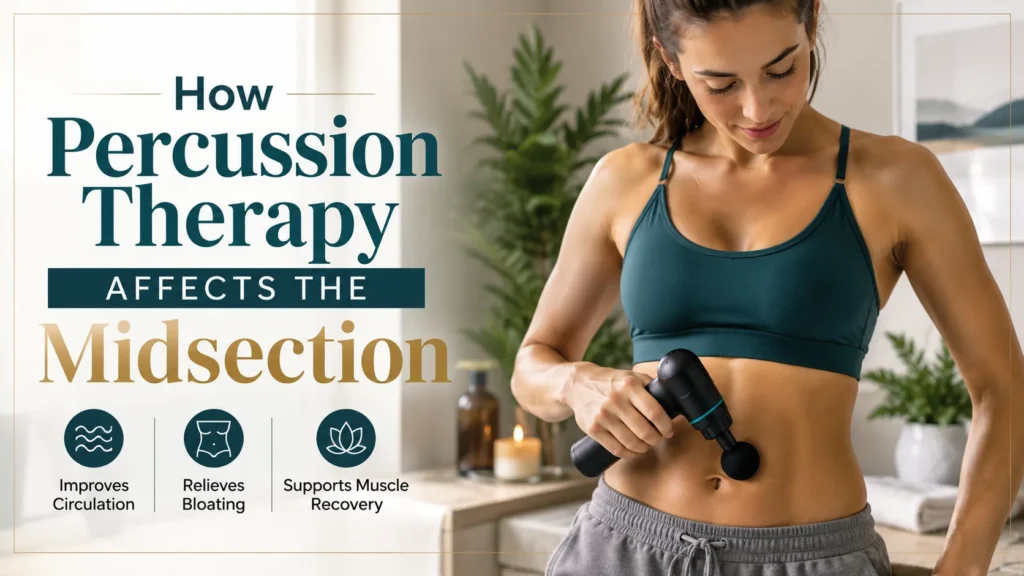
Percussion therapy may relax the abdominal wall and ease mild muscle soreness, but it does not safely reach or treat internal organs. The stomach contains sensitive structures, so users should apply little or no pressure and avoid the area when health problems or recent procedures are present.
Muscle Relaxation And Soreness
A massage gun sends rapid pulses into the tissues it touches. On the abdominal wall, gentle use may increase local blood flow and reduce the feeling of tightness after exercise. It can affect the rectus abdominis, obliques, and other surface muscles, but it cannot strengthen them or reduce belly fat.
The abdominal muscles are thinner and less protected than the thighs or glutes. Users should choose the lowest setting, use a soft attachment, and keep the device moving for only a short period. The pressure should stay mild and pain-free. A massage gun should not be used directly over the navel, ribs, spine, or any painful, swollen, bruised, or numb area.
A person should stop immediately if the device causes sharp pain, nausea, dizziness, tingling, or unusual discomfort. Light hand massage, stretching, or gentle heat may offer safer options for minor muscle tightness.
Digestive And Internal Organ Considerations
Percussion does not massage the stomach, intestines, liver, kidneys, or other organs in a controlled or proven way. Strong pressure over the abdomen may cause pain or worsen an existing problem, especially after eating. It may also aggravate a hernia, surgical site, skin injury, or abdominal inflammation.
People should avoid using a massage gun on the stomach if they are pregnant or recently had abdominal surgery. They should also seek medical advice before use if they have a hernia, unexplained abdominal pain, digestive bleeding, a tumor, or a blood-clotting condition.
| Situation | Safer approach |
|---|---|
| Mild soreness after exercise | Use the lowest setting briefly on the abdominal muscles |
| Pain with no clear cause | Avoid the device and seek medical advice |
| Recent surgery or injury | Wait for clearance from a healthcare professional |
| Nausea, bruising, or sharp pain | Stop use immediately |
Areas That Require Extra Caution
The abdomen contains organs, blood vessels, and soft tissues that do not respond like large muscles in the legs or back. A massage gun should not be used over the rib cage, pelvic bones, spine, or any area with pain, swelling, bruising, or a recent injury.
Upper Abdomen And Rib Margin
The upper abdomen lies below the ribs and includes the liver, stomach, gallbladder, and other organs. The rib margin also contains bone and cartilage, which can become painful or irritated under repeated percussion.
A person should avoid using a massage gun over the center of the upper abdomen, the sides of the rib cage, and the area directly below the breastbone. The device should never contact the ribs, breastbone, spine, or any tender spot.
If a health professional approves limited use, it should involve the lowest setting, light contact, and a soft attachment over a broad area of muscle. The user should stop immediately if pain, nausea, dizziness, bruising, or unusual tenderness develops.
Lower Abdomen And Pelvic Region
The lower abdomen lies near the bladder, intestines, reproductive organs, and major blood vessels. The pelvic region also contains bone, joints, and sensitive tissues that should not receive direct percussion.
A person should not use a massage gun over the pubic bone, groin, hip bones, or any surgical scar. They should also avoid the area during pregnancy unless their health care professional gives specific guidance. People with a hernia, recent abdominal surgery, unexplained pain, or an active infection should avoid abdominal percussion.
Massage guns should not treat a lump, bulge, severe cramps, or persistent abdominal discomfort. These symptoms require medical assessment rather than mechanical pressure.
Sides Of The Torso
The sides of the torso include the oblique muscles, lower ribs, kidneys, and the edge of the spine. The outer muscle may tolerate gentle contact in some healthy adults, but the device can easily move onto bone or sensitive areas.
A user should keep the massage gun on the thickest part of the side muscles and stay away from the lower ribs, spine, waistline, and back of the torso. The lowest speed and a soft attachment provide less stress than a hard, narrow attachment.
The user should avoid this area when it has bruising, numbness, swelling, a skin infection, or sharp pain. Blood-thinning medicine or a bleeding disorder also increases the risk of bruising and requires medical advice before use.
Safe Technique And Device Settings
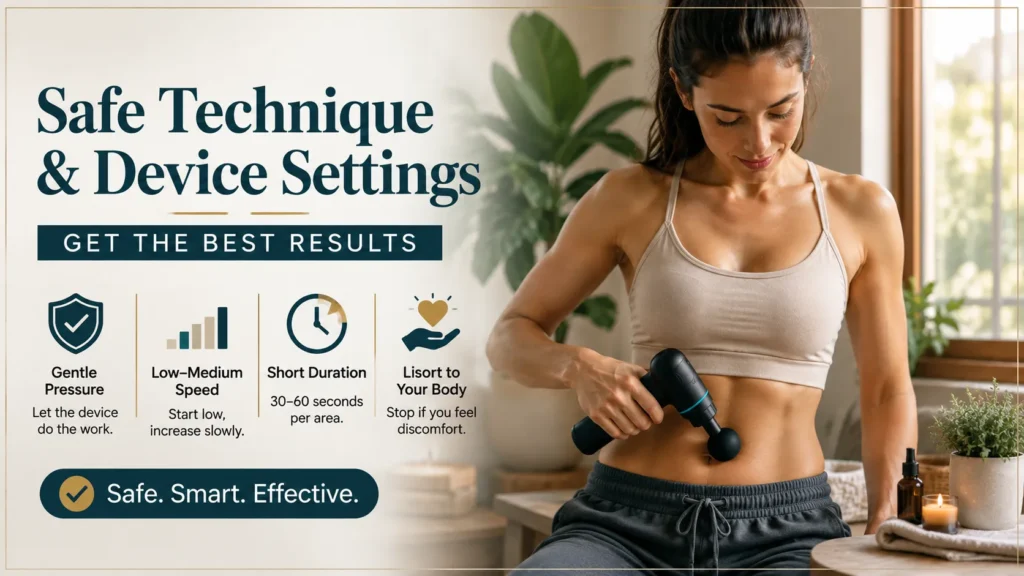
A massage gun should touch only the abdominal muscles, not the organs beneath them. A soft attachment, low speed, light pressure, and short sessions reduce the chance of pain or injury.
Selecting An Attachment
A soft, rounded ball attachment works best for the abdominal wall. It spreads the force over a wider area and feels less intense than a pointed head. A flat or dampener attachment may also work if the device maker permits use on the abdomen.
The user should avoid bullet, fork, thumb, and other narrow attachments. These heads can focus too much force on a small area. The massage gun should never touch the navel, ribs, spine, hip bones, open wounds, bruises, rashes, or areas with reduced sensation.
The device should move across the muscle rather than stay in one spot. It should not press deeply into the abdomen or target a painful lump.
Choosing Speed And Pressure
The user should select the lowest speed and test it on the side of the abdomen first. The sensation should feel mild and comfortable, without sharp pain, cramping, nausea, dizziness, or a deep vibrating feeling.
Only light pressure should be used. The attachment should rest gently on the skin instead of pushing into the body. The user should keep the massage gun moving slowly over the abdominal muscles and avoid pressing directly over internal organs.
| Setting | Safer approach |
|---|---|
| Speed | Lowest setting at first |
| Pressure | Light contact only |
| Movement | Slow, continuous passes |
| Position | Relaxed, supported posture |
The user should stop immediately if discomfort develops. A massage gun should not replace medical care for abdominal pain.
Recommended Session Length
A first session should last about 30 seconds to 1 minute per area, with no more than 2 to 3 minutes across the abdomen. The user should wait and check for soreness or skin irritation before using the device again.
If the area remains comfortable, sessions should stay brief and use the lowest effective setting. The user should avoid repeated daily treatment when soreness continues. It should also avoid use after a large meal, when the abdomen feels bloated, or during active stomach pain.
People who are pregnant, recently had surgery, or have a hernia or another abdominal condition should ask a health professional before using a massage gun on the stomach.
People Who Should Seek Medical Advice First
A massage gun can place pressure and repeated vibration on sensitive abdominal tissue. People who are pregnant, recovering from surgery, have a hernia, or take medicines that affect bleeding should get medical advice before using one on the stomach.
Pregnancy And Postpartum Recovery
Pregnant people should avoid using a massage gun on the abdomen unless their obstetric clinician specifically approves it. The abdomen changes throughout pregnancy, and pain, bleeding, contractions, or reduced fetal movement needs medical assessment rather than percussion.
After childbirth, the abdominal wall and pelvic tissues may still be healing. This includes recovery after a vaginal birth, cesarean delivery, episiotomy, or significant tearing. A clinician should confirm that the incision and deeper tissues have healed before any abdominal massage. A massage gun should never be used over a cesarean scar, tender area, or suspected blood clot.
Hernias And Recent Surgery
A hernia can cause a bulge, pressure, or pain when tissue pushes through a weak area in the abdominal wall. A massage gun cannot repair a hernia and may worsen pain or irritate the area. Anyone with a known or suspected hernia should ask a doctor before using percussion near the abdomen.
People recovering from abdominal or pelvic surgery should wait for clearance from the surgeon. This includes procedures involving the intestines, stomach, gallbladder, appendix, uterus, or bladder. The device should not be used over an incision, drain site, bruise, swelling, or area with reduced sensation.
Urgent medical care is needed for a hard or painful bulge, severe or increasing abdominal pain, vomiting, fever, a swollen abdomen, or inability to pass stool or gas.
Medical Conditions And Medications
Medical advice is important for people with conditions that may make pressure or vibration unsafe. Examples include blood clots or deep vein thrombosis, bleeding disorders, osteoporosis, abdominal masses, unexplained pain, and serious heart or circulation problems. The device should not be used to investigate or numb a symptom.
Certain medicines also raise concern, especially blood thinners such as warfarin, apixaban, rivaroxaban, or clopidogrel. These medicines can increase bruising or bleeding after pressure. People taking steroids or medicines that reduce sensation should also ask a clinician first, because tissue damage may be harder to notice.
A clinician may recommend avoiding the abdomen entirely or using only gentle hand massage. They should provide specific guidance based on the person’s diagnosis, medication, and recovery stage.
Common Mistakes To Avoid
A massage gun can harm sensitive abdominal tissues when used with too much force or in the wrong situation. Safe use means avoiding direct pressure, stopping during digestive symptoms, and responding quickly to pain or other warning signs.
Pressing Directly Into The Abdomen
The abdomen contains organs and other soft tissues, not just muscle. A massage gun should not press directly over the stomach, intestines, kidneys, liver, or other internal structures. It should also stay away from the ribs, spine, and front of the pelvis.
If a health professional approves its use, the lowest speed and a soft attachment offer a safer approach. The device should move lightly over the abdominal wall rather than remain in one spot. Short sessions are preferable to deep, prolonged pressure.
People should avoid abdominal use after surgery, during pregnancy, or when they have a hernia unless a qualified clinician gives clear instructions. A massage gun cannot treat organ problems, weight gain, or digestive disease.
Using It During Digestive Discomfort
A massage gun should not be used when a person has stomach pain, bloating, nausea, vomiting, diarrhea, constipation with severe pain, or unexplained tenderness. Vibration may increase discomfort and could make it harder to notice symptoms that need medical attention.
The device should also be avoided soon after a large meal. Pressure and vibration over a full stomach can worsen nausea, reflux, cramping, or a feeling of fullness. Waiting until digestion feels normal reduces this risk.
Gentle walking, relaxed breathing, or a warm—not hot—compress may offer safer comfort for minor digestive discomfort. Severe pain, repeated vomiting, a swollen abdomen, fever, or blood in vomit or stool requires prompt medical care rather than massage.
Ignoring Pain Or Warning Signs
Mild muscle tenderness is not a reason to push through sharp, burning, or deep pain. The user should stop the device immediately if pain increases, the skin becomes numb, bruised, unusually sensitive, or discolored, or the abdomen feels hard or swollen.
Dizziness, shortness of breath, weakness, fainting, or new nausea also signals the need to stop. Symptoms that continue after stopping deserve medical advice, especially when they occur after surgery, an injury, or a recent procedure.
People who take blood thinners or have a bleeding disorder should ask a clinician before using percussion therapy. The same caution applies to people with abdominal conditions, implanted devices, or unexplained lumps.
Safer Alternatives For Abdominal Tension
Gentle touch, slow movement, and controlled breathing can ease muscle tightness without the strong force of a massage gun. These methods may also help with gas, bloating, or constipation when no serious health problem causes the symptoms.
Gentle Self-Massage
A person can lie on their back with the knees bent and use a flat hand over the abdomen. Light pressure should follow the path of the colon: start on the lower right side, move upward, across the upper abdomen, and down the left side. Slow, clockwise circles may also help relax tight muscles and support gas movement.
The pressure should feel comfortable, never sharp or painful. Five to 10 minutes may be enough. A person should stop if they feel worsening pain, nausea, dizziness, or unusual tenderness. They should avoid abdominal massage after recent surgery and seek medical advice first during pregnancy or with a known abdominal condition.
Stretching And Breathing Exercises
Diaphragmatic breathing can reduce abdominal tension. A person can lie down or sit upright, place one hand on the chest and one on the belly, then breathe in through the nose so the belly gently rises. A slow exhale through pursed lips should last slightly longer than the inhale. Repeating this for five minutes may help relax the abdominal wall.
Gentle stretches can add movement without pressing directly on the stomach. A person can try a supported child’s pose, a slow seated side bend, or a gentle knee-to-chest stretch. Each position should remain comfortable for 15 to 30 seconds, without bouncing or forcing the range of motion. Severe, persistent, or sudden abdominal pain requires medical evaluation rather than self-treatment.
FAQs
Can someone use a massage gun on the stomach?
Most people should avoid direct use on the abdomen. The area contains vital organs and does not have the same muscle protection as the thighs, calves, or back.
Can it help with bloating or digestion?
There is not enough strong evidence that a massage gun improves digestion or bloating. Its rapid percussion may instead cause pain, nausea, or other discomfort.
Is it safe after eating?
No. A person should not use a massage gun on the stomach soon after eating. Movement and pressure may worsen nausea or abdominal discomfort.
Can it be used on the abdominal muscles after exercise?
A person should choose gentle hand massage or light stretching instead. If a healthcare professional approves a massage gun, they should use the lowest setting, keep the device moving, and avoid the ribs, belly button, and organs.
Who should avoid abdominal use completely?
People who are pregnant, recently had surgery, have a hernia, unexplained abdominal pain, digestive disease, bleeding problems, or implanted medical devices should not use it without medical advice.
When should someone seek medical care?
Severe or lasting pain, swelling, vomiting, bruising, dizziness, or blood in the stool requires prompt medical attention. A person should stop using the device if any symptom begins or worsens.
Conclusion
A massage gun may be used on the muscular parts of the abdominal wall, but it requires caution. It should stay on the lowest setting, use light pressure, and avoid the ribs, spine, pelvis, and areas with little muscle.
It should never be used directly over internal organs, an open wound, a hernia, bruised skin, or a painful swelling. People who are pregnant or have abdominal pain, recent surgery, bleeding problems, or other medical conditions should ask a health professional before using one.
A massage gun may ease muscle tension after exercise, but it has not been proven to treat digestive problems, reduce belly fat, or heal internal conditions. If sharp pain, dizziness, nausea, bruising, or unusual discomfort develops, the user should stop immediately and seek medical advice.