
Written by Alex Turner
Quick Answer: Yes, you can generally take a percussion massager on a plane. A battery-powered model is usually easiest to travel with in your carry-on. If you put it in checked baggage, it should be completely powered off and protected from accidental activation or damage. Spare lithium batteries and power banks must stay in your carry-on.
Traveling With a Percussion Massager
A percussion massager can be useful on a trip, but packing it is different from simply putting another electronic device in your suitcase. The main issue is usually the battery, especially when the massager uses a rechargeable lithium-ion battery.
For most travelers, the simplest approach is to turn the device completely off, protect it from accidental activation, and keep it accessible in a carry-on bag. Airline rules can be stricter than general federal requirements, so checking your carrier before departure is still a smart final step.
Important: This article is for general educational information only. It does not diagnose, treat, cure, or prevent any condition. It does not replace advice from a licensed healthcare professional. Readers should seek professional help for severe, worsening, unusual, or persistent symptoms.
Why Battery Type Matters When You Fly
A percussion massager is a portable electronic device, so its battery is the part that deserves the most attention when you pack it. Many modern models use rechargeable lithium-ion batteries. The Federal Aviation Administration says portable electronic devices containing lithium-ion batteries should be carried in carry-on baggage when practical because a battery problem can be noticed and handled more quickly in the cabin. FAA battery guidance
For a device with its battery installed, federal rules can allow carriage in either carry-on or checked baggage when the battery meets applicable limits and the device is completely powered off and protected from accidental activation. Still, carry-on storage is generally the more straightforward choice for a rechargeable percussion massager.
The important distinction is between an installed battery and a spare battery. A removable spare lithium battery is treated differently from the massager itself and must remain in your carry-on. The same applies to a separate power bank used to recharge the device.
Note: Check the label on your massager or its battery for the watt-hour rating if it is available. Most ordinary personal electronics use batteries well below the common 100 Wh limit, but the actual rating matters when airline rules are applied.
Swipe left/right to see the full table →
| Item | Carry-On | Checked Bag |
|---|---|---|
| Massager with battery installed | Generally allowed | Generally allowed if fully off and protected |
| Spare lithium battery | Yes | No |
| Power bank | Yes | No |
| Damaged or recalled battery | Do not carry | Do not carry |
Carry-On or Checked Bag: Which Makes More Sense?
If your goal is a simple airport experience, place the percussion massager in your carry-on. This keeps the device available if security officers need to inspect it and avoids the extra battery considerations that come with checking electronic equipment.
A checked bag can still be an option for a massager with its battery installed when the device complies with applicable battery requirements. It should be completely switched off rather than left in standby mode, and it should be protected from accidental activation and physical damage.
If your carry-on is taken from you at the gate and placed in the aircraft’s cargo compartment, remember that spare lithium batteries and power banks cannot remain inside that checked bag. FAA guidance says those items must be removed and kept with you in the cabin. FAA passenger battery guidance
Practical safety decision path
Yes → continue with the device. No → keep the spare battery in carry-on baggage.
Yes → do not bring it onto the aircraft.
Yes → pack it so the power button cannot be pressed accidentally.
Yes → follow the carrier’s stricter requirement if it differs from the general rule.
This is a practical packing guide, not a guarantee of what an individual airline or security officer will decide. The safest final check is the airline’s current baggage policy before you leave for the airport.
How to Pack a Percussion Massager for a Flight
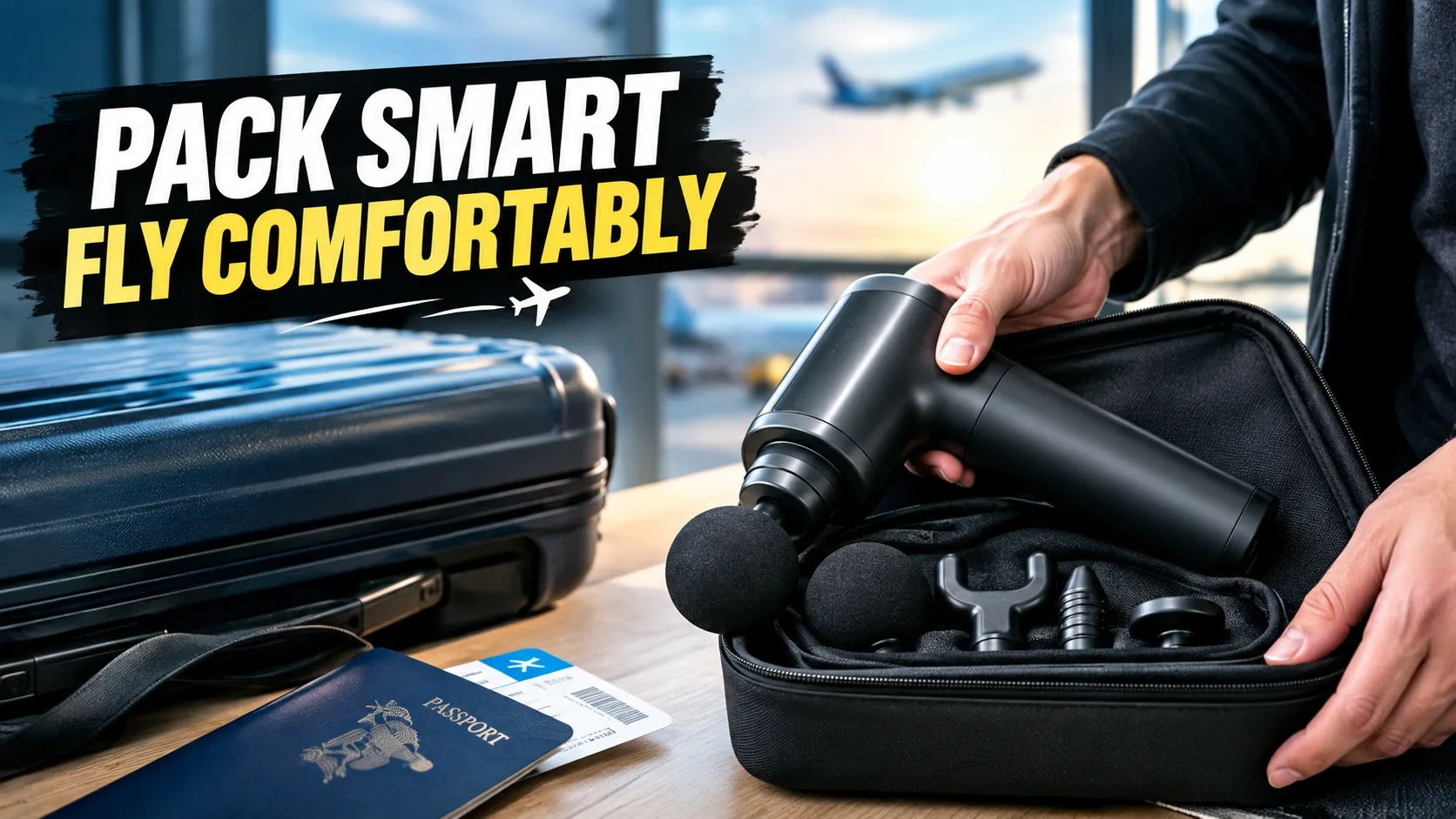
Good packing prevents the two most common travel problems: accidental activation and battery damage. A small amount of preparation also makes security screening easier.
1
Power it off completely. Do not rely on sleep mode or a locked control screen.
2
Prevent accidental activation. Use the travel lock if the manufacturer provides one, or use a protective case.
3
Protect the device. Cushion it so the controls, battery compartment, and housing are not likely to be crushed.
4
Separate loose batteries. Keep spare lithium batteries protected against short circuits and accessible in your carry-on.
5
Keep charging accessories organized. Pack the charger and cable so they are easy to remove if an inspection is needed.
6
Check the airline. Review the carrier’s battery and baggage rules, especially for international travel.
Tip: If the massager has a removable battery, read the manufacturer’s instructions before removing it. Some devices are designed for the battery to remain installed during normal transport.
Battery and packing priorities
Think of these as a practical travel priority guide rather than scientific risk measurements.
Keep the battery accessible
Typical routine priority: 90%
Prevent accidental activation
Typical routine priority: 85%
Protect against impact
Typical routine priority: 75%
Keep accessories organized
Typical routine priority: 55%
The main idea is simple: battery safety comes first, followed by preventing accidental activation and physical damage. A neat travel setup also reduces unnecessary delays if the bag needs inspection.
What Goes Where?
Knowing the difference between the device, a spare battery, and a power bank removes much of the confusion. The FAA states that spare lithium-ion batteries and power banks must be carried in the cabin rather than checked. Installed batteries have different rules and may be allowed in checked baggage when the device is switched off and protected. FAA lithium-battery guidance
Swipe left/right to see the full table →
| Packing Situation | Better Choice | Reason |
|---|---|---|
| Massager used during travel | Carry-on | Accessible in cabin |
| Massager not needed until arrival | Carry-on preferred | Simpler battery access |
| Spare battery | Carry-on only | Not permitted in checked baggage |
| Power bank | Carry-on only | Spare lithium battery category |
Common Packing Mistakes to Avoid
The biggest problems are usually simple packing mistakes rather than the massager itself. Avoiding them can make your trip smoother.
Mistake vs better choice
Swipe left/right to see the full table →
| Mistake | Better Choice |
|---|---|
| Leaving it in standby | Power it completely off |
| Loose spare battery | Protect terminals and carry on |
| Packing under heavy items | Use protective padding |
| Assuming every airline is identical | Check your carrier before flying |
Warning: Do not pack a damaged, defective, swollen, recalled, overheating, smoking, or otherwise unsafe lithium battery or battery-powered device for a flight. FAA guidance specifically warns that damaged or recalled lithium batteries can create a fire hazard.
Do’s and don’ts before leaving home
Do
Power the massager off, protect it from accidental activation, keep spare batteries in carry-on baggage, and check your airline’s current rules.
Don’t
Do not check loose lithium batteries, pack a damaged battery, or assume that a rule for one airline automatically applies to another.
The practical goal is not to make packing complicated. It is to keep the battery protected, the device switched off, and any spare lithium battery accessible in the cabin.
What About International Flights?
For a U.S. domestic trip, FAA and airline rules provide the main framework. International travel can involve additional airline, destination-country, or aviation requirements. That means a setup that is acceptable for one itinerary may need another check when you are crossing borders.
Before an international flight, check the operating airline rather than relying only on the airport you are departing from. If multiple airlines operate different legs of the journey, review the applicable carrier rules for the trip.
Battery capacity is also worth checking when traveling internationally. The FAA states that rechargeable lithium-ion batteries from 0 to 100 Wh are generally allowed for passenger baggage, while batteries from 101 to 160 Wh require airline approval under applicable rules. Batteries above the permitted threshold are not accepted for ordinary passenger travel. Review the current FAA limits before you fly.
Battery check dashboard
0–100 Wh
Generally within standard passenger battery limits.
101–160 Wh
Airline approval may be required, with additional restrictions.
Above 160 Wh
Not permitted for ordinary passenger baggage under the general FAA framework.
Damaged battery
Do not carry it unless the safety issue has been properly addressed under applicable rules.
When Should You Confirm With the Airline?
A quick airline check is especially useful when the massager has an unusually large battery, a removable battery system, unusual charging hardware, or a battery rating that is difficult to identify. It is also important when the itinerary involves several airlines or international travel.
Self-check vs airline confirmation
Swipe left/right to see the full table →
| Situation | Next Step |
|---|---|
| Standard personal massager | Pack safely and review airline policy |
| Battery over 100 Wh | Contact airline before travel |
| International itinerary | Check each applicable carrier |
| Damaged or recalled battery | Do not pack it |
Red-flag packing checklist
If any of these red flags apply, pause before packing. A few minutes checking the battery label, manufacturer instructions, and airline policy can prevent a problem at the airport.
When to contact a professional: If you are asking because a battery is swollen, leaking, smoking, unusually hot, damaged, or recalled, do not rely on ordinary travel-packing advice. Keep the item away from ignition sources and seek appropriate battery or hazardous-material guidance before attempting to transport it.
Can You Use a Percussion Massager During the Flight?
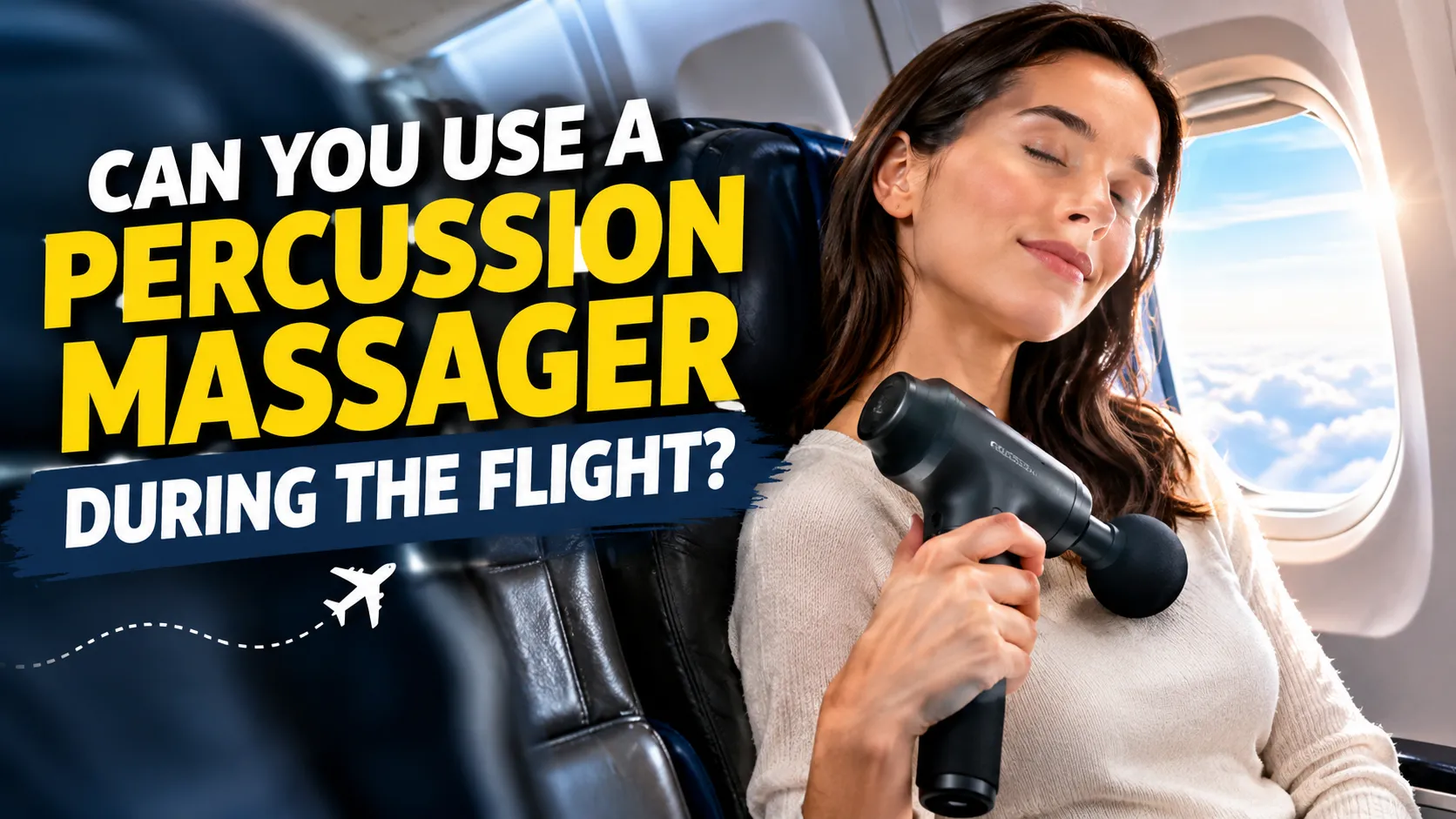
Being allowed to bring an electronic device does not automatically mean you should use it during the flight. Cabin crew instructions, airline policies, noise considerations, and the comfort of nearby passengers all matter.
A percussion massager can produce noticeable vibration and sound, so using it in a crowded cabin may be inappropriate even when carrying it is permitted. If you want to use one after landing, keeping it packed during the flight avoids unnecessary questions or disruption.
If the device overheats, swells, smokes, or shows another battery problem while you are onboard, do not continue using it. Notify the flight crew immediately so they can respond according to their safety procedures.
Frequently Asked Questions
Can you take a percussion massager on a plane in your carry-on?
Yes. A typical battery-powered percussion massager can generally be carried in your carry-on when its battery meets applicable requirements and the device is protected from accidental activation.
Can you put a percussion massager in checked luggage?
A massager with its battery installed may generally be placed in checked baggage if it is completely powered off, protected from accidental activation and damage, and otherwise meets the applicable battery rules. Carry-on storage is often simpler.
Can I bring a spare percussion massager battery?
Yes, when it meets the applicable battery limits, but a spare lithium battery must remain in your carry-on and be protected against short circuits.
Can I bring a power bank for my percussion massager?
Power banks containing lithium batteries must be carried in your carry-on rather than checked baggage. Check the power bank’s watt-hour rating and your airline’s current limits before flying.
What if my massage gun has a lithium battery?
Lithium-ion batteries are common in rechargeable percussion massagers. Keep the device protected and completely powered off when transported, and keep any spare battery in your carry-on.
Should I check with my airline before bringing a percussion massager?
Yes, especially for international trips, unusually large batteries, removable battery systems, or multi-airline itineraries. Airlines can impose restrictions that are stricter than general federal rules.
Can I use a percussion massager while flying?
Carrying the device does not guarantee that using it onboard is appropriate. Follow crew instructions and airline policies, and consider cabin noise and the comfort of nearby passengers.
Final Thoughts
For most travelers, the easiest approach is to keep the percussion massager in your carry-on, switch it completely off, and protect it from accidental activation or damage. Spare lithium batteries and power banks should stay with you in the cabin.
Because airlines can apply stricter requirements and international rules can vary, check the operating carrier before departure. If the battery is damaged, swollen, recalled, overheating, or otherwise unsafe, do not bring it on the aircraft.
Author
-

I’m Alex Turner, a massage product reviewer and wellness writer at RemedyTip. I specialize in researching, evaluating, and comparing massage and recovery products to help readers make informed purchasing decisions. My focus is on practical, evidence-informed product guidance covering muscle recovery, relaxation, everyday comfort, and wellness.
I take a research-driven approach to every product I review. I examine product specifications, features, materials, performance claims, user feedback, durability, comfort, ease of use, and overall value. When appropriate, I also consult trusted industry and health-related sources to verify important information and provide readers with a more complete and balanced view.
I cover a wide range of products, including massage guns, handheld massagers, neck and shoulder massagers, foot massagers, massage chairs, foam rollers, and other recovery tools. Rather than focusing only on marketing claims, I look at how products compare in real-world use and who they are actually suitable for. I also consider different budgets, use cases, and user needs when making recommendations.
At RemedyTip, I’m committed to accuracy, transparency, and unbiased product information. I clearly distinguish between manufacturer claims, available evidence, and my own product analysis so readers can understand the basis of each recommendation. I continuously research new products, technologies, and developments in the massage and recovery space to keep my content current and useful.
My goal is simple: to provide trustworthy, easy-to-understand information that helps readers choose massage and recovery products with greater confidence.

