
Written by Alex Turner
Quick Answer: Can trigger point massage make pain worse?
Yes. Focused pressure can leave an area temporarily sore, but worsening pain, sharp pain, tingling, numbness, weakness, or pain that keeps increasing is a reason to stop rather than push harder.
Pressure should feel purposeful, not punishing.
Trigger point massage uses focused pressure on a tender or tight area. That can sometimes create short-lived soreness, but more pressure is not automatically better. The useful question is whether your symptoms settle afterward or continue getting worse.
Important: This article is for general educational information only. It does not diagnose, treat, cure, or prevent any condition. It does not replace advice from a licensed healthcare professional. Readers should seek professional help for severe, worsening, unusual, or persistent symptoms.
Why Massage Can Sometimes Leave You More Sore
Trigger point massage is designed around focused pressure on an area that feels tight, tender, or knotted. The pressure may be applied with fingers, hands, or a simple massage tool. Because the technique concentrates force on a small area, the spot can feel tender during or after the session.
A little temporary soreness is not automatically a sign that something went wrong. Massage can mechanically stress already-sensitive tissue, and people can respond differently depending on how tense or irritated the area was beforehand. The important distinction is between mild, settling soreness and symptoms that become stronger or change in character.
The question is therefore not simply whether massage hurts. A better question is whether the sensation is manageable and whether the area is moving in a comfortable direction afterward.
Expected soreness versus a warning signal
Normal post-massage soreness tends to be more like tenderness or muscle fatigue. A warning sign is a sensation that feels sharp, electric, increasingly intense, or associated with neurological symptoms such as tingling, numbness, or weakness.
If the same pressure repeatedly makes the area feel worse, continuing to press harder is not a useful test. Backing off gives you better information about whether the technique is appropriate for that situation.
Note: A tender spot is not proof that you have correctly identified a trigger point. Pain can have many possible causes, and self-massage cannot determine what is causing persistent or unusual symptoms.
What the sensation can tell you
This is a practical guide rather than a measurement of safe pressure. Your response matters more than trying to reach a particular intensity.
When Pressure May Be Too Much
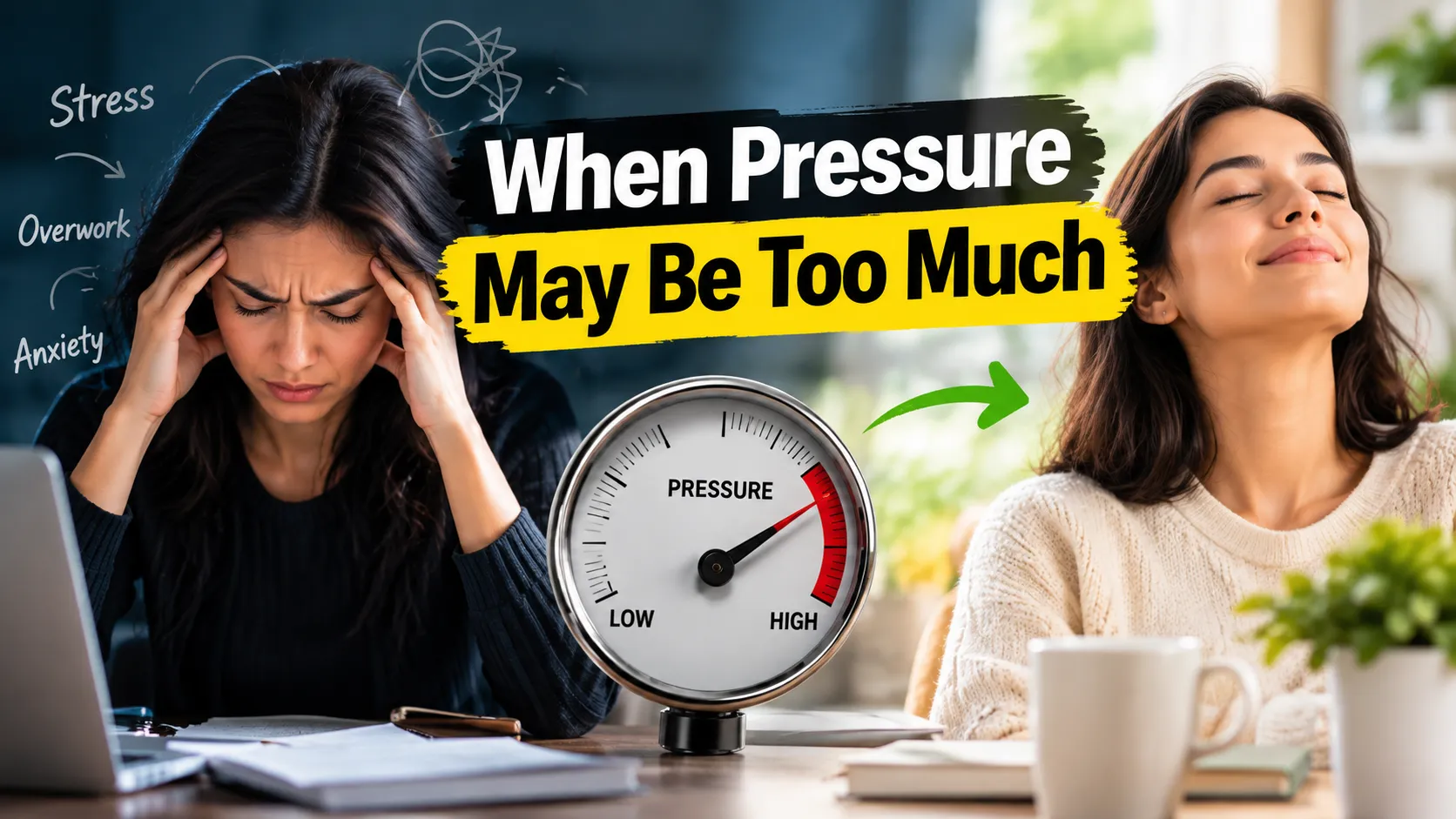
One common mistake is treating pain intensity as proof that the technique is working. Trigger point work can feel uncomfortable, but deliberately chasing severe pain can make it harder to tell ordinary tenderness from an injury or another source of symptoms.
Signs that call for less pressure
If you notice that your pain rises while you press, reduce the pressure or stop. The same applies if symptoms begin traveling away from the original spot, especially when the sensation is sharp, burning, electric, or associated with tingling.
It is also sensible to stop when the area feels increasingly irritated after repeated attempts. Repeatedly testing a painful spot can create a cycle in which you keep aggravating the area while trying to determine whether massage will help.
Direct pressure should also be approached carefully around sensitive anatomical areas. Avoid treating bones or the front and sides of the neck as if they were ordinary muscle knots. If you are unsure where pressure is appropriate, professional guidance is safer than experimenting with stronger force.
Common pressure mistakes
The following comparison can help you recognize when a routine has become too aggressive.
Swipe left/right to see the full table →
| Situation | Possible meaning | Better response |
|---|---|---|
| Mild tenderness | Sensitive tissue | Use lighter pressure |
| Pain increases | Too much stimulation | Stop and reassess |
| Sharp pain | Not typical massage discomfort | Stop pressure |
| Tingling or numbness | Possible nerve-related symptom | Stop and seek advice if persistent |
Who Should Be More Cautious?
Self-massage is not equally appropriate for every situation. A new pain after an injury deserves more caution than ordinary muscle tightness after a long day. The same is true when symptoms are unexplained, persistent, or accompanied by changes in strength or sensation.
Situations that deserve a pause
Swipe left/right to see the full table →
| Situation | Why caution matters | Practical choice |
|---|---|---|
| Recent injury | The cause may need assessment | Get appropriate guidance |
| Numbness or weakness | Not simply ordinary tenderness | Stop and seek evaluation |
| Fever or feeling unwell | Pain may have another cause | Seek medical advice |
| Severe or persistent pain | Self-massage may delay evaluation | Talk with a professional |
This practical decision path keeps the goal simple: use the lowest pressure that feels tolerable, then watch what happens rather than assuming stronger pressure is better.
How to Use Trigger Point Massage More Carefully
A cautious routine does not require complicated equipment. It mainly requires restraint, attention to symptoms, and a willingness to stop when the response is unfavorable.
1
2
3
4
5
Tip: Communication matters during professional massage too. Tell the therapist when pressure feels excessive, especially if the sensation changes from manageable tenderness to pain that feels sharp or abnormal.
Safer routine choices
Swipe left/right to see the full table →
| Safer choice | Riskier choice | Why it matters |
|---|---|---|
| Gentle pressure | Maximum pressure | Easier to monitor response |
| Short sessions | Repeated prolonged pressure | Limits repeated irritation |
| Muscle-focused areas | Direct pressure on bones | Avoids unnecessary pressure |
| Stop when symptoms worsen | Push through worsening pain | Reduces avoidable aggravation |
Warning: Do not use severe pain as your target. If a technique produces sharp pain, tingling, numbness, weakness, or a clear increase in symptoms, stop rather than trying to work through it.
What to Do If You Feel Worse Afterward
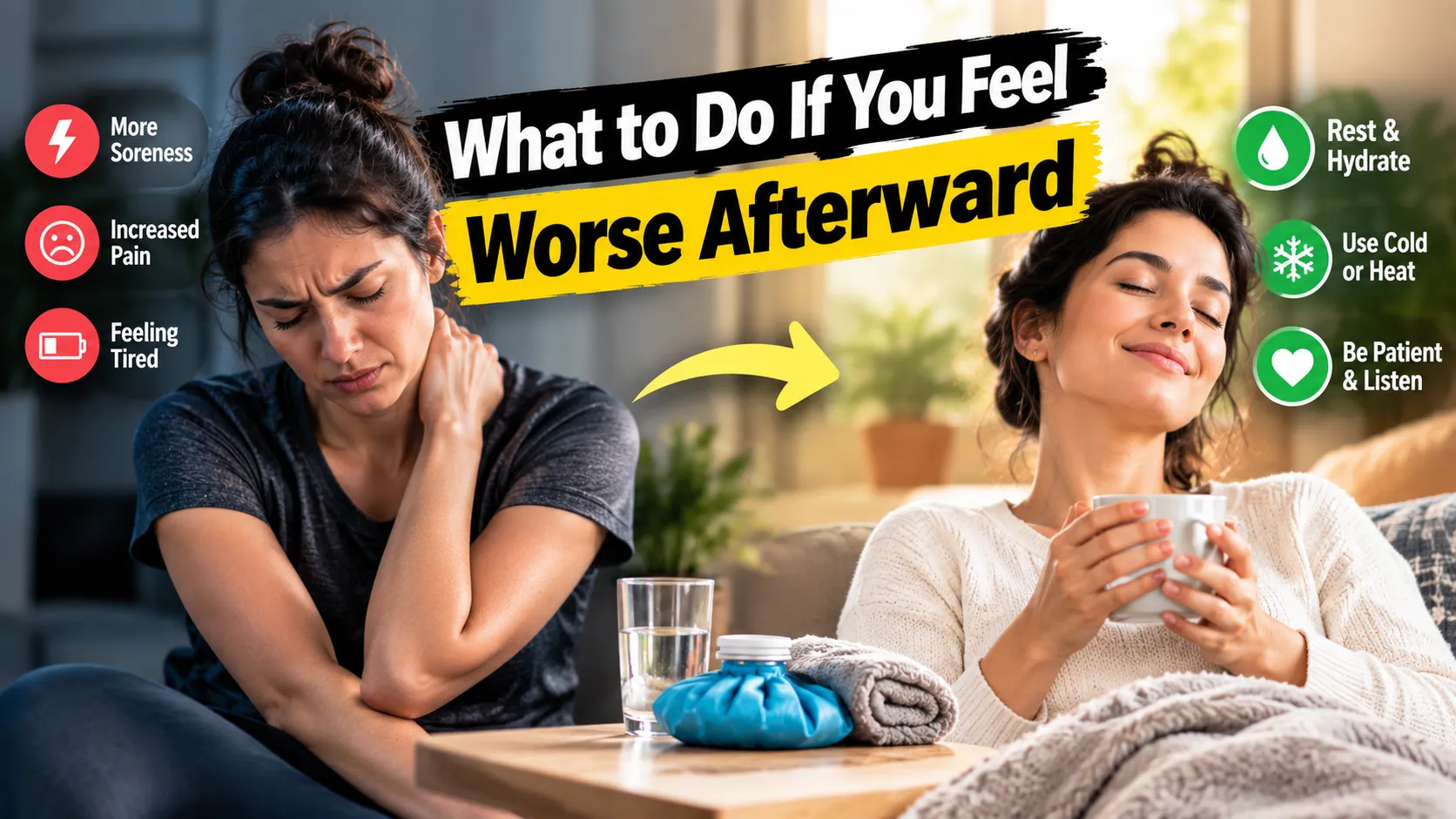
If you are mildly sore after massage, give the area time to settle and avoid immediately repeating the same intense pressure. Gentle everyday movement may be more appropriate than another aggressive session.
If soreness is intense, keeps increasing, or lasts longer than expected, the next step should not be simply more massage. Consider speaking with a healthcare professional, particularly when you have a recent injury or an unexplained pain pattern.
Give the area time and avoid aggressive repetition.
Stop self-massage and consider professional advice.
Do not keep applying pressure to test it.
Seek appropriate medical evaluation.
The practical goal is not to eliminate every sensation immediately. It is to avoid turning a manageable problem into a more irritated one through repeated, forceful pressure.
Self-care versus professional evaluation
Swipe left/right to see the full table →
| Self-care may fit | Professional advice may fit | Decision rule |
|---|---|---|
| Mild temporary tenderness | Pain keeps returning or worsening | Watch the trend |
| Known simple muscle tightness | Unexplained pain | Avoid guessing at the cause |
| Symptoms improve with rest | Symptoms spread or change | Reassess before continuing |
| No concerning symptoms | Red flags are present | Seek appropriate care |
Red Flags You Should Not Massage Through
Some symptoms should move the focus away from self-massage and toward medical evaluation. This is especially important when pain is severe, unusual, worsening, or connected with neurological or systemic symptoms.
These signs are not problems to test with deeper massage. If any are present, seek appropriate medical help rather than relying on self-massage to determine what is happening.
When to contact a professional: Seek medical guidance for severe, worsening, unusual, or persistent pain; numbness or weakness; pain following an injury; fever; chest pain; or loss of bladder or bowel control. If symptoms are rapidly worsening or feel urgent, seek prompt medical care.
Can Trigger Point Massage Make Pain Worse? Common Questions
Can trigger point massage make pain worse the next day?
It can leave an area temporarily sore, particularly after focused pressure. Worsening or intense pain that persists should not be treated as a reason to massage harder.
How much pressure should trigger point massage use?
Use pressure that remains manageable rather than chasing severe discomfort. Reduce or stop pressure if symptoms become sharp, increasingly painful, or abnormal.
Is sharp pain during trigger point massage normal?
Sharp pain is a reason to stop rather than push through it. Tingling, numbness, or weakness also deserves extra caution and may warrant professional evaluation.
Should I massage a painful area after an injury?
A recent injury deserves caution because the cause of pain may need assessment. Avoid using forceful massage as a way to test or treat an unexplained post-injury pain.
Why does a trigger point hurt when I press it?
A trigger point is a localized tight or tender area within muscle and surrounding tissue. However, not every painful spot is necessarily a trigger point, so persistent symptoms should not be self-diagnosed.
Should I keep massaging if the pain keeps increasing?
No. Stop or reduce the pressure and reassess. Continued worsening pain is a reason to avoid more aggressive self-massage and consider professional advice.
When should I get medical help for pain after massage?
Seek professional help for severe, worsening, unusual, or persistent symptoms, especially when numbness, weakness, fever, injury, chest pain, or loss of bladder or bowel control is involved.
Final Thoughts
Trigger point massage can sometimes leave temporary soreness, but pain that becomes stronger, sharp, tingling, numb, or associated with weakness is a reason to stop rather than push harder. Use gentle pressure, watch how your symptoms respond, and avoid self-massage when red flags or a recent significant injury are involved.
If symptoms are severe, worsening, unusual, persistent, or not improving, seek advice from a licensed healthcare professional rather than relying on increasingly forceful massage.
Author
-

I’m Alex Turner, a massage product reviewer and wellness writer at RemedyTip. I specialize in researching, evaluating, and comparing massage and recovery products to help readers make informed purchasing decisions. My focus is on practical, evidence-informed product guidance covering muscle recovery, relaxation, everyday comfort, and wellness.
I take a research-driven approach to every product I review. I examine product specifications, features, materials, performance claims, user feedback, durability, comfort, ease of use, and overall value. When appropriate, I also consult trusted industry and health-related sources to verify important information and provide readers with a more complete and balanced view.
I cover a wide range of products, including massage guns, handheld massagers, neck and shoulder massagers, foot massagers, massage chairs, foam rollers, and other recovery tools. Rather than focusing only on marketing claims, I look at how products compare in real-world use and who they are actually suitable for. I also consider different budgets, use cases, and user needs when making recommendations.
At RemedyTip, I’m committed to accuracy, transparency, and unbiased product information. I clearly distinguish between manufacturer claims, available evidence, and my own product analysis so readers can understand the basis of each recommendation. I continuously research new products, technologies, and developments in the massage and recovery space to keep my content current and useful.
My goal is simple: to provide trustworthy, easy-to-understand information that helps readers choose massage and recovery products with greater confidence.

