Written by Alex Turner
Quick Answer: Can I leave massage cream overnight? Sometimes, but it depends on the product. A plain moisturizing massage cream may be intended to remain on the skin, while medicated, warming, cooling, fragranced, or strongly active formulas may need different handling. Check the label first, and wash it off if your skin becomes irritated.
Overnight massage cream is not one single type of product. Some formulas are simple body creams designed to stay on the skin. Others are massage products, warming creams, cooling creams, or topical pain-relief products with specific directions. That difference matters more than the word “cream” on the container.
This article is for general educational information only. It does not diagnose, treat, cure, or prevent any condition. It does not replace advice from a licensed healthcare professional. Readers should seek professional help for severe, worsening, unusual, or persistent symptoms.
What Determines Whether Massage Cream Can Stay On Overnight?
The first question is not simply whether the cream feels gentle. The better question is: what does the product label say the cream is designed to do? Cosmetic body creams, massage lotions, and topical pain-relief products can have very different instructions.
If the product is a basic moisturizing massage cream and the label does not tell you to rinse it away, leaving a small amount on healthy skin may be reasonable for some people. However, there is no universal rule that every massage cream should remain on the skin overnight.
The ingredients also matter. Fragrance, preservatives, botanical extracts, cooling agents, warming agents, and topical medicines can all change how a product should be used. The FDA advises consumers to read cosmetic labels, follow directions and warnings, and pay attention to ingredients that may cause irritation or allergic reactions.
Plain massage cream vs. medicated cream
A plain massage cream is generally a personal-care product intended to provide slip for massage and may also moisturize the skin. A medicated cream is different because its active ingredients and directions are part of how the product is supposed to be used.
For example, topical capsaicin products have specific instructions about application, damaged skin, heat exposure, and hand washing. They are not interchangeable with an ordinary moisturizing massage cream.
Which type of product are you using?
The table below gives a practical way to identify what you have before deciding whether to sleep with it on your skin.
Swipe left/right to see the full table →
| Product type | Typical purpose | Overnight question |
|---|---|---|
| Basic massage cream | Massage and moisture | Check label and skin response |
| Warming cream | Warm or cooling sensation | Follow exact product directions |
| Topical pain cream | Contains active medicine | Do not assume overnight use |
| Fragranced cream | Massage plus scent | Watch for irritation |
The main takeaway is simple: a cream designed as a leave-on moisturizer is a different situation from a topical product containing active pain-relief ingredients.
Can I Leave Massage Cream Overnight If My Skin Feels Fine?
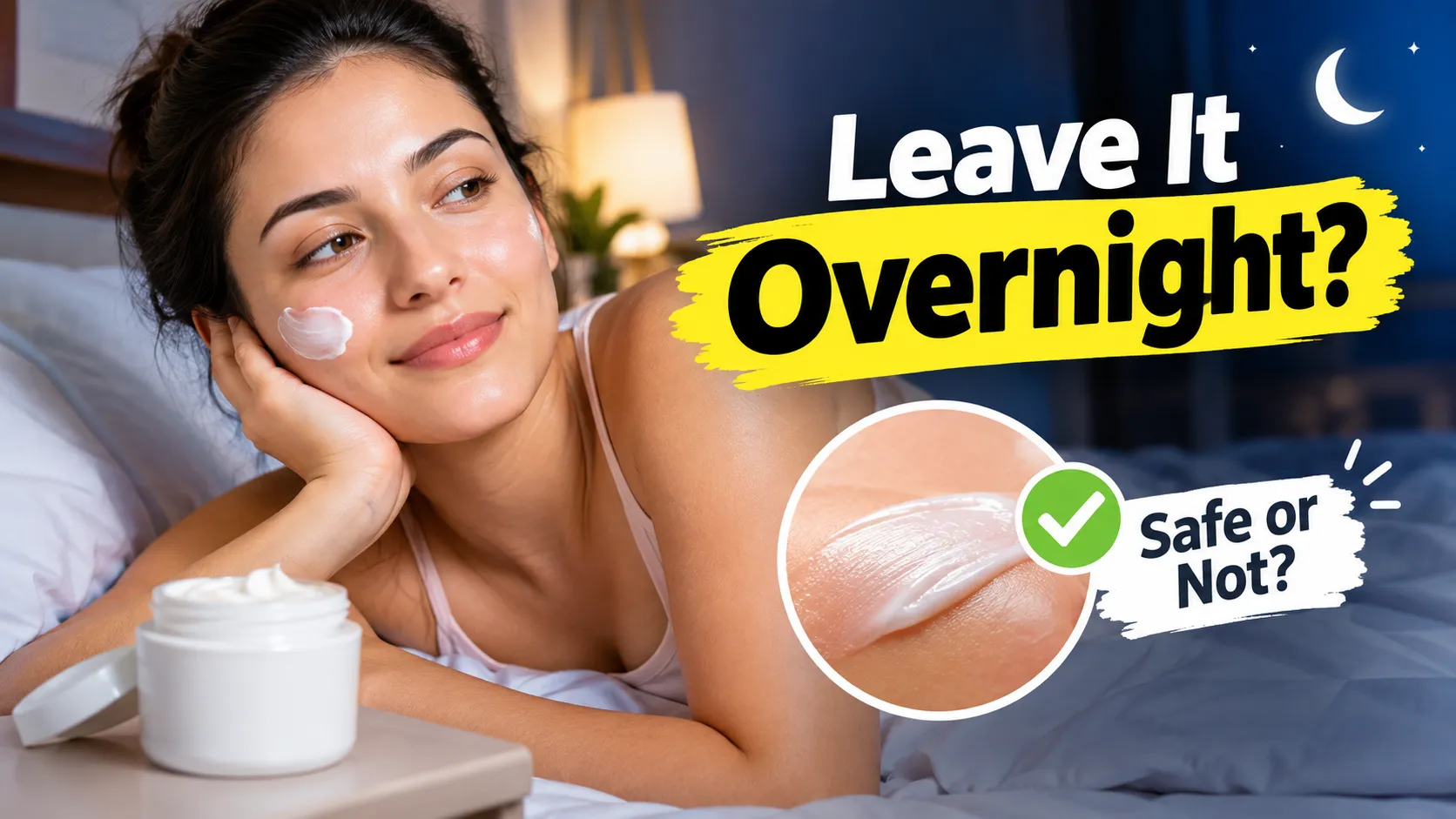
Possibly, if the product is specifically suitable for leave-on use and the label does not require removal. Skin that feels comfortable after application is a useful sign, but it does not override the product directions.
Some reactions to personal-care products are not immediate. The American Academy of Dermatology notes that contact dermatitis can appear after exposure to an irritating or allergenic product, and symptoms can include itching, burning, redness, swelling, tenderness, or blistering.
Practical safety decision path
Is it clearly intended as a leave-on product?
Does it contain active, warming, cooling, or fragranced ingredients?
Healthy and comfortable skin is different from irritated or damaged skin.
Follow the label, or wash it off if irritation develops.
This is a practical guide rather than a guarantee that overnight use will suit every person. When the label is unclear, asking the manufacturer or a pharmacist is safer than guessing.
Note: “Natural,” “herbal,” and “hypoallergenic” do not automatically mean a product cannot irritate your skin. The FDA notes that “hypoallergenic” does not have a standardized federal definition for cosmetics, so the ingredient list and directions still matter.
Ingredients That Deserve Extra Attention
Massage creams can contain ingredients that are comfortable for one person but irritating for another. Fragrance is a common example. The FDA lists fragrances, preservatives, dyes, metals, and natural rubber among classes of cosmetic allergens.
Active topical ingredients deserve even more attention because they may have specific instructions. Capsaicin, for example, should not be used on broken, damaged, infected, or rash-covered skin, and MedlinePlus advises protecting treated areas from direct heat.
If a cream contains menthol, methyl salicylate, capsaicin, or another active ingredient intended for pain relief, treat it as a topical product with directions rather than as an ordinary moisturizer.
Swipe left/right to see the full table →
| Ingredient category | Why check it | Practical approach |
|---|---|---|
| Fragrance | May trigger sensitivity | Choose fragrance-free if sensitive |
| Menthol | Creates cooling sensation | Follow label directions |
| Capsaicin | Can cause burning or irritation | Use exactly as directed |
| Methyl salicylate | Active topical ingredient | Do not extend use beyond directions |
Ingredient attention map — practical guide
Lower concern
Simple leave-on moisturizer, if label permits
More attention
Fragrance or multiple botanical ingredients
Highest attention
Active medicated or warming formulas
The bar widths above show typical routine priority, not measured medical risk. The more active the formula, the more important it is to follow its exact directions rather than assuming overnight use is harmless.
When Should You Wash Massage Cream Off?
Washing the product off is a sensible choice if the label says to remove it, if you applied more than directed, or if your skin starts feeling uncomfortable. Burning, stinging, itching, redness, swelling, or a new rash are reasons not to keep adding exposure.
The American Academy of Dermatology recommends gently washing off a product when a skin reaction develops and avoiding the product again.
There is also a practical reason to remove excess cream before bed: it can transfer onto clothing, bedding, or other skin areas. That does not automatically make the product dangerous, but it can increase unwanted contact and make it harder to notice exactly where the product has gone.
Swipe left/right to see the full table →
| Situation | Safer response |
|---|---|
| Skin feels normal | Still follow the label |
| Itching or burning begins | Wash the product off |
| Rash or swelling appears | Stop using and assess symptoms |
| Label says rinse off | Rinse as directed |
Warning: Do not assume that leaving a topical pain-relief cream on longer will make it work better. Some topical products have strict instructions about frequency, amount, heat, damaged skin, or covering the treated area. Follow the package directions rather than extending the contact time yourself.
Common Overnight Mistakes to Avoid
Most problems come from treating every massage cream as if it were the same. A few simple checks can reduce avoidable irritation.
Swipe left/right to see the full table →
| Mistake | Better choice |
|---|---|
| Ignoring the label | Read directions first |
| Applying to broken skin | Use only where the label permits |
| Adding heat over active cream | Check whether heat is prohibited |
| Using more for longer | Use the stated amount |
Direct heat deserves special attention with certain topical products. MedlinePlus specifically warns against direct heat such as heating pads and electric blankets when using topical capsaicin.
Do’s and don’ts for bedtime use
Do
- Read the product directions.
- Use a thin layer when directed.
- Keep the product away from eyes and mouth.
- Stop if irritation develops.
Don’t
- Assume every cream is leave-on.
- Use on damaged skin unless directed.
- Add heat without checking instructions.
- Keep using a product that causes a reaction.
This simple split is especially useful when the product was bought for massage but also contains active ingredients. If the packaging treats it as a topical medicine, use the medicine directions rather than general massage habits.
A Simple Bedtime Timeline
If your product is clearly intended to remain on the skin, a short bedtime routine can help you avoid using too much or spreading it to sensitive areas.
General bedtime routine guide
Read the label and check the ingredients.
Use only the amount recommended or needed for comfortable massage.
Check for burning, itching, redness, or other discomfort.
Wash the area if the label calls for removal or your skin feels uncomfortable.
This timeline is a practical routine, not a required medical schedule. Product directions always take priority, especially for topical medicines.
Tip: If you are trying a new massage cream, consider testing a small area first. The American Academy of Dermatology recommends testing skin-care products on a small area and observing for a reaction before wider use.
When Should You Avoid Leaving It On?
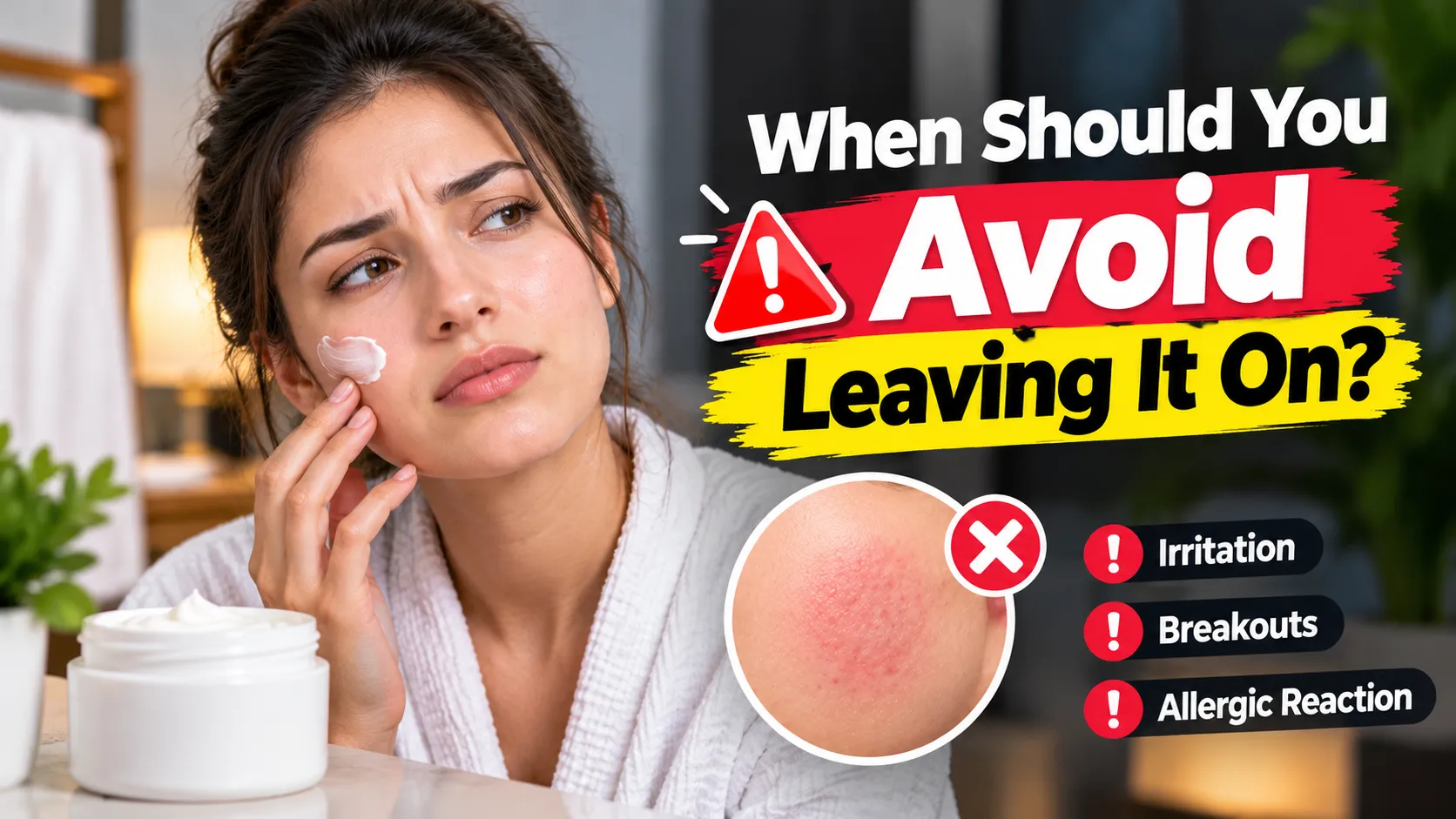
Be more cautious when the skin is already irritated, cut, scraped, sunburned, infected, or covered by a rash. Some topical products specifically instruct users not to apply them to damaged skin. Capsaicin is one example.
You should also avoid guessing with products that contain active pain-relief ingredients. If you cannot tell whether a cream is cosmetic or medicated, check the package for an active-ingredient section, drug facts information, warnings, or dosing directions.
Fragrance can be another reason to reconsider overnight exposure if you already know that scented products bother your skin. The FDA and AAD both recognize fragrance as a potential trigger for sensitivity or contact dermatitis in some people.
Swipe left/right to see the full table →
| Self-care may be reasonable | Professional advice is more appropriate |
|---|---|
| Mild, short-lived skin discomfort | Severe or worsening reaction |
| No rash or swelling | Swelling, blistering, or spreading rash |
| Symptoms improve after stopping | Symptoms persist or repeatedly return |
| Product directions are clear | Directions are unclear or conflicting |
When to Contact a Professional
A mild temporary sensation after a product may not mean something is seriously wrong, but severe, unusual, persistent, or worsening symptoms deserve professional attention. This is especially important if a product causes significant swelling, blistering, severe burning, breathing difficulty, or another unexpected reaction.
When to contact a professional:
- Severe or worsening burning, pain, itching, or swelling.
- Blisters, significant skin damage, or a spreading rash.
- Symptoms that remain after you stop using the product.
- Repeated reactions to massage or personal-care products.
- Breathing trouble, facial swelling, or other signs of a serious allergic reaction.
The FDA advises consumers to stop using a cosmetic when an unexpected reaction such as rash, redness, or burning occurs and to contact a healthcare provider about the problem.
If a serious allergic reaction includes trouble breathing, swallowing difficulty, or significant facial swelling, seek urgent medical help.
Overnight-use checklist
Think of the checklist as a final pause before bed. If any item is uncertain, the safest next step is usually to follow the package directions or ask a pharmacist or healthcare professional rather than extending the exposure on your own.
Frequently Asked Questions
Can I leave massage cream overnight?
It depends on the formula and label. A simple leave-on body cream may be suitable, while medicated, warming, cooling, or fragranced products may have different directions.
Should I wash massage cream off before sleeping?
Wash it off if the label says to rinse, if the cream is causing irritation, or if you are unsure how an active topical product should be used.
Can I sleep with a warming massage cream on?
Do not assume that warming creams are suitable for overnight use. Follow the product directions and check whether the label restricts heat, covering, application time, or frequency.
What if massage cream makes my skin itchy overnight?
Gently wash the product off and stop using it if a reaction develops. Seek professional advice if the reaction is severe, persistent, worsening, or unusual.
Can fragrance in massage cream cause skin irritation?
Yes. Fragrance ingredients can trigger irritation or allergic contact dermatitis in some people. If scented products bother your skin, consider a fragrance-free option.
Can I leave medicated massage cream on overnight?
Do not assume so. Medicated topical products can have specific instructions about amount, frequency, heat, damaged skin, and application time, so follow the product label or professional advice.
Final Thoughts
Can I leave massage cream overnight? Sometimes, but the answer depends on the exact product, its ingredients, and its directions. Simple leave-on creams may be different from medicated or warming formulas, so check the label before bed and wash the product off if irritation develops. Seek professional help for severe, worsening, unusual, or persistent symptoms.
Author
-

I’m Alex Turner, a massage product reviewer and wellness writer at RemedyTip. I specialize in researching, evaluating, and comparing massage and recovery products to help readers make informed purchasing decisions. My focus is on practical, evidence-informed product guidance covering muscle recovery, relaxation, everyday comfort, and wellness.
I take a research-driven approach to every product I review. I examine product specifications, features, materials, performance claims, user feedback, durability, comfort, ease of use, and overall value. When appropriate, I also consult trusted industry and health-related sources to verify important information and provide readers with a more complete and balanced view.
I cover a wide range of products, including massage guns, handheld massagers, neck and shoulder massagers, foot massagers, massage chairs, foam rollers, and other recovery tools. Rather than focusing only on marketing claims, I look at how products compare in real-world use and who they are actually suitable for. I also consider different budgets, use cases, and user needs when making recommendations.
At RemedyTip, I’m committed to accuracy, transparency, and unbiased product information. I clearly distinguish between manufacturer claims, available evidence, and my own product analysis so readers can understand the basis of each recommendation. I continuously research new products, technologies, and developments in the massage and recovery space to keep my content current and useful.
My goal is simple: to provide trustworthy, easy-to-understand information that helps readers choose massage and recovery products with greater confidence.