A neck massager may ease muscle tightness linked to neck pain, but it cannot directly free a compressed nerve. A neck massager may provide short-term relief when muscle tension contributes to symptoms, but it can worsen pain if it presses on an irritated nerve.
Pain, tingling, numbness, or weakness can signal more than simple muscle tension. Michael Hayes of RemedyTip.com recommends learning which symptoms may respond to gentle care, how to use a device safely, and when medical evaluation matters.
Key Takeaways
- Gentle massage may ease related muscle tension.
- Pressure can worsen nerve irritation.
- Weakness or lasting numbness needs medical care.
Understanding Pinched Nerve Symptoms
A pinched nerve in the neck develops when nearby tissue presses on or irritates a spinal nerve. Symptoms depend on the affected nerve and may include neck pain, pain that travels into the shoulder or arm, tingling, numbness, or muscle weakness.
Common Causes Of Nerve Compression
Several conditions can narrow the space around a neck nerve. Common causes include:
- Herniated or bulging discs: A damaged disc can press against a nerve root.
- Arthritis: Bone spurs and joint changes may reduce space in the spine.
- Muscle strain: Tight or swollen muscles can irritate nearby tissues.
- Injury: Whiplash or other neck trauma can cause swelling and pressure.
- Poor posture or repeated movements: Prolonged screen use or frequent neck strain may increase pressure over time.
Symptoms may affect one side of the body. For example, a compressed nerve in the lower neck can cause pain, tingling, or weakness that travels from the neck into the shoulder, arm, or hand. The location of numbness can help a clinician identify the affected nerve.
When Symptoms May Signal A Serious Condition
Some symptoms require prompt medical assessment rather than self-treatment with a neck massager. Progressive muscle weakness, trouble gripping objects, or frequent dropping of items may indicate significant nerve involvement.
Emergency care may be needed if neck symptoms occur with any of these signs:
- Sudden loss of balance or difficulty walking
- Loss of bladder or bowel control
- Numbness in both arms or legs
- Severe headache, fever, or a stiff neck
- Symptoms after a major fall, crash, or other injury
- Trouble speaking, swallowing, or breathing
Symptoms that last more than a few days, worsen, or interfere with sleep should also receive medical evaluation. A clinician can check strength, reflexes, sensation, and neck movement before recommending massage, exercise, medication, or other treatment.
How Neck Massage Affects Muscles And Nerves
Gentle neck massage may relax tight muscles and reduce pain caused by muscle tension. It cannot directly remove pressure from a nerve compressed by a disc, bone growth, swelling, or another structural problem.
Muscle Tension And Referred Pain
Tight muscles can develop after poor posture, repetitive movements, stress, or an injury. These muscles may restrict movement and irritate nearby tissues. A gentle neck massager can loosen some muscle fibers, increase local blood flow, and reduce feelings of stiffness.
Muscle pain can also spread from the neck into the shoulder, upper back, or head. This is called referred pain. When massage reduces muscle tension, it may lessen this type of discomfort. It does not prove that the nerve itself has healed.
| Possible effect | What it may help |
|---|---|
| Muscle relaxation | Tightness and stiffness |
| Gentle pressure | Mild muscle soreness |
| Improved movement | Reduced discomfort during neck motion |
A neck massager should use low pressure and short sessions. It should not press directly on the spine, the front of the neck, or an area with numbness or weakness.
Limits Of Massage For Nerve Compression
A pinched nerve develops when surrounding tissue places pressure on a nerve. Causes can include a herniated disc, narrowed spinal spaces, arthritis, swelling, or an injury. Massage may relax nearby muscles, but it cannot correct these structural causes.
Strong pressure may worsen nerve irritation, especially when symptoms include electric or shooting pain, tingling, numbness, or weakness. A massage gun also carries a higher risk of aggravating painful tissue when used on the neck.
The person should stop using the device if symptoms spread, become sharper, or increase after treatment. Medical evaluation is important when symptoms persist or include arm weakness, loss of coordination, severe pain, or problems with bladder or bowel control.
When A Neck Massager May Provide Relief
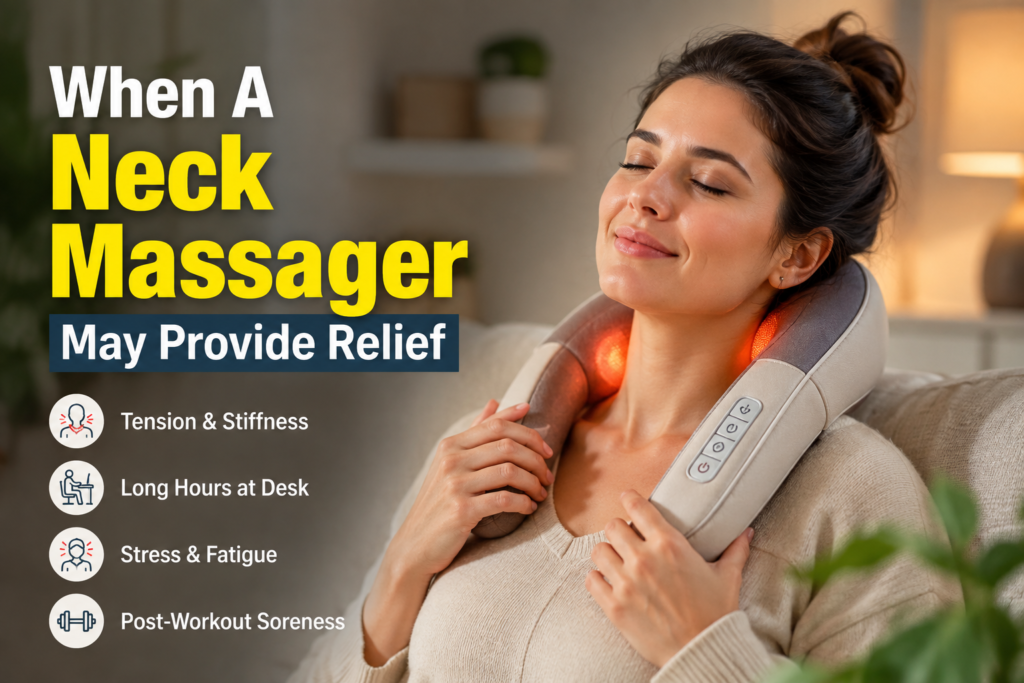
A neck massager may ease muscle tightness around an irritated nerve, especially when tension limits movement. It cannot remove the cause of nerve compression, so gentle use and attention to warning signs remain important.
Tension-Related Neck Discomfort
A pinched nerve can cause neck pain, stiffness, tingling, numbness, or weakness. A massager may help when tight muscles add to the discomfort. Gentle pressure can relax tense muscles near the neck and shoulders, which may reduce muscle-related pain and make movement easier.
The device should stay on the muscles beside the spine, not directly over the spine or the painful nerve area. Low pressure and a short session provide a safer starting point. A person should stop if the massager increases pain, tingling, numbness, dizziness, or weakness.
| May be reasonable | Avoid or seek medical advice |
|---|---|
| Mild muscle tightness | New or worsening weakness |
| Stiffness after activity | Loss of balance or coordination |
| Pain that improves with gentle movement | Severe numbness or spreading symptoms |
People with a recent injury, severe pain, or symptoms that travel into the arm should speak with a health professional before using a neck massager.
Short-Term Comfort And Mobility
A neck massager may provide temporary comfort by reducing muscle tension. This relief can help a person turn the head, sit more comfortably, or perform gentle stretches. The effect does not prove that the nerve has healed, and symptoms may return after the session.
A person should use the lowest comfortable setting for about 5 to 10 minutes. They should keep the neck in a neutral position and avoid forceful kneading, high-impact percussion, or prolonged use. A handheld device should not press on the front or sides of the neck, where sensitive blood vessels and other structures are located.
If pain, tingling, or numbness continues, a clinician can assess the cause and recommend safer treatment. Urgent care is needed for sudden weakness, trouble walking, loss of bladder or bowel control, or severe symptoms after an injury.
When A Neck Massager May Worsen Symptoms
A neck massager may increase pain when the neck has active inflammation, a recent injury, or an irritated nerve. Strong pressure over the spine, swollen tissue, or areas with reduced sensation can also worsen symptoms or hide signs that need medical care.
Inflammation And Acute Injury
After a fall, crash, sudden twist, or other injury, neck muscles and joints may become inflamed. Heat, vibration, or deep kneading can increase discomfort in some people, especially during the first few days. A massager should not replace an examination when pain starts after an injury.
A person should stop using the device if it causes more pain, swelling, headache, dizziness, or reduced neck movement. New numbness, tingling, weakness, or pain that travels into the arm may indicate nerve irritation rather than simple muscle tension.
Until a clinician evaluates the injury, gentle movement within a comfortable range may be safer than forceful massage. The person should follow medical advice and avoid using a massager over bruised, swollen, or visibly injured areas.
Pressure Over Sensitive Areas
Direct pressure over the neck can irritate an already sensitive nerve. It may also place unwanted force on the front or side of the neck, where important blood vessels and other structures are located. A person should avoid pressing on the spine, throat, or areas that feel numb or unusually tender.
The device should be stopped immediately if it causes shooting pain, tingling, numbness, burning, or weakness in the neck, shoulder, hand, or arm. These symptoms can signal increased nerve irritation.
A safer approach involves the lowest setting and brief use on nearby muscle tissue, not directly over the painful spot. A person should not use a massager when symptoms continue, spread, or worsen without first seeking medical assessment.
Choosing And Using A Device Safely
A neck massager may ease muscle tension, but it cannot remove pressure from a pinched nerve. Safe use requires low intensity, short sessions, correct placement, and stopping when symptoms worsen.
Appropriate Settings And Duration
The user should choose the lowest effective setting, especially during the first session. Gentle vibration or light kneading is safer than strong compression or deep-tissue pressure. Heat should stay warm, not hot, and the user should check the skin often because numbness can reduce awareness of burns.
| Use | Safer approach |
|---|---|
| Session length | Start with 5 minutes; do not exceed 15 minutes |
| Frequency | Allow at least several hours between sessions |
| Pressure | Use light pressure without forcing the device into the neck |
| Symptoms | Stop if pain, tingling, numbness, weakness, dizziness, or headache appears |
The user should follow the device instructions and avoid sleeping while using it. A health professional should assess persistent symptoms, arm weakness, loss of coordination, or worsening pain before the person continues self-treatment.
Areas To Avoid During Self-Massage
The device should contact the larger muscles at the back and sides of the neck, shoulders, or upper back only if those areas feel comfortable. It should not press directly on the front or sides of the throat, where important blood vessels, nerves, and the airway are located.
The user should also avoid the spine, the base of the skull, swollen areas, open skin, bruises, and painful spots that produce electric-shock sensations. A massager should never be used over a known neck injury or suspected fracture.
People with recent surgery, severe arthritis, bleeding problems, a blood clotting disorder, or an implanted medical device should ask a clinician before use. If symptoms spread into an arm or hand, gentle positioning and medical advice are safer than increasing massage pressure.
Alternative Home Care Strategies
Small changes can reduce strain on the neck and give irritated tissues time to settle. Gentle movement, careful use of heat or cold, and better support during work and sleep may help without adding pressure to the nerve.
Posture And Ergonomic Adjustments
A neutral neck position can reduce stress during daily activities. The ears should stay roughly over the shoulders, while the chin remains level instead of jutting forward. A phone should be held at eye level rather than cradled between the ear and shoulder.
At a desk, the screen should sit near eye level and about an arm’s length away. The shoulders should stay relaxed, and the elbows should rest close to the body. Short movement breaks every 30–60 minutes can prevent one position from irritating the neck.
Sleep posture also matters. A pillow should support the natural curve of the neck without forcing the head upward or downward. Side sleepers may benefit from a pillow that fills the space between the head and mattress. Stomach sleeping can twist the neck and may worsen symptoms.
Gentle Movement And Heat Or Cold Therapy
Gentle movement can prevent stiffness, but it should not increase shooting pain, numbness, or tingling. Slow neck turns, shoulder rolls, and chin tucks may help maintain comfortable motion. Each movement should stay within a pain-free range, without bouncing or forceful stretching.
Cold therapy may help during a recent flare or after activity. An ice pack wrapped in a thin towel can be applied for about 15–20 minutes, with several hours between applications. Heat may help tight muscles; a warm compress can be used for 15–20 minutes. The skin should be checked often to prevent burns or irritation.
A neck massager should not press directly on the spine or areas with reduced sensation. It should be stopped if symptoms spread into the arm or become sharper. Persistent weakness, loss of coordination, or worsening numbness requires prompt medical assessment.
Medical Evaluation And Treatment Options

Neck massagers may ease muscle tension, but they cannot confirm or treat the cause of nerve compression. Persistent pain, numbness, or weakness needs medical assessment because symptoms may come from a disc problem, arthritis, injury, or another condition.
Warning Signs Requiring Prompt Care
A person should seek prompt medical care for new or worsening arm or hand weakness, loss of coordination, or trouble walking. These signs may show that nerve compression is affecting movement.
Urgent evaluation is also needed after a major neck injury or when neck pain occurs with fever, severe headache, confusion, or unexplained weight loss. New loss of bladder or bowel control requires emergency care.
A person should stop using a neck massager if it increases pain, tingling, numbness, dizziness, or weakness. Forceful pressure, strong vibration, or neck-stretching attachments may worsen irritated tissues. A soft collar may provide short-term support in some cases, but extended use can weaken neck muscles and should follow medical advice.
Professional Diagnosis And Rehabilitation
A clinician usually reviews the symptoms, checks neck movement, and tests strength, reflexes, and sensation in the arms and hands. Imaging, such as an MRI, may be considered when symptoms persist, weakness develops, or the examination suggests a disc or bone problem. Guidance from reliable medical information about cervical radiculopathy can help explain the condition, but it does not replace an examination.
Treatment often begins without surgery. A clinician may recommend activity changes, pain medicine, physical therapy, and exercises that improve posture, neck movement, and upper-back strength. A therapist can also teach safe manual techniques and decide whether heat or gentle massage is appropriate. Steroid injections or surgery may be considered when severe pain or weakness continues despite other treatment.
FAQs
Can a neck massager help a pinched nerve?
It may ease muscle tightness and reduce nearby discomfort when tense muscles add pressure around the nerve. It cannot fix structural causes, such as a herniated disc, bone spur, or spinal narrowing.
Can a massage gun be used on the neck?
A massage gun should not be used directly on the front or sides of the neck, the spine, or areas with numbness or weakness. If a clinician approves its use, gentle treatment of nearby shoulder muscles may be safer.
What symptoms mean the massager should be stopped?
Treatment should stop if it increases pain, tingling, numbness, dizziness, headache, or weakness. Symptoms that spread into the arm also need medical attention if they persist or worsen.
How should someone use a neck massager safely?
The lowest setting and light pressure provide the safest starting point. The device should move over surrounding muscles for a short time rather than press on one spot or directly on the suspected nerve.
When should someone see a health professional?
A clinician should assess severe or lasting pain, loss of strength, trouble walking, or symptoms after an injury. Immediate care is needed for sudden major weakness or loss of bladder or bowel control.
Conclusion
A neck massager may ease muscle tightness and reduce pain linked to a pinched nerve. It cannot remove pressure caused by a herniated disc, bone spur, arthritis, or spinal narrowing.
People should use low pressure and short sessions. They should stop if the device increases pain, tingling, numbness, dizziness, or weakness. A massage therapist or health professional can help identify the cause and choose safer treatment.
Medical care is important when symptoms persist, worsen, or limit movement. Severe weakness, trouble walking, loss of bladder or bowel control, or sudden widespread numbness requires urgent medical attention.