By Alex Turner
Percussion massagers have become a common tool in home recovery routines, and a lot of people with joint pain wonder whether the rapid tapping motion is a comfort tool or a risk. This guide looks at what the devices actually do, who tends to feel better using one, who should be more careful, and the specific warning signs that mean it’s time to stop and check in with a healthcare provider instead of adjusting the intensity dial.
What Percussion Massagers Actually Do
A percussion massager (sometimes called a massage gun) drives a small head in and out against soft tissue at a rapid, repeating rate. The goal is to loosen tight muscle and increase local blood flow around a joint, not to move or press directly on the joint structure itself. That distinction matters a lot when arthritis is involved, because arthritis pain usually comes from the joint lining, cartilage, or surrounding inflammation, not from a tight muscle alone.
Most people asking whether percussion massagers are good for arthritis are really asking two separate questions: can it ease the stiff, achy muscles that build up around an arthritic joint, and is it safe to use anywhere near a joint that is already inflamed. The honest answer is that it depends heavily on the type of arthritis, how active the joint currently is, and where the device is used.
Why Some People With Arthritis Try Them
Arthritis often causes the muscles around a joint to tighten up as a protective response. A short, gentle percussion session on those surrounding muscles — the thigh above an arthritic knee, for example — can sometimes ease that tightness and make the joint feel less restricted afterward. This is a comfort effect, not a change in the arthritis itself, and it does not apply the same way to every joint or every arthritis type.
Who Should Be Cautious With a Percussion Massager
Not everyone with joint pain fits the same profile. The table below breaks down how caution level changes by arthritis type and joint condition, since this is usually the deciding factor rather than the device itself.
Arthritis Type and Caution Level
Swipe left/right to see the full table →
| Situation | Caution Level | Why |
|---|---|---|
| Stable osteoarthritis, muscles only | Lower | Muscle tightness around a calm joint may respond to gentle use |
| Active flare or swollen joint | Higher | Direct vibration on inflamed tissue can increase irritation |
| Rheumatoid or autoimmune arthritis | Higher | Joint involvement and flare pattern differ from osteoarthritis; professional guidance is important first |
| Blood thinners or fragile skin | Higher | Bruising risk increases with repetitive impact |
| Recent joint surgery or replacement | Higher | Healing tissue and hardware need direct medical clearance first |
Safety Decision Path
Before asking whether percussion massagers are good for arthritis in your specific case, walk through this general decision path.
This is a general practical guide, not a personalized medical assessment.
Red Flags That Mean Stop Immediately
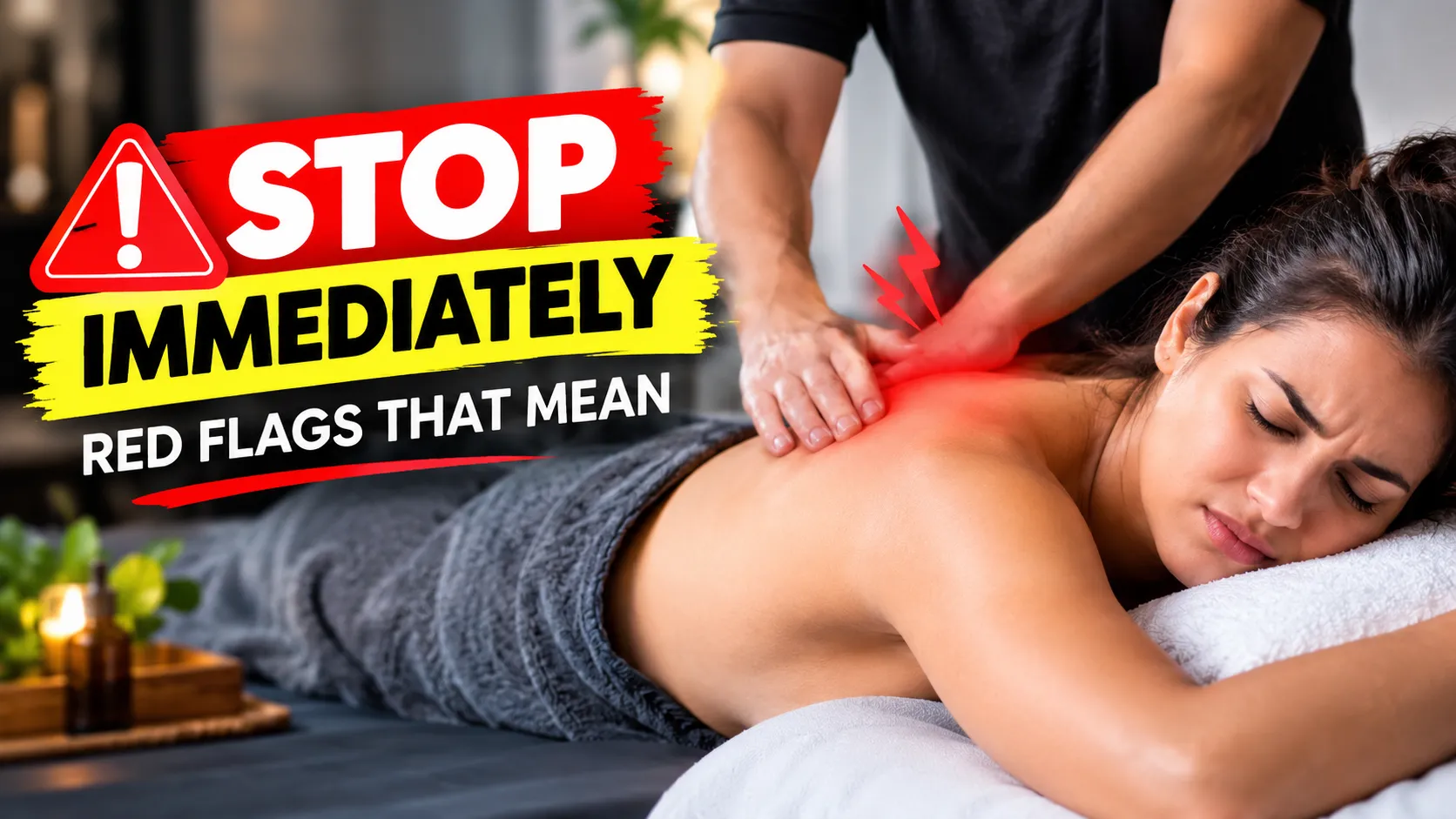
Even in people who are generally cleared to try a percussion massager, certain signs mean the session should end right away rather than being pushed through.
Red-Flag Checklist
- Sharp or shooting pain during use, not just pressure
- New swelling, warmth, or redness after a session
- Pain that is worse the next day rather than easing
- Numbness, tingling, or a bruise forming near the joint
- Fever alongside joint pain
Any one of these is a reason to stop and speak with a healthcare professional, not a reason to lower the intensity and try again.
Safe Use vs. Risky Use
Whether percussion massagers are good for arthritis in daily practice often comes down to small habits, not the device brand or price. The table below compares common safe patterns with the risky versions people fall into.
Swipe left/right to see the full table →
| Habit | Safer Pattern | Riskier Pattern |
|---|---|---|
| Placement | On the muscle belly, away from the joint line | Directly on or right over the joint |
| Intensity | Lowest setting, soft attachment head | High setting, firm or pointed head |
| Duration | 30-60 seconds per muscle area | Several minutes in one spot |
| Timing | On calm days, joint not swollen | During an active flare |
Safer Alternatives to Consider
For some people, the answer to whether percussion massagers are good for arthritis is simply “not right now,” and a gentler option fits better while a joint settles down.
Swipe left/right to see the full table →
| Option | Best For | Note |
|---|---|---|
| Warm compress | Stiff, non-swollen joints | Can loosen stiffness without impact |
| Cold pack | Active flares, swelling | Often the more appropriate choice during a flare |
| Gentle range-of-motion stretching | Everyday stiffness | Ask a physical therapist for joint-specific moves |
| Low-intensity percussion massager | Cleared, calm muscle tightness | Only on surrounding muscle, never the joint itself |
General Risk-Level Guide by Situation
Calm joint, muscle-only use, low setting
Mild stiffness, unclear joint status
Active flare, swelling, or direct-joint use
This is a general practical guide, not a measured clinical score.
Common Mistakes and Better Choices

Swipe left/right to see the full table →
| Mistake | Better Choice |
|---|---|
| Using it to “push through” a painful joint | Stop at the first sign of sharp pain and reassess later |
| Starting on the highest setting | Always begin on the lowest setting available |
| Skipping a doctor check for rheumatoid arthritis | Get individualized guidance before adding any new device |
Do’s and Don’ts at a Glance
Do
- Use on surrounding muscle only
- Start low and short
- Check with your doctor first
Don’t
- Use directly on a swollen joint
- Use during a flare
- Ignore new pain or bruising
When to Contact a Professional
Compact Percussion Massager With Low-Intensity Settings
A lightweight option with a true low-speed setting can make it easier to stick to gentle muscle-only sessions around a joint, which may support comfort as part of a routine you build with your doctor’s input.
Percussion Massager With Soft Attachment Head
A softer, rounded attachment spreads pressure more gently than a firm or pointed head, which can make daily muscle-care routines around sensitive joints more comfortable when used as directed by a professional.
Frequently Asked Questions
Are percussion massagers good for arthritis pain relief?
They may ease muscle tightness around a calm joint for some people, but they do not treat the arthritis itself and are not appropriate for every joint or flare.
Can a percussion massager make arthritis worse?
Used directly on an inflamed or swollen joint, it can increase irritation. Keeping it on surrounding muscle at low intensity lowers that risk.
What speed setting is safest for arthritic joints?
The lowest available setting, paired with a soft attachment head and short sessions, is the safer starting point.
Should I use it directly on an arthritic joint?
No. Percussion massagers are made for muscle tissue, not joint structures, so it is safer to work on the muscle around the joint instead.
Are percussion massagers safe for rheumatoid arthritis?
This needs individual guidance from a doctor or rheumatologist first, since rheumatoid arthritis involves joint inflammation patterns that differ from osteoarthritis.
How long should a session last for arthritis-related tightness?
Many people start with 30 to 60 seconds per muscle area and check how the area feels afterward before doing more.
When should I stop and see a doctor instead of adjusting the device?
Stop right away for sharp pain, new swelling, bruising, numbness, or pain that is worse the next day, and contact a healthcare professional.
So, are percussion massagers good for arthritis? For some people, in the right circumstances, gentle use on the muscles around a calm joint may add a bit of comfort to a daily routine. They are not a substitute for medical care, and they are the wrong tool during a flare or over a swollen joint. If your pain is severe, worsening, unusual, or not settling down, check in with a healthcare professional rather than relying on a device alone.
Author
-

I’m Alex Turner, a massage product reviewer and wellness writer at RemedyTip. I specialize in researching, evaluating, and comparing massage and recovery products to help readers make informed purchasing decisions. My focus is on practical, evidence-informed product guidance covering muscle recovery, relaxation, everyday comfort, and wellness.
I take a research-driven approach to every product I review. I examine product specifications, features, materials, performance claims, user feedback, durability, comfort, ease of use, and overall value. When appropriate, I also consult trusted industry and health-related sources to verify important information and provide readers with a more complete and balanced view.
I cover a wide range of products, including massage guns, handheld massagers, neck and shoulder massagers, foot massagers, massage chairs, foam rollers, and other recovery tools. Rather than focusing only on marketing claims, I look at how products compare in real-world use and who they are actually suitable for. I also consider different budgets, use cases, and user needs when making recommendations.
At RemedyTip, I’m committed to accuracy, transparency, and unbiased product information. I clearly distinguish between manufacturer claims, available evidence, and my own product analysis so readers can understand the basis of each recommendation. I continuously research new products, technologies, and developments in the massage and recovery space to keep my content current and useful.
My goal is simple: to provide trustworthy, easy-to-understand information that helps readers choose massage and recovery products with greater confidence.